
August 3, 2026
Your Coffee Maker Makes Coffee Taste Bitter When It Is Dirty
Bitter coffee is not always a bean problem. Old oils, mineral buildup, and a grimy brew basket can make even decent coffee taste harsh.
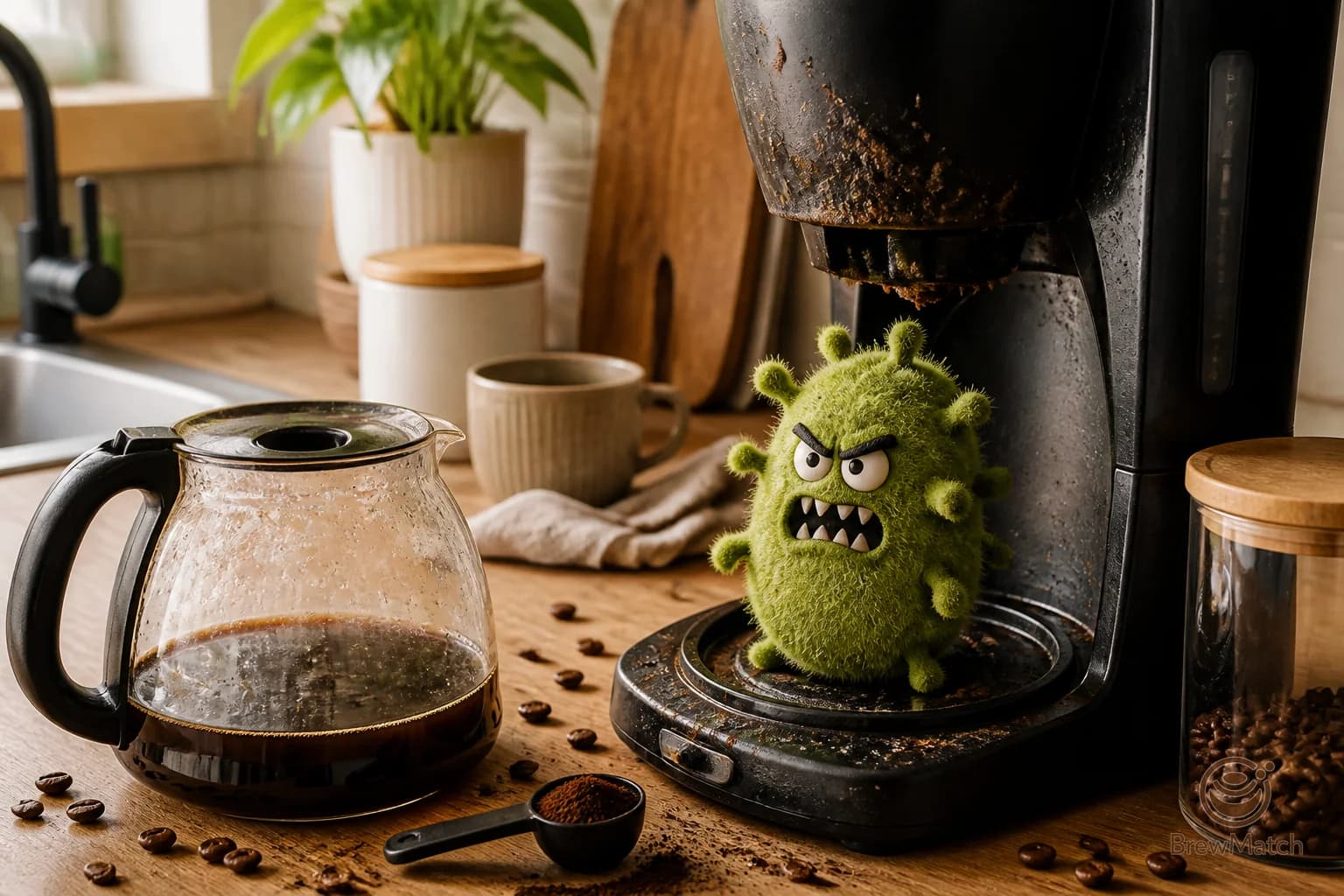
A dirty coffee maker can absolutely make coffee taste bitter. Old coffee oils turn stale, mineral scale changes how water moves, and leftover grounds keep giving up harsh flavors long after the brew is done. If your coffee suddenly tastes bitter even though the beans and recipe have not changed, clean the machine before blaming the roast.
This is not glamorous advice. Nobody wants their coffee problem to be “wash the thing.” But a lot of bitter coffee starts with the parts people rarely look at.
The bitter taste can come from old coffee oil
Coffee leaves oil behind. Not a cute little aroma film. Actual residue.
That residue builds up on the brew basket, filter holder, carafe, lid, shower head, French press mesh, moka pot chamber, espresso portafilter, and anything else that touches brewed coffee. Fresh coffee oil can taste pleasant. Old coffee oil tastes stale, sharp, and bitter.
The annoying part is that old oil does not always smell awful. You may not notice it until hot water hits it again. Then it gets pulled into the next cup and makes the coffee taste heavier and harsher than it should.
If your coffee has a bitter edge that feels dirty, dusty, or flat, old oil is a serious suspect.
Mineral buildup can mess with extraction
Water leaves minerals behind as it heats and evaporates. Over time, that mineral buildup can clog small openings inside a coffee maker.
That changes the brew in a few ways:
- Water may not flow evenly through the grounds.
- Some grounds may get soaked too much.
- Other grounds may barely extract.
- Brew temperature and contact time can become less predictable.
That uneven brewing can create a cup that tastes bitter, harsh, weak, or oddly hollow. People often describe it as “burnt,” even when nothing is actually burning.
This is why descaling matters. Cleaning removes coffee residue. Descaling removes mineral buildup. They are related, but they are not the same job.
The brew basket is usually worse than the carafe
Most people rinse the carafe because they can see it. The brew basket gets ignored because it looks harmless once the filter is gone.
Bad tradeoff.
The brew basket is where wet grounds sit, drain, drip, steam, and splash. It catches fine particles and oil. If you use paper filters, it can still collect residue around the edges. If you use a reusable metal filter, buildup can happen even faster.
A dirty brew basket can make fresh coffee taste like yesterday’s coffee. Not in a charming diner way. In a bitter, stale, “why is this so rough?” way.
If your coffee maker has a removable basket, take it out and wash it with warm water and dish soap. If it has corners, grooves, a valve, or a spring loaded drip stop, pay attention there. That is where gunk likes to hide.
The lid can ruin a clean pot
The carafe lid is one of the most missed parts of a drip coffee setup.
Steam rises into it. Coffee splashes onto it. Condensation carries oils into little seams and channels. Then the next brew runs under or around that same lid.
If your coffee tastes bitter near the end of the pot, or if the last cups taste worse than the first, the lid and carafe may be part of it. Hot plates can make this worse too, because brewed coffee keeps cooking as it sits. If that sounds familiar, read Coffee Tastes Bitter After Sitting On The Hot Plate.
Quick test: remove the lid and smell it after rinsing. If it still smells like old coffee, it is not clean yet.
Do this before changing beans
Before you buy a different roast, run this quick cleanup sequence.
Practical checklist
- Wash the carafe with warm water and dish soap.
- Remove and wash the brew basket.
- Scrub or soak the carafe lid if coffee smell remains.
- Rinse the water reservoir if your machine allows it.
- Check the shower head or water outlet for coffee stains or mineral crust.
- Replace or deep clean reusable filters.
- Run a descale cycle if your machine recommends it.
- Run fresh water cycles after cleaning so no cleaner taste remains.
- Brew the same coffee again before changing the recipe.
Use the cleaning method your coffee maker manufacturer recommends. Some machines are fine with vinegar. Others call for a specific descaling product. The point is not to freestyle with harsh chemicals. The point is to get old coffee and mineral buildup out of the path between water and cup.
If you are not sure whether your problem is the beans, water, grind, or machine, BrewMatch can help you narrow down what is most likely causing the bitter taste based on how you brew and what you want your coffee to taste like.
When cleaning fixes bitterness fast
Cleaning is most likely to help when the bitterness showed up gradually.
Watch for these clues:
- The same beans used to taste better.
- Every bag tastes kind of bitter now.
- The coffee smells fine before brewing but tastes stale after brewing.
- The first cup is okay but later cups taste harsher.
- Your machine has not been cleaned in weeks or months.
- You see brown film, cloudy plastic, or crusty white buildup.
That pattern points away from “bad beans” and toward “bad environment.” Your coffee is passing through parts that already taste bad.
This is also why switching to expensive beans may not help. Better beans can taste even more disappointing when brewed through old residue. You did not buy bad coffee. You ran good coffee through a dirty obstacle course.
When cleaning is not the whole answer
Cleaning helps a lot, but it will not fix every bitter cup.
If your brewer is clean and the coffee still tastes bitter, look at the usual suspects:
- Grind too fine
- Water too hot
- Too much contact time
- Too much coffee for the water
- Beans that are old or too dark for your taste
- Paper filter taste
- Tap water that makes coffee taste harsh
Water is worth checking because even a clean machine can brew bitter coffee with the wrong water. If your tap water tastes unpleasant on its own, it can drag the coffee with it. BrewMatch has a deeper breakdown here: Tap Water Can Make Coffee Taste Bitter.
The goal is not to chase perfection. It is to stop changing five things at once. Clean first. Brew again. Then adjust one variable.
The one cup test
After cleaning, make one normal cup or one normal pot with the same coffee you used before.
Do not change the grind. Do not change the dose. Do not switch beans. Do not suddenly become a recipe scientist at 7 a.m.
You are testing one thing: did removing buildup improve the taste?
If the coffee is less bitter, the machine was part of the problem. Keep the recipe and build a cleaning habit.
If nothing changes, the bitterness is probably coming from extraction, water, beans, or heat. That is useful too. You have ruled out one boring but common cause.
A simple cleaning rhythm that actually works
You do not need a complicated routine.
For drip coffee makers, rinse removable parts after brewing and wash the carafe, basket, and lid regularly. If you brew daily, a weekly soap wash is a reasonable baseline. Descale when your machine asks for it, when flow slows down, or when you see mineral buildup.
For French press, wash the plunger screen well. Coffee particles hide in the mesh and under the metal layers. A quick rinse is not always enough.
For espresso, knock out the puck, wipe the basket, rinse the portafilter, and follow your machine’s cleaning instructions. Espresso gear punishes neglect quickly because pressure pushes oils into small places.
For moka pots, avoid leaving wet grounds sitting in the chamber. Clean and dry the parts before storing.
None of this makes you a coffee snob. It makes you someone who does not want stale oil seasoning every cup.
Bitter coffee is often a maintenance problem
The least exciting explanation is often the right one. If your coffee maker is dirty, your coffee can taste bitter no matter how carefully you choose beans.
Clean the parts coffee touches. Descale when minerals build up. Then taste again before blaming the roast, the grinder, or yourself.
If you want help figuring out whether your bitter coffee is coming from your brewer, beans, grind, or water, try BrewMatch. It is built for normal home coffee drinkers who want better tasting coffee without turning breakfast into a lab report.
Find your match
Not sure which beans fit your taste?
Use BrewMatch to turn your flavor goal, brew method, and current coffee problem into a practical roast and bean profile.
Try BrewMatch