
September 28, 2026
Variable Speed Grinders Will Not Save Bitter Coffee
Variable speed sounds like a serious grinder upgrade. For bitter coffee, it is usually a distraction unless the grinder also gives you clean adjustment, low fines, and settings you can repeat.
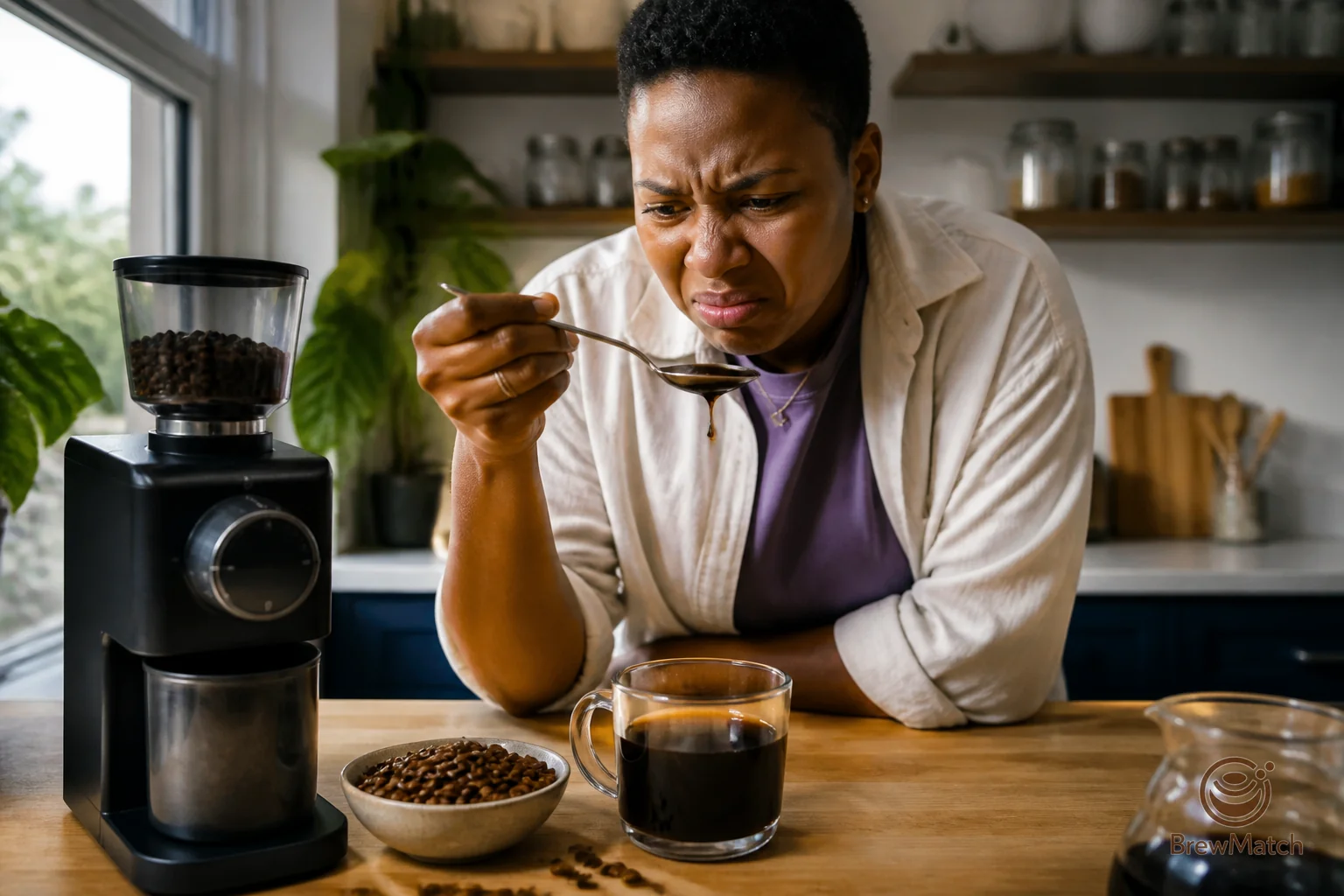
A variable speed coffee grinder will not automatically make bitter coffee taste smoother. Grinder speed can affect workflow, noise, static, and sometimes how the coffee breaks apart, but bitterness usually comes from extraction problems: too many fines, too fine a grind, too much brew time, too much heat, or a recipe that is fighting itself.
If you hate bitter coffee, do not buy the grinder with the fanciest RPM dial first. Buy the grinder you can actually dial in.
Quick answer: variable speed can save noise, mess, or workflow friction, but it rarely saves a bitter cup by itself. For smoother coffee, fix grind size, fines, brew time, heat, and repeatable settings before paying extra for an RPM control.
What variable speed actually changes
Variable speed means the grinder lets you adjust how fast the burrs spin. Some grinders run at one fixed motor speed. Others let you choose a lower or higher RPM.
That sounds like a taste control, and sometimes it can be. A slower speed can change how beans feed into the burrs. A faster speed can move coffee through more aggressively. Depending on the grinder design, burrs, roast, and grind setting, speed may slightly affect particle spread.
But that is a lot of may and slightly.
For most home coffee drinkers, variable speed is not the first thing deciding whether the cup tastes bitter. The bigger question is whether the grinder creates too much coffee dust, whether the grind setting is right for the brew method, and whether you can make the same grind again tomorrow.
A grinder with variable speed and sloppy adjustment is still a sloppy grinder. It just lets you be sloppy at multiple speeds.
Why bitter coffee usually ignores the RPM knob
Bitter coffee usually shows up when water pulls too much harsh flavor out of the grounds, or when tiny particles over extract faster than everything else.
Those tiny particles are often called fines. They are the coffee dust in the grind. A little is normal. Too much can make coffee taste bitter, dry, muddy, or harsh even when the recipe looks reasonable.
Changing grinder speed might affect fines on some grinders, but it will not rescue a setup where:
- the grind is too fine for the brew method
- the grinder produces a wide mix of boulders and dust
- the brew time is running long
- the coffee bed is clogging
- the setting is hard to repeat
- the dose keeps changing because you are guessing
That is why grinder marketing can be annoying. It loves to spotlight the dramatic spec. Burr size. RPM. Motor power. Exotic materials. Meanwhile, the cup is asking a boring question: can this grinder produce an even grind at the setting you need?
If not, bitterness stays.
When variable speed can help a little
Variable speed is not fake. It is just easy to overvalue.
It can be useful if you already understand your recipe and want another adjustment tool. For espresso, a speed change may affect how the shot flows. For pour over, it may slightly change the amount of fines or how the bed drains. For some grinders, a slower setting may feel calmer and create less mess.
The tradeoff is simple: extra control only helps if the basic controls are already good.
If you are still moving the grind setting randomly, guessing your dose, or blaming every bitter cup on the beans, the speed dial becomes another thing to chase. More knobs do not automatically mean more control. Sometimes they just give you more ways to avoid the obvious fix.
If you want help separating bean preference from brewing problems, BrewMatch can help you find coffees that fit the flavors you actually like, without pretending every bitter cup is your fault.
Grinder specs that matter more for bitter coffee
If your goal is less bitter coffee, these grinder traits usually matter more than variable speed.
Grind consistency
A more even grind helps water extract the coffee more evenly. That means fewer particles getting over extracted while others stay under extracted.
This is especially important for pour over, drip, French press, and espresso. The exact grind size changes by method, but the basic idea does not: fewer wild extremes usually means a cleaner cup.
BrewMatch has a deeper breakdown here: Grind Consistency Is the Grinder Spec That Actually Helps Bitter Coffee.
Adjustment range
A grinder needs enough useful settings for your brew method. If one click tastes sour and the next click tastes bitter, you do not have much room to work.
This is where some cheap grinders fall apart. They technically grind coffee, but they do not give you enough control to fix taste. That is not a personal failure. That is a tool problem.
Repeatable settings
If you find a good setting, you need to get back to it. A grinder that drifts, slips, or has vague markings makes troubleshooting harder than it needs to be.
A grinder does not need to look like lab equipment. It just needs to let you make a change, taste the result, and repeat what worked.
Low fines for your brew style
Some grinders are better suited to espresso. Some are friendlier for filter coffee. Some try to do both and make compromises.
If you mostly brew drip, pour over, or French press, do not buy a grinder only because espresso people are loud about it online. Espresso priorities are not always your priorities.
Useful design instead of shiny specs
Big burrs and fancy numbers are easy to sell. They are not always the fix. If a grinder is hard to clean, hard to adjust, or inconsistent at the range you use every morning, the spec sheet is doing more work than the grinder.
For a related reality check, read Burr Size Is Not the Coffee Grinder Spec That Fixes Bitter Coffee.
Practical checklist before buying a variable speed grinder
Before paying extra for variable speed, run through this list.
- Does the grinder have enough adjustment range for your brew method?
- Can you make small changes without overshooting the sweet spot?
- Are the grind settings easy to read and repeat?
- Does it have a reputation for producing low fines in the brew style you use?
- Is it easy enough to clean that you will actually clean it?
- Does the grinder fit your normal batch size?
- Are you buying variable speed for taste, or because the spec sounds impressive?
- Have you already tried a slightly coarser grind to reduce bitterness?
- Have you checked brew time before blaming the grinder?
- Are you changing one variable at a time, or doing coffee chaos before breakfast?
If most of those answers are unclear, variable speed should not be the deciding feature.
A better test for the grinder you already own
Before replacing your grinder, do a simple bitterness test.
Brew your normal coffee exactly as usual. Then change only the grind size one step coarser. Keep the coffee amount, water amount, water temperature, and brew method the same.
If the coffee becomes smoother and less bitter, your issue was probably extraction. You may not need a new grinder at all. You may just need a better setting.
If one step coarser makes the cup weak but still bitter, your grinder may be producing too many fines or your recipe may be uneven. That is when grinder quality starts to matter more.
If every setting tastes harsh, bitter, and flat, check the beans, water, machine cleanliness, and brew time before you spend serious money.
The goal is not to prove your grinder is bad. The goal is to stop guessing.
So should you buy a variable speed grinder?
Buy one if you already have the basics under control and want another way to fine tune. Variable speed can be fun, useful, and genuinely interesting for people who like experimenting.
Do not buy one because you think RPM is the magic bitterness switch.
For most home coffee drinkers, the better buy is a grinder with solid burr alignment, consistent output, enough useful settings, low fines for your brew method, and adjustment you can repeat without squinting at a mystery dial.
Bitter coffee is usually not a sign that you need the most complicated grinder on the counter. It is a sign that something in the recipe, grind, or extraction is pushing too far.
Start there. Then decide whether the speed dial deserves your money.
If you want coffee that naturally fits your taste instead of chasing gear specs forever, try BrewMatch. It is built for home coffee drinkers who want a better cup without turning breakfast into a hobby tax.
Find your match
Not sure which beans fit your taste?
Use BrewMatch to turn your flavor goal, brew method, and current coffee problem into a practical roast and bean profile.
Try BrewMatch