
July 22, 2026
Too Much Coffee Can Make Coffee Taste Bitter
Extra coffee grounds can make your cup taste bitter fast. Before you blame the beans, check the ratio and stop making your brew fight itself.
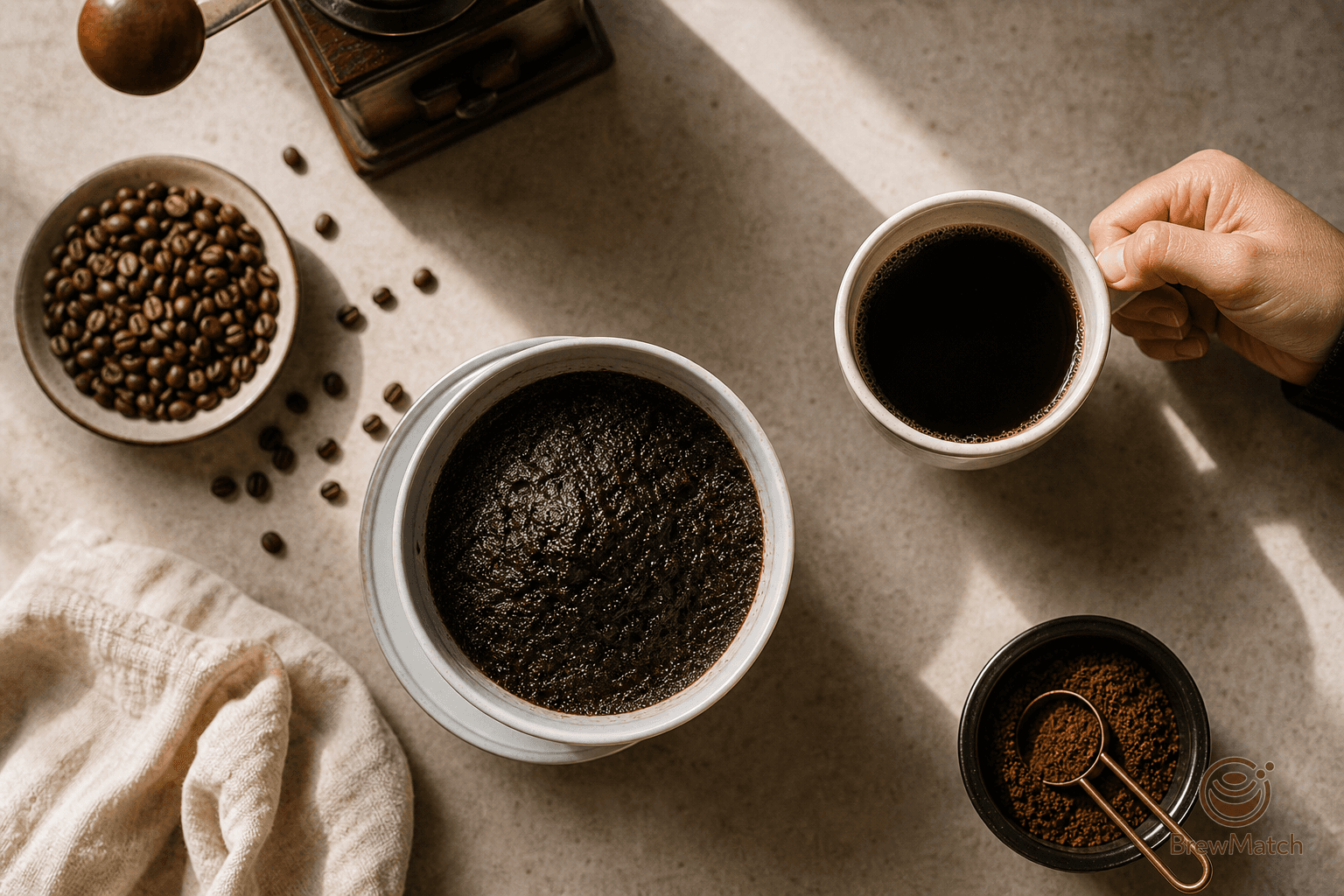
Yes, too much coffee can make coffee taste bitter, but not always for the reason people think. Extra grounds do not automatically mean a better, bolder cup. They can make the brew taste heavy, dry, sharp, and muddy because the coffee is too concentrated or because the water cannot move through the grounds evenly.
The fix is usually boring in the best way: measure the coffee, measure the water, then change one thing at a time.
More grounds do not mean more flavor
A lot of home coffee mistakes come from a decent instinct: if coffee tastes thin, add more coffee. Sometimes that works. Often it just turns the cup into a crowded mess.
Coffee strength has two parts:
- How much coffee flavor is dissolved into the water
- How evenly that flavor was extracted from the grounds
When you add too many grounds, you increase concentration. That can make coffee taste stronger. But if the brew also becomes uneven, clogged, slow, or sludgy, you are not just getting more pleasant flavor. You are getting more bitterness, dryness, and harshness too.
That is why a cup can taste both “strong” and bad. It has plenty of coffee in it, but the flavor is not balanced.
If you want a deeper cup, the goal is not to punish the water with a mountain of grounds. The goal is to use enough coffee for body while still giving the water room to do its job.
The ratio problem people miss
Most bitter coffee advice jumps straight to grind size, roast level, or water temperature. Those matter. But the coffee to water ratio is the boring little dial that can wreck everything before those other fixes get a chance.
If you use too much coffee for the amount of water, a few things can happen:
- The cup tastes overly intense even if the extraction is fine.
- The brew bed gets too deep, so water flows unevenly.
- Some grounds get overworked while others barely extract.
- Bitter and dry flavors become more obvious because the cup is crowded.
That last part matters. Bitterness is not only about extraction. It is also about concentration. A small amount of bitterness in a balanced cup may be fine. The same bitterness in a super concentrated cup can feel aggressive.
Think of it like salt in soup. A little can make everything better. Too much makes the whole bowl taste like a mistake.
What “too much coffee” tastes like
Coffee made with too many grounds does not always taste burnt. It often has a more specific profile:
- Heavy body but little sweetness
- Dry finish on your tongue
- Bitter aftertaste that hangs around
- Muddy flavor instead of clear flavor
- A cup that feels strong but not enjoyable
- Chocolate or nut notes turning into dark, dusty flavors
If your coffee tastes sharp and drying, read Coffee Tastes Bitter and Dry: 4 Fixes That Work next. Dryness is one of the biggest clues that the problem is not just “strong coffee.”
And if you are chasing a bigger cup without the bitter punishment, Strong Coffee Should Not Taste Bitter is worth keeping open.
A simple starting ratio for home coffee
You do not need a lab coat. You need a repeatable starting point.
For most drip coffee, pour over, and French press brewing, start around:
- 1 gram of coffee for every 15 to 17 grams of water
- Or roughly 2 tablespoons of ground coffee per 6 ounces of water if you do not have a scale
A scale is better because tablespoons lie. Different grind sizes and roast levels sit differently in a spoon. Dark roast is often less dense, so one scoop can weigh less than you think. Fine grounds pack tighter. Coarse grounds leave more empty space.
Still, if scoops are what you have, use them consistently. The enemy is not imperfection. The enemy is changing three things every morning and then blaming the beans.
A good starting recipe for a single mug:
- 20 grams coffee
- 320 grams water
- Medium grind for drip or pour over
- Coarser grind for French press
If that tastes too weak, do not jump straight to 30 grams of coffee. Try 22 grams. Small changes are how you learn what your setup actually does.
If you want help finding beans that fit the flavors you actually like, not a fake expert version of what you “should” like, try BrewMatch. It matches coffee to your taste preferences, including whether bitterness is a dealbreaker for you.
The trap with “one extra scoop”
The extra scoop is dangerous because it feels harmless.
You make coffee. It tastes weak. Tomorrow you add one more scoop. The cup tastes fuller, so the move feels smart. Then you do it again. After a week, your recipe has quietly drifted into bitter sludge territory.
This happens a lot with automatic drip machines because the markings are confusing. A “cup” on many coffee makers is not the same as your mug. Your machine might call 5 or 6 ounces a cup, while your mug holds 12 to 16 ounces. So people add coffee based on vibes, water based on the reservoir line, and hope the machine sorts it out.
It will not.
Pick one recipe and write it down. Even if it is just:
- 4 level tablespoons coffee
- Water to the 4 cup line
Then adjust from there. If you do not know what you did, you cannot fix what you brewed.
Too much coffee can also slow the brew
This is where ratio and grind size start teaming up against you.
If you add more grounds, the brew bed gets deeper. Water has to travel through more coffee. In a drip basket or pour over cone, that can slow the flow. If your grind is also a little fine, the brew can stall or drain unevenly.
Slow draining can pull more bitter compounds from parts of the coffee bed. At the same time, other areas may be under extracted because water found an easier path around them. That is how you get a confusing cup: bitter, harsh, and oddly hollow.
People often respond by changing beans. Fair, but premature. If the same coffee tasted better at a cafe or in a different brewer, your recipe deserves questioning before the bag goes in the shame corner.
How to fix bitter coffee caused by too much coffee
Start with ratio before you start buying new gear.
1. Reduce the coffee by 10 percent
Do not cut the dose in half. That just creates a new problem.
If you use 30 grams of coffee, try 27 grams. If you use 5 scoops, try 4.5 scoops. Keep the water the same. Brew again.
If bitterness drops but the cup still has enough body, you found the issue.
2. Keep the grind the same for one test
Changing ratio and grind at the same time makes the result useless. First test the amount of coffee. Then adjust grind if needed.
If the cup is still bitter and dry after reducing the dose, go slightly coarser next time.
3. Do not extend brew time to “make up for it”
This is a classic overcorrection. You reduce the coffee, then let it brew longer because you worry it will be weak. Now you have changed two variables and invited bitterness back in through the side door.
Use the same brew time for the first test.
4. Add water after brewing if needed
If the flavor is good but too intense, dilute the finished coffee with a little hot water. This is not cheating. It is a clean way to lower concentration without forcing the grounds to keep extracting.
Espresso drinkers do this all the time with Americanos. Drip coffee is allowed to be practical too.
5. Stop using bitterness as proof of strength
This one is more mental than technical. Bitter coffee can be strong, but bitterness is not the same as strength. A smooth cup can still be bold. A bitter cup can still be badly brewed.
Do not reward your coffee for being unpleasant.
Practical checklist
Use this checklist the next time your coffee tastes bitter and too heavy:
- Did you add an extra scoop because yesterday’s cup tasted weak?
- Are you using a large mug but following the coffee maker’s “cup” markings loosely?
- Does the coffee taste dry, muddy, or harsh instead of clean and bold?
- Is the brew draining slower than usual?
- Are the grounds packed high in the filter basket?
- Did you change both grind and coffee amount at the same time?
- Have you tried reducing the dose by about 10 percent?
- Have you kept the water amount the same while testing?
- Does a small splash of hot water make the finished cup taste better?
If yes, your coffee may not be doomed. Your ratio may just be loud.
When it is not the ratio
Too much coffee is common, but it is not the only bitterness trigger.
If reducing the dose makes the cup weak but still bitter, look at:
- Grind size that is too fine
- Water that is too hot
- Old coffee sitting on heat
- A dirty coffee maker
- Uneven pouring in pour over
- Beans roasted darker than you enjoy
The order matters. Fix the easiest variables first. Ratio is easy. Cleaning is easy. Measuring is easy. Buying new beans every time your cup acts up is expensive and usually less useful than people want it to be.
A better target than “less bitter”
“Less bitter” is a good start, but it is not the full goal. You want coffee that tastes balanced for you.
For some people, that means round, chocolatey, and mellow. For others, it means bright, sweet, and tea like. Some people like a little roasty edge. Some want none of it. There is no trophy for pretending to enjoy bitterness you hate.
If your coffee tastes bitter after you started adding more grounds, pull the recipe back before you blame your grinder, your brewer, or your taste buds. Use enough coffee to get body, not so much that the cup turns into a dare.
Want coffee picked around what you actually enjoy? Use BrewMatch to find beans that fit your taste instead of guessing your way through another bitter bag.
Find your match
Not sure which beans fit your taste?
Use BrewMatch to turn your flavor goal, brew method, and current coffee problem into a practical roast and bean profile.
Try BrewMatch