
August 21, 2026
Stop Leaving Beans in the Grinder Hopper If Coffee Tastes Bitter
Your grinder hopper is not a coffee storage jar. If your coffee tastes stale bitter or weirdly flat your beans may be sitting in the worst possible spot.
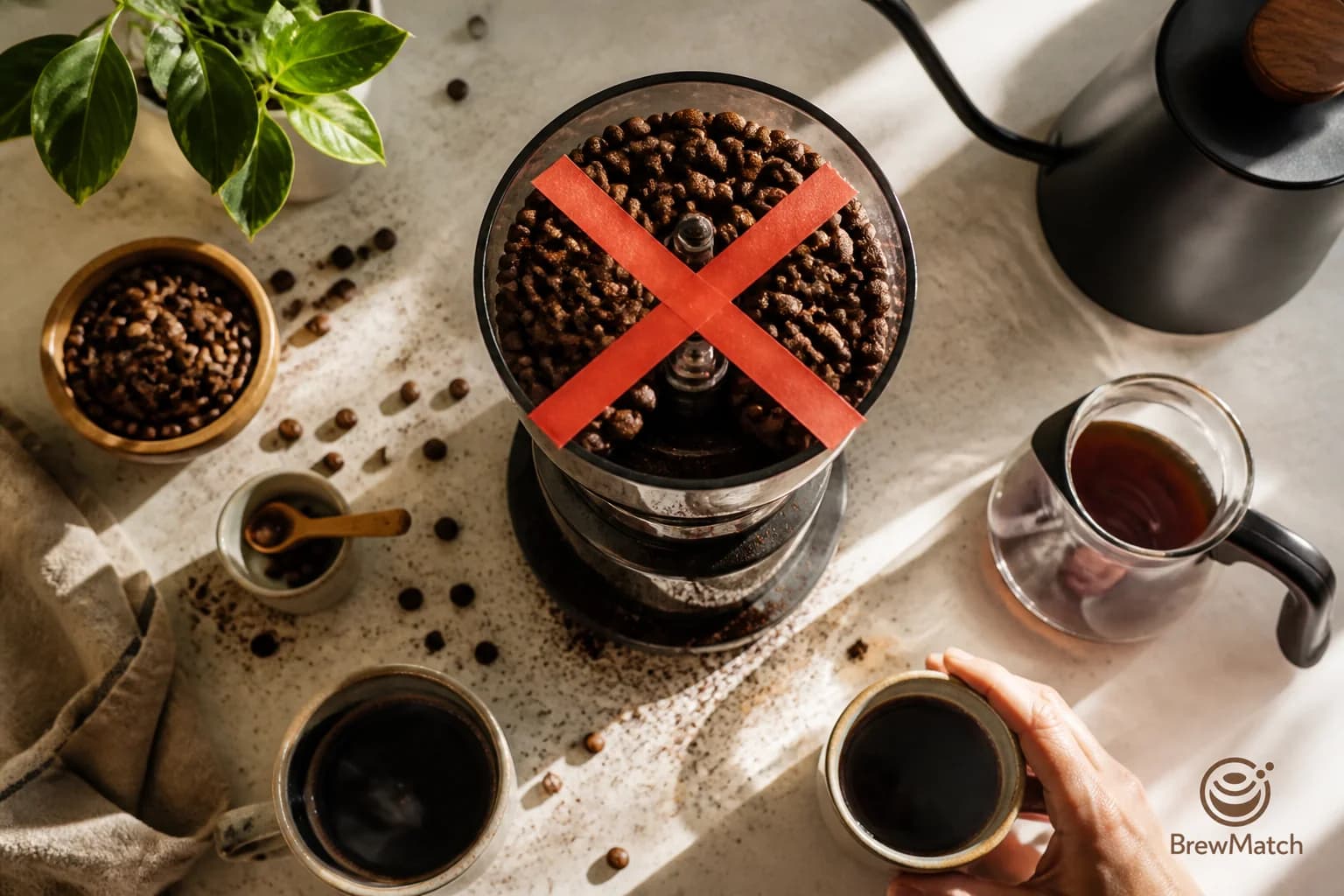
Leaving beans in the grinder hopper can make coffee taste more bitter, especially if they sit there for days. The hopper is convenient, but it usually exposes beans to air, light, kitchen heat, and old coffee residue. That does not always create sharp bitterness on its own, but it can turn smooth coffee flat, stale, dry, and harsher than it should be.
Most home coffee drinkers blame the beans, the roast, or the grinder itself. Sometimes the smaller problem is simpler: the beans are being stored in the grinder like the grinder is a storage container.
It is not.
The hopper is built for feeding beans not protecting them
A grinder hopper has one job: hold beans long enough to feed them into the burrs or blades. It is not designed to keep coffee fresh.
A good coffee storage setup tries to limit four things:
- Air
- Light
- Heat
- Moisture
Most grinder hoppers are not great at that. Many are clear plastic. They sit on the counter. They have lids that are fine for dust but not serious freshness. They also sit directly above a motor and grinding chamber that collect coffee oils and tiny particles.
That does not mean beans become ruined in an hour. Coffee is not that fragile. But if you pour a full bag into the hopper and use it slowly over the week, you are asking the beans to age in public.
The tradeoff is convenience. A full hopper feels tidy. Press button, coffee appears. Nice.
The cost is that your last few brews from that hopper may taste flatter, drier, and more bitter than the first ones.
Stale bitterness is different from over extracted bitterness
Not all bitter coffee tastes the same.
Over extracted coffee often tastes harsh, drying, and heavy. It can feel like the cup keeps grabbing the sides of your tongue. If that sounds familiar, read Over Extracted Coffee Tastes Bitter Not Strong.
Stale coffee bitterness is a little different. It often tastes dull. The sweetness is missing. The aroma is weaker. The cup can taste like cardboard, old nuts, dry cocoa, or yesterday’s coffee even when you brewed it fresh.
That stale flatness can make bitterness stand out more because there is less sweetness and aroma to balance it.
People often say, “This roast is too dark.” Maybe. But if the same bag tasted better three days ago, the hopper deserves some blame.
The grinder can hold old coffee even after the beans are gone
The hopper is only part of the issue. Grinders also hold old grounds inside the chute, burr chamber, and corners around the exit path.
That leftover coffee is called retention. You do not need to obsess over the term. Just know this: a little old coffee can mix into your next brew.
If old grounds sit inside the grinder, they can taste stale and dusty. Then the next morning’s fresh beans get mixed with yesterday’s tired crumbs. That is not a premium flavor note. That is kitchen archaeology.
This is one reason coffee can taste bitter even when you grind fresh. You are grinding fresh beans through a path that still contains old coffee.
If your grinder produces a lot of powdery fines, that can add another bitterness problem. Tiny particles extract fast and can make the cup taste dry or harsh. BrewMatch has a deeper piece on that here: Coffee Dust From Your Grinder Makes Coffee Taste Bitter.
When leaving beans in the hopper is probably fine
No need to turn breakfast into a lab routine.
Leaving beans in the hopper for a short stretch is usually not a disaster. If you brew often and go through the beans quickly, the difference may be small. If your grinder is kept away from sun, steam, and heat, that helps too.
It becomes more noticeable when:
- You fill the hopper with more beans than you use in a day or two
- The grinder sits near a sunny window
- The grinder sits near the stove, kettle, or dishwasher
- Your kitchen gets warm or humid
- You use darker oily beans
- You brew only one small cup per day
- The final cups from the hopper taste worse than the first cups
Darker roasts can be more sensitive here because surface oils can cling to the hopper and grinder path. Those oils do not stay lovely forever. They can smell stale and make later cups taste heavier or more bitter.
Again, the fix is not panic. The fix is less counter storage in the hopper.
A simple hopper test for bitter coffee
Try this before you buy a new grinder.
For one week, stop storing beans in the hopper. Keep most of the bag in a sealed container or the original bag if it closes well. Store it in a cool, dry cabinet.
Each time you brew, weigh or scoop only the amount you need and put that into the hopper. Grind it. Brew it.
If your grinder needs a few extra beans to feed properly, add a tiny bit more and keep the routine simple. You are not auditioning for a coffee competition. You are checking whether hopper storage is making your coffee taste worse.
Pay attention to these signs:
- Does the aroma improve?
- Does the bitterness feel less stale and dry?
- Does the first cup of the day taste cleaner?
- Does the bag stay more consistent through the week?
- Do you notice less old coffee smell around the grinder?
If the coffee improves, you found a real problem. Not the only possible problem, but a fixable one.
If you want a faster way to sort out whether your bitterness is coming from beans, grind, water, or brew style, BrewMatch can help match your taste preferences to a smoother coffee direction without turning it into homework.
What to do instead of filling the hopper
You have a few easy options.
Option 1: Dose only what you need
This is the cleanest habit. Measure the beans for one brew, grind them, and leave the hopper empty when you are done.
You do not need a fancy single dose grinder to do this. Any grinder with a hopper can be used this way if it feeds properly.
Option 2: Keep only a day’s worth in the hopper
If weighing beans every morning annoys you, compromise. Put in roughly what you will use that day. Not the whole bag.
This keeps the convenience without turning the hopper into long term storage.
Option 3: Store beans in a better place
Use the original bag if it has a decent seal, or use an opaque airtight container. Keep it in a cabinet away from heat and steam.
Avoid storing beans above the stove. That cabinet may be convenient, but it can get warm. Warm beans age faster and taste flatter.
Option 4: Clean the hopper and chute more often
If the hopper smells like old coffee even when it is empty, clean it.
Unplug the grinder first. Remove the hopper if your grinder allows it. Wipe out oils and old dust with a dry cloth. Follow the manufacturer’s cleaning instructions for anything deeper.
Do not spray water into the grinder body. That is not cleaning. That is a repair bill with extra steps.
What to look for if you are buying a grinder
If you are grinder shopping and hate bitter coffee, do not get hypnotized by giant hoppers.
A large hopper looks serious, but home drinkers often do not need it. If you brew one or two cups at a time, a smaller hopper or easy dose by dose workflow may fit better.
Look for practical things:
- A hopper that is easy to remove and clean
- A lid that fits well
- A shape that does not trap beans in corners
- A grind path that is not annoying to brush out
- Simple adjustment for your brew method
- A size that matches how much coffee you actually make
The wrong move is buying a grinder meant to sit full all week when you only drink one cup a day. That setup is convenient on Monday and stale by Friday.
Practical checklist for less bitter coffee from your grinder setup
Use this checklist for the next few brews:
- Empty the hopper after each grinding session
- Store the main bag away from light, heat, steam, and air
- Smell the hopper when empty. If it smells stale, clean it
- Brush out visible old grounds from the chute if your grinder allows it
- Avoid pouring an entire bag into the hopper unless you use it quickly
- Keep the grinder away from the stove and sunny windows
- Compare the first and last brews from the same bag
- If the coffee tastes dry and harsh, also check grind size and brew time
- If it tastes dull and cardboard like, suspect stale beans or old retained grounds
Small changes count here. You are not trying to make perfect coffee. You are trying to stop making the same cup worse before it even hits the brewer.
The bottom line
A grinder hopper is convenient, but it is a weak place to store coffee beans. If your coffee tastes stale, flat, and bitter, stop filling the hopper for a week and dose only what you need.
If the cup improves, you do not need a new personality or a more expensive bag. You need a better storage habit and a cleaner grinder path.
For a smoother starting point based on what you actually like drinking, try BrewMatch. Bitter coffee is usually not a life sentence. Sometimes it is just beans sitting in the wrong plastic tube.
Find your match
Not sure which beans fit your taste?
Use BrewMatch to turn your flavor goal, brew method, and current coffee problem into a practical roast and bean profile.
Try BrewMatch