
August 11, 2026
Stepped vs Stepless Grinders for Less Bitter Coffee
A stepless grinder is not magic. If your coffee tastes bitter the real question is whether your grinder lets you make the right size change without turning every cup into a guessing game.
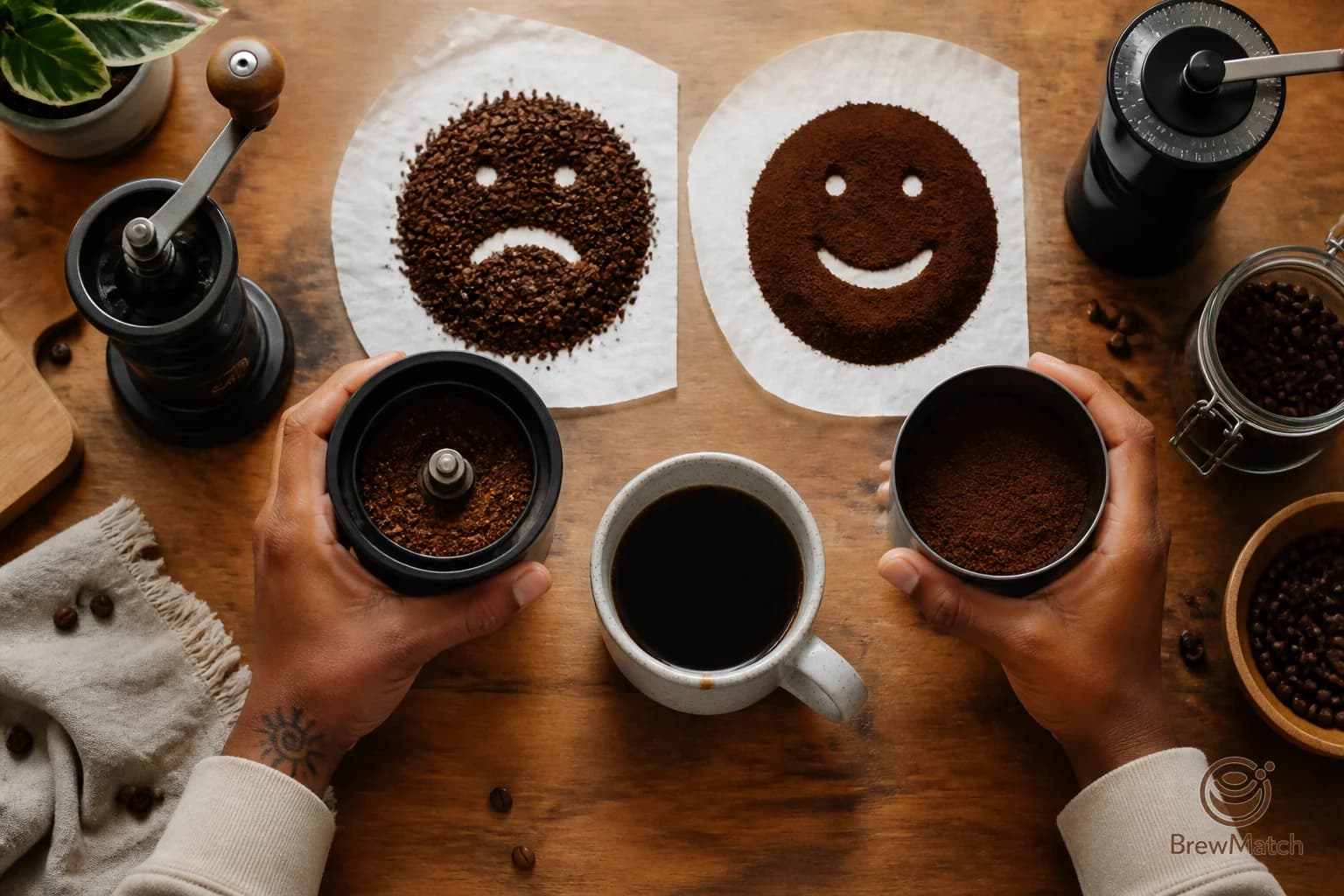
If your coffee tastes bitter, a stepless grinder is not automatically the fix. The better question is simpler: can your grinder make small enough changes for the way you brew? Stepped grinders can make smooth drip, French press, moka pot, and pour over coffee. Stepless grinders help most when espresso is involved, because tiny grind changes can swing a shot from sharp to harsh fast.
The mistake is buying more adjustment than you need while ignoring the grind quality itself.
What stepped and stepless actually mean
A stepped grinder has preset clicks. You turn the dial and it lands on setting 12, 13, 14, and so on. Each click changes the distance between the burrs by a fixed amount.
A stepless grinder has no preset clicks. You can stop the dial almost anywhere. That gives you more control, but also more ways to get lost if you do not have a clear starting point.
That is the whole difference. Not better coffee by default. Not worse coffee by default. Just different control.
For home coffee drinkers, the question is not which one sounds more serious. It is whether the adjustment style matches the brew method and the level of fuss you are willing to tolerate before breakfast.
Where bitterness enters the grinder decision
Grind size affects extraction. Finer grounds expose more surface area to water. That usually means the water pulls flavor out faster. Go too fine, brew too long, or use water that is too hot for the recipe, and the cup can turn bitter, dry, harsh, or burnt tasting.
That does not mean fine grind is always bad. Espresso needs a fine grind. Some pour over recipes use a medium fine grind. The problem is being stuck too fine, or only being able to jump from too coarse to too fine with nothing useful in between.
If your coffee tastes bitter and dry, your grinder might be trapping you on the wrong side of the recipe. BrewMatch has a separate breakdown of that exact issue in Coffee Ground Too Fine Can Taste Bitter and Dry.
A grinder helps with bitterness when it lets you correct the cup without making a giant swing. If one click tastes weak and sour, but the next click tastes bitter and dusty, you do not have enough useful adjustment for that brew method.
A stepped grinder is enough for most brewed coffee
For drip coffee, French press, AeroPress style brewing, cold brew, and many pour over setups, a decent stepped burr grinder is usually enough.
You do not need infinite control to make French press taste round instead of bitter. You need a grind that is not powdery, a reasonable brew time, and a recipe you can repeat. Same with a basic drip machine. If the grinder gives you a few usable settings around medium, you can usually move one click coarser when the cup tastes bitter and one click finer when it tastes thin.
Pour over is a little more sensitive, but still does not require stepless adjustment for most people. It benefits from a grinder with enough middle settings and a reasonably consistent grind. If your grinder has only a few broad clicks between medium coarse and medium fine, that can get annoying. But if it has a sensible range, stepped is fine.
This is where people get sold the expensive version of control before they have fixed the boring part: consistency. A cheap grinder with wobbly burrs or lots of dust can still make bitter coffee, even if the dial has many numbers on it.
If you are choosing beans and brew changes because your coffee keeps tasting harsh, BrewMatch can help you narrow toward smoother options without turning your kitchen into a lab.
Stepless grinders earn their keep with espresso
Espresso is where stepless adjustment starts to make more sense.
A tiny grind change can alter shot time, pressure, flow, and flavor. One setting might run too fast and taste sharp. The next click on a stepped grinder might choke the shot or push it into bitter territory. When the window is that narrow, stepless adjustment lets you land between clicks.
That does not mean every espresso drinker needs a stepless grinder on day one. Pressurized baskets, milk drinks, and forgiving blends can hide a lot. But if you are using a non pressurized basket and trying to dial in shots by taste, more precise adjustment becomes useful.
For espresso, a stepped grinder can work if the steps are small enough. Some stepped espresso grinders have very fine adjustment intervals. Some general purpose stepped grinders do not. The label matters less than the size of each adjustment.
A good espresso grinder lets you make a small correction when the shot tastes bitter instead of forcing a huge jump. That is the point.
The trap is blaming the steps when the grind is messy
Stepped vs stepless gets too much attention because it is easy to compare on a product page. Clicks or no clicks. Simple.
But bitter coffee often comes from messier grinder problems:
- Too many fines, which are tiny powdery particles that over extract fast
- A grind range that does not reach the setting your brewer needs
- Large jumps between useful settings
- Old grounds stuck inside the grinder
- Inconsistent output from dull blades or poor burr alignment
- Guessing a new setting every day with no notes
A stepless grinder can still create bitter coffee if it produces lots of fines or if you keep nudging it finer because the cup tastes weak. Weak and bitter is a common trap. The coffee may be over extracted in some particles and under extracted in others. More fine grinding usually makes that worse, not better.
If your grinder has very few usable settings, that is a separate issue. BrewMatch covers that in A Grinder With Too Few Settings Can Keep Coffee Bitter.
The practical grinder checklist for less bitter coffee
Use this before buying anything.
- If you brew French press, look for a burr grinder with a clean coarse range.
- If you brew drip, make sure it has several useful medium settings.
- If you brew pour over, look for enough small moves around medium fine to medium coarse.
- If you brew espresso with a non pressurized basket, consider stepless or very small stepped adjustments.
- If you switch between espresso and French press often, check whether the grinder can move across that range without being painful to reset.
- If the grinder makes a lot of powder, more settings will not fully save it.
- If you hate tinkering, a good stepped grinder may be less annoying than a stepless one.
- If you love espresso dialing, stepless adjustment can save frustration.
- If one setting tastes thin and the next tastes bitter, you need smaller adjustment steps.
- If every setting tastes bitter, look beyond the dial: dose, brew time, water temperature, bean age, and cleanliness all matter.
Notice the tradeoff. Stepless gives you precision. Stepped gives you repeatability. Neither one promises better flavor by itself.
A quick test before you upgrade
Before buying a new grinder, run one simple test.
Brew your normal coffee exactly the same way, but move the grind one step coarser. Keep the amount of coffee, water, brew time, and water temperature as close as you can.
If the cup becomes less bitter and still has enough flavor, your grinder adjustment helped. You may not need a new grinder at all.
If it becomes weak but stays bitter, the issue might be uneven grinding, too much coffee, old beans, a dirty brewer, or water sitting with the grounds too long.
If one click coarser makes the cup dramatically too thin, your grinder may not give you small enough steps for that brew method.
For espresso, make the same test carefully. Change only the grind, then watch the shot time and taste. If the shot jumps from choking to gushing with one click, that is a strong sign you need finer adjustment.
So which one should you buy?
Choose a stepped grinder if you mainly brew drip, French press, cold brew, moka pot, or casual pour over and you want repeatable settings. It is easier to return to yesterday's setting, easier to share with another person, and usually less fussy.
Choose a stepless grinder if espresso is your main thing, especially if you use a non pressurized basket and want to dial in by taste. It gives you more room to correct bitterness without overshooting.
Do not buy stepless just because bitter coffee made you mad. Buy it because your brew method needs tiny adjustments and your current grinder cannot make them.
For most home coffee drinkers, less bitter coffee comes from a grinder that is consistent, adjustable enough, and easy enough to use that you stop improvising every morning.
If you want help matching coffee taste preferences before you spend money on new gear, try BrewMatch. A better bag and a calmer recipe can fix more than a shiny dial ever will.
Find your match
Not sure which beans fit your taste?
Use BrewMatch to turn your flavor goal, brew method, and current coffee problem into a practical roast and bean profile.
Try BrewMatch