
August 18, 2026
Single Dose Coffee Grinders Can Help Bitter Coffee But They Are Not Magic
A single dose grinder can help bitter coffee by reducing stale leftovers and giving you more control. It will not fix a bad recipe or dusty grind by itself.
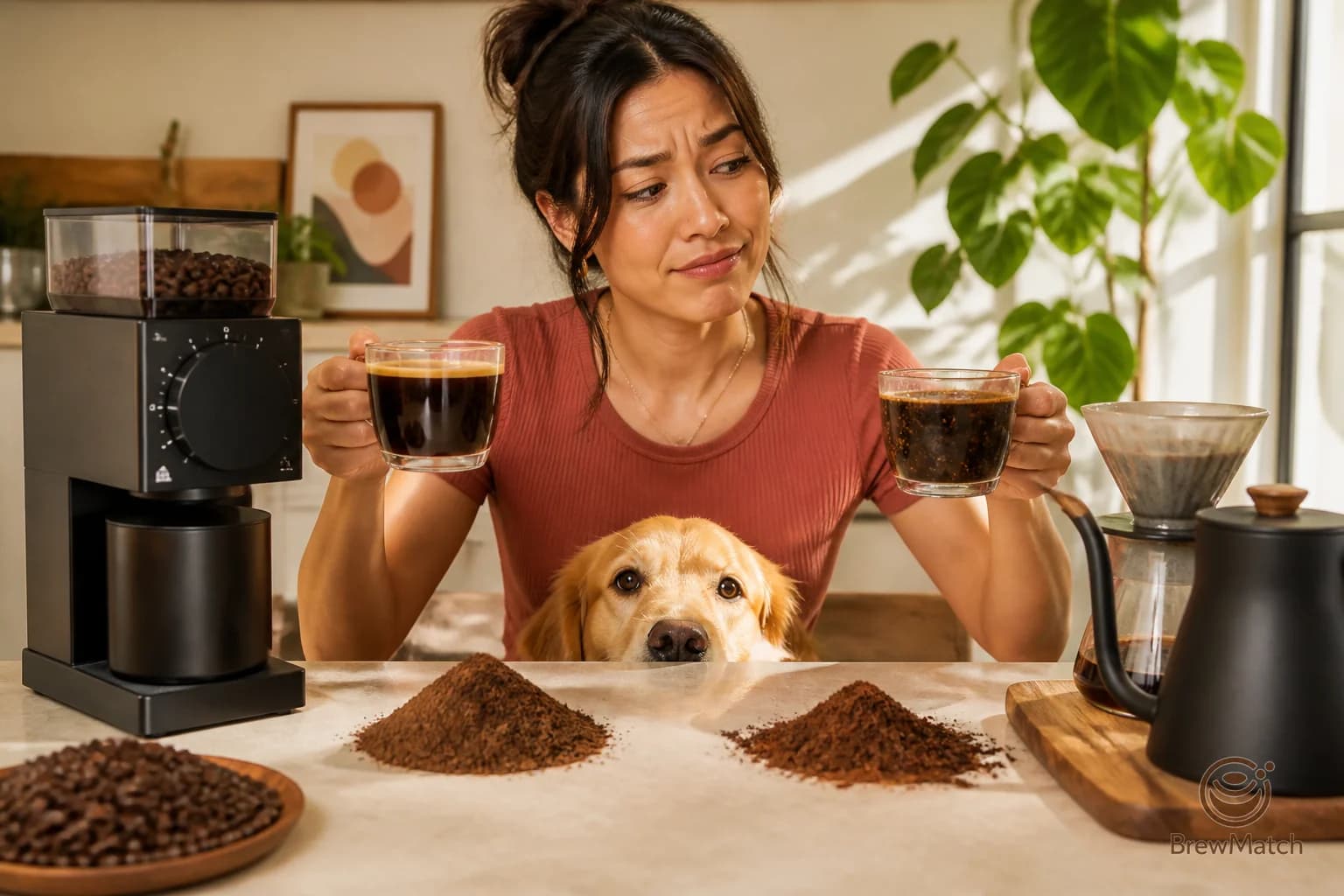
A single dose coffee grinder can help coffee taste less bitter, but only for the right reasons. It reduces old grounds sitting inside the grinder, makes it easier to adjust recipes, and helps you notice what changed. It does not automatically fix a grind that is too fine, a bad brew ratio, or a grinder that creates too much dust.
If you are shopping for a grinder because every cup tastes bitter, single dose can be a smart move. Just do not buy it as a magic bitterness eraser.
What single dose actually means
A single dose grinder is built around grinding one measured dose of beans at a time.
Instead of filling a hopper with beans and letting them sit there for days, you weigh the beans for one brew, grind them, and use them right away. Many single dose grinders are designed to keep very little coffee trapped inside after grinding. That trapped coffee is called retention.
Retention matters because yesterday's grounds can end up in today's cup.
That sounds tiny, but coffee taste is fussy in annoying ways. A small amount of old, stale, extra fine coffee can make a fresh brew taste flatter, harsher, or more bitter than expected. It is not always dramatic. Sometimes it just makes every cup taste slightly muddy, no matter which beans you buy.
Single dose grinders are popular because they make the workflow cleaner:
- Weigh beans before grinding
- Grind only what you need
- Switch beans more easily
- Waste less coffee during adjustments
- Reduce stale grounds left inside the grinder
That is useful. It is not the same as guaranteed smooth coffee.
The bitterness problem single dose can fix
Single dose grinders are most useful when bitterness is coming from stale leftover coffee or inconsistent adjustment habits.
Picture this. You fill a hopper with dark roast beans on Monday. By Thursday, those beans have been sitting in light, air, and kitchen heat. The grinder may also be holding a little old coffee inside. You brew a cup and it tastes bitter, dull, and kind of tired.
You blame the beans.
Sometimes the beans are fine. The setup is not helping them.
A single dose workflow limits that problem. Beans stay in the bag or container until you brew. Grounds do not sit around as long. You are more likely to measure the same amount each time instead of guessing.
That can make bitterness easier to control because you are removing a few messy variables.
This is especially helpful if you:
- Switch between different coffees often
- Brew one or two cups at a time
- Use beans slowly
- Keep coffee in a grinder hopper for several days
- Taste a stale bitter edge even with fresh beans
If pre ground coffee has been part of your routine, the freshness problem gets bigger. BrewMatch has a separate breakdown here: Pre Ground Coffee Is Often the Bitterness Problem.
The bitterness problem single dose will not fix
A single dose grinder will not save a bad brew recipe.
This is where grinder shopping gets expensive and slightly ridiculous. People buy a cleaner grinder, use the same too fine grind, the same long brew time, the same heavy dose, and then act betrayed when the coffee still tastes bitter.
The grinder changed. The extraction did not.
Single dose will not fix:
- Grind size that is too fine
- Water that is too hot for the coffee and method
- Espresso shots running too long
- Pour over drawdown that drags on
- French press coffee sitting on the grounds too long
- Too much coffee in the basket
- A roast that is already darker than you enjoy
It also will not fix a grinder that creates a lot of fines. Fines are tiny coffee particles that extract fast. Too many of them can add harshness, dryness, and bitterness, especially in pour over and drip coffee.
Some single dose grinders handle fines well. Some do not. The single dose label tells you about workflow. It does not automatically tell you the grind quality.
If your grinder leaves a dusty mess and your coffee tastes harsh, read Coffee Dust From Your Grinder Makes Coffee Taste Bitter before blaming the beans again.
Retention is worth caring about but do not obsess over it
Grinder retention is how much ground coffee stays inside the grinder after you grind.
Lower retention is usually better for home coffee drinkers because it means less stale coffee gets carried into the next brew. That said, retention numbers can become a weird rabbit hole.
For most people, the question is not whether the grinder retains zero coffee. The question is whether it keeps enough old grounds inside to affect your cup or waste beans when you adjust.
A low retention grinder helps if you are trying to dial in coffee because your changes show up faster. If you move the grind coarser, you do not want the next brew partly made from old finer grounds trapped in the machine.
That is the actual advantage. Cleaner feedback.
When you make a change, the cup responds. That helps you stop guessing.
If you want a less bitter profile but are not sure what kind of coffee you actually like, BrewMatch can help you narrow the direction before you buy another bag or another grinder.
What to check before buying a single dose grinder
If the goal is less bitter coffee, do not shop only by the words single dose. Look at the parts that affect taste and daily use.
1. Adjustment range
You need enough grind settings for the way you brew.
Espresso needs small adjustments. Pour over and drip need enough range to move away from bitter over extraction without jumping straight into weak sour coffee. If the grinder's adjustment feels crude, single dose will not help much.
2. Grind consistency
A grinder that produces a cleaner spread of particle sizes usually makes troubleshooting easier. You want fewer boulders and fewer fines. Perfect uniformity is not the goal at home. Less chaos is.
3. Low retention design
Look for a grinder designed to keep less coffee trapped inside. Bellows, vertical burr layout, short grind path, and easy cleaning access can all help, depending on the model.
Do not treat any one feature as proof. Read actual user feedback about retention and cleaning.
4. Cleaning access
If a grinder is annoying to clean, most people will not clean it often. Old coffee oils and trapped grounds can make fresh coffee taste stale and bitter. Easy access matters more than flashy specs.
5. Workflow fit
Single dose means weighing beans each time. Some people love that. Some people hate it before breakfast.
If you want push button convenience for a full household, a hopper grinder may be more realistic. A grinder you actually use correctly beats a prettier grinder that turns your morning into a tiny lab chore.
Practical checklist for bitter coffee shoppers
Before you buy a single dose grinder, run this checklist:
- Are beans sitting in your grinder hopper for more than a day or two?
- Does your coffee taste stale, bitter, or flat even after opening a fresh bag?
- Do you brew small amounts and switch coffees often?
- Do grind changes take several cups before they seem to show up?
- Does your grinder leave clumps or visible dust?
- Are you willing to weigh beans for each brew?
- Have you already tried a slightly coarser grind?
- Have you checked brew time before blaming the grinder?
- Can the grinder be cleaned without a whole afternoon of nonsense?
- Are you buying for control, not because the internet made your current setup feel embarrassing?
If you said yes to the first few, single dose might help. If you said no to the workflow questions, be honest. Convenience matters.
Single dose vs hopper grinder for less bitter coffee
A hopper grinder is not automatically bad. Plenty of people make good coffee with one.
The problem is how home drinkers use hoppers. They fill them like cereal dispensers, leave beans there for days, then wonder why the coffee tastes dull and bitter by the end of the week.
If you use a hopper grinder, you can still improve things:
- Put only a day or two of beans in the hopper
- Store the rest sealed away from heat and light
- Purge a small amount when changing grind settings
- Clean the grinder regularly
- Do not leave oily dark roast beans sitting in there forever
Single dose just makes those habits easier to maintain. It nudges you toward fresher beans, cleaner adjustments, and less waste.
That is valuable. It is not supernatural.
The buying mistake to avoid
Do not buy a single dose grinder just because you hate bitter coffee.
Buy one if the way you brew matches the strengths of that design.
A good single dose grinder helps you control freshness, retention, and recipe changes. A bad fit gives you another expensive object on the counter while your coffee still tastes bitter because the grind is too fine or the brew runs too long.
The better question is not whether single dose grinders are worth it in general. The better question is whether your current bitterness problem comes from stale trapped coffee, poor control, or the actual brew recipe.
If you cannot tell yet, change one thing before shopping. Grind a little coarser. Shorten the brew time. Use fresh beans without leaving them in the hopper. Clean the grinder. See what moves.
Then decide.
Bottom line
A single dose grinder can help bitter coffee when the problem is stale retained grounds, poor freshness, or messy adjustment habits. It will not fix over extraction, a dusty grind, or a roast style you simply do not like.
If you want less bitter coffee, buy for control instead of status. The right grinder should make your choices clearer, not make your morning more precious.
Need help figuring out whether your bitterness problem is beans, grind, or brew method? Try BrewMatch and get a taste direction before you spend grinder money.
Find your match
Not sure which beans fit your taste?
Use BrewMatch to turn your flavor goal, brew method, and current coffee problem into a practical roast and bean profile.
Try BrewMatch