

October 26, 2026
Quiet Coffee Grinders Will Not Fix Bitter Coffee
A quiet grinder can save your mornings but it will not save bitter coffee if the grind is messy uneven or hard to adjust.
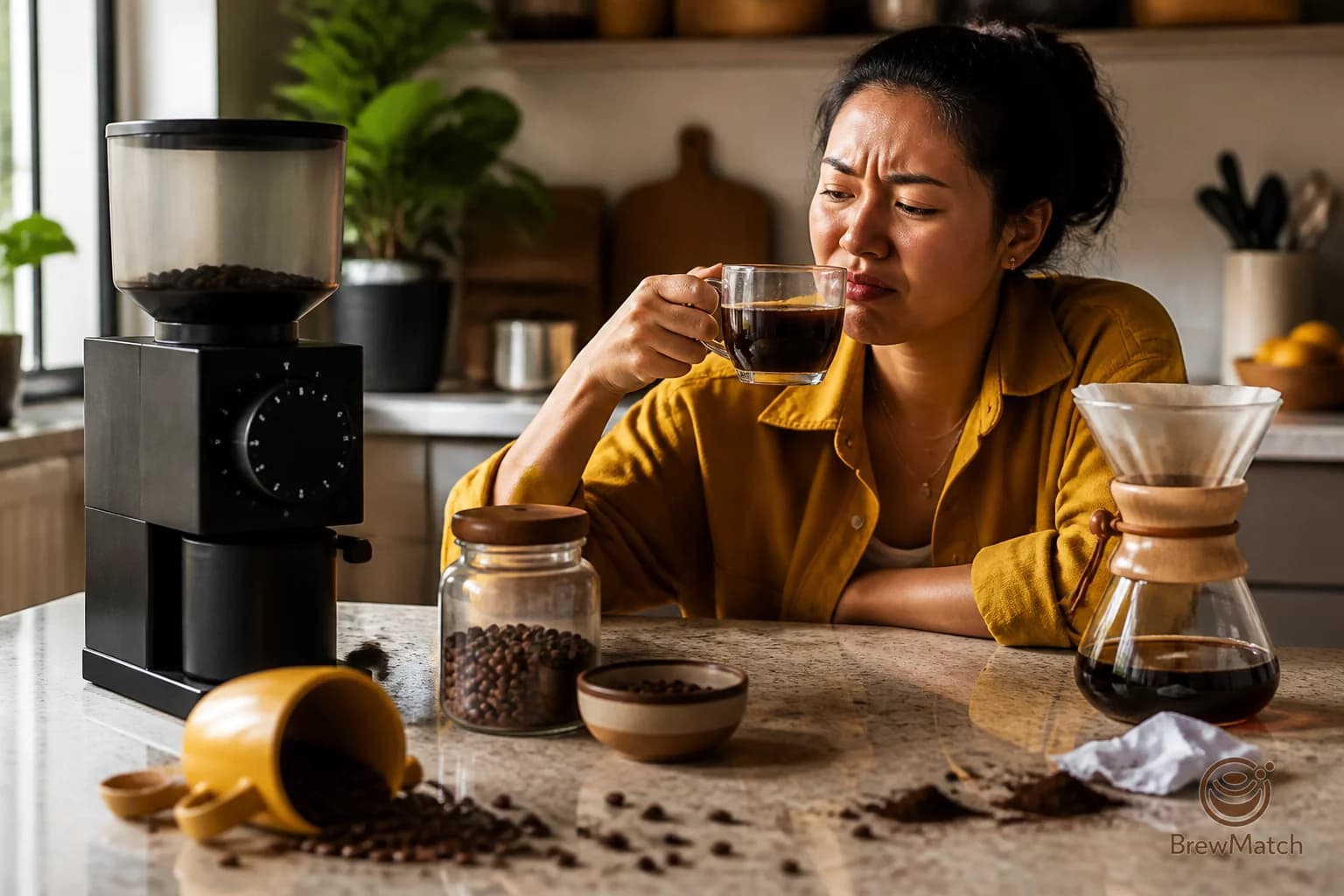
A quiet coffee grinder can make your kitchen less annoying. It will not automatically make your coffee less bitter. Noise tells you how a grinder feels to use. Bitterness usually comes from grind consistency, grind size, stale retained grounds, or a recipe that is extracting too much from the coffee. Buy quiet if you value peace. Buy adjustable and consistent if you want smoother coffee.
That tradeoff matters because a lot of grinder shopping gets hijacked by comfort features. Low noise is nice. So is a small footprint, a tidy catch cup, and a pretty body. None of those fix a cup that tastes sharp, dry, burnt, or bitter every morning.
Quiet is a comfort feature not a flavor feature
A quieter grinder can absolutely be worth it. If you brew before anyone else is awake, a screaming grinder is not charming. If you live in an apartment, noise matters. If you make coffee while half asleep, a calmer machine is easier to live with.
But noise level mostly tells you about motor sound, body design, vibration, burr speed, and insulation. It does not tell you whether the grinder produces fewer fines, holds a stable setting, or gives you enough control to move away from bitterness.
That is where people get burned. They read reviews that say a grinder is quiet, premium, compact, or pleasant to use, then expect the cup to taste smoother. Sometimes it does. Often it does not, because the bitter taste was never a noise problem.
A grinder can be quiet and still make too much powder. A grinder can be quiet and still have vague settings. A grinder can be quiet and still trap old grounds inside. Peaceful does not mean precise.
What actually changes bitter coffee
If your coffee tastes bitter, the grinder traits that matter most are boring on purpose.
First, grind consistency. You want grounds that are mostly similar in size for your brew method. Too much fine powder extracts fast and can add harsh bitterness, especially in drip, pour over, French press, and cold brew.
Second, usable adjustment. If each setting jump is too big, you can get stuck between sour and bitter with no comfortable middle. That is frustrating because your coffee is not doomed. Your grinder just will not let you make a small enough correction.
Third, low retention. If old grounds sit inside the grinder and mix into tomorrow’s brew, the cup can taste stale, flat, and bitter even with good beans.
Fourth, repeatability. If the same setting gives you a different result every morning, you are not dialing in coffee. You are negotiating with a small appliance.
If you want the grinder spec that deserves more attention than noise, read Grind Consistency Is the Grinder Spec That Actually Helps Bitter Coffee. It is not glamorous, but it is closer to the cup.
When a quiet grinder is still a good buy
Quiet is not useless. It just needs to sit in the right place on the priority list.
A quiet grinder is a good buy if it also gives you consistent grounds, sensible adjustment, and easy cleaning. In that case, the low noise is a bonus. You get better daily use without giving up cup control.
A quiet grinder is a weaker buy if it gets quiet by using a slow weak motor that struggles with denser beans, has a tiny adjustment range, or leaves a lot of old coffee trapped inside. That is the kind of grinder that feels civilized while quietly making the same bitter cup.
There is also a budget reality. If two grinders cost the same and one spends more of the price on sound dampening, something else may be compromised. Not always, but often enough to check. You are not buying a meditation device. You are buying a tool that has to crush coffee evenly.
If you are unsure whether the grinder is actually your issue or just the most tempting thing to blame, try BrewMatch. It helps match your taste preferences to smoother coffee choices without pretending one grinder feature fixes every cup.
The shopping mistake that keeps coffee bitter
The mistake is ranking features by annoyance instead of flavor impact.
Noise is obvious. You hear it every morning. Bitterness is also obvious, but its cause is less visible. So the loud grinder becomes the villain. That can be true if the grinder is also making uneven grounds, but loudness itself is not the flavor problem.
A loud burr grinder with consistent particle size may make better coffee than a quiet grinder that produces dusty uneven grounds. Annoying? Yes. Worth knowing? Also yes.
This is where product listings can mislead home coffee drinkers. They often highlight quiet operation, sleek design, one touch controls, low mess, and compact storage because those are easy to sell. The cup quality details are harder to explain, and sometimes missing.
Look for what the grinder lets you change. Can you make small grind adjustments? Can you return to a previous setting? Is it easy to clean the burr area? Does it work for your actual brew method, not just espresso in a marketing photo?
A grinder that makes bitter coffee more quietly is still making bitter coffee.
Quick diagnosis before you buy another grinder
Before you shop, test whether bitterness responds to simple changes. This keeps you from buying a quiet grinder when you really needed a coarser grind or shorter brew time.
Try this over your next few brews:
- Grind a little coarser and keep everything else the same.
- Shorten contact time if you are using French press, AeroPress, or cold brew.
- Use slightly cooler water if your coffee tastes burnt as well as bitter.
- Clean the grinder and brewer to remove stale oils and trapped grounds.
- Use a consistent dose instead of eyeballing scoops.
- Taste the coffee before adding milk or sweetener so you know what you are fixing.
If one of those changes clearly reduces bitterness, your coffee setup needed tuning. A new grinder might still help, but now you know what feature to prioritize.
If nothing changes, the problem may be the beans, roast level, water, or your brew method. That is not failure. It just means the grinder was only one suspect.
For a broader decision check, Do You Need a New Grinder to Fix Bitter Coffee is worth reading before spending money.
Practical checklist for buying a quiet grinder
Use this checklist if you want a grinder that is quieter without locking you into bitter coffee.
- Start with your brew method. Espresso needs much finer adjustment than drip, French press, or cold brew.
- Check grind adjustment range. More usable control matters more than a dramatic noise claim.
- Look for consistent grounds. Reviews that mention too much dust, powder, or uneven grind are warning signs.
- Check cleaning access. If old grounds are hard to remove, bitterness can creep back in.
- Avoid judging by watts alone. Motor numbers do not tell the whole cup story.
- Do not pay only for quiet. Quiet plus control is useful. Quiet without control is just polite disappointment.
- Favor repeatable settings. You want to find a good setting and get back to it tomorrow.
- Be honest about your mornings. If noise makes you avoid grinding fresh coffee, quieter may help indirectly.
That last point is the nuance. A quiet grinder can improve your coffee routine if it makes you more likely to grind fresh, measure properly, and brew consistently. It just does not remove bitterness by being quiet.
A better way to think about quiet grinders
Do not ask, “Will a quiet grinder make my coffee less bitter?”
Ask, “Is this a good grinder that also happens to be quiet?”
That question keeps the priorities straight. You want fewer fines, enough adjustment, easy cleaning, and settings you can repeat. Then you can care about noise, counter space, looks, and price.
A quiet grinder is a quality of life upgrade. A consistent adjustable grinder is a taste upgrade. The sweet spot is getting both without pretending they are the same thing.
If your goal is smoother coffee with less bitterness, start with the taste problem, not the decibel claim. BrewMatch can help you narrow down coffee choices that fit what you actually like, then you can decide whether your grinder is helping or getting in the way.
Find your match
Not sure which beans fit your taste?
Use BrewMatch to turn your flavor goal, brew method, and current coffee problem into a practical roast and bean profile.
Try BrewMatch