
July 25, 2026
Pre Ground Coffee Is Often the Bitterness Problem
Pre ground coffee is convenient, but it can quietly turn smooth beans bitter. Here is how to tell when the bag is the problem and what to fix first.
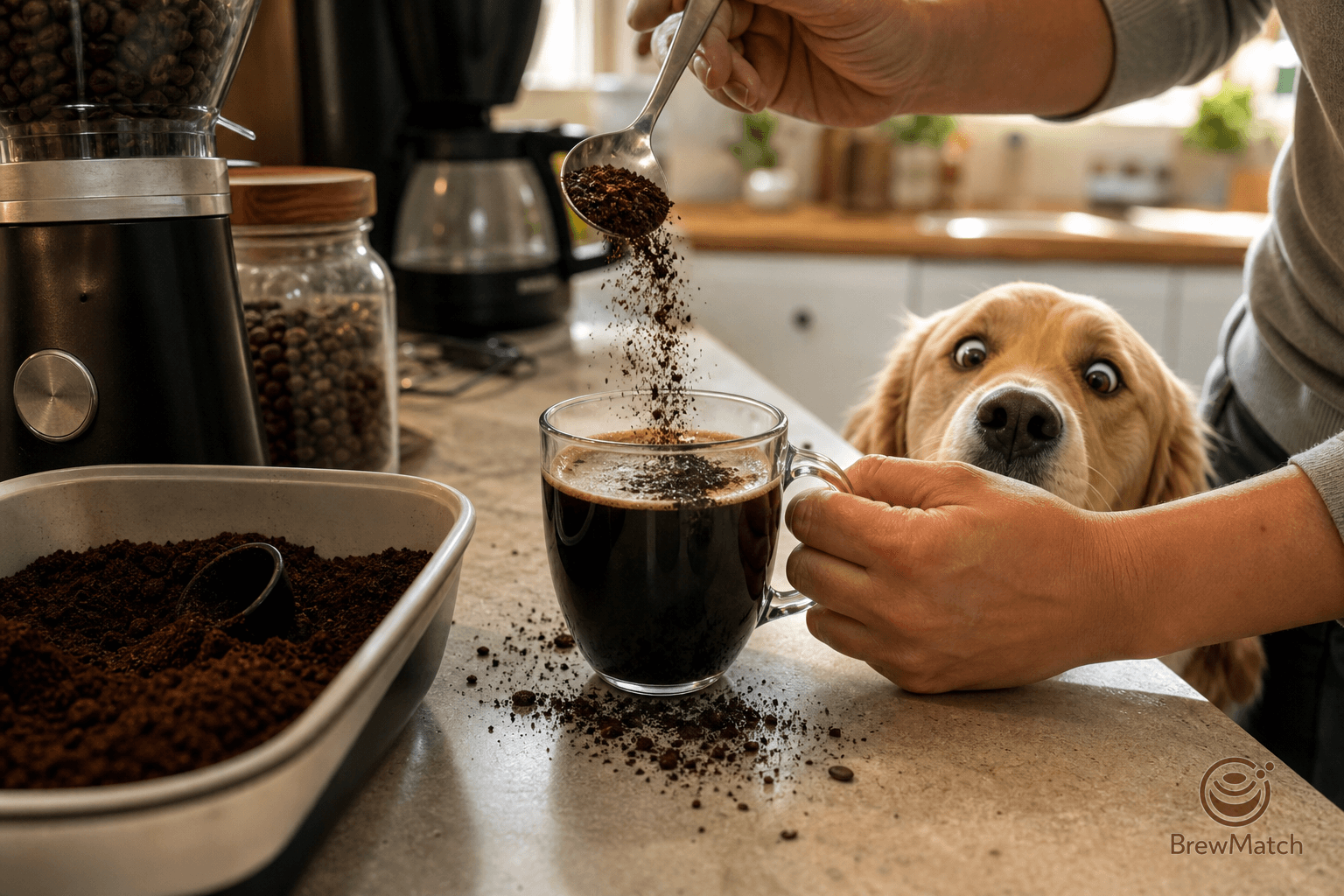
Pre ground coffee often tastes bitter because the grind is not matched to your brewer, your brew time, or your water. The beans might be fine. The roast might be fine. The problem is that pre ground coffee asks every coffee maker to behave the same, and they do not. If your cup tastes bitter, dry, hollow, or a little burnt, the grind may be doing more damage than the label admits.
Pre ground coffee is not evil. It is just a tradeoff. You get convenience, speed, and less mess. You give up control over one of the biggest flavor levers in coffee.
The grind size may be wrong for your coffee maker
Most pre ground coffee is sold as a general purpose grind. That sounds helpful until you remember that drip machines, pour overs, French presses, moka pots, and reusable pods all extract coffee differently.
If the grounds are too fine for your setup, water pulls too much from the coffee. That extra extraction is where bitterness, dryness, and harshness show up. You may think you made the coffee stronger, but the cup can taste thin and punishing at the same time.
A grind that works in one automatic drip machine may be too fine for a French press. A grind that tastes okay in a paper filter may taste muddy in a metal filter. A bag labeled medium grind does not know what brewer is sitting on your counter.
If your coffee tastes bitter and leaves a drying feeling on your tongue, read Coffee Ground Too Fine Can Taste Bitter and Dry. That flavor is a strong clue that your brew is extracting too much, not just tasting bold.
Fresh enough is not the same as freshly ground
Whole beans protect flavor better than ground coffee. Once coffee is ground, more surface area touches air. Aroma fades faster. The lively parts disappear first, and the heavier bitter notes are often what remain.
That does not mean every bag of pre ground coffee is stale. It means the clock is louder.
A bag can smell pleasant when you open it and still brew flat. That is the annoying part. Smell is useful, but it is not a full flavor test. If the cup tastes bitter without sweetness, roundness, or aroma, the coffee may not be ruined. It may just be past its best drinking window for your taste.
This is more obvious with lighter or medium roasts because you expect some brightness and sweetness. When those fade, the coffee can seem sharper. With darker roasts, old pre ground coffee can taste ashy or burnt even if you brewed it normally.
Pre ground coffee can make good beans taste cheap
People love blaming the beans because it is simple. Bad cup equals bad beans. Sometimes that is fair. Plenty of coffee is roasted darker than you want or stored badly before you ever buy it.
But pre grinding can flatten the difference between good and mediocre coffee. A nice bean ground too fine for your brewer can taste bitter. A smooth roast brewed with too much contact time can taste rough. A coffee that should have chocolate or fruit notes can land as plain brown bitterness.
That is why upgrading beans without changing anything else can disappoint you. You buy the nice bag, brew it the same way, and still get a bitter cup. The bag did not fail you. Your recipe may be too aggressive for that grind.
If you want a shortcut instead of guessing from labels, BrewMatch can help match your taste preferences to coffees that are less likely to fight your brew setup.
The package grind is usually a compromise
Some coffee bags let you choose a grind when ordering online. French press, drip, espresso, pour over, cold brew. That is better than a mystery grind, but it is still a guess.
Your actual setup changes the result:
- Your filter type changes flow speed
- Your water temperature changes extraction
- Your brew time changes bitterness
- Your coffee dose changes strength and contact
- Your machine may run hotter or slower than expected
So even a bag ground for drip can taste bitter in one brewer and fine in another. The grind is only one part of the recipe, but it is the part you cannot adjust once the bag is opened.
That is the real frustration with pre ground coffee. If it tastes bitter, your fixes are limited. You can change dose, water, temperature, and brew time. You cannot make the grind coarser.
Practical checklist for bitter pre ground coffee
Before you throw the bag away, run through this:
- Use slightly cooler water if you brew manually. Do not pour actively boiling water straight onto the grounds.
- Shorten the contact time if your method allows it.
- Use a little less coffee if the cup is heavy, harsh, and drying.
- Use a little more water if the brew tastes concentrated and bitter.
- Avoid leaving brewed coffee on a hot plate.
- Store the grounds in an airtight container away from heat and light.
- Buy smaller bags if you do not finish coffee quickly.
- Choose a grind labeled for your actual brew method when possible.
- If using French press, avoid very fine pre ground coffee.
- If using espresso, do not expect regular pre ground coffee to behave like espresso ground coffee.
Only change one thing at a time. If you change grind source, water temperature, dose, and brew time all at once, you will have no idea which fix helped.
A simple test before you buy a grinder
You do not need to become a gear person overnight. Try this first.
Buy the same coffee two ways if you can: one bag pre ground and one bag whole bean ground fresh at the shop for your exact brew method. Brew both with the same water, same amount of coffee, and same brewer.
If the shop ground version tastes smoother, your normal supermarket grind may be the issue. If both taste bitter, look at water temperature, brew time, roast level, or dose.
Another test: buy a small bag from a local roaster and ask them to grind it specifically for your method. Tell them your brewer, not just drip. If you use French press, say French press. If you use pour over, say pour over. Specific beats polite vagueness.
This test is cheaper than buying a grinder and finding out you actually hate the roast.
When a grinder is worth it
A grinder is worth considering if you keep buying decent coffee and it still tastes bitter, flat, or dull. Grinding at home lets you adjust the coffee instead of accepting whatever the bag gives you.
That does not mean you need the most expensive grinder on the internet. For bitterness, consistency matters more than drama. A burr grinder gives you more even grounds and more control than a blade grinder. If you are comparing options, Burr Grinder vs Blade Grinder for Less Bitter Coffee explains the flavor difference without turning it into a hobby tax.
The point is not to buy gear for the sake of gear. The point is to stop letting a random grind size decide whether your coffee tastes smooth or bitter.
When pre ground coffee is still a good choice
Pre ground coffee can work well if you pick the right bag and use it quickly. There is no shame in convenience. Most people are making coffee before they are fully awake. A grinder is not morally superior to a quiet morning.
Pre ground coffee is most likely to taste good when:
- The bag is small enough to finish quickly
- The grind matches your brewer
- The roast level fits your taste
- The coffee is stored well after opening
- Your recipe is not pushing extraction too hard
If you like mellow coffee, do not buy the darkest roast on the shelf and expect softness. If you use French press, do not buy a fine grind because it was the only option. If you drink one cup a day, do not buy a giant tub and wonder why week four tastes sad.
Convenience is fine. Blind convenience is expensive.
The fix is usually smaller than you think
If pre ground coffee tastes bitter, start with the easiest adjustments. Use cooler water. Shorten brew time. Try a smaller bag. Buy a grind meant for your brewer. If those help but do not fully fix the cup, then consider whole beans and a grinder.
Do not turn one bitter cup into a full identity crisis. Coffee is adjustable. The bag may be convenient, but it does not get to be in charge of your taste forever.
If you want coffee that better fits what you actually like, not what a roast label claims you should like, try BrewMatch.
Find your match
Not sure which beans fit your taste?
Use BrewMatch to turn your flavor goal, brew method, and current coffee problem into a practical roast and bean profile.
Try BrewMatch