
July 23, 2026
Over Extracted Coffee Tastes Bitter Not Strong
Bitter coffee is not always strong coffee. Sometimes your recipe is just taking too much from the grounds and punishing your cup for it.
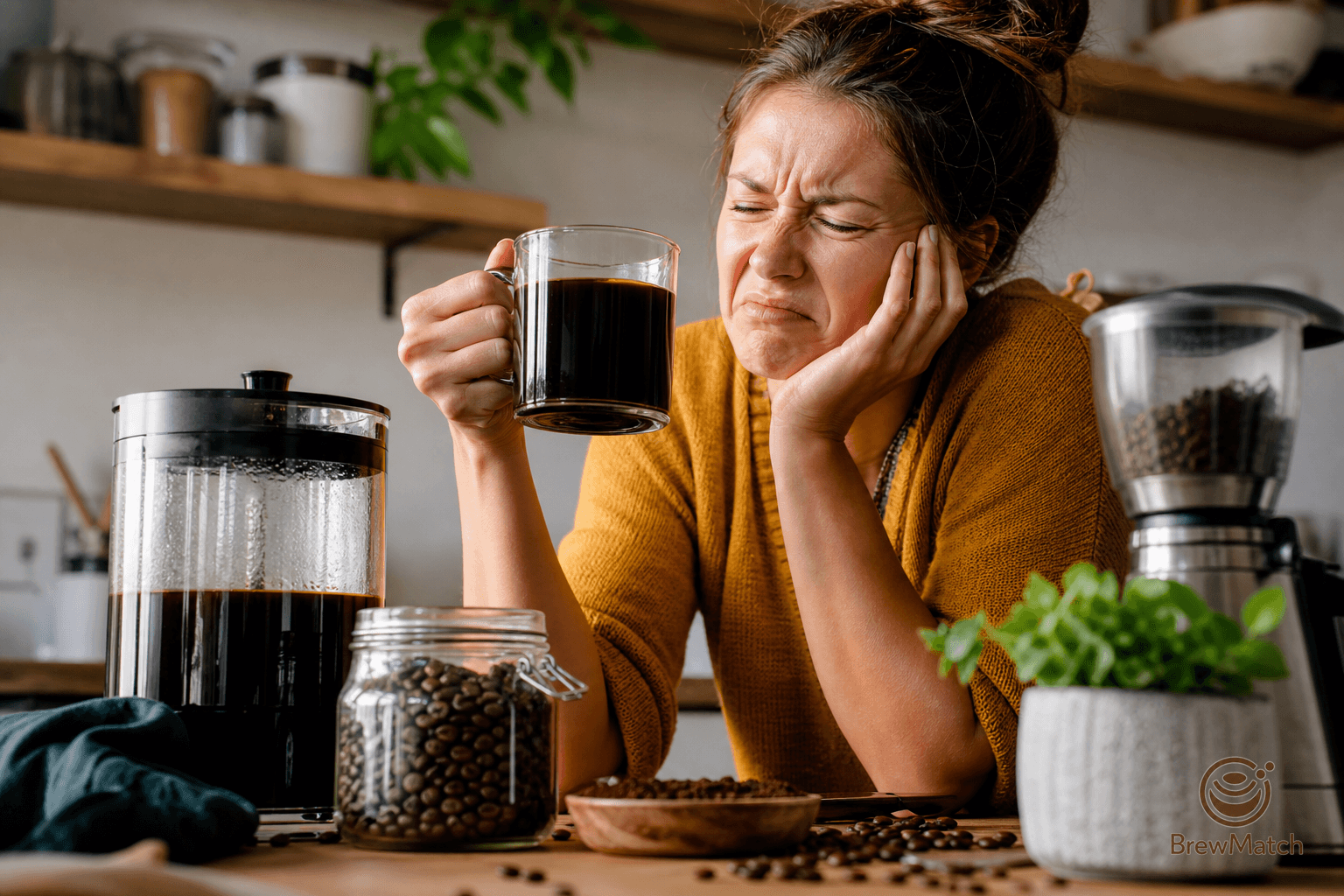
Over extracted coffee tastes bitter because the water has pulled too much from the grounds. The fix is usually not better beans or a weaker cup. It is a shorter brew, a slightly coarser grind, cooler water, or less agitation. If your coffee tastes harsh, dry, ashy, or hollow after the first sip, you are probably extracting too much.
A lot of home coffee drinkers call this strong coffee. It is not always strong. Sometimes it is just coffee that has been pushed too far.
Bitter is not the same as strong
Strong coffee has more dissolved coffee in the cup. Bitter coffee has the wrong balance of flavor.
You can brew a strong cup that tastes rich, sweet, and full. You can also brew a weak cup that tastes sharp and bitter. Strength is about concentration. Bitterness is about what got pulled out of the grounds and when.
That distinction matters because the usual panic move is wrong. People taste bitterness and add more milk, buy a different roast, or use less coffee next time. Sometimes that helps by accident. Often it makes the cup thinner while the harsh edge stays.
Over extraction is what happens when the water keeps pulling flavor after the good stuff has already done its job. Early extraction can bring acidity and sweetness. The middle gives body and balance. Push too far and you start getting more drying, bitter, woody flavors.
No, you do not need to memorize extraction chemistry. You just need to know when your cup is yelling at you.
Signs your coffee is over extracted
Over extracted coffee usually has a few tells.
First, the bitterness hangs around. A pleasant dark chocolate bitterness fades cleanly. Over extraction leaves a dry, scratchy finish that sits on your tongue.
Second, the cup can taste both bitter and empty. This is the part people get wrong. Over extracted coffee does not always taste huge. It can taste hollow, papery, or thin, then finish bitter. That is why adding more water after brewing rarely saves it.
Third, the last half of the mug gets worse. As the coffee cools, the bitterness becomes more obvious. Heat can hide messy extraction for a few minutes. Cool coffee tells on you.
Fourth, the aroma may be fine but the sip disappoints. If the beans smell good and the brewed coffee tastes harsh, the problem may be your recipe, not the bag.
If your bitterness is paired with mouth drying roughness, read Coffee Tastes Bitter and Dry: 4 Fixes That Work. That dry finish is one of the clearest signs that the brew has gone too far.
The main causes of over extracted coffee
Over extraction usually comes from one or more of these recipe choices.
Your grind is too fine
Fine grounds expose more surface area to water. That speeds up extraction. In espresso, moka pot, pour over, drip, and French press, going too fine can pull bitter flavors fast.
A fine grind is not bad by itself. It is bad when the brew time and method do not match it.
If your coffee tastes bitter and your brew is slow, muddy, or heavy, grind a little coarser. Not wildly coarser. One or two steps on a burr grinder is enough for a test.
Your brew time is too long
More time means more extraction. That can be great until it is not.
French press left sitting with the grounds keeps extracting. Pour over that drains too slowly keeps extracting. Espresso shots that run long can taste bitter and burnt. Drip coffee sitting in contact with grounds too long can turn dull and harsh.
Shortening brew time is one of the fastest ways to test over extraction. Change only time if you can. If the cup gets smoother and less dry, you found a major part of the problem.
Your water is too hot for the recipe
Hotter water extracts faster. That can be helpful for light roasts or fast brews. It can also make bitterness show up early, especially with darker roasts, fine grinds, or long contact time.
You do not need laboratory precision. If you are pouring boiling water directly onto coffee and the cup tastes harsh, let the kettle sit for a short moment before brewing. Small temperature drops can make a noticeable difference.
You are agitating the coffee too much
Stirring, swirling, aggressive pouring, and repeated plunging all move water through the grounds more forcefully. That can increase extraction.
Some agitation is useful. Too much can punish the cup. This is especially true when the grind is already fine or the brew time is already long.
If your pour over or French press tastes bitter, try being boring for one brew. Pour gentler. Stir less. Press slower. Coffee does not need a workout.
The fastest fix is to change one variable
The worst troubleshooting move is changing everything at once. New beans, new grind, new ratio, new water temperature, new prayer. Then the next cup is different and you have no idea why.
Pick one variable and test it.
Start here:
- Grind slightly coarser.
- Keep the same amount of coffee and water.
- Keep the same water temperature.
- Brew again.
- Compare the finish, not just the first sip.
If the coffee is less bitter but also too weak, you can adjust strength later. First, remove the harshness. Then rebuild body.
If the coarser grind helps but does not fully fix it, shorten the brew time next. If that helps too, your old recipe was probably extracting too much from too fine a grind for too long.
That is common. It is not a moral failure. It is breakfast math.
If you want help separating bean preference from brewing problems, BrewMatch can point you toward coffees that match the way you want your cup to taste, without making you pretend to be a professional taster.
Method by method over extraction clues
Different brewers show over extraction in different ways.
Drip coffee
Drip coffee can over extract when the grind is too fine, the basket is overloaded, or water moves unevenly through the grounds. If the brew takes longer than usual and tastes bitter, go coarser before changing beans.
If only some grounds are soaked well and others are barely touched, you can also get uneven extraction. That can taste sour and bitter in the same cup. For that specific mess, see Harsh Bitter Coffee Usually Means Uneven Extraction.
Pour over
Pour over over extraction often shows up as a slow drawdown and a harsh finish. A grind that is too fine can clog the bed. Aggressive pouring can churn the grounds and pull too much from them.
Try a slightly coarser grind and a calmer pour. Do not chase a perfect spiral if your coffee tastes like burnt toast water.
French press
French press can taste over extracted when the coffee steeps too long or keeps sitting with the grounds after plunging. A coarse grind helps, but time still matters.
If the cup is rich at first and rough later, pour it out of the press after brewing instead of letting it sit there.
Espresso
Espresso over extraction can taste sharp, burnt, dry, or medicinal. It often comes from shots running too long, grind too fine, dose issues, or channeling.
For a basic home test, stop the shot a little earlier and taste. If the bitterness drops fast, the shot was likely going too long.
Cold brew
Cold brew can over extract too. Long steep times, too fine a grind, and warm room conditions can make it taste woody or bitter instead of smooth.
Cold brew is forgiving, not magical.
Practical checklist for fixing over extracted coffee
Use this before you buy another bag out of frustration.
- Grind one or two steps coarser.
- Shorten brew time slightly.
- Let boiling water cool briefly before pouring.
- Pour or stir more gently.
- Keep your coffee to water ratio the same during the first test.
- Taste the finish after the coffee cools a little.
- If it gets smoother, you were probably over extracting.
- If it gets sour, thin, or sharp, you may have gone too far in the other direction.
- Change one thing per brew so you know what worked.
The goal is not to remove every trace of bitterness. Coffee naturally has some bitter compounds. The goal is to remove the harsh, dry, lingering bitterness that makes you stop enjoying the cup.
When the beans are actually part of it
Sometimes the recipe is fine and the coffee just is not your style. Very dark roasts, some robusta heavy blends, stale beans, or coffees with smoky roast notes can taste more bitter to people who prefer mellow cups.
But blame the beans last, not first. If your brew time is long, your grind is fine, and your finish is dry, switching bags might only hide the problem for a day.
A better move is to make the recipe smoother first. Then choose beans for flavor preference, not damage control.
If you consistently dislike bitter coffee, look for tasting notes like milk chocolate, caramel, nutty, honey, brown sugar, or creamy. Be cautious with labels that lean smoky, intense, extra bold, or Italian roast if those flavors usually taste burnt to you.
A simple test for tomorrow morning
Brew your normal coffee, but change one thing: grind slightly coarser.
Do not change the beans. Do not change the amount of coffee. Do not add extra water. Just grind coarser and taste the finish.
If the cup becomes smoother, you have a direction. If it becomes too light but less bitter, you can increase the coffee dose a little next time while keeping the coarser grind. That gives you more strength without dragging the harshness back in.
That is the tradeoff people miss. Less bitter does not have to mean weaker. You can build a stronger cup after you fix extraction.
For coffee that matches your taste instead of fighting it every morning, try BrewMatch. It is built for home coffee drinkers who know what they like, even if they do not speak fluent cafe menu.
Find your match
Not sure which beans fit your taste?
Use BrewMatch to turn your flavor goal, brew method, and current coffee problem into a practical roast and bean profile.
Try BrewMatch