
October 12, 2026
One Grinder for Espresso and Drip Can Keep Coffee Bitter
One grinder for everything sounds efficient until every brew starts tasting bitter. Before you buy an all purpose grinder, check whether it can actually move between espresso and drip without wrecking your cup.
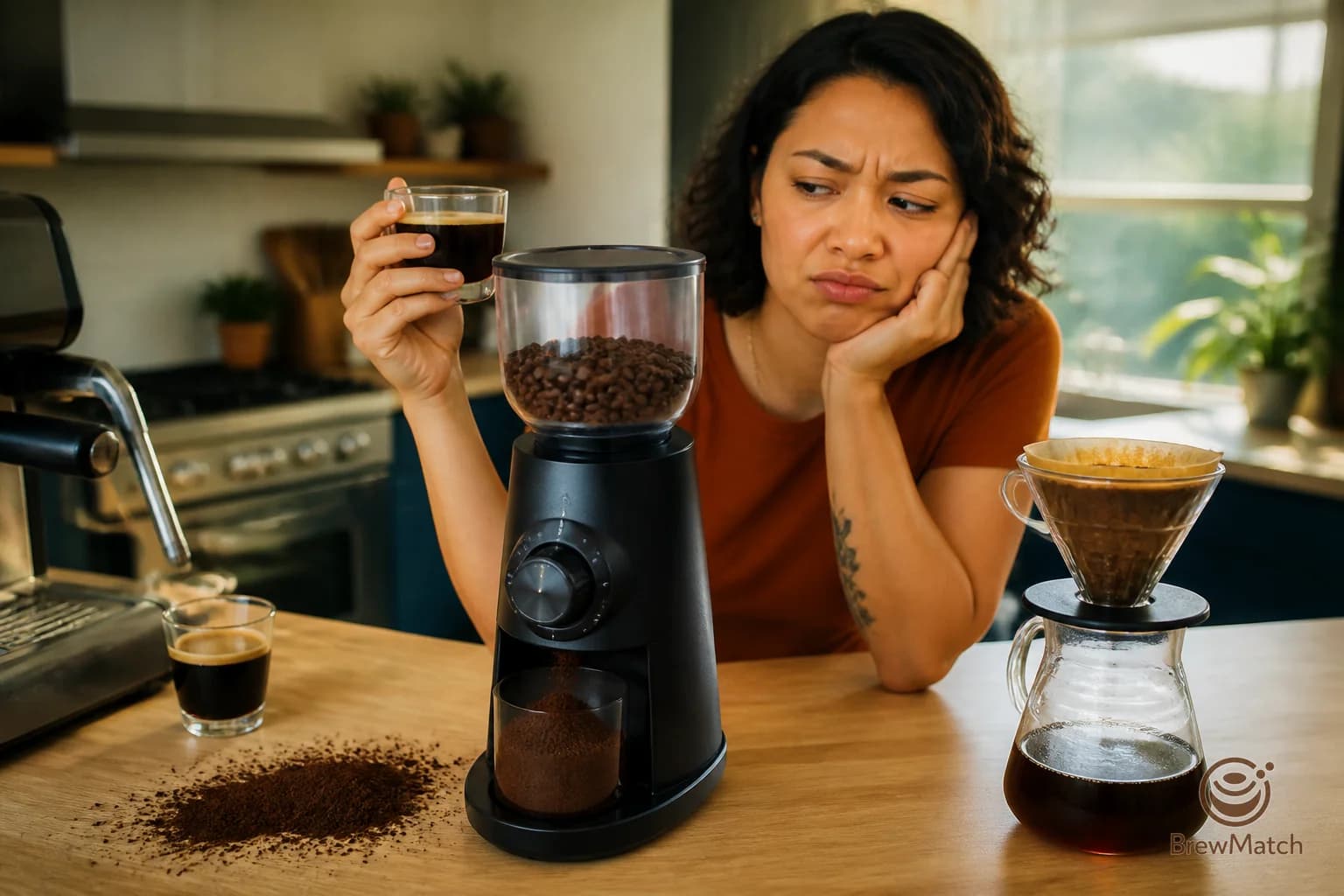
One grinder can work for espresso and drip, but it can also keep your coffee bitter if it cannot switch settings cleanly. Espresso needs tiny grind changes. Drip needs a more forgiving medium grind with fewer dusty fines. If your grinder struggles to move between those worlds, you will keep chasing bitterness that looks like a bean problem.
This is where a lot of home coffee buyers get trapped. One grinder sounds tidy. Less counter clutter. Less money than buying two machines. One set of beans, one dial, one little promise that life will be simpler.
Then the drip coffee tastes harsh after an espresso morning. Or the espresso runs slow and bitter after yesterday's batch brew. Nobody wants a kitchen appliance that turns breakfast into a troubleshooting session.
Espresso and drip ask very different things from a grinder
Espresso is picky. A tiny grind adjustment can change whether a shot runs fast, slow, sour, bitter, thin, or syrupy. That does not mean espresso is only for experts. It just means the grinder needs to give you fine control.
Drip coffee is less dramatic, but it has its own problem. It punishes grinders that create too much coffee dust. Those tiny particles extract fast. They can make a pot taste dry, harsh, or bitter even when the main grind size looks reasonable.
So the question is not whether a grinder can technically grind fine and medium. Most can claim that.
The better question is this: can it move from espresso fine to drip medium and back again without turning every cup into a mystery?
If not, the all in one setup becomes a bitterness machine with a nice product photo.
The first warning sign is huge jumps between settings
Some grinders have settings that are too far apart for espresso. You move one click finer and the shot chokes. You move one click coarser and the shot gushes. That is annoying for espresso, but it can also spill into drip.
When a grinder has rough adjustment steps, people compensate in odd ways. They grind a little too fine because the next setting is too coarse. They add more coffee. They brew longer. They keep stacking fixes until the cup tastes stronger, darker, and more bitter than it needs to.
If you are comparing adjustment systems, this is where Stepped vs Stepless Grinders for Less Bitter Coffee is worth reading. Stepless does not automatically mean better for everyone, but adjustment control matters when bitterness is the thing you are trying to avoid.
For a shared espresso and drip grinder, the dial should feel predictable. You should be able to make a small change and taste a small change. If each movement feels like falling down stairs, bitter coffee is not surprising.
The second warning sign is muddy drip coffee after espresso grinding
A grinder that performs nicely for espresso may not make pleasant drip coffee.
That sounds backwards because espresso grinders are often treated like the serious option. Fine control, heavier build, better reputation. But a grinder tuned for espresso can still produce too many fines at drip settings, or make it annoying to find a clean medium grind.
That is why an espresso focused machine is not always the easy answer for everyday coffee. BrewMatch has covered this tradeoff in An Espresso Grinder Is Not Always Better for Less Bitter Drip Coffee.
Here is the simple taste clue: if your drip coffee tastes heavy, dry, and bitter even when you use a normal recipe, look at the grind. If you see a lot of powder mixed into the grounds, those fines may be doing the damage.
The cup can taste over extracted even when the brew time looks normal. That is the annoying part. The recipe did not fail loudly. The grinder quietly made the recipe harder to win.
The third warning sign is poor setting memory
For one grinder to handle both espresso and drip, it needs to return to previous settings cleanly.
This is not glamorous. It is not the feature people brag about. But for bitter coffee, it is huge.
Imagine this routine:
- You dial in espresso in the morning.
- You move much coarser for drip in the afternoon.
- You move back for espresso the next day.
- The old setting is close, but not quite right.
- The shot runs too long and tastes bitter.
Now repeat that twice a week. Suddenly you are not brewing coffee. You are negotiating with a dial.
A grinder with clear markings, repeatable settings, and low frustration is often better than a fancier grinder that makes you guess. The less repeatable the grinder, the more likely you are to overcorrect. Overcorrection is where bitter coffee loves to hide.
If you are not sure whether your bitter coffee is coming from the grinder, the beans, or the way you brew, BrewMatch can help you sort your taste preferences before you spend money in the wrong place.
The fourth warning sign is leftover grounds between brew methods
When you grind espresso fine, some grounds can stay inside the grinder. Then you switch to drip, and a little fine espresso grind rides along into your medium grind dose.
That small carryover can matter. Fine leftovers extract quickly and can make drip coffee taste sharper, darker, or more bitter than expected.
This does not mean you need to obsess over every speck. It means you should know whether your grinder holds onto grounds. If it does, you may need to purge a small amount after big setting changes.
The tradeoff is obvious: purging wastes a little coffee. Not purging can waste the whole cup.
For some home drinkers, that is acceptable. For others, it gets old fast.
When one grinder is still a good idea
A single grinder can be the right choice if your routine is simple.
It is usually fine if you mostly brew one way and only occasionally use the other. For example, you make drip coffee every morning and pull espresso on weekends. In that case, a grinder with decent range and clear settings may be enough.
It can also work if you are not chasing cafe style espresso every day. If you use a pressurized espresso basket or a more forgiving machine, you may not need extreme adjustment precision.
One grinder also makes sense if counter space matters more than perfect switching. That is a real tradeoff, not a moral failure. Coffee gear should fit your kitchen, not turn it into a lab.
Just do not buy one grinder because it sounds elegant on paper. Buy it because it matches the way you actually make coffee.
When two grinders are less ridiculous than they sound
Two grinders can sound excessive until you live with constant bitterness from one compromised setup.
Two grinders may make sense if:
- You drink espresso and drip most days.
- More than one person changes the grinder settings.
- You use different beans for espresso and filter coffee.
- You keep losing your dialed in espresso setting.
- Your drip coffee tastes bitter after espresso grinding.
- You hate wasting coffee to purge between methods.
This does not mean both grinders need to be expensive. A dedicated espresso grinder plus a simpler filter grinder can sometimes be less frustrating than one all purpose grinder that is barely good at switching.
The mistake is assuming fewer devices always means less hassle. Sometimes one device creates more decisions.
A quick home test before you blame the beans
Try this before replacing coffee beans or buying a new grinder.
For three days, use the grinder for only one brew method. If you make drip, leave it at the drip setting. Do not switch to espresso. Keep the recipe steady.
Then do the same for espresso. Leave the grinder in the espresso zone and avoid big setting jumps.
Pay attention to what happens.
If the coffee tastes better when the grinder stays in one range, switching may be your bitterness trigger. Not the beans. Not your taste buds. Not some mysterious coffee curse.
If it still tastes bitter when the grinder stays put, look at grind size, brew time, water temperature, dose, and roast level next.
Practical checklist before buying one grinder for espresso and drip
Use this checklist before you buy an all purpose grinder:
- Can it grind fine enough for your espresso setup?
- Can it grind medium enough for drip without making tons of powder?
- Are the adjustment steps small enough for espresso?
- Are the settings easy to read and return to?
- Does it retain a lot of coffee between grinds?
- Is it easy to clean without taking half the machine apart?
- Do reviews mention both espresso and drip, not just one method?
- Can you live with purging after big setting changes?
- Does the grinder fit your actual routine, not your fantasy routine?
That last question is the one people skip. They buy for the coffee life they imagine, then get annoyed by the coffee life they actually have at 7:12 a.m.
The better buying rule
Do not ask whether one grinder can do espresso and drip.
Ask whether it can do both without making you lose control of taste.
If the grinder has poor repeatability, too much dust, awkward adjustment, or annoying retention, it can keep coffee bitter no matter how good the beans are. One grinder can be smart. One grinder can also be the reason every cup tastes like you overdid something.
Before you buy based on specs, reviews, or counter space alone, use BrewMatch to get clearer on the coffee taste you actually want. A grinder should help you get there. It should not make bitterness your default setting.
Find your match
Not sure which beans fit your taste?
Use BrewMatch to turn your flavor goal, brew method, and current coffee problem into a practical roast and bean profile.
Try BrewMatch