
August 13, 2026
An Old Coffee Grinder Can Make Coffee Taste Bitter
Your old grinder might not be vintage charm. It might be making bitter dust stale oils and uneven grounds that punish good beans.
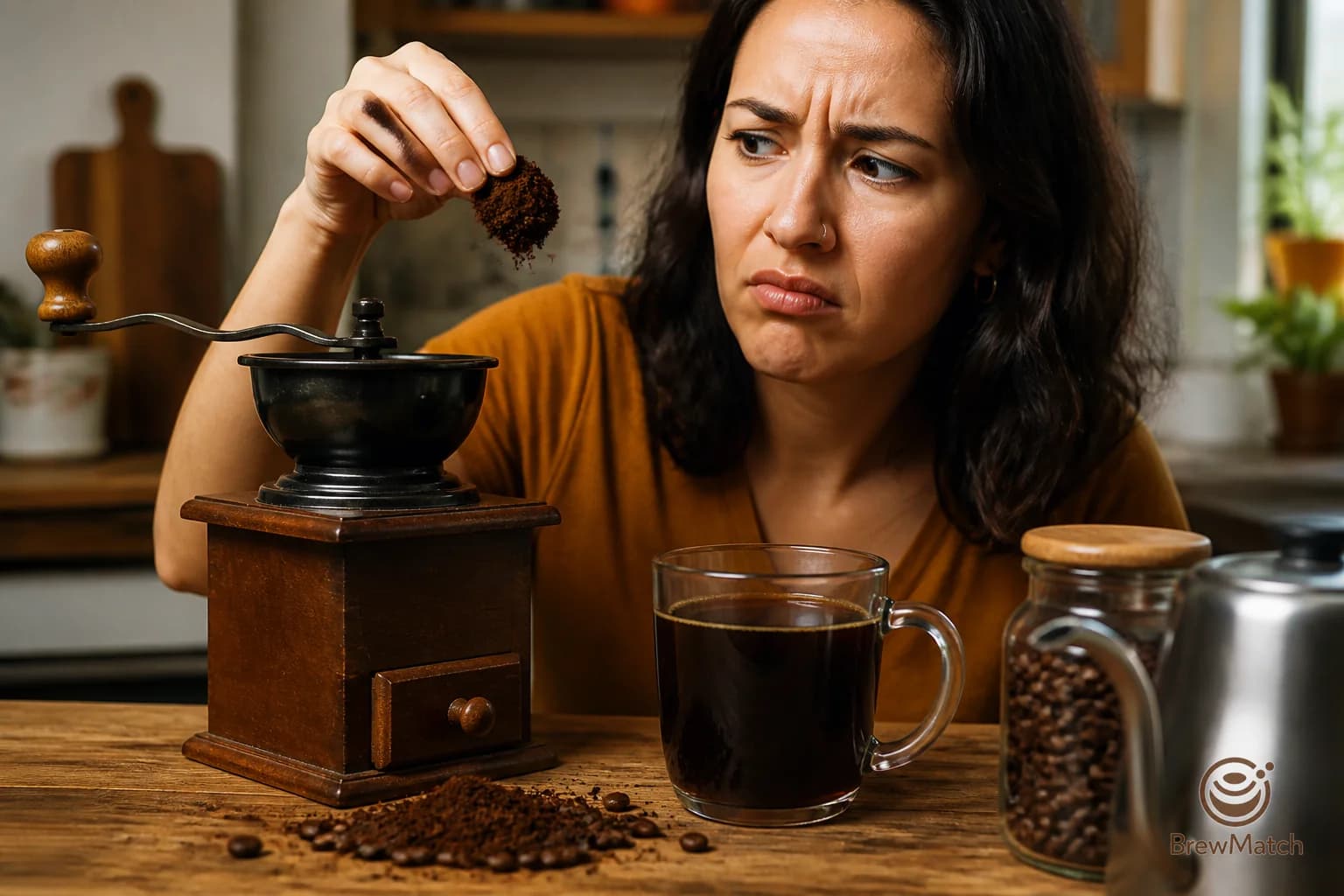
Yes, an old coffee grinder can make coffee taste bitter. Not because old equipment is cursed, but because worn burrs, tired blades, trapped oils, and uneven grind size can push your brew toward harsh, dry, burnt flavors. Before you blame your beans, check whether your grinder is making powder and boulders at the same time.
A grinder does not need to be fancy to make good coffee. It does need to be predictable.
Old grinders create uneven grounds
Coffee brewing is basically water pulling flavor out of ground coffee. Smaller pieces give up flavor fast. Bigger pieces give up flavor slowly.
When your grinder makes a messy mix of powder, normal grounds, and chunky bits, your coffee gets pulled in different directions at once. The powder extracts too much and brings bitterness. The chunks extract too little and can taste flat or sour. The cup ends up confused: harsh but not rich, bitter but not satisfying.
That is why an old grinder can make good beans taste worse than they should. The beans may be fine. The recipe may be close. The grinder may be throwing random particle sizes into the brew basket and making your coffee pay for it.
People often call this strong coffee. It usually is not. It is messy extraction.
The bitterness usually comes from fines
Fines are the dusty particles that show up when coffee gets shattered, crushed unevenly, or ground with worn parts. A little bit of fine coffee dust is normal. A lot of it is trouble.
Fines over extract quickly. In a drip machine, they can clog the filter and slow the brew down. In a pour over, they can settle into the bed and choke the flow. In a French press, they can float through the mesh and keep extracting in the cup. In espresso, they can make the shot run strangely and taste sharp or burnt.
If you want the deeper grinder version of this problem, read Coffee Dust From Your Grinder Makes Coffee Taste Bitter.
The quick test is simple: grind some coffee onto a white plate or paper towel. Spread it out with your finger. If it looks like beach sand mixed with flour and gravel, your grinder is not giving you a clean target.
That does not always mean you need a new grinder today. It does mean your bitterness fix should start with the grind, not with buying another random bag of beans.
Dull burrs and tired blades fail differently
If you use a blade grinder, age usually makes a bad pattern worse. Blade grinders chop coffee with spinning blades. They do not truly grind to one size. You control the result by time, shaking, pulsing, and luck. As the blade gets dull or the motor slows, it can smash more than cut, making more dusty fragments.
If you use a burr grinder, the problem is different. Burr grinders crush coffee between two abrasive surfaces. They are usually better for less bitter coffee because they can produce a more controlled grind. But burrs do wear down. When burrs get dull, they can create more fines, grind more slowly, and make it harder to repeat the same cup.
That does not mean every burr grinder is automatically better than every blade grinder in your kitchen. A filthy, worn, badly adjusted burr grinder can still make bitter coffee. A blade grinder can sometimes be made less awful with careful pulsing. But if bitterness keeps following you across different beans and recipes, the grinder deserves suspicion.
For a broader comparison, see Burr Grinder vs Blade Grinder for Less Bitter Coffee.
Old oils can fake a burnt taste
A grinder does more than break beans. It also collects old coffee oils.
Coffee oils cling to burrs, blades, hoppers, chutes, lids, and little corners you never think about. Over time, those oils go stale. They can smell bitter, dusty, rancid, or oddly burnt. Then every fresh batch of beans gets dragged through that residue before it even touches hot water.
This is one reason people say their coffee tastes burnt even when the beans smell fine. The burnt note may not be from the roast. It may be from stale grinder buildup.
A dirty grinder can also hold old grounds in the chute. Those old grounds get mixed into your next brew. If you grind every morning, this might sound minor. But stale coffee does not need a dramatic amount of time to taste flat and bitter.
If your grinder smells like old peanuts, ash, or stale dark chocolate when it is empty, clean it before making another judgment about your beans.
Practical checklist: test the grinder before replacing it
Before you spend money, run through this checklist. It is cheaper than panic buying gear and less annoying than pretending bitter coffee is a personality trait.
- Empty the hopper and brush out visible grounds.
- Clean the burrs or blade area according to the grinder manual.
- Remove old coffee from the chute if your grinder has one.
- Smell the grinder while it is empty. Stale odor means stale flavor risk.
- Grind a small amount and inspect it on white paper.
- Look for excessive powder, large chunks, or both together.
- Brew the same coffee with a slightly coarser grind.
- If bitterness drops fast, grind size or fines were likely part of the problem.
- Try a different brew method if you can, such as French press or drip.
- If every method tastes bitter with the same grinder, the grinder is a stronger suspect.
Only change one thing at a time. If you clean the grinder, change beans, change water temperature, and change grind size in one morning, you will not know what fixed the cup.
If you want a shortcut on the bean side while you troubleshoot gear, BrewMatch can help point you toward coffees that match your taste preferences instead of forcing you to decode roast labels and tasting notes.
When replacement starts to make sense
A new grinder starts to make sense when cleaning and adjustment do not help.
Watch for these signs:
- The grind looks wildly uneven at most settings.
- Coffee tastes bitter across multiple bags of beans.
- Small grind changes make no clear difference in taste.
- The grinder produces lots of dust even at medium or coarse settings.
- The motor sounds strained or inconsistent.
- The burrs look chipped, smooth, or worn.
- The grinder holds a lot of old grounds after each use.
Replacement also makes sense if your current grinder cannot match your main brew method. French press needs a reasonably clean coarse grind. Drip usually needs medium. Pour over often needs small adjustments. Espresso needs much tighter control. A grinder that is barely acceptable for one method may be frustrating for another.
Do not buy the most expensive grinder just because your coffee is bitter. Buy for control, consistency, easy cleaning, and the brew method you actually use. A grinder that is easy to adjust and clean will usually help more than one with impressive marketing and a design that traps stale grounds forever.
What to look for in a less bitter coffee grinder
If your goal is less bitter coffee at home, look for a grinder that helps you repeat a clean recipe.
Good signs include:
- Burr grinding instead of blade chopping.
- Enough settings for your brew method.
- Clear grind adjustment that you can repeat.
- Low retention, meaning less old coffee trapped inside.
- Easy access for brushing and cleaning.
- A stable motor that does not sound like it is fighting the beans.
- A grind range that fits how you brew most often.
For drip and pour over, you do not need a laboratory machine. You need a grinder that can move a little coarser or finer without turning every adjustment into a guessing game. For French press, you need a cleaner coarse grind that does not dump powder into the brew. For espresso, you need finer control because small changes can swing taste fast.
The tradeoff is money versus control. Cheap grinders can work, but they often make you compensate with careful technique. Better grinders make the target easier to hit. They do not make bitter coffee impossible. They just stop adding chaos before the water even arrives.
Do not let the grinder take every blame
An old grinder can make coffee bitter, but it is not always the villain. Water that is too hot, grind size that is too fine, too much coffee, long brew time, a dirty coffee maker, and very dark roast beans can all push bitterness higher.
The grinder is worth checking because it sits early in the chain. If it makes uneven grounds, every brew method after that has to fight the damage.
Start with the boring fixes: clean it, inspect the grounds, go a little coarser, and taste again. If bitterness gets better, you learned something useful. If nothing changes, you can move on to dose, brew time, water temperature, or the beans themselves.
And if you are tired of guessing which coffees are more likely to taste smooth instead of bitter, try BrewMatch. It is built for home coffee drinkers who want better matches without turning breakfast into a tasting exam.
Find your match
Not sure which beans fit your taste?
Use BrewMatch to turn your flavor goal, brew method, and current coffee problem into a practical roast and bean profile.
Try BrewMatch