
July 16, 2026
Moka Pot Coffee Should Taste Bold Not Bitter
Fix bitter moka pot coffee with better heat, grind size, timing, and basket prep so the cup tastes strong and rich instead of burnt or sharp.
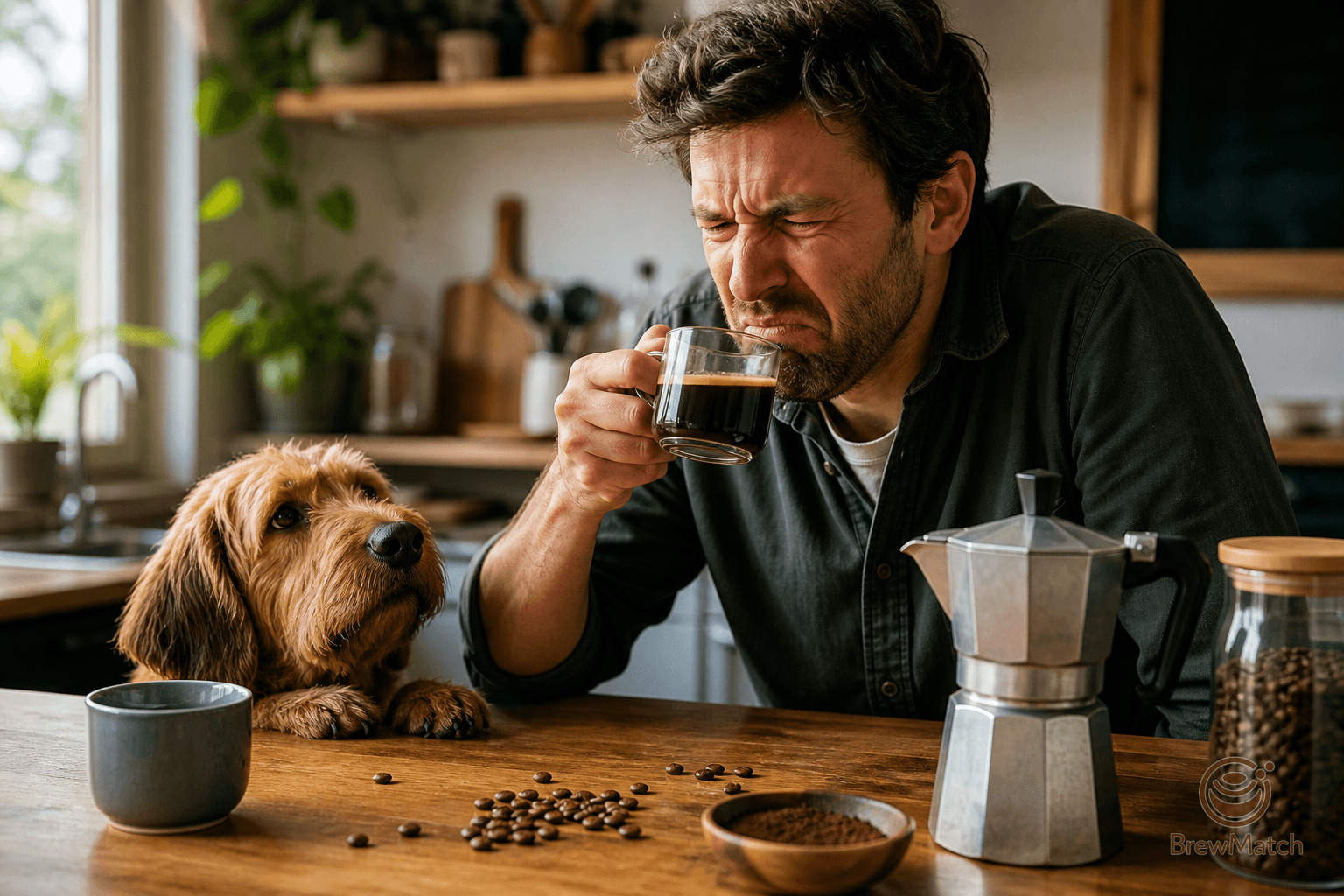
Moka pot coffee tastes bitter when the brew gets too hot, runs too long, uses coffee that is ground too fine, or sits on the stove after it is done. The moka pot is not the problem. It is just less forgiving than a drip machine. Small mistakes show up fast because the coffee is concentrated.
That does not mean moka pot coffee has to taste burnt. It should taste bold, dense, and satisfying. If it tastes like charred toast and metal, something in the setup is pushing extraction too hard.
Quick answer: to fix bitter moka pot coffee, grind a little coarser, use medium-low heat, avoid tamping the basket, remove the pot before the loud final sputter, and pour the coffee out soon after brewing. Change one variable at a time so you know which fix actually helped.
Strong is not the same as bitter
A moka pot makes concentrated coffee. That is the whole appeal. It will not taste like a soft pour over or a big mug of drip coffee unless you dilute it.
But concentrated coffee should still have balance. It can be strong without being harsh. It can feel heavy without drying your mouth out. The trouble starts when people treat bitterness as proof that the moka pot is working.
It is not.
Bitter moka pot coffee usually has a few tells:
- It tastes burnt even when the beans smell good
- The finish is dry or scratchy
- The last few sips are much harsher than the first
- The coffee smells cooked instead of aromatic
- Adding milk helps, but only because it hides the problem
If that sounds familiar, do not throw away the brewer yet. Fix the pressure points first.
Your grind is probably too fine
Moka pot coffee needs a grind that is finer than drip coffee but coarser than espresso. That middle zone matters.
If the grind is too fine, water struggles to move through the coffee bed. The brew slows down. Heat builds. The coffee gets pushed harder for longer. That is a nice little recipe for bitterness.
A too-fine grind can also make the moka pot sputter aggressively near the end. People often blame the brewer for that sound, but the coffee bed may be choking the flow.
Try this:
- If you use an espresso grind, go coarser
- If your moka pot takes forever to start flowing, go coarser
- If the coffee tastes bitter and muddy, go coarser
- If you see sludge in the cup, go coarser or use a more consistent grinder
You do not need a perfect grinder to improve this. You just need to stop treating moka pot like stovetop espresso. It is its own thing.
If you are not sure whether your grinder is a good fit for moka pot, try the Grind Size and Grinder Fit Helper. It can help you decide whether the next test should be grind direction, grinder consistency, or a non-grind brewing variable.
For a deeper look at this one variable, read A Too Fine Grind Can Make Coffee Taste Bitter.
High heat makes the brew aggressive
The moka pot looks tough, so people blast it with high heat. That is usually where the cup starts going sideways.
High heat can rush the brew and overheat the water chamber. The coffee may come out fast, loud, and angry. It can also make the final stage sputter harder, which sends bitter, overcooked flavors into the top chamber.
Use medium-low to medium heat instead. The goal is steady flow, not a stovetop geyser.
A good moka pot flow looks calm. Coffee should rise into the upper chamber in a smooth stream. If it spurts violently, hisses early, or smells burnt before the pot is done, lower the heat next time.
This is where teams of tired home brewers fool themselves: they think faster coffee is more efficient. With moka pot, faster often just means rougher.
Take it off the heat before it screams
The end of a moka pot brew is where a lot of bitterness sneaks in.
Once most of the water has moved up, the pot starts pushing steam and hotter, harsher liquid through the coffee. That last stage can taste thin, bitter, and burnt. If you leave the moka pot on the burner until it fully sputters and screams, you are inviting that flavor into the cup.
Pull the pot off the heat when the upper chamber is mostly full and the flow starts turning pale or bubbly. Some people wrap the base in a cool towel or run the bottom under cool water to stop extraction quickly. You do not have to be dramatic about it, but you should stop the brew instead of letting it cook itself to death.
A small timing change can make moka pot coffee taste noticeably smoother.
Do not pack the basket
The moka pot basket is not an espresso portafilter. Do not tamp it.
Fill the basket level, then gently smooth the top. That is enough. If you press the coffee down, you make it harder for water to pass through evenly. That can increase pressure, slow the brew, and create bitter pockets.
This is one of those habits that feels professional but does not help at home. Moka pot coffee wants an even, loose bed. Not a compressed puck.
If you are using pre-ground coffee, this matters even more. Some pre-ground coffee is already too fine for moka pot. Packing it down makes the problem worse.
If you are not sure what kind of coffee matches the taste you actually like, BrewMatch can help you narrow it down without making you learn coffee-shop vocabulary first.
Start with hot water if your coffee tastes cooked
This one is slightly debated, but it is useful.
Starting with hot water in the bottom chamber can reduce the amount of time the ground coffee sits over heat before brewing begins. Less time on the stove can mean less cooked, metallic, burnt flavor.
Use hot water carefully. The base will be hot when you screw the moka pot together, so use a towel and do not rush. If that sounds annoying, skip it. Medium-low heat with room-temperature water can still work well.
But if your moka pot coffee always tastes roasted twice, hot starting water is worth testing.
Try it once against your normal method. Same coffee. Same amount. Same grind. Only change the starting water temperature. If the hot-water version tastes cleaner, you found one of your bitterness triggers.
The beans still matter but not the way people think
Yes, some beans taste more bitter than others. Very dark roasts can bring more smoky, roasty flavors. Some coffees naturally have more cocoa-like bitterness. That is not automatically bad.
The mistake is assuming the beans are the whole story.
If your moka pot setup is too hot, too fine, too slow, or overfilled, even smooth beans can taste harsh. Changing beans without fixing the brew can turn into an expensive guessing game.
A better order:
- Fix grind size
- Lower heat
- Stop the brew earlier
- Avoid tamping
- Then decide whether the beans fit your taste
If the coffee still tastes more bitter than you like after those changes, choose a medium roast with flavor notes like milk chocolate, nuts, caramel, or brown sugar. Avoid bags that lean heavily into smoky, charred, or intense roast notes if you already dislike bitterness.
Quick checklist for less bitter moka pot coffee
Use this as your next-brew checklist when you search for moka pot bitter coffee fixes and need one practical place to start:
- Grind slightly coarser than espresso
- Fill the basket level without tamping
- Use medium-low or medium heat
- Watch for a smooth steady stream
- Remove the pot before the loud final sputter
- Cool the base briefly to stop the brew
- Pour the coffee out soon after brewing
- Dilute with hot water if you want a softer cup
- Change only one variable at a time
That last point matters. If you change grind, heat, beans, dose, and timing all at once, you will not know what helped.
If it tastes bitter and hollow
Bitter moka pot coffee can come from over extraction. That means the water pulled too much from the grounds, especially the harsher compounds that show up late in brewing.
A cup can be strong and still taste round. Over extracted coffee tastes bitter, dry, and sometimes hollow. It has impact but not much pleasure.
If your moka pot coffee tastes bitter and thin at the same time, shorten the brew and lower the heat before blaming the beans. You may be extracting the worst part of the coffee while losing the sweetness that should hold it together.
For broader fixes that apply across brew methods, read Over Extracted Coffee Tastes Bitter: 4 Home Fixes.
A simple moka pot reset recipe
If your current moka pot routine is all over the place, try this baseline:
- Use fresh medium-roast coffee
- Grind finer than drip but coarser than espresso
- Fill the basket level and do not tamp
- Fill water to just below the safety valve
- Brew on medium-low heat
- Keep the lid open so you can watch the flow
- Remove from heat when the stream turns pale and bubbly
- Pour immediately
Taste it black first, even if you usually add milk. You are not doing this to suffer. You are checking whether the bitterness is still there before anything covers it up.
If it is smoother, keep the method and adjust strength later. If you want a bigger mug, dilute the finished coffee with hot water instead of forcing the moka pot to brew longer. Longer is often where the bitterness lives.
Bold coffee does not need to punish you
Moka pot coffee has a reputation for being intense. Fair enough. But intense should not mean burnt, bitter, and joyless.
Most bitter moka pot coffee comes from treating the brewer like it needs force. Finer grind. Higher heat. Longer brewing. More pressure. More drama.
Back off a little.
Let the water move steadily. Stop the brew before the harsh finish. Keep the basket loose. Use beans that match the flavors you actually enjoy.
If you want help finding coffee that fits your taste instead of fighting it every morning, try BrewMatch. Strong coffee is allowed to taste good.
Find your match
Not sure which beans fit your taste?
Use BrewMatch to turn your flavor goal, brew method, and current coffee problem into a practical roast and bean profile.
Try BrewMatch