
August 8, 2026
Manual vs Electric Coffee Grinders for Less Bitter Coffee
Manual or electric is not the real coffee grinder fight. If your coffee tastes bitter, grind consistency matters more than gadget drama.
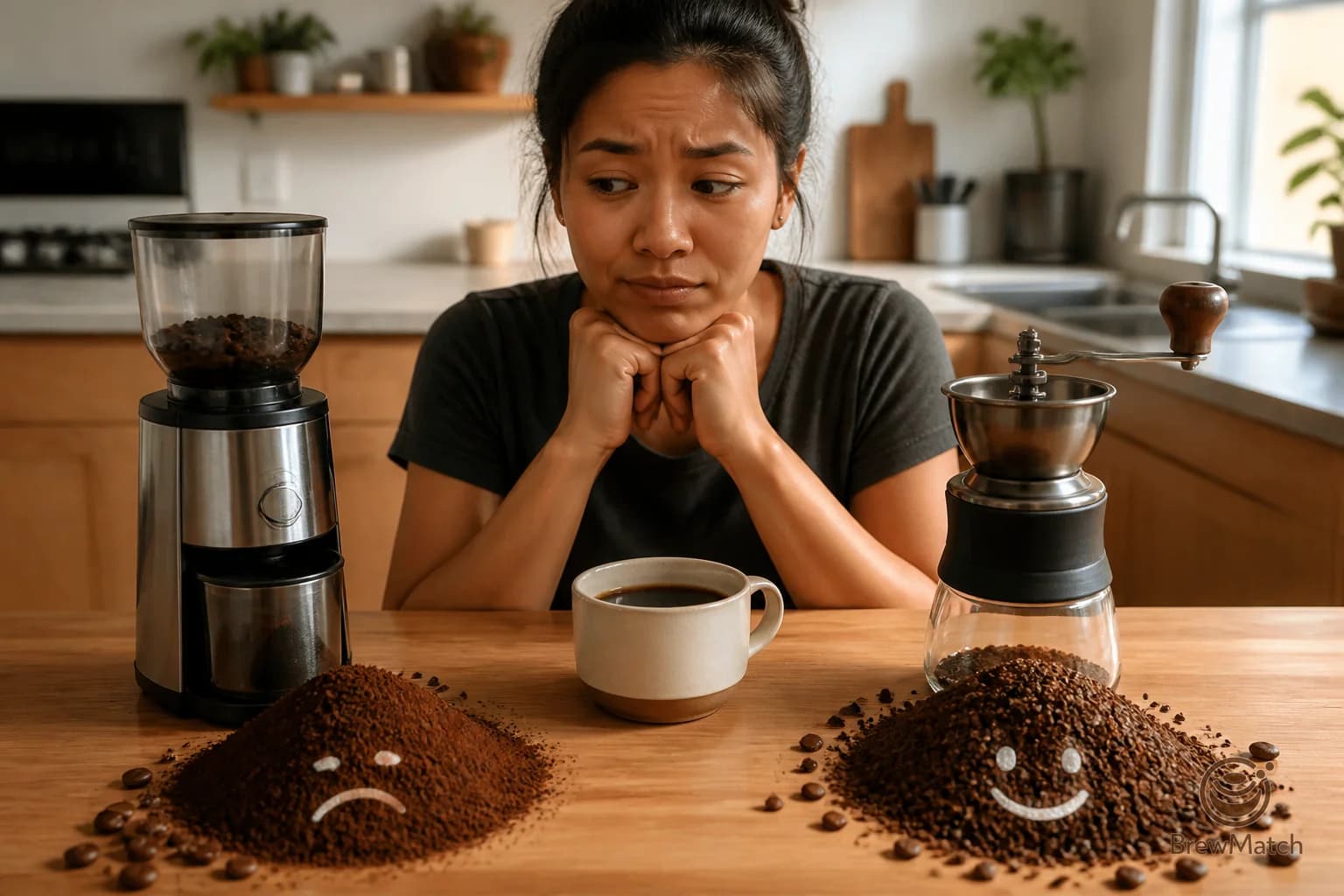
Manual and electric coffee grinders can both make less bitter coffee if they grind evenly and give you enough control. The type of motor is not the magic part. The burr quality, grind consistency, and adjustment range matter more. A good manual grinder can beat a cheap electric grinder. A good electric grinder can save your morning. A bad version of either can make coffee taste harsh, dry, and bitter.
If you are choosing between manual and electric, do not ask which one is more serious. Ask which one will help you repeat the same grind tomorrow without guessing.
Bitter coffee usually comes from uneven extraction
When coffee tastes bitter, people often blame the beans first. Sometimes they are right. More often, the grind is quietly making the brew uneven.
Coffee grounds extract at different speeds depending on size. Tiny pieces give up flavor fast. Large chunks extract slowly. If your grinder produces a messy mix of dust and boulders, your cup can taste confused: bitter from the fines, thin from the bigger pieces, and rough overall.
That is why grinder choice matters for bitterness. Not because one grinder type has moral superiority. Because an even grind makes it easier to brew coffee that tastes smooth instead of punishing.
For a deeper grinder comparison, BrewMatch has a related guide here: Burr Grinder vs Blade Grinder for Less Bitter Coffee.
Manual grinders: better control for less money
A manual grinder can be a smart choice if you want better grind quality without paying for a large electric machine. Many manual burr grinders put more of the cost into the burrs and build quality because there is no motor, screen, or automatic dosing system to pay for.
That can be great for bitter coffee troubleshooting. A decent manual burr grinder can give you cleaner, more even grounds than a cheap electric grinder. Cleaner grounds usually mean fewer bitter fines and fewer under extracted chunks.
Manual grinders are especially useful if you brew one cup at a time. Pour over, AeroPress, moka pot, and single serving French press can all work well with a manual grinder.
The tradeoff is obvious: you are the motor. Grinding coffee by hand is not romantic at 6:20 a.m. if you are tired, late, or making coffee for three people. Dark roasts can also feel harder to grind because they can be more brittle and oily, depending on the beans.
A manual grinder is a good fit if:
- You make one or two cups at a time
- You care more about grind quality than speed
- You do not mind a short hand grinding routine
- You want a smaller grinder for your kitchen or travel bag
- You are trying to avoid the cheapest electric grinder trap
It is a bad fit if you know you will stop using it after a week. The best grinder is not the one you admire. It is the one you actually use before making coffee.
Electric grinders: easier mornings and better repeatability
An electric grinder wins on convenience. Push a button, get grounds, move on with your life. If you brew several cups, make espresso, or share coffee duty with other people, electric can be much easier to live with.
A good electric burr grinder also makes recipe changes simpler. You can move one or two settings coarser, brew again, and notice whether the bitterness drops. That repeatability matters. Bitter coffee troubleshooting gets annoying when every brew feels like a new experiment.
The problem is that cheap electric grinders often look more capable than they are. Some have loud motors, vague grind settings, and uneven output. They grind quickly, but they may also create a lot of fine powder. That powder can over extract and make your coffee taste bitter or dry.
Electric grinders are a good fit if:
- You brew more than one cup at a time
- You want coffee before your brain turns on
- You switch brew methods often
- You need repeatable settings for a household
- You are grinding for espresso and need fine control
The tradeoff is cost and counter space. A good electric grinder usually costs more than a good manual grinder. If you buy the cheapest electric option just to avoid hand grinding, you may keep the bitterness problem and add a loud machine to your kitchen.
For less bitter coffee, burrs beat speed
Whether you choose manual or electric, prioritize burrs over blades. Burr grinders crush coffee between two abrasive surfaces at a set distance. Blade grinders chop randomly. That random chopping is the problem.
Blade grinders can make some pieces tiny while leaving others large. For bitterness, that is a rough deal. The fine particles can over extract fast and push the cup toward bitterness. The larger pieces can stay under extracted and make the cup taste weak or hollow.
A burr grinder does not guarantee perfect coffee. It just gives you a better starting point. You still need the right grind size, dose, water, and brew time. But if your current grinder gives you wildly uneven grounds, fixing that can make your coffee taste less harsh before you change beans.
If your cup tastes sharp, dry, or aggressively bitter, the grind may also be too fine for your method. This guide can help you spot that specific issue: Coffee Ground Too Fine Can Taste Bitter and Dry.
The bitterness test before you buy
Before you choose manual or electric, run a simple test with your current setup.
Brew your usual coffee. Then change only one thing: grind slightly coarser. Keep the coffee amount, water amount, water temperature, and brew method the same.
If the next cup tastes less bitter, your grind was probably part of the problem. That does not automatically mean you need a new grinder. It means your grinder needs to let you make useful changes.
If one setting is too bitter and the next setting is thin or sour, your grinder may not have enough usable range. If the grounds look dusty and chunky at the same time, consistency may be the issue. If every brew tastes different even when you do the same thing, repeatability may be the issue.
That is where grinder selection becomes practical instead of nerdy. You are not buying a trophy. You are buying control.
Not sure whether your coffee bitterness is coming from grind, beans, roast, or brew method? BrewMatch can help match your taste preferences to coffees that are more likely to work for how you actually drink coffee.
Manual vs electric by brew method
Different brew methods put different pressure on the grinder.
For French press, you usually need a coarse grind. A manual grinder can work well, but it may take more effort because coarse grinding still means processing a lot of coffee. An electric burr grinder is convenient if you brew a larger press.
For pour over, either manual or electric can work. Consistency matters because uneven grounds can make the bed drain strangely. If your pour over swings between bitter and weak, grinder control is worth caring about.
For drip coffee makers, electric is often easier because you may grind more coffee at once. You want a grinder that can produce a medium grind without loads of dust.
For moka pot, you need a grind finer than drip but usually not as fine as espresso. A manual grinder can do this well if the adjustment is clear. An electric burr grinder is easier if you brew moka pot often.
For espresso, electric usually wins for convenience and fine adjustment. Manual espresso capable grinders exist, and some are excellent, but grinding fine enough for espresso by hand can get old fast. Bitter espresso can come from too fine a grind, too long a shot, channeling, or all three. You need control, not guesswork.
A practical grinder checklist for less bitter coffee
Use this checklist before buying a manual or electric grinder:
- Choose burrs, not blades
- Look for clear grind adjustments
- Make sure the grinder suits your brew method
- Avoid grinders with only vague settings like fine, medium, and coarse
- Check whether it can grind enough coffee for your normal batch
- Pick manual if you want better grind quality for less money and brew small amounts
- Pick electric if convenience will make you use it consistently
- Do not buy a grinder just because it looks serious on the counter
- After buying, adjust coarser if the coffee tastes bitter and dry
- Change one variable at a time so you know what helped
The most common mistake is treating grinder choice like a personality test. Manual does not make you careful. Electric does not make you lazy. The right grinder is the one that gives you consistent grounds and fits your actual morning.
So which one should you buy?
Buy a manual burr grinder if you want strong grind quality for the money, usually brew one or two cups, and do not mind doing a little work. This is often the smarter budget choice for someone trying to make coffee taste less bitter.
Buy an electric burr grinder if you brew larger batches, want faster mornings, or need repeatable settings with less effort. Spend enough to avoid the flimsy grinder that creates dusty, uneven grounds and calls it convenience.
Do not buy based on manual versus electric alone. Buy based on consistency, adjustment range, and whether you will actually use it. Bitter coffee is often a control problem. The grinder is one of the places where control either improves or disappears.
If you want coffee that tastes smoother without turning your kitchen into a gear forum, start with your taste preferences. BrewMatch can help you find coffees that fit what you like, not what a coffee snob says you should like.
Find your match
Not sure which beans fit your taste?
Use BrewMatch to turn your flavor goal, brew method, and current coffee problem into a practical roast and bean profile.
Try BrewMatch