
July 15, 2026
A Long Espresso Shot Can Taste Burnt and Bitter
Burnt bitter espresso is usually a recipe problem. Shorten the shot and make one small grind or dose change before blaming your beans.
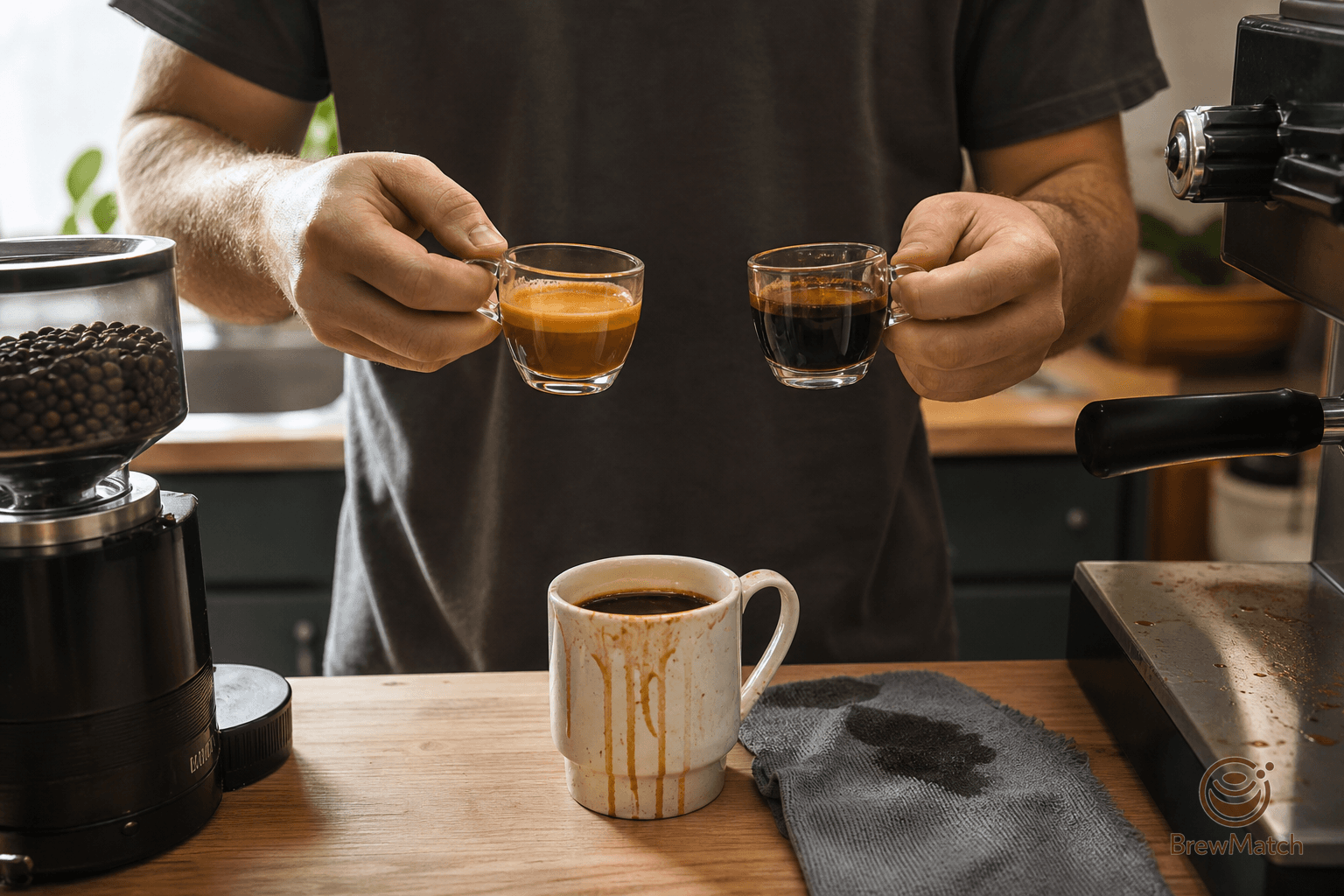
If your espresso tastes burnt and bitter, your shot may be running too long. A long shot can pull too much from the coffee, especially near the end, when the liquid often tastes thinner, drier, and more bitter. Before you blame the beans or buy a new machine, check shot time, grind size, dose, and yield.
Espresso is tiny, which makes it dramatic. A small change can turn a sweet shot into something that tastes like hot ash and regret.
Burnt is often over extraction in disguise
People say burnt when espresso tastes sharp, smoky, ashy, or harsh. Sometimes the beans really are roasted darker than you like. But a lot of burnt espresso at home is not actually a roast problem.
It is a brewing problem.
When espresso runs too long, water keeps moving through the puck after the nicer flavors have already come out. The later part of the shot can taste hollow, woody, bitter, and dry. If you keep all of that liquid in the cup, the whole drink can taste burnt.
This is especially common when someone thinks more espresso equals better value. It feels wrong to stop the shot early when coffee is still coming out. But espresso is not a faucet. More liquid is not always more flavor.
If the cup tastes bitter, dry, and a little burnt, start by treating it as over extraction. This BrewMatch guide is a good companion if you want the broader version: Over Extracted Coffee Tastes Bitter: 4 Home Fixes.
The shot keeps going after the good part is done
A simple espresso recipe has three pieces:
- How much ground coffee goes in
- How much liquid espresso comes out
- How long it takes
Home machines make this messy because buttons are often programmed by volume, not taste. The machine may keep running until it hits a preset amount of water, even if that amount is too much for your coffee, grind, and basket.
A common starting point is a 1:2 ratio. That means 18 grams of ground coffee in and about 36 grams of espresso out. It does not have to be perfect, but it gives you a baseline.
If you use 18 grams of coffee and pull 55 or 60 grams of espresso, that is a much longer drink. It may look impressive in the cup, but it can taste thin and bitter.
This is where teams fool themselves at home: they judge the shot by crema and cup volume instead of flavor. Crema can look nice while the drink underneath tastes rough.
A slow shot and a long shot are not the same thing
People often mix these up.
A slow shot means the espresso takes a long time to reach your target yield. For example, 18 grams in and 36 grams out in 40 seconds.
A long shot means you let too much liquid come out. For example, 18 grams in and 60 grams out.
Either one can taste bitter, but they are not fixed the same way.
If the shot is slow and bitter, the grind may be too fine, the dose may be too high, or the puck may be too compressed in spots.
If the shot is normal at first but you let it keep running far past the target, the end of the shot can drag the cup into burnt territory.
You do not need to become an espresso nerd to fix this. You just need to stop changing five things at once.
Start with a target yield
If you have a scale, use it. If you do not, get one before you buy more beans. That sounds blunt because it should. Espresso without a scale is mostly guessing with hot water.
Try this simple baseline:
- Use your normal dose, such as 16 to 18 grams
- Aim for about twice that weight in liquid espresso
- Stop the shot when you hit that number
- Taste before changing anything else
So if you use 18 grams of coffee, stop near 36 grams of espresso. If your machine has automatic buttons, you may need to stop it manually.
Do not worry if the first shot is not perfect. The goal is to find out whether your usual drink was simply too long.
If the shorter shot tastes less burnt but still too intense, that is progress. Add a little hot water afterward if you want a larger drink. That gives you an Americano-style cup without forcing bitter late-shot flavors through the coffee puck.
Not sure which coffees are less likely to hit that burnt edge for your taste? BrewMatch can help you find beans that match how you actually like coffee, not how coffee bags pretend everyone tastes. Try it here: BrewMatch.
If the shot is still bitter, change the grind one notch
Once yield is under control, look at shot time.
If your shot reaches the target yield very slowly and tastes bitter, try grinding slightly coarser. A too-fine grind can restrict flow and push the shot toward harshness.
Do not make a huge jump. Move one small step coarser, pull another shot, and taste again.
Watch for these signs that the grind is too fine:
- Espresso drips slowly instead of flowing
- The pump sounds strained
- The shot takes much longer than usual
- The cup tastes bitter, dry, or dusty
- The puck looks muddy after brewing
A slightly coarser grind can let the water move more evenly. That does not mean fast is always better. A shot that gushes out can taste sour or weak. You are looking for balance, not speed for its own sake.
Do not hide a bad shot with milk yet
Milk can soften bitterness, but it can also hide the cause. If every latte tastes burnt unless you add syrup, the espresso underneath probably needs work.
Taste a small sip of the espresso before adding milk. You do not need to enjoy straight espresso. You just need to know what you are working with.
Ask yourself:
- Is it bitter from the first sip?
- Does it taste burnt only in the finish?
- Is it dry on your tongue?
- Is it thin and watery but still harsh?
- Does the smell seem smoky before you taste it?
If the bitterness shows up mostly in the finish, the shot may be too long. If it tastes harsh from the start, grind, dose, water temperature, or puck prep may be involved.
For more on burnt flavor outside espresso, read Burnt Coffee Is Usually a Brewing Problem Not a Bean Problem.
The practical checklist for burnt bitter espresso
Use this before changing beans:
- Weigh your dose if possible
- Stop the shot at about a 1:2 ratio to start
- Taste the espresso before adding milk
- If the shorter shot tastes better, your old shot was probably too long
- If the shot is slow and bitter, grind one notch coarser
- If the shot is fast and sharp, grind one notch finer
- Change only one thing at a time
- Keep notes for dose, yield, and time
- Rinse the portafilter between shots
- Clean the basket so old oils are not adding bitterness
That last point is not glamorous, but old coffee residue can make everything taste worse. A clean setup makes troubleshooting less annoying.
A better espresso fix than buying random beans
New beans can help if you dislike the roast style. But if every bag tastes burnt in your machine, the machine is probably not the only common factor. Your recipe is.
Shorten the shot first. Then adjust grind. Then think about beans.
That order saves money and frustration. It also keeps you from blaming a perfectly decent coffee for a shot that was allowed to run too far.
If you want smoother espresso, look for coffees described with chocolate, caramel, brown sugar, nuts, or mild fruit rather than smoky, intense, or extra dark. Those words are not guarantees, but they are useful clues.
And if you want help sorting that out without pretending you have a professional palate, use BrewMatch. It matches coffee to the flavors you already like and helps you avoid the styles you do not. Start here: BrewMatch.
Your espresso is not doomed. It may just need to stop sooner.
Find your match
Not sure which beans fit your taste?
Use BrewMatch to turn your flavor goal, brew method, and current coffee problem into a practical roast and bean profile.
Try BrewMatch