
August 26, 2026
Hot Grounds From Your Grinder Are Usually Not the Bitter Coffee Problem
Warm grounds sound guilty when coffee tastes bitter. Most of the time they are just nearby while fines, stale trapped coffee, or a too fine grind do the damage.
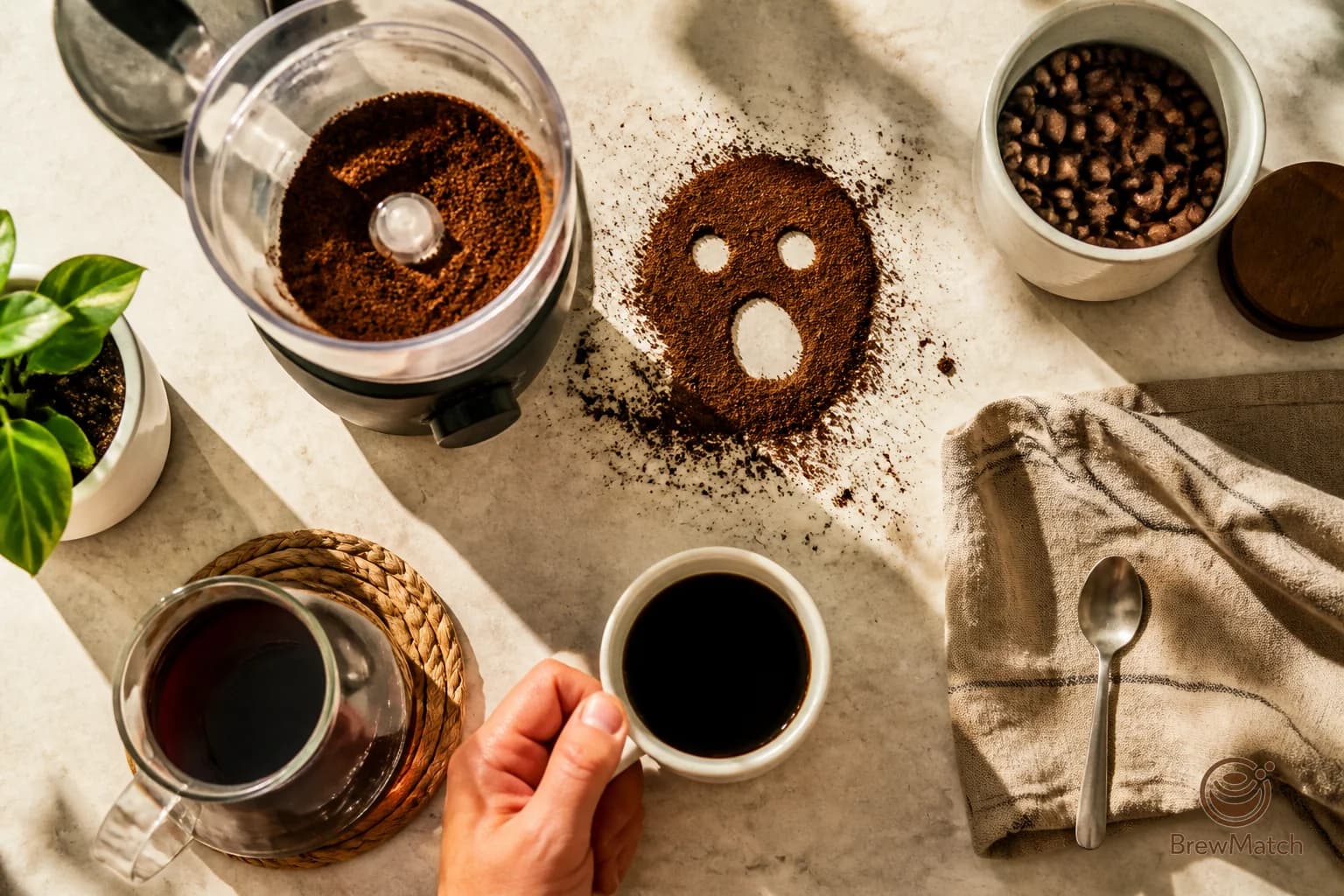
Warm coffee grounds can happen, but they are usually not the main reason your coffee tastes bitter at home. For most home brewers, bitterness is more likely coming from too many fines, a grind setting that is too fine, old grounds stuck in the grinder, or a recipe that extracts too much. Grinder heat gets blamed because it sounds technical. The boring stuff is usually more guilty.
If you grind one normal dose of coffee and the grounds feel a little warm, do not panic. That does not automatically mean you cooked the coffee before brewing it.
Warm grounds are easy to notice and easy to overblame
A grinder is a motor spinning metal or ceramic parts against hard roasted beans. Some warmth is not shocking. If you grind several batches back to back, run a small grinder for a long time, or use a blade grinder until the coffee is basically dust, the grounds may feel noticeably warm.
That still does not prove heat is the bitterness problem.
Home coffee drinkers often make this jump:
- Coffee tastes bitter.
- Grounds felt warm after grinding.
- Grinder heat must be ruining the coffee.
- Time to buy a grinder with better specs.
Maybe. But usually not.
Heat from grinding is a convenient villain because it feels measurable. You can touch the grounds and think, there it is. But taste is messier. Bitterness comes from what gets extracted into the cup, and extraction is affected by grind size, grind consistency, brew time, water temperature, agitation, coffee dose, and the coffee itself.
Grinder heat is rarely the first thing to fix unless your grinder is obviously overheating, smoking, smelling electrical, or getting hot enough that something seems wrong. At that point, the issue is not subtle flavor tuning. It is a gear problem.
The bigger grinder problem is usually fines
If your grinder creates a lot of tiny coffee particles, those fines extract fast. They can make coffee taste bitter, dry, harsh, or muddy even when the main grind size looks reasonable.
This is why warm grounds can fool you. The same grinder that makes the grounds feel warm may also be producing too much dust. The heat gets your attention, but the dust does the damage.
Fines are especially annoying because they do not behave like the rest of the grind. They clog filters, slow pour over drawdown, sneak through metal filters, settle at the bottom of the cup, and over extract quickly. If your coffee tastes sharp and bitter at the end, or the last sip is gritty and harsh, fines are a better suspect than mild grinder warmth.
If this sounds familiar, read Coffee Dust From Your Grinder Makes Coffee Taste Bitter. That is a more common home grinder problem than heat panic.
A too fine grind is still the boring champion
A grind that is too fine can make coffee taste bitter even if the grinder stays perfectly cool.
Fine grounds expose more surface area to water. That can be useful for espresso, but it can punish drip, French press, moka pot, and pour over if the recipe is not built for it. The result is often bitter coffee that also tastes dry or heavy.
The tradeoff is simple: finer grinding gives water easier access to flavor, but it also makes over extraction easier. Coarser grinding can reduce bitterness, but go too coarse and the coffee may become sour, thin, or empty.
So do not chase cool grounds before you try one small grind adjustment.
Move one notch coarser if your grinder has settings. If it does not, shorten the grind time slightly if you are using a blade grinder, though that is an imprecise fix. Brew the same coffee again with the same amount of water and coffee. If the bitterness drops, heat was probably not your main issue.
For a deeper version of that fix, see Coffee Ground Too Fine Can Taste Bitter and Dry.
When grinder heat is worth paying attention to
Grinder heat is not fake. It just gets promoted too early.
Pay attention to heat if one of these is true:
- You grind a lot of coffee in a row.
- The grinder body gets uncomfortably hot.
- The grounds smell flat, scorched, or oddly dull right after grinding.
- Your grinder struggles, stalls, or sounds strained.
- You use a blade grinder and keep running it for a long time to chase a finer grind.
- You grind for multiple people every morning, not just one cup.
In those cases, heat can be part of a larger grinder problem. But even then, ask what the heat comes with. Is the grind wildly uneven? Is there visible powder mixed with chunks? Does the grinder retain old grounds? Is it hard to clean? Those things usually affect flavor more directly than the ground coffee being slightly warm.
A good grinder for less bitter coffee is not just a cooler grinder. It should give you a reasonably consistent grind, enough adjustment for your brew method, and a design you can keep clean without treating it like a weekend project.
If you want help picking coffee that matches what you actually like instead of guessing from roast labels and grinder specs, try BrewMatch. It is built for taste matching, not coffee gatekeeping.
Do not buy a low speed grinder just because your coffee is bitter
Low speed grinders, powerful motors, bigger burrs, and premium build quality can be useful. They can also be expensive distractions if your recipe is off.
A grinder with better consistency may reduce bitter edges. A grinder with less retention may stop old coffee from sneaking into the next brew. A grinder with clearer settings may help you make repeatable adjustments.
Those are real reasons to upgrade.
But buying a grinder because it promises less heat is risky if you have not checked the cheaper causes first. If your coffee is bitter because the grind is too fine, a new grinder set too fine will still make bitter coffee. If your coffee is bitter because your brew runs too long, a cooler motor will not rescue it. If your coffee is bitter because stale grounds are trapped inside the grinder, heat is not the main story.
People love gear explanations because they turn taste into shopping. Sometimes shopping helps. Sometimes it just gives you nicer bitter coffee.
The quick test before blaming heat
Run this simple test before deciding your grinder is overheating your coffee.
Use the same beans, same water, same brewer, and same coffee dose. Change only one thing.
Brew 1: Grind as usual.
Brew 2: Grind one step coarser, or slightly shorter if using a blade grinder.
Taste both while warm and again after they cool a little.
If Brew 2 tastes smoother and less bitter, the issue was likely grind size or fines, not heat. If both are equally bitter, look at brew time, water temperature, roast level, dirty equipment, or old retained grounds. If the grinder gets hot and the coffee smells strange before brewing, then heat may deserve a closer look.
This test is not fancy. That is the point. You do not need a lab to find out whether your grinder is the villain or just standing near the crime scene.
Practical checklist for bitter coffee and warm grounds
Before replacing your grinder, check these in order:
- Grind one step coarser and brew again.
- Look for powdery dust mixed into the grounds.
- Clean out trapped old grounds if your grinder allows it.
- Avoid grinding several batches back to back in a small grinder.
- Stop running a blade grinder long enough to turn beans into dust.
- Keep the same coffee to water ratio while testing.
- Taste the coffee before adding milk or sweetener.
- Notice whether bitterness is harsh, dry, muddy, burnt, or only in the aftertaste.
- Check whether the brew is taking longer than usual.
- Upgrade only if the grinder cannot produce a consistent enough grind for your brew method.
The order matters. Start with the changes that cost nothing. Then decide whether the grinder is actually limiting you.
What to look for if you do upgrade
If you do decide to buy a new grinder, do not shop by heat claims alone.
For less bitter coffee at home, look for:
- Consistent grind size for your brew method.
- Enough settings to make small adjustments.
- Easy cleaning so old grounds do not build up.
- Low retention if you switch coffees often.
- A design that does not create obvious dust and chunks together.
- A workflow you will actually use every morning.
That last point sounds basic, but it matters. The best grinder on paper is not helpful if it is annoying enough that you avoid dialing it in or cleaning it.
The calmer diagnosis
If your coffee tastes bitter and your grounds feel warm, do not start with grinder heat. Start with extraction.
Try a coarser grind. Watch for fines. Clean the grinder. Keep the recipe steady while testing. Then decide if the grinder is truly holding you back.
Warm grounds can be a clue, but they are rarely the whole case. Bitter coffee is usually fixable without turning breakfast into a motor engineering debate.
Want a smoother coffee pick without decoding every bag and grinder claim yourself? Use BrewMatch to match your taste preferences to coffees that make sense for how you actually drink coffee.
Find your match
Not sure which beans fit your taste?
Use BrewMatch to turn your flavor goal, brew method, and current coffee problem into a practical roast and bean profile.
Try BrewMatch