
August 22, 2026
A Hard to Clean Grinder Can Keep Coffee Bitter
If your grinder traps old grounds you can keep brewing stale bitter coffee even with good beans. Cleanability is not glamorous but it absolutely affects taste.
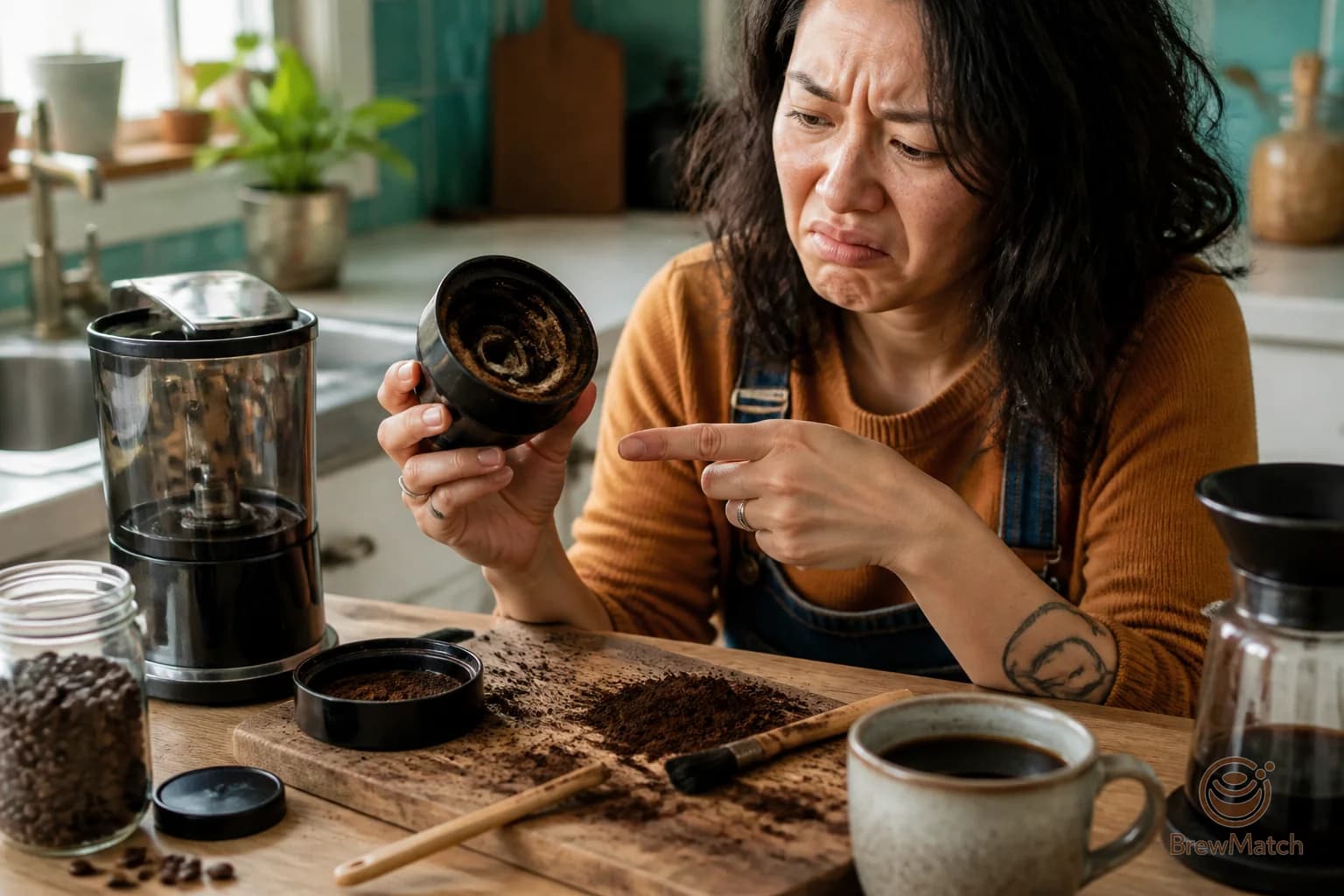
A hard to clean grinder can keep coffee bitter because old grounds and oily residue hang around inside it. Those leftovers mix into fresh coffee, especially with darker roasts, fine grinds, and daily use. You do not need to obsessively detail your grinder every morning, but if cleaning it feels like taking apart a lawn mower, bitterness can become a routine problem.
Grinder shopping usually gets hijacked by burr shape, motor power, and whether the thing looks expensive on the counter. Fine. Those details can matter. But for home coffee drinkers, cleanability is one of the boring specs that quietly decides whether your coffee tastes fresh or stale.
The taste problem is old coffee hiding in the grinder
Every grinder holds onto some coffee. Grounds collect around burrs, chutes, corners, anti static flaps, dosing cups, and little plastic tunnels you forget exist until you shine a flashlight into them.
That trapped coffee does not stay neutral. It dries out. It oxidizes. If the beans are oily, residue coats surfaces. Then tomorrow's fresh coffee picks up yesterday's stale dust.
That can show up as:
- bitterness that feels stale rather than bold
- a dry finish even when the brew time looks normal
- a burnt edge from dark roast residue
- muddy flavor across different bags
- coffee that tastes worse after a week of using the same grinder
People often blame the beans at this point. Sometimes the beans are part of it. But if every bag slowly starts tasting like the same bitter version of itself, the grinder deserves suspicion.
For a deeper look at fines and residue, read Coffee Dust From Your Grinder Makes Coffee Taste Bitter.
Cleanability matters more than fancy grinder language
A grinder can have impressive specs and still be annoying to live with.
If it is hard to open, awkward to brush out, or full of narrow internal paths, you will clean it less often. That is not a character flaw. That is normal home behavior. Gear that fights you usually gets ignored.
The tradeoff is simple: a grinder that performs well on paper but traps coffee can make your daily cup taste older than it should.
When you are trying to make coffee less bitter, the question is not just “Are the burrs good?” It is also “Can I actually keep this thing clean without turning Saturday morning into appliance surgery?”
That matters most if you:
- drink dark roast
- grind fine for espresso or moka pot
- switch between different coffees
- use flavored beans sometimes
- grind every day
- notice bitterness getting worse over time
None of this means you need the most expensive grinder. It means the grinder should be easy enough to maintain that you will actually do it.
Signs your grinder is holding stale coffee
You do not need special tools to spot the pattern. Look for these clues.
The first cup after cleaning tastes better
If your coffee suddenly tastes clearer after brushing out the grinder, that is not a coincidence. It means trapped grounds were affecting the cup.
Do not overthink it. If cleaning improves flavor, cleanability is part of your taste problem.
Different beans taste strangely similar
A bright medium roast and a chocolatey dark roast should not taste like the same bitter cup. If every bag turns into one flat, roasted, dry flavor, stale residue may be muting the differences.
The grinder smells stronger than the beans
Open the grinder and smell it. If the grinder smells oily, stale, smoky, or like old dark roast, that smell can move into your cup.
Fresh beans should not have to fight a grinder that already smells like yesterday.
Grounds are stuck in hidden places
Tap the grinder after use. Brush around the chute. Remove the catch cup. If old coffee keeps falling out long after grinding, that coffee has been sitting in the path.
A little retention is normal. A surprise avalanche is not ideal.
What to look for in an easy to clean coffee grinder
If you are buying a grinder because bitter coffee is driving you nuts, do not shop only by price or burr type. Look at how the grinder comes apart.
Good signs include:
- burr access without a complicated teardown
- a short and visible grind path
- a chute you can brush or puff clean
- fewer hidden corners where grounds collect
- removable parts that line up easily when reassembled
- a design that does not require recalibrating everything after basic cleaning
Bad signs include:
- lots of tiny screws for normal access
- a long internal chute you cannot reach
- oily grounds stuck behind plastic flaps
- unclear cleaning instructions
- parts that feel fragile or annoying to remove
- reviews mentioning clogging, static buildup, or retained grounds
That last point is worth reading for. User reviews are noisy, but if many people say a grinder is hard to clean, believe them. The bitterness penalty shows up later.
If you want help matching your taste preferences to coffee that is less likely to fight your setup, try BrewMatch. It is built for home coffee drinkers who want better flavor without pretending coffee should require a lab coat.
Cleanability is not the same as low retention
Low retention means the grinder holds back less coffee after grinding. Cleanability means you can easily remove what does stay behind.
Those overlap, but they are not identical.
A grinder can retain only a small amount but be irritating to clean when oils build up. Another grinder might hold a bit more coffee but make it simple to brush out the burr area and chute.
For bitter coffee, both matter. Less trapped coffee is good. Easy access is also good. The mistake is buying a grinder because it promises low retention and then discovering that cleaning it feels like opening a safe.
Dark roast makes this problem louder
Dark roast is not automatically bad. Plenty of people like it because it tastes chocolatey, heavy, and familiar. The issue is that darker beans often have more surface oils, especially if they are roasted very dark.
Those oils can cling inside the grinder. Once they build up, they can make fresh coffee taste harsher, smokier, or more bitter than the beans should.
If you mostly drink dark roast, cleanability deserves extra attention. A grinder that handles light roast neatly may still get messy with oily beans. That does not mean you have to quit dark roast. It means you need a grinder you can keep from becoming a stale coffee storage unit.
Practical checklist before you blame the beans
Use this before replacing your coffee, grinder, or entire morning personality.
- Empty the hopper or bean chamber.
- Unplug the grinder if it is electric.
- Remove the burr or top section if the grinder allows it.
- Brush out visible grounds around the burrs.
- Clean the chute as far as you can safely reach.
- Tap the grinder gently to loosen trapped grounds.
- Wipe oily removable parts with a dry cloth unless the manual says otherwise.
- Avoid water near burrs and motors unless the manufacturer clearly allows it.
- Grind a small amount of coffee after cleaning and discard it if needed.
- Brew your normal recipe and compare the taste.
If the coffee tastes cleaner, less stale, or less bitter, you found a real variable.
You do not need to clean like this every day. For many home drinkers, a quick brush routine plus occasional deeper cleaning is enough. The point is consistency, not punishment.
When cleaning will not fix the bitterness
Cleaning helps when stale residue is the issue. It will not fix every bitter cup.
Your coffee can still taste bitter if:
- the grind is too fine
- the brew time is too long
- the water is too hot
- the dose is off
- the roast is darker than you enjoy
- the grinder produces too many fines
- the coffee is old before it reaches the grinder
If the grinder is clean and the coffee still tastes dry and harsh, check grind size next. A too fine grind can pull too much from the coffee and create bitterness even with a clean setup. This guide explains that pattern: Coffee Ground Too Fine Can Taste Bitter and Dry.
Should you replace a grinder because it is hard to clean?
Maybe. Not immediately.
First, clean it well and see if the cup improves. If it does, try a realistic cleaning routine for two weeks. If the coffee stays better, you may not need a new grinder.
But if the grinder clogs constantly, traps a lot of coffee, smells stale soon after cleaning, or makes basic maintenance miserable, replacement is reasonable. Not because new gear is magic. Because a grinder you avoid cleaning can keep dragging yesterday's coffee into today's cup.
The buying rule is boring but useful: choose the grinder you can maintain, not the one with the loudest spec sheet.
Less bitter coffee starts with fewer stale leftovers
A clean grinder will not turn bad coffee into great coffee. But it can stop good coffee from tasting older, harsher, and more bitter than it should.
If you are shopping for a grinder, ask how easy it is to clean before you obsess over burr geometry. If you already own one, give it a real cleaning before you blame the beans.
And if you want coffee recommendations that fit the smoother side of your taste, use BrewMatch. Bitter coffee is usually fixable. You just need to stop letting stale grounds vote in every cup.
Find your match
Not sure which beans fit your taste?
Use BrewMatch to turn your flavor goal, brew method, and current coffee problem into a practical roast and bean profile.
Try BrewMatch