
August 27, 2026
Grounds Stuck in Your Grinder Can Make Coffee Taste Bitter
Fresh beans can still taste bitter if your grinder is feeding yesterday’s stale grounds into today’s cup. Check this before blaming the bag.
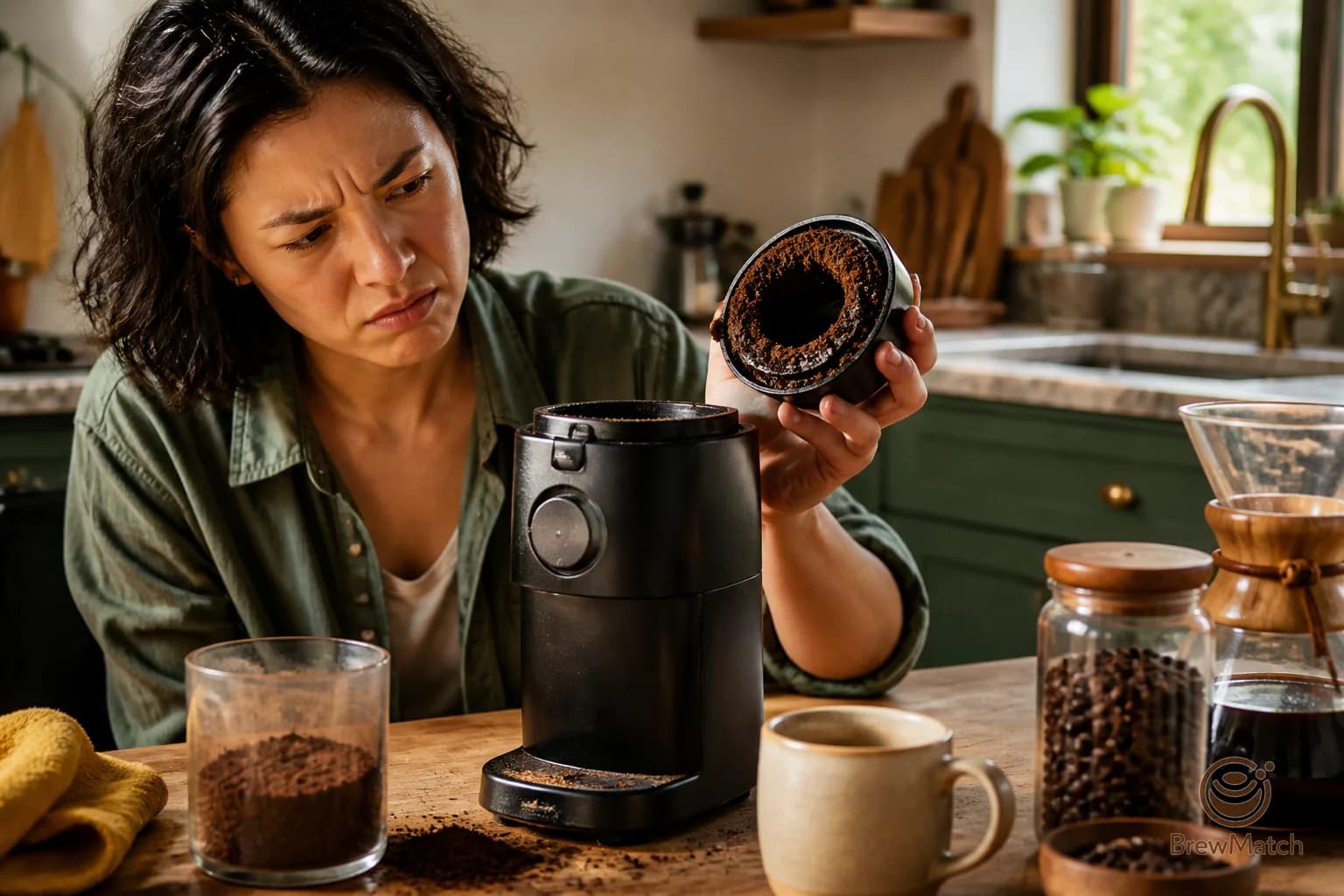
Grounds stuck in your grinder can make coffee taste bitter, flat, dusty, or stale even when the beans are fresh. The problem is not always the grinder being “bad.” It is often retained coffee hiding in the chute, burr chamber, dosing cup, or corners of the grinder, then mixing into your next brew. A little old coffee can drag down a whole cup.
This is one of those boring problems that feels too small to matter until you fix it.
What stuck grounds actually do to your coffee
When coffee is ground, it starts losing aroma fast. The smaller the particles, the more surface area is exposed to air. That means old trapped grounds go stale much faster than whole beans sitting in a bag.
If your grinder holds onto old grounds, tomorrow’s “fresh” brew may include yesterday’s coffee dust. Sometimes it is only a tiny amount. Sometimes it is enough to tint the whole cup with a stale, bitter edge.
You might notice:
- A dry bitter finish that hangs around
- Coffee that smells better before brewing than it tastes after brewing
- A muddy or dusty flavor
- A stale note even with newly opened beans
- More bitterness in the first cup after the grinder has sat overnight
That last one is the giveaway. If the first brew tastes worse than the second, your grinder may be spitting out old coffee before it gets to the fresh stuff.
This is not the same as grind size bitterness
A too fine grind can absolutely make coffee bitter. It slows water down and pulls more bitter compounds from the coffee bed. If your brew tastes bitter and dry, grind size should still be on the suspect list. We covered that more directly in Coffee Ground Too Fine Can Taste Bitter and Dry.
But stuck grounds create a different problem.
With grind size, the fresh coffee is being extracted too aggressively. With retained grounds, stale coffee is joining the party before brewing even starts.
The fix is different too. Grinding coarser may help if extraction is the issue. It will not remove old coffee packed into a chute.
Where coffee gets trapped in a grinder
Most home grinders keep some coffee inside after each use. That does not mean every grinder is defective. It means coffee is messy, oily, and full of tiny particles.
Common hiding places include:
- The exit chute where grounds leave the burrs
- The burr chamber
- Corners around the dosing cup or grounds bin
- Anti static flaps or declumper screens
- Screw heads and small ledges inside the grind path
- The area under the hopper on some grinders
Dark roasts can make this worse because they are often oilier and more brittle. They can leave more residue, clump more easily, and stick to surfaces. That does not make dark roast “bad.” It just means your grinder may need a little more attention if you use oily beans.
The first cup test
Try this before you buy anything.
Tomorrow morning, before brewing your normal cup, run the grinder for a second or two and throw away whatever comes out. Then grind your actual dose and brew as usual.
If the coffee tastes cleaner, sweeter, or less stale, you have a retention problem.
You do not need to purge half a bag. Start small. For most home setups, a short purge is enough to tell you whether the grinder is holding onto old coffee.
The tradeoff is obvious: purging wastes a little coffee. Drinking stale grounds wastes the whole cup. Pick your villain.
When stuck grounds turn into bitter dust
Retained coffee often includes fines, which are the tiny dust like particles created during grinding. Fines extract quickly. Too many of them can push a cup toward bitterness, dryness, and harshness.
If your grinder has old fines sitting in the chute, they can get knocked loose into a later brew. That means one cup may be fine and the next one tastes weirdly bitter, even with the same beans and same recipe.
This is also why shaking, tapping, or slapping the grinder is not always harmless. A light tap to clear the chute is fine. Beating the machine like it owes you money can dump old fines into your dose.
For a deeper look at the dust side of this problem, read Coffee Dust From Your Grinder Makes Coffee Taste Bitter.
A simple cleaning routine that actually helps
You do not need a laboratory ritual. You need a routine you will repeat.
After grinding:
- Tap the grinder gently to clear loose grounds.
- Brush the chute if your grinder gives you access.
- Empty the grounds bin instead of letting coffee sit there.
- Wipe oily residue from reachable surfaces.
- Deep clean on a schedule that matches how often you brew.
If you drink coffee daily, a quick weekly brush out is reasonable for many grinders. If you use oily dark roasts, you may need to clean more often. If you brew once a week, old trapped grounds may be more noticeable because they sit longer between uses.
Do not spray water into the grinder. Do not rinse burrs unless your grinder’s manual specifically says a part is washable. Coffee grinders and mystery moisture are a bad friendship.
What to look for if you are choosing a grinder
If you are shopping for a grinder because your current one keeps making bitter coffee, do not get hypnotized by burr shape, motor specs, or fancy words on the box.
For this problem, look for boring physical details:
- Easy access to the chute
- A grind path that does not hide coffee in deep corners
- A grounds bin that empties cleanly
- Replacement parts or cleaning guidance from the brand
- A burr chamber you can open without a tiny engineering degree
- Reviews that mention low retention in normal daily use
“Low retention” means the grinder holds onto less coffee after grinding. It is not just an espresso nerd phrase. It matters for home drinkers who want the coffee they grind today to be the coffee they actually brew today.
If you are not sure whether your bitterness is coming from beans, grinder, or brew method, BrewMatch can help narrow the likely cause based on how your coffee tastes and how you brew at home.
Signs your grinder is worth keeping
Do not throw out a grinder just because some grounds stick inside. Almost every grinder retains something.
Your grinder may be fine if:
- A quick purge fixes the stale edge
- Cleaning makes the coffee noticeably better
- Bitterness changes when you adjust grind size
- The grinder produces mostly even grounds for your brew method
- You can access the dirty parts without a fight
In that case, your grinder is not doomed. It just needs a cleaner workflow.
Signs the grinder may be the wrong fit
A grinder becomes a bigger problem when it keeps trapping coffee and makes cleaning painful enough that you stop doing it.
Watch for:
- Grounds packed tightly in the chute after every use
- Big clumps that fall out randomly
- Bitter stale flavor even after cleaning
- Coffee spraying everywhere because you have to shake the grinder hard
- A burr chamber that is hard to open or never seems clean
- Dark oily buildup that comes back fast
That does not mean you need the most expensive grinder on the shelf. It means you need one that fits your beans, your brew method, and your tolerance for cleaning. A grinder that is technically impressive but annoying to maintain can still make your daily coffee worse.
Practical checklist for less bitter coffee from your grinder
Use this before changing beans or buying new gear:
- Smell the grounds that come out first. If they smell stale, purge them.
- Brew one cup after a short purge and compare it with your usual cup.
- Brush the chute and grounds bin.
- Check for packed coffee around the exit path.
- Clean more often if you use oily dark roast.
- Avoid aggressive tapping that dumps old fines into the dose.
- If bitterness is dry and sharp, test a slightly coarser grind.
- If bitterness is stale and flat, focus on trapped grounds.
- If the grinder is miserable to clean, factor that into your next purchase.
One change at a time. If you purge, clean, change grind size, change beans, and change water all in the same morning, you will have no idea what worked.
The fix is usually less dramatic than the cup tastes
Bitter coffee feels like a bean problem because the beans are the thing you paid for. But sometimes the beans are fine and your grinder is quietly seasoning every cup with old grounds.
Start with the first cup test. Purge a tiny amount, clean the chute, and brew again. If the coffee tastes cleaner, you found a fix that costs almost nothing.
If you want help matching smoother coffee to how you actually brew, try BrewMatch. It is built for home drinkers who want better coffee without pretending every morning needs to be a tasting exam.
Find your match
Not sure which beans fit your taste?
Use BrewMatch to turn your flavor goal, brew method, and current coffee problem into a practical roast and bean profile.
Try BrewMatch