
August 6, 2026
A Grinder With Too Few Settings Can Keep Coffee Bitter
If one grinder click takes your coffee from bitter to weak your beans may not be the problem. Your grinder might be giving you bad choices.
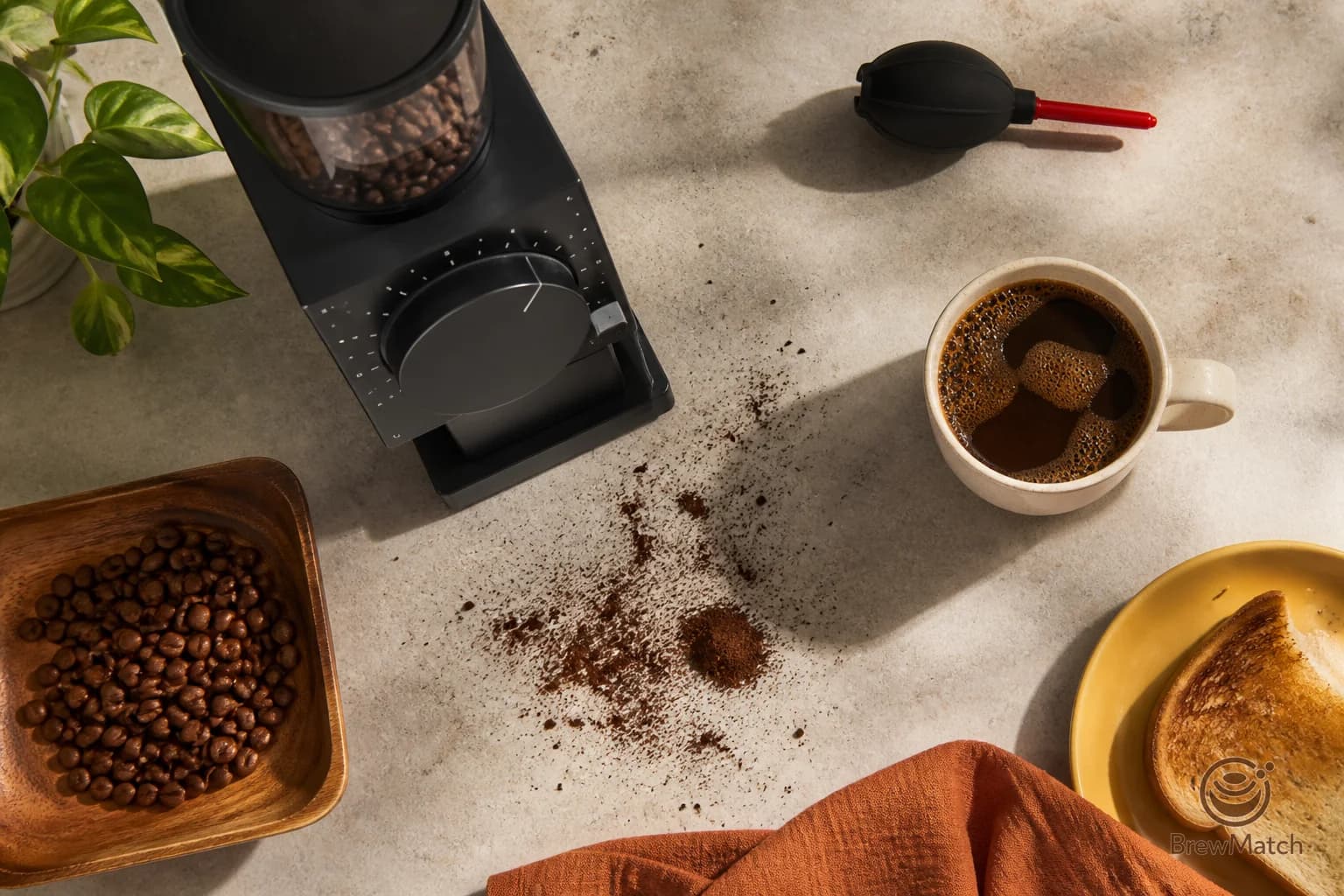
If your coffee stays bitter no matter which beans you buy, your grinder may not give you enough usable settings. One click might be too fine and bitter. The next click might be too coarse and thin. That leaves you stuck blaming roast level, water, or your own taste when the grinder is quietly forcing bad tradeoffs.
This is one of the sneakiest grinder problems because the grinder still works. It spins. It makes grounds. It looks like you have choices. You just may not have the right choices.
The grinder problem people notice too late
Most home coffee drinkers think about grinders in simple terms: burr grinder good, blade grinder bad. That is a useful starting point, but it is not the whole story.
A burr grinder can still make frustrating coffee if its settings are too far apart. You turn the dial one notch coarser and the coffee loses body. You turn it one notch finer and the cup gets harsh, bitter, or dry. The machine is not broken. The beans are not cursed. The adjustment range is just too blunt.
This matters most when you are trying to fix bitterness. Bitterness often comes from extracting too much from the coffee grounds. Grind size is one of the main ways you control that. Finer grounds usually extract faster. Coarser grounds usually extract slower. If your grinder only lets you make big jumps, you are trying to tune taste with a sledgehammer.
For a home drinker, that can feel ridiculous. You bought whole beans. You grind fresh. You follow the recipe. The cup still tastes like it is scolding you.
Bitter coffee can be a stuck between settings problem
A stuck between settings problem sounds like this:
- Setting 6 tastes bitter and dry.
- Setting 7 tastes weak, thin, or a little sour.
- There is no setting 6.5.
That missing middle is where your better cup might live.
People often misread this as a bean problem. They buy a lighter roast, then a darker roast, then a bag with tasting notes that sound like dessert. The coffee changes, but the same harsh edge keeps showing up.
If a single grinder adjustment causes a huge taste swing, pay attention. That is a sign your grinder may not have enough precision for the brew method you use most.
This is especially common with pour over and espresso, but drip machines can suffer too. Any brew method that depends on consistent water flow through the coffee bed will punish big grind jumps. French press is usually more forgiving, but even there, too much coffee dust can make the cup muddy and bitter.
If you suspect your coffee is simply ground too fine, start with Coffee Ground Too Fine Can Taste Bitter and Dry. If the next coarser setting ruins the cup in the other direction, come back to the grinder range.
What enough grinder settings actually means
Enough settings does not mean the biggest number printed on the box. Some grinders advertise a huge number of clicks, but only a smaller part of the range is useful for the way you brew.
For bitter coffee troubleshooting, you want three things:
- Small enough steps to make gentle taste changes
- A usable range around your normal brew method
- Grounds that do not include a ton of powdery dust
That last part matters because fine dust extracts quickly. Even if most of your coffee is the right size, too much dust can bring bitterness into the cup early. You may set the grinder coarser and still taste harshness because the tiny particles are doing their own thing.
You do not need to become a grinder engineer. You just need to avoid buying a grinder that gives you three fake choices: too fine, too coarse, and still annoying.
Match the grinder to the coffee you actually make
A grinder can be perfectly decent and still wrong for your routine.
If you mostly brew drip coffee, you need a grinder that is comfortable around medium grind sizes. Not just technically able to get there. Comfortable. Repeatable. Easy to adjust a little without overshooting.
If you mostly make French press, you need a grinder that can go coarse without producing a pile of dust. Coarse chunks mixed with powder can taste hollow and bitter at the same time, which is a terrible little combo.
If you make pour over, you need finer control because small grind changes can change the whole cup. The water flow, contact time, and extraction all react quickly.
If you make espresso, grinder adjustment becomes even more demanding. Espresso is not forgiving. A grinder with broad steps can make you chase bitterness all morning.
Before you shop, be honest about what you brew most often. Do not buy around a fantasy version of your kitchen. If you make drip coffee five days a week and espresso once a month, the drip range deserves more attention.
Not sure whether your taste issue is the grinder, the beans, or the recipe? BrewMatch can help you narrow down what kind of coffee profile is more likely to taste smooth to you before you keep buying random bags.
Try these fixes before buying another grinder
A limited grinder is annoying, but you may be able to work around it.
If the finer setting tastes bitter and the coarser setting tastes weak, use the coarser setting and adjust strength without increasing bitterness. Try slightly less water or a little more coffee. Do not automatically brew longer. Longer contact can bring bitterness right back.
If the coarser setting tastes too thin, check your water temperature. Very hot water can make bitterness worse, but water that is too cool can make coffee taste flat or sour. You are looking for balance, not a heroic temperature stunt.
If you brew pour over, pour more gently. Aggressive pouring can stir up the bed and pull harsh flavors from uneven grounds. If you brew French press, avoid grinding finer just to make the cup stronger. Use a little more coffee instead.
If your grinder has a numbered dial, write down what you tried. Taste memory is flaky before breakfast. Notes beat vibes.
Practical checklist for grinder related bitterness
Use this checklist before blaming the beans.
- Does one grinder click make a dramatic difference in taste?
- Is one setting bitter and dry while the next is weak or sour?
- Do your grounds include a lot of powdery dust?
- Does the bitterness show up across multiple bags of beans?
- Does the problem get worse with pour over or espresso?
- Are you grinding finer just to make coffee taste stronger?
- Have you tried changing water amount or coffee dose instead of grind?
- Can you return to the same setting easily tomorrow?
- Does your grinder feel vague around the setting you use most?
If you answered yes to several of these, your grinder may be limiting your ability to fix the cup.
Buying signals that are mostly noise
Grinder shopping gets weird fast. Brands throw around materials, motor claims, burr shapes, app features, and sleek photos of beans falling in slow motion. Most of that does not help you make less bitter coffee tomorrow.
For home bitterness troubleshooting, do not overvalue these signals:
- A premium look on the counter
- A huge settings number without a clear usable range
- Espresso claims when you only brew drip
- Fancy wording around power or speed
- A high price that implies better taste by default
Price can matter, but it does not magically solve bitterness. A costly grinder can still be a poor match for your brew method or your patience level. If you are tempted to spend your way out of bitter coffee, read Expensive Grinders Do Not Automatically Make Coffee Less Bitter before you click buy.
The better question is not “Is this grinder impressive?” It is “Can this grinder make small useful adjustments where I actually brew?”
That is less glamorous. It is also the thing that changes your cup.
When the grinder is not the culprit
A limited grinder is common, but it is not the only cause of bitter coffee.
Your coffee can taste bitter because the water is too hot, the brewer is dirty, the beans are stale, the dose is too high, or the coffee sits too long before you drink it. Good troubleshooting does not pick one villain and build a personality around it.
Still, the grinder deserves attention because it sits between the beans you bought and the brew you drink. If it gives you uneven grounds or crude adjustments, every recipe gets harder.
That is why “buy better beans” often disappoints. Better beans still need a grind that lets them behave.
The bottom line
A grinder with too few useful settings can keep coffee bitter even when everything else looks right. The biggest clue is a jumpy dial: one setting tastes harsh, the next tastes hollow, and there is no satisfying middle.
Before buying another bag, test whether your grinder can make small taste changes. If it cannot, adjust dose, water, and brew time around the limitation. If you are shopping, choose a grinder for the brew method you actually use, not the one that looks most serious online.
Your coffee is not doomed. Your grinder may just be making dramatic decisions on your behalf.
If you want a calmer way to find beans and brew choices that fit your taste, try BrewMatch. It is built for home coffee drinkers who want better coffee without pretending to be a competition judge.
Find your match
Not sure which beans fit your taste?
Use BrewMatch to turn your flavor goal, brew method, and current coffee problem into a practical roast and bean profile.
Try BrewMatch