
August 29, 2026
Grind Consistency Is the Grinder Spec That Actually Helps Bitter Coffee
Stop shopping for grinder hype. If bitter coffee keeps showing up in your cup the spec worth caring about is grind consistency.
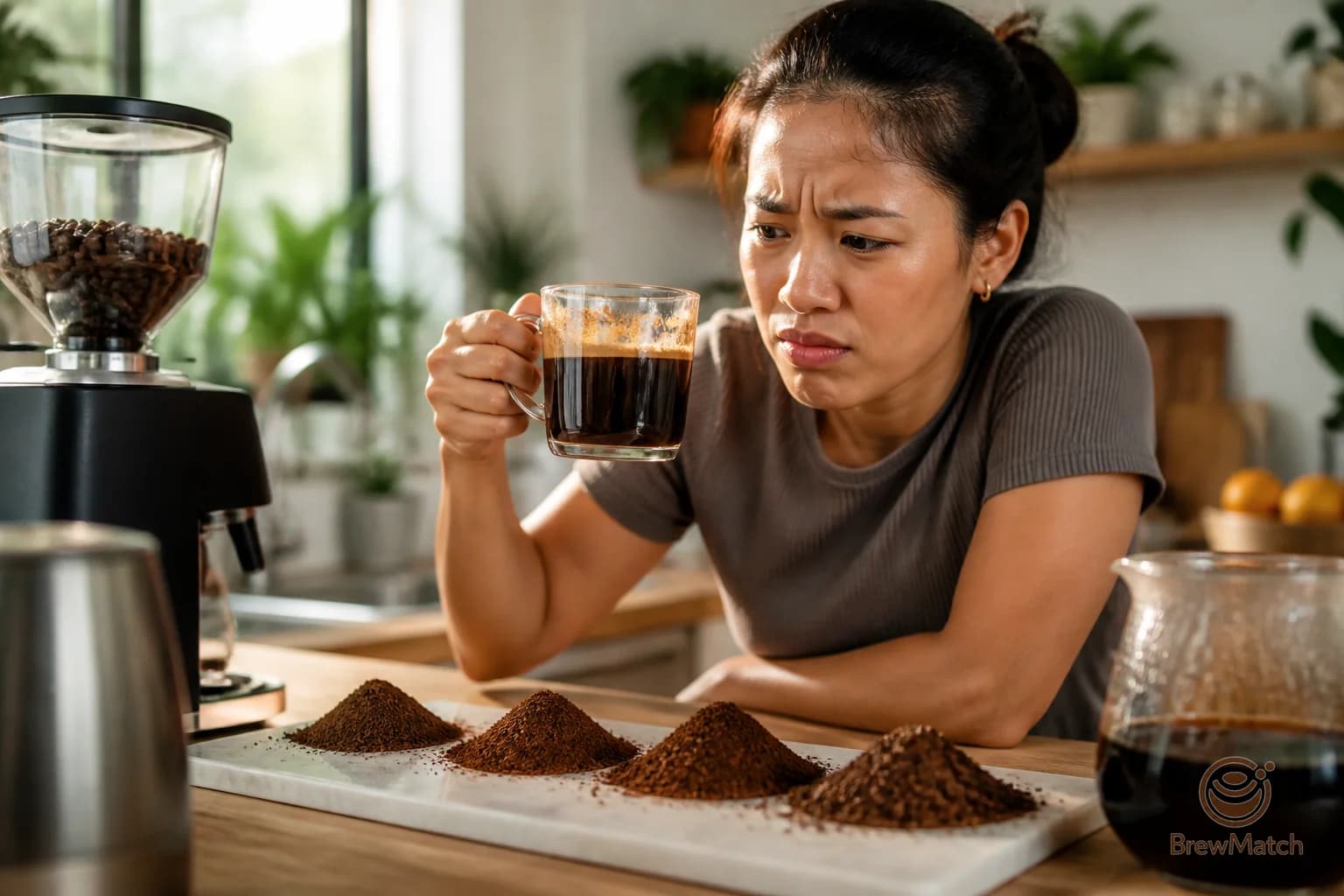
If your coffee tastes bitter and you are shopping for a grinder, care less about fancy burr names and more about grind consistency. Uneven grounds can push part of your coffee too far while the rest barely extracts. That gives you the worst combo: harsh bitterness, thin body, and a cup that feels impossible to fix with beans alone.
A better grinder will not rescue every bad brew. But a grinder that produces a tighter, more even grind gives you a fair shot at making coffee taste smoother without guessing wildly every morning.
What grind consistency actually means
Grind consistency means most of your coffee grounds are close to the size you intended.
If you set your grinder for drip, you want mostly medium pieces. If you set it for French press, you want mostly coarse pieces. If you set it for espresso, you want mostly fine pieces. You do not need laboratory perfection. You do need fewer extremes.
The trouble starts when one grind contains too many tiny dusty particles and too many chunky pieces at the same time.
The tiny pieces extract fast. They can turn bitter, dry, and harsh before the rest of the coffee catches up. The large pieces extract slowly. They can leave the cup tasting thin, sharp, or hollow. Put both together and the coffee can taste bitter but still not rich.
That is why people often say, I used good beans and measured everything, but it still tastes bad. The recipe may be fine. The grind may be messy.
The bitter coffee problem with uneven grounds
Coffee brewing is basically controlled dissolving. Hot water pulls flavor from the grounds. Pull too little and coffee tastes sour, sharp, or weak. Pull too much and it turns bitter, dry, or burnt tasting.
Uneven grind size makes that control harder.
Imagine brewing a basket with three types of pieces:
- Dusty fines that give up flavor almost instantly
- Medium particles that brew the way you wanted
- Big chunks that lag behind
By the time the medium pieces taste balanced, the fines may already be over extracted. If you brew longer to get more from the big chunks, the fines get punished even more. That is where bitterness gets stubborn.
This is also why changing beans sometimes feels like a fake fix. A smoother bag can help, but if your grinder is spraying out random particle sizes, even gentle beans can taste rough.
If your coffee tastes bitter and sour in the same cup, uneven extraction may be part of the mess. BrewMatch has a deeper guide here: Coffee Can Taste Bitter and Sour at the Same Time.
Do you need an expensive grinder for consistency?
Not automatically.
Price can buy better parts, better alignment, stronger motors, and easier adjustment. It can also buy a shiny metal box with features you barely use. The tradeoff is simple: you want enough grinder quality to make repeatable coffee, not a countertop trophy.
For bitter coffee, a grinder is worth considering when it gives you:
- A more even particle size
- Small enough setting changes for your brew method
- Less coffee dust than your current grinder
- A stable grind setting that does not drift
- Easy cleaning so old grounds do not build up
You do not need to memorize burr geometry or pretend you can taste the difference between every grinder design. Home coffee gets better when the grinder lets you make one controlled change at a time.
If you want a more shopping focused breakdown, read 5 Grinder Features That Make Coffee Taste Less Bitter.
The grinder specs people overrate
Some grinder details get treated like magic. They are not useless, but they are often less important than people make them sound.
Burr material gets too much attention. Steel versus ceramic sounds important, but either can make good or bad coffee depending on the grinder design, alignment, settings, and how clean it stays.
Motor power can matter, especially for speed and durability, but raw power does not guarantee a sweeter cup.
More settings can help, but only if those settings land where your brew method needs them. A grinder with many awkward settings can still be annoying.
A beautiful body does nothing for bitterness if the grounds come out chaotic.
Coffee gear marketing loves specs that are easy to print on a box. Your cup cares about what lands in the filter.
If you are not sure whether your taste preferences are the issue or your setup is working against you, BrewMatch can help match you with coffees that fit how you actually want coffee to taste. Less guessing, fewer bags bought on hope.
How to spot poor grind consistency at home
You do not need a microscope. You just need to look closely and taste honestly.
After grinding, spread a small amount of coffee on a white plate or paper towel. Look for extremes. Do you see powder mixed with boulders? Does the grind look like one general size or like coffee gravel after an argument?
Then taste the pattern.
Poor grind consistency often shows up as:
- Bitter finish even when the coffee smells good
- Dry feeling on your tongue
- Weak body even with enough coffee used
- Sourness and bitterness in the same mug
- A muddy layer at the bottom of French press or metal filter coffee
- Drip coffee that changes a lot from batch to batch
One bad cup does not prove your grinder is guilty. But if the same bitterness keeps showing up across different beans and recipes, the grinder deserves suspicion.
A simple grind consistency test
Use one coffee you know, one brew method, and one recipe. Do not change everything at once.
Try this:
- Grind your usual way.
- Brew your normal cup.
- Taste for bitterness, dryness, sourness, and body.
- Grind slightly coarser next time.
- Keep the same coffee amount and water amount.
- Taste again.
If going coarser reduces bitterness but makes the coffee weak fast, your grinder may be producing too many fines. The coarse setting reduces some over extraction, but the uneven grind still keeps the cup from getting full and sweet.
If small grind changes create huge flavor swings, that can also point to poor consistency or settings that are too far apart.
This is where many people blame themselves. They think they are bad at brewing. More often, their equipment is making the recipe harder than it needs to be.
Grinder consistency by brew method
Different brew methods punish uneven grinding in different ways.
For drip coffee, fines can clog the filter and slow the brew. The longer water sits with the grounds, the more bitter and dry the cup can get. If your drip coffee tastes harsh no matter what beans you use, look at grind consistency before you declare drip coffee bad.
For pour over, uneven grounds can cause slow drawdown and uneven flow. Some parts of the coffee bed get overworked while others barely contribute. That can create a cup that tastes sharp at first and bitter at the end.
For French press, fines are more obvious. They slip through the mesh and keep extracting in the cup. That is one reason French press can turn muddy or bitter as it sits.
For espresso, consistency is even less forgiving. Tiny changes in grind can change shot speed. Uneven grinding can make one shot bitter, the next sour, and the next confusing.
The point is not that every brew method needs a luxury grinder. The point is that consistency affects how easy the method is to control.
Practical checklist before you buy a new grinder
Before spending money, run through this list.
- Clean your current grinder if it has old grounds or oily buildup.
- Use fresh enough beans, but do not assume freshness fixes everything.
- Try one click or step coarser if the coffee is bitter and dry.
- Keep your coffee dose and water amount the same while testing.
- Look at the grounds on a light surface after grinding.
- Check whether you see lots of powder mixed with large chunks.
- Notice whether your brew time changes wildly from cup to cup.
- Ask whether the grinder has useful settings for your brew method.
- Avoid buying based only on burr material, color, or brand hype.
- Prioritize repeatability over fancy features.
If your current grinder is clean, adjusted reasonably, and still produces wildly uneven grounds, upgrading may actually help. If your recipe is chaotic, a new grinder may just make expensive chaotic coffee.
What to look for in a grinder if bitterness is the problem
Shop for control, not drama.
For most home drinkers, the better grinder is the one that makes your brew easier to repeat. It should grind evenly enough for your main brew method, adjust clearly, and avoid leaving you trapped between too fine and too coarse.
If you mainly brew drip or pour over, you do not need an espresso obsessed grinder unless it also handles medium ranges well. If you mainly brew French press, you need a grinder that can go coarse without producing a pile of dust. If you brew espresso, you need fine adjustment and consistency under pressure.
Also think about cleaning. A grinder that is annoying to clean can hold stale grounds and oils. That can drag bitterness into cups even when the grind size looks right.
And yes, expensive grinders can be good. They are just not automatically the answer. For more on that trap, read Expensive Grinders Do Not Automatically Make Coffee Less Bitter.
The better way to think about grinder upgrades
Do not ask, what grinder will make my coffee perfect?
Ask, what grinder will make my coffee more controllable?
That question saves money and frustration. It keeps you focused on the cup instead of the spec sheet. Bitter coffee is usually not caused by one glamorous villain. It is usually a chain of small problems: grind size, brew time, temperature, ratio, roast, water, and consistency.
A grinder with better consistency can remove one big variable. Then your other adjustments start making sense.
If you hate bitter coffee and want beans that fit your taste instead of fighting it, try BrewMatch. It is built for home coffee drinkers who want a smoother cup without pretending to be café technicians.
Your grinder does not need to be impressive. It needs to be predictable. That is the spec bitter coffee actually respects.
Find your match
Not sure which beans fit your taste?
Use BrewMatch to turn your flavor goal, brew method, and current coffee problem into a practical roast and bean profile.
Try BrewMatch