
September 9, 2026
Grind by Weight vs Timed Grinders for Less Bitter Coffee
If your coffee tastes bitter some mornings and fine on others the grinder timer might be lying to you. Grind by weight can help but only if the rest of your setup is not a mess.
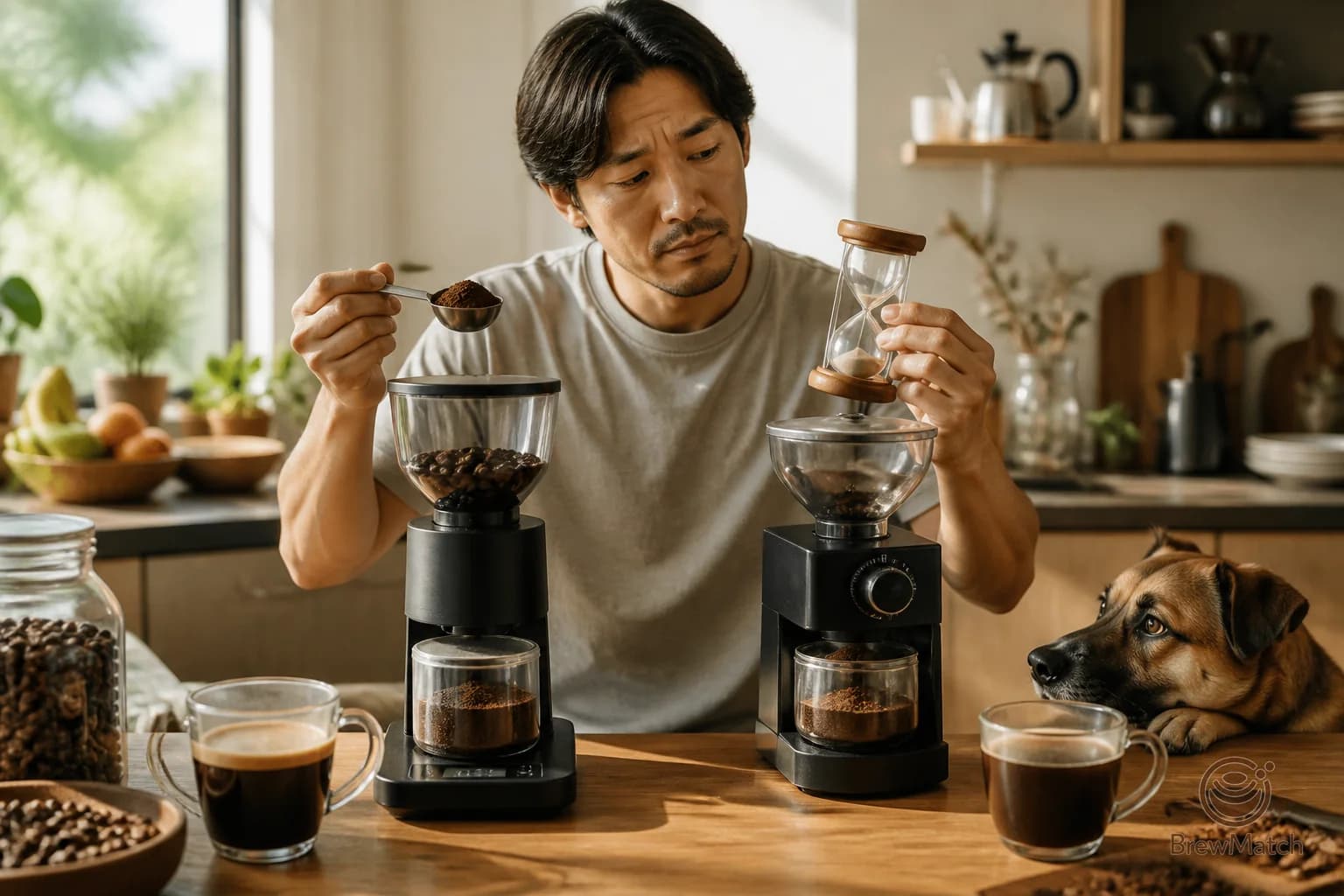
A grind by weight coffee grinder can help make bitter coffee less random because it doses by actual coffee weight, not by grinding time. A timed grinder can be fine, but it can drift when beans change, the hopper level drops, or the grind setting moves. If your coffee tastes bitter some days and weak on others, dose inconsistency may be part of the problem.
That does not mean everyone needs a grind by weight grinder. It means you should know what problem you are buying your way out of.
Quick answer: grind by weight can improve consistency when timed dosing drifts, especially for espresso or frequent bean changes. It is worth considering when your coffee tastes bitter one day and weak the next, but it will not fix poor grind quality, dirty gear, or a recipe that extracts too harshly.
What grind by weight actually means
A grind by weight grinder stops when it reaches a target weight, such as 18 grams for espresso or 30 grams for a larger drip brew. The grinder is measuring output, not guessing based on seconds.
A timed grinder stops after a set amount of time. You tell it to grind for 10 seconds, 14 seconds, or whatever number gives you roughly the amount you want.
That sounds close enough, and sometimes it is. The catch is that coffee does not always flow through a grinder at the same rate.
A timer assumes everything stays steady. Beans rarely cooperate that nicely.
Why timed grinders can make bitterness feel random
Timed grinders do not create bitterness by themselves. The problem is that they can quietly change your dose.
If yesterday's timed dose gave you 24 grams and today's gives you 27 grams, your brew recipe changed even if you did nothing on purpose. More coffee in the basket can slow water flow, crowd the brew bed, and pull more harsh bitter compounds into the cup.
Or the opposite happens. The grinder gives you less coffee than expected, so the drink tastes weak, thin, and still bitter because the water has overworked the grounds that were there.
That is the annoying version of bad coffee: not obviously strong, not obviously sour, just disappointing and hard to diagnose.
If that sounds familiar, read Coffee Tastes Bitter But Weak: 4 Fixes That Actually Help. That flavor combo often points to a recipe problem, not bad beans.
What changes the dose on a timed grinder
A timed grinder can be predictable enough when your setup stays the same. But a few normal home coffee habits can throw it off.
Different beans grind at different speeds
A dense light roast may feed through the burrs differently than an oily dark roast. Even two medium roasts can behave differently.
So if you switch bags and keep the same timer setting, you may not be getting the same dose anymore.
Hopper level can affect feeding
When the hopper is full, beans press down differently than when only a small handful remains. Some grinders are more sensitive to this than others.
The result is not dramatic every time, but small dose changes can matter when you are already fighting bitter coffee.
Grind setting changes affect output
Finer grinding often slows the flow of grounds through the grinder. Coarser grinding may speed it up. If you adjust the grind setting to fix bitterness but keep the same timer, your dose may move at the same time.
Then you are changing two things at once and pretending it was one.
Coffee does not reward that kind of optimism.
Where grind by weight helps most
Grind by weight is most useful when you want repeatable coffee without weighing every dose separately.
It helps most if:
- you brew espresso often
- you switch between beans
- your coffee tastes different day to day
- you share the grinder with someone else
- you want less measuring friction in the morning
- you already care about brew ratio but hate extra steps
For espresso, the benefit is obvious. A gram or two can change shot time and flavor quickly. Too much coffee in the basket can make the shot slow, dry, harsh, and bitter.
For drip coffee, grind by weight still helps, especially if you brew different batch sizes. It keeps your recipe anchored instead of letting the timer freestyle.
Where grind by weight does not save you
Grind by weight is not a bitterness cure if the grinder itself makes a lot of fines, has huge setting jumps, or is hard to adjust.
If the coffee bed is full of dust, accurate dosing will only give you the same dusty dose every morning. That can still taste harsh and bitter.
If your grinder has too few usable settings, you may still be stuck between too fine and too coarse. Dose accuracy will not fix a grind size you cannot dial in.
For a broader look at grinder traits that actually matter, see 5 Grinder Features That Make Coffee Taste Less Bitter.
If you want a shortcut based on what you actually like drinking, BrewMatch can help you narrow down coffee styles and taste preferences without turning your kitchen into a tasting lab.
Timed grinders are not automatically bad
A good timed grinder can be perfectly usable at home. Plenty of people make smooth coffee with one.
The trick is not treating the timer like a scale.
A timer is a convenience feature. A scale is a measurement tool. Those are not the same thing.
If you use a timed grinder, weigh the output when:
- you open a new bag
- you change grind size
- the coffee suddenly tastes bitter
- the cup tastes weak and harsh
- you move from drip to French press or espresso
- the hopper is almost empty and your grinder seems inconsistent
You do not have to weigh every single morning forever. But you should check often enough to know whether your grinder is quietly changing the recipe.
Grind by weight vs timed grinder for drip coffee
For drip coffee, grind by weight is nice but not mandatory.
Most drip brewers are more forgiving than espresso machines. If your dose moves by half a gram, you probably will not taste it. If it moves by several grams, you might.
The bigger issue with drip is consistency across the whole basket. If you have too much coffee, water may move unevenly through the bed. Some grounds get over extracted and bitter while others are barely used.
That is when the cup tastes both flat and sharp. Not a fun combination.
A grind by weight grinder helps keep the dose steady, but you still need the right grind size and enough water contact. If the brew basket is overloaded, no dosing system makes that a good idea.
Grind by weight vs timed grinder for espresso
For espresso, grind by weight is more valuable because the recipe window is tighter.
A small dose change affects puck depth, resistance, shot time, and extraction. If your grinder gives you 18 grams one day and 19.5 grams the next, your espresso machine is not seeing the same recipe.
That can make espresso taste bitter even when the beans are fine.
A timed espresso grinder can still work, but you need to check the dose more often. This is especially true after grind adjustments. When you grind finer, your timed output may drop. When you grind coarser, it may rise.
That makes espresso troubleshooting more annoying than it needs to be.
The buying tradeoff
Grind by weight grinders usually cost more than basic timed grinders. They also add another system that needs to work well: the scale mechanism.
So the question is not "Which one is better?" It is "Which problem do I want to deal with?"
With a timed grinder, you save money but need to check weight manually when things change.
With a grind by weight grinder, you pay more for convenience and repeatability, but you still need a grinder with solid burrs, useful settings, and low mess.
Do not buy grind by weight as a way to avoid learning your recipe. Buy it if you already know dose consistency is a pain point.
Practical checklist before you upgrade
Before spending money on a grind by weight coffee grinder, run this quick check.
- Weigh your grinder output three times using the same timer setting.
- If the weights vary a lot, your timer is not giving you a stable dose.
- Open a different bag of beans and test the same timer again.
- Change the grind setting slightly and weigh the output again.
- Brew two cups with the same exact weight, not the same timer.
- If the weighed cups taste more consistent, dose drift was probably part of the issue.
- If the coffee is still bitter, look at grind size, brew time, water temperature, and coffee freshness.
- If you hate weighing but care about repeatability, grind by weight starts to make more sense.
That little test is cheaper than buying a grinder because the internet made you feel under equipped.
So should you choose grind by weight or timed?
Choose grind by weight if your coffee tastes inconsistent, you switch beans often, or you make espresso and want less daily fuss. It is a convenience upgrade with real flavor benefits when dose drift is part of your bitterness problem.
Choose a timed grinder if your budget is tighter and you do not mind checking output with a scale. A good timed grinder plus a cheap scale can beat a mediocre grind by weight grinder.
And if your main goal is less bitter coffee, do not shop by feature list alone. Match the grinder to the way you brew, the beans you like, and the amount of tolerance you have for morning math.
If you want help finding coffee that fits your taste instead of guessing from roast labels and grinder specs, try BrewMatch. Less drama, better odds of a cup you actually want to finish.
Find your match
Not sure which beans fit your taste?
Use BrewMatch to turn your flavor goal, brew method, and current coffee problem into a practical roast and bean profile.
Try BrewMatch