
July 17, 2026
Good Beans Can Still Make Bitter Coffee
Bought better beans and still got a bitter cup? The bag may be fine. Your brew recipe might be dragging out the rough flavors.
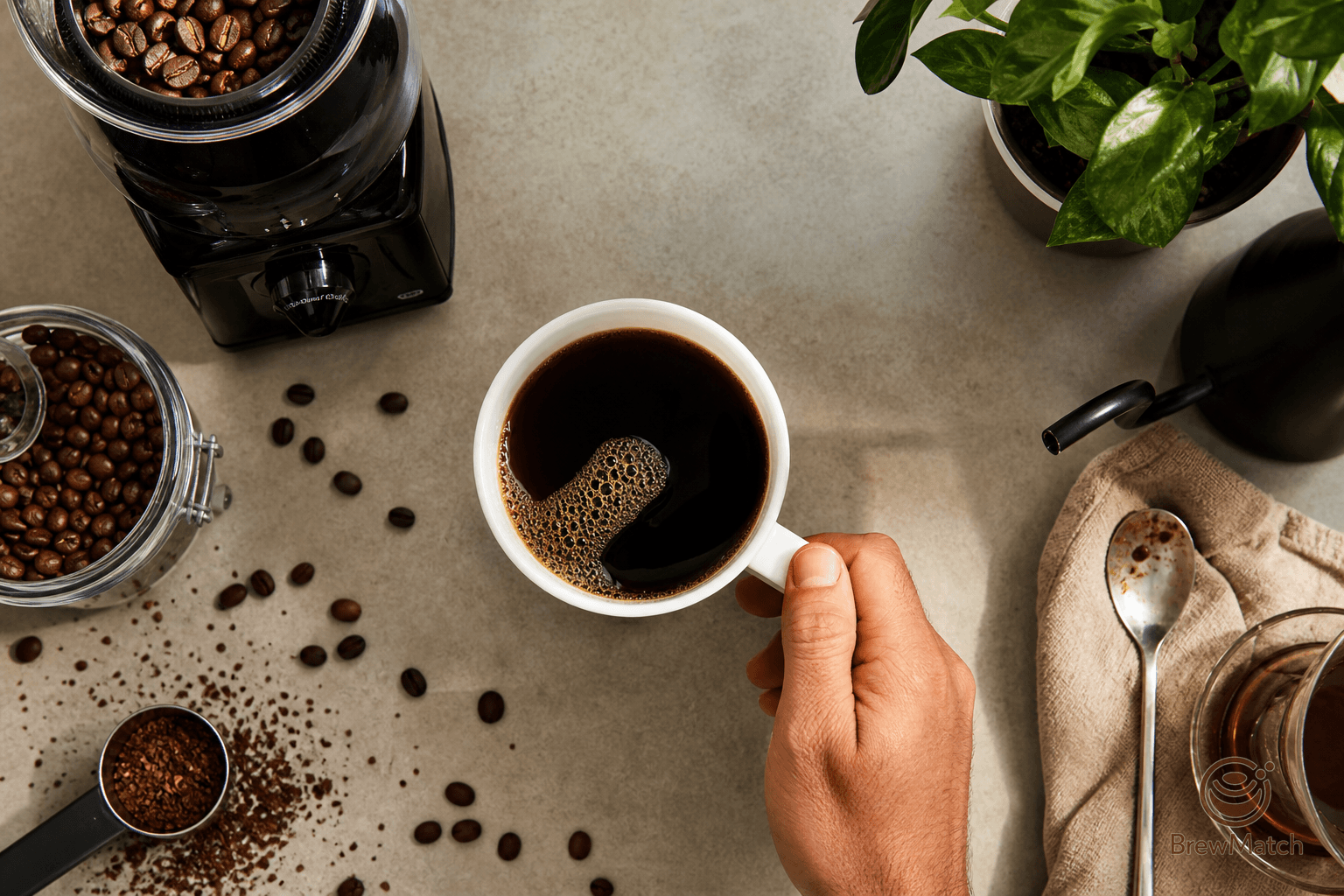
Good beans can still make bitter coffee if the brew recipe is pulling too much from them. Better beans do not cancel out a too-fine grind, too much contact time, overheated water, stale grounds, or an uneven brew bed. Before you buy another bag, change one variable at a time. Bitter coffee is often a brewing problem wearing an expensive-bean disguise.
Good beans are not a bitterness shield
A better bag gives you better potential. It does not guarantee a better cup.
That is the part people get wrong. They buy fresh beans from a good roaster, brew the same way they always have, and expect the coffee to fix itself. Sometimes it does. Often it does not.
Coffee brewing is extraction. Water pulls flavor from ground coffee. Early extraction tends to bring brighter, sweeter, lighter flavors. Later extraction pulls heavier, drier, more bitter compounds. A good bean can still be pushed too far.
So if your coffee tastes bitter with good beans, do not assume you got scammed. Also do not assume you have bad taste. Your setup may simply be asking the coffee for more than it can give politely.
Bitter is not the same as strong
This matters because a lot of home coffee drinkers try to fix bitterness by making coffee weaker. Sometimes that helps. Sometimes it just gives you thin bitter coffee, which is worse because now the cup has no backbone either.
Strong coffee means concentrated flavor. Bitter coffee means rough, dry, burnt, ashy, or unpleasantly sharp flavor.
A strong cup can taste sweet, round, and full. A bitter cup can taste hollow and aggressive even if it is not especially strong.
Try this quick test:
- If the coffee tastes intense but pleasant, it is probably strong.
- If it dries your tongue and makes you wince, it is probably bitter.
- If adding a splash of water makes it smoother, it may be too concentrated.
- If adding water makes it weaker but still harsh, extraction is probably the issue.
If bitterness is the problem, the fix is usually not just less coffee. It is a better recipe.
The bean may be good but wrong for your taste
There is one fair exception: some beans are simply not a match for you.
If you dislike bitter coffee, you may not enjoy very dark roasts, smoky roast styles, or coffees described with heavy chocolate, tobacco, or roasted notes. Those coffees are not bad. They are just playing a different game.
Look for tasting notes that sound softer: caramel, honey, brown sugar, milk chocolate, vanilla, almond, or mild fruit. Medium roast is often a safer starting point than very dark roast if you want smoother coffee without a bitter edge.
That said, do not use bean preference as an excuse to ignore brewing. A smooth medium roast can still taste bitter if it is ground too fine or brewed too long.
If you want help finding beans that match what you actually like instead of what coffee labels pretend everyone understands, try BrewMatch. It is built for taste matching, not coffee trivia.
The usual culprit is over extraction
When good beans taste bitter, over extraction should be near the top of your suspect list.
Over extraction means the water pulled too much from the coffee. The cup may taste bitter, dry, hollow, woody, or burnt. You might also notice that the first few sips are tolerable, then the finish gets rough.
Common causes include:
- Grinding too fine
- Brewing too long
- Using water that is too hot
- Using too little coffee for the amount of water
- Letting grounds sit in contact with water after brewing
- Creating uneven flow through the coffee bed
If that sounds familiar, read Over Extracted Coffee Tastes Bitter: 4 Home Fixes after this. It covers the core fixes in more detail.
For now, start with the smallest useful change: make the grind slightly coarser or shorten the brew time. Do not change five things at once. That is how you turn breakfast into a science fair.
Your grinder can punish good beans
Good beans ground badly are just expensive dust.
If your grind is too fine, water has more surface area to attack. That can push the brew toward bitterness fast, especially in drip coffee, pour over, espresso, and moka pot.
If your grind is uneven, you get another problem. Tiny particles over extract while larger chunks under extract. The result can taste sour and bitter at the same time, which feels illegal but happens constantly.
Blade grinders are especially good at creating this mess because they chop coffee into random sizes. Burr grinders usually give you more control, though even a burr grinder needs the right setting.
A simple rule:
- Bitter and dry: try slightly coarser.
- Sour and thin: try slightly finer.
- Bitter but weak: check dose and brew time before blaming the bag.
For a deeper grinder-specific fix, see A Too Fine Grind Can Make Coffee Taste Bitter.
Your recipe might be too aggressive
Good beans often expose recipe problems because they have more flavor to lose.
If you use a random scoop, fill the brewer by habit, and hope for the best, your coffee may swing from decent to bitter without warning. That does not mean you need to become the person who brings a scale to brunch. It just means your recipe needs a little structure.
Start with a repeatable ratio. For many home brewers, something around 1 gram of coffee to 15 to 17 grams of water is a reasonable zone. If you do not use a scale, at least use the same scoop and the same water level each time while testing.
Then adjust based on taste:
- Too bitter and heavy: use a little more water or a slightly coarser grind.
- Too weak but still bitter: use more coffee and grind coarser.
- Too sharp or sour: grind a little finer or brew a little longer.
- Flat and muddy: check freshness, grind consistency, and brewer cleanliness.
The tradeoff is simple. More extraction can bring more body and sweetness, but push it too far and the cup turns rough. Less extraction can taste cleaner, but too little tastes thin or sour.
You are not chasing a perfect number. You are chasing a cup you actually want to finish.
Heat can make a good bean taste roasted twice
Water temperature is another quiet bitterness trigger.
Very hot water extracts faster. That can be useful for some light roasts, but it can make darker roasts taste harsh, smoky, or burnt. If your coffee tastes bitter with good beans and you are pouring freshly boiling water straight onto the grounds, back off a little.
You do not need a fancy kettle to test this. Boil the water, then let it sit for 30 to 60 seconds before brewing. If the coffee gets smoother, temperature was part of the problem.
This is especially worth testing if your beans are medium-dark or dark. Those coffees are already roasted further, so they often do not need the most aggressive water temperature you can throw at them.
Check the boring stuff before buying new beans
Nobody wants the answer to be clean your brewer, but sometimes the boring answer wins.
Old coffee oils can stick to baskets, carafes, French press screens, moka pot parts, and grinder chambers. Those oils go stale and can add a bitter, rancid edge to otherwise good coffee.
Also check where you store your beans. A bag left open near heat, sunlight, or moisture will lose its charm faster. Fresh beans do not stay fresh because the label says so.
Use an airtight container or reseal the bag well. Keep it somewhere cool and dry. Do not store it next to the oven unless you enjoy sabotaging yourself.
Practical checklist for bitter coffee with good beans
Use this before you abandon the bag.
- Brew the same beans one more time with a slightly coarser grind.
- Shorten brew time if your method allows it.
- Let boiled water rest 30 to 60 seconds before brewing.
- Use a consistent coffee-to-water ratio.
- Avoid leaving brewed coffee on heat for too long.
- Rinse paper filters if they add a papery or dry taste.
- Clean the brew basket, carafe, grinder, and reusable filters.
- Taste the coffee before adding milk or sugar so you know what changed.
- Change one variable per brew, not everything at once.
- If the coffee still tastes bitter after recipe fixes, try a smoother roast style next time.
A simple starting fix
If you want the shortest possible plan, do this tomorrow:
Grind a little coarser, use the same amount of coffee, use the same amount of water, and let boiled water cool briefly before brewing. Taste it black first. If the bitterness drops, your beans were probably fine.
If the cup becomes smoother but weak, add a little more coffee next time while keeping the coarser grind. If it stays bitter, clean your brewer and try a slightly shorter brew.
That is the less glamorous answer, but it saves money. Buying better beans is fun. Fixing the brew is cheaper.
And if you keep choosing coffees that sound good but taste harsher than you want, let BrewMatch point you toward a smoother fit. Your coffee is not doomed. Your recipe may just be being dramatic.
Find your match
Not sure which beans fit your taste?
Use BrewMatch to turn your flavor goal, brew method, and current coffee problem into a practical roast and bean profile.
Try BrewMatch