
August 5, 2026
Expensive Grinders Do Not Automatically Make Coffee Less Bitter
A pricey grinder can still make bitter coffee. Buy for consistency and easy adjustment, not countertop bragging rights.
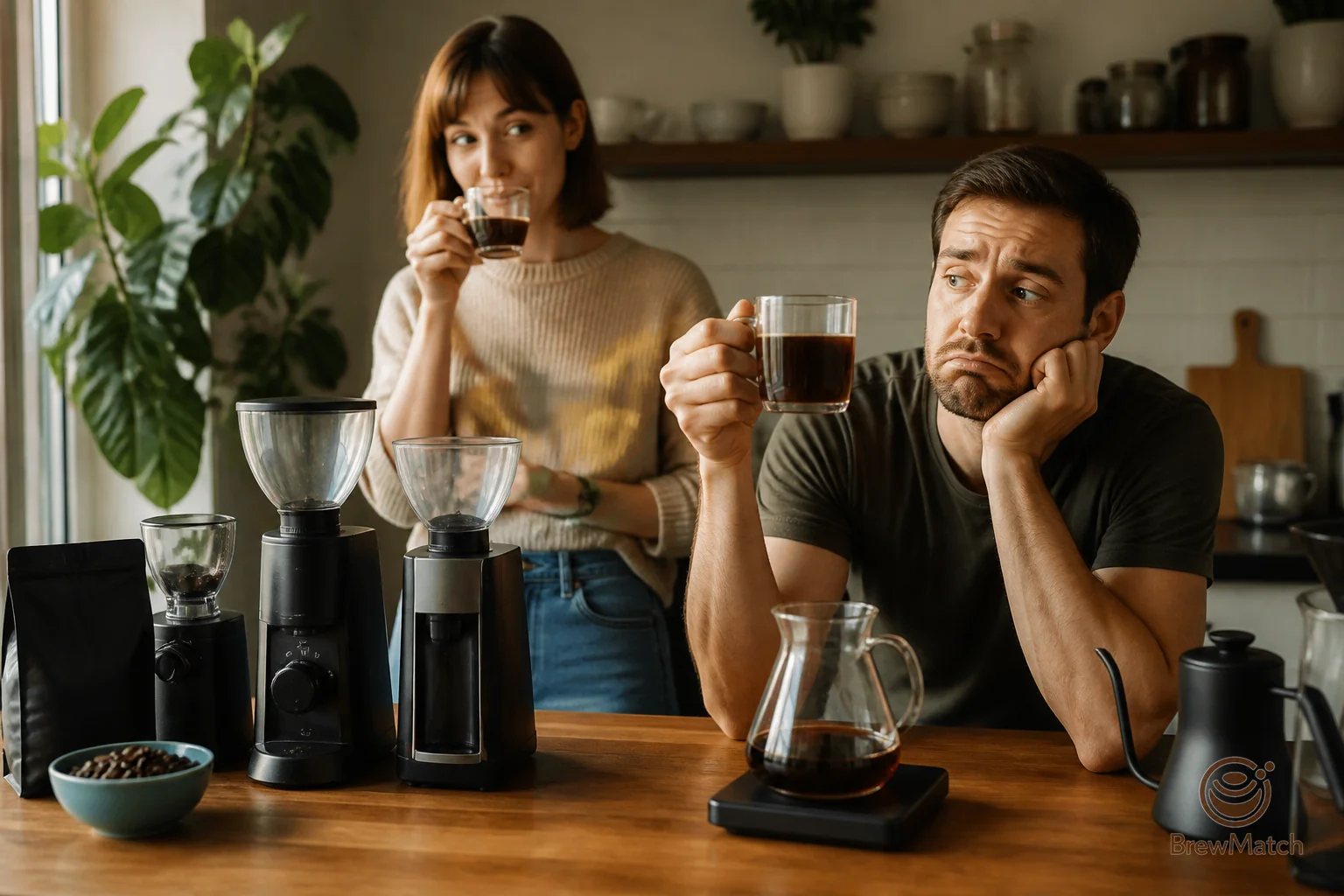
An expensive grinder can make coffee less bitter, but only if it solves the right problem. Price alone does not fix burnt, harsh, or dry coffee. What matters is whether the grinder makes even particles, creates less dusty powder, adjusts predictably, and lets you repeat a good setting. Buy the wrong expensive grinder and you can still end up with coffee that tastes like punishment.
The annoying part is that grinder shopping often gets framed like a status ladder. More metal, more numbers, more money, better coffee. Not always. For a home coffee drinker trying to escape bitterness, the question is simpler: does this grinder help you control extraction?
What a grinder can actually fix
A better grinder helps when your coffee is bitter because the grounds are uneven.
When coffee is ground, it does not come out as perfectly identical little pieces. Some bits are large. Some are small. Some are tiny dust, often called fines. Those tiny pieces extract fast. If there are too many of them, they can dump harsh, bitter flavors into the cup before the larger pieces have caught up.
That is why two grinders can produce very different cups even when the bag, water, coffee maker, and recipe stay the same.
A good grinder can help with:
- More even particle size
- Fewer dusty fines
- Less random boulder sized coffee
- More repeatable settings
- Easier small adjustments
- Fresher coffee compared with old pre ground coffee
That does not mean you need to buy the most expensive grinder you can find. It means you need to avoid grinders that make adjustment feel like gambling.
If you are still choosing between basic grinder types, read Burr Grinder vs Blade Grinder for Less Bitter Coffee. The short version: burr grinders are usually better for bitterness control because they crush coffee more evenly than blade grinders chop it.
What a grinder cannot fix
A grinder cannot rescue every bitter cup.
If your water is too hot, your coffee maker is dirty, your beans are stale, or your recipe is simply extracting too much, a nicer grinder may only make the same problem more consistent. That is not a win. That is just expensive disappointment.
A grinder also cannot make every bean taste mellow. Some coffees are roasted darker. Some have a sharper profile. Some are just not your style. Better grinding gives you more control, but it does not turn every bag into chocolate pudding.
The trap is buying a grinder because your coffee tastes bad, then changing nothing else. If your new grinder is set too fine, the coffee may taste even more bitter than before. Better equipment gives you more precision, including the precision to make a bad cup very reliably.
The bitterness problem hidden inside cheap grinders
Cheap grinders often struggle in one boring but important way: they make too many particle sizes at once.
Imagine brewing coffee where part of the dose is powder and part of it is gravel. The powder extracts quickly and can turn bitter. The larger chunks extract slowly and can taste thin or sour. Mix those together and the cup can taste harsh, muddy, weak, and bitter at the same time.
That is why people often say, “I used good beans and it still tasted bad.” The beans may be fine. The grind may be chaotic.
This shows up most clearly in pour over, drip coffee, French press, and espresso, but in different ways.
For pour over and drip, too many fines can clog the filter and slow the brew. The water spends more time with the coffee, pulling more bitter flavor. For French press, fine particles stay in the brew and can make the last sips taste heavy and harsh. For espresso, uneven grind can make water race through some areas and over extract others.
You do not need to memorize the science. Watch the cup. Bitter, dry, scratchy coffee often means something extracted too much.
Do not shop by price first
The best coffee grinder for less bitter coffee is not automatically the most expensive one. It is the grinder that lets you make controlled changes and repeat them tomorrow.
For most home drinkers, these buying factors matter more than a luxury price tag:
- Consistent grind for your brew method A grinder that works well for French press might not be ideal for espresso. Espresso needs very fine adjustment. French press needs a clean coarse grind without tons of dust. Match the grinder to how you actually brew.
- Small enough adjustment steps If one click is too bitter and the next click is too sour, the grinder is not giving you enough control. This matters a lot for espresso and can still matter for pour over.
- Low mess and easy cleaning Old coffee trapped inside a grinder can taste stale and harsh. If cleaning the grinder feels miserable, you will put it off. Then yesterday’s coffee becomes part of today’s cup.
- Low retention Retention means coffee gets stuck inside the grinder. A little is normal. A lot means old grounds can mix into fresh brews, especially if you only make one cup at a time.
- Settings you can find again A grinder with clear, repeatable settings makes troubleshooting easier. If you move coarser and the cup improves, you want to know where you were.
That last point is underrated. Coffee troubleshooting is hard when every morning starts from a mystery setting.
Not sure whether your bitter cup is coming from grind, roast, water, or recipe? BrewMatch can help you narrow the taste problem without acting like you need a barista certificate.
The grinder mistake that makes better gear taste worse
A lot of people buy a better grinder and immediately grind too fine.
It makes sense. Fine coffee feels more serious. It smells intense. It looks like something a cafe would use. But finer is not automatically better. Finer grounds expose more surface area to water, so extraction increases. Push it too far and the coffee turns bitter, dry, or burnt tasting.
This is one of the most common ways a grinder upgrade backfires. The new grinder gives you more power, then you overuse it.
If your coffee tastes bitter after a grinder upgrade, try this before blaming the beans:
- Move the grind one or two steps coarser
- Keep the same amount of coffee and water
- Brew again
- Taste for less dryness and less harshness
- If it gets thin or sour, move slightly finer again
Small moves are the point. Do not swing wildly from espresso powder to driveway gravel.
For a deeper look at this specific issue, read Coffee Ground Too Fine Can Taste Bitter and Dry.
Burr shape matters less than people pretend
You will see grinders described as conical burr, flat burr, ceramic burr, steel burr, stepped, stepless, single dose, hopper based, and a dozen other things.
Some of those details matter. They do not all matter equally for a normal person trying to make breakfast coffee less bitter.
Do not get trapped comparing burr geometry before you know your actual problem. If your current grinder is a blade grinder or a very inconsistent budget burr grinder, almost any decent burr grinder matched to your brew method may be a meaningful improvement.
If you already have a capable grinder and still get bitter coffee, the next fix may not be buying another one. It may be grind setting, water temperature, brew time, dose, or cleaning.
That is the tradeoff. A grinder upgrade can reduce randomness. It does not remove the need to dial in.
Practical checklist before you buy a grinder
Use this before spending money.
- Name your brew method. Espresso, pour over, drip, French press, and moka pot do not need the same grinder strengths.
- Check your current grind. If it has visible chunks plus dust, consistency is probably hurting the cup.
- Try grinding slightly coarser. If bitterness drops, your grinder may be fine enough to troubleshoot before replacing.
- Clean the grinder. Old oils and trapped grounds can add stale bitterness.
- Avoid blade grinders if bitterness control is the goal. They can work in a pinch, but they make consistency harder.
- Look for repeatable settings. You want to change one thing and know what happened.
- Do not overbuy for espresso if you do not make espresso. Espresso capable grinders can be great, but you may be paying for precision you will not use.
- Do not buy only by review hype. A grinder can be excellent and still wrong for your brewing style.
- Budget for fresh beans too. A grinder helps most when the coffee going into it is worth grinding.
A simple test after your grinder arrives
When you get a new grinder, do not change everything at once.
Use the same beans, same water, same coffee amount, same brew method, and same brew time as before. Change only the grind. Start around the recommended setting for your method, then adjust based on taste.
If the cup is bitter and dry, go coarser. If it is sour, sharp, or hollow, go finer. If it is bitter but also weak, you may have a recipe problem, not just a grind problem.
Write down the setting when the coffee tastes better. Not forever. Just long enough to stop repeating the same mistake every morning.
Buy control not bragging rights
A grinder is worth upgrading when it gives you more control over extraction. That is the whole point. Less random dust, better adjustment, cleaner flavor, and repeatable settings can absolutely help bitter coffee.
But the grinder is not a magic apology from the coffee gods. If you buy an expensive grinder and use it too fine, skip cleaning, or ignore your recipe, the cup can still taste harsh.
Buy the grinder that fits your brew method. Use it to make small changes. Let taste decide whether you need another purchase or just a calmer recipe.
If you want help matching your taste preferences to coffee that is less likely to fight you every morning, try BrewMatch. Your coffee is not doomed. Your setup may just be making the bitter path too easy.
Find your match
Not sure which beans fit your taste?
Use BrewMatch to turn your flavor goal, brew method, and current coffee problem into a practical roast and bean profile.
Try BrewMatch