
August 20, 2026
An Espresso Grinder Is Not Always Better for Less Bitter Drip Coffee
Buying an espresso grinder for drip coffee sounds like an upgrade until your coffee turns sharp dry and bitter. Match the grinder to the way you actually brew.
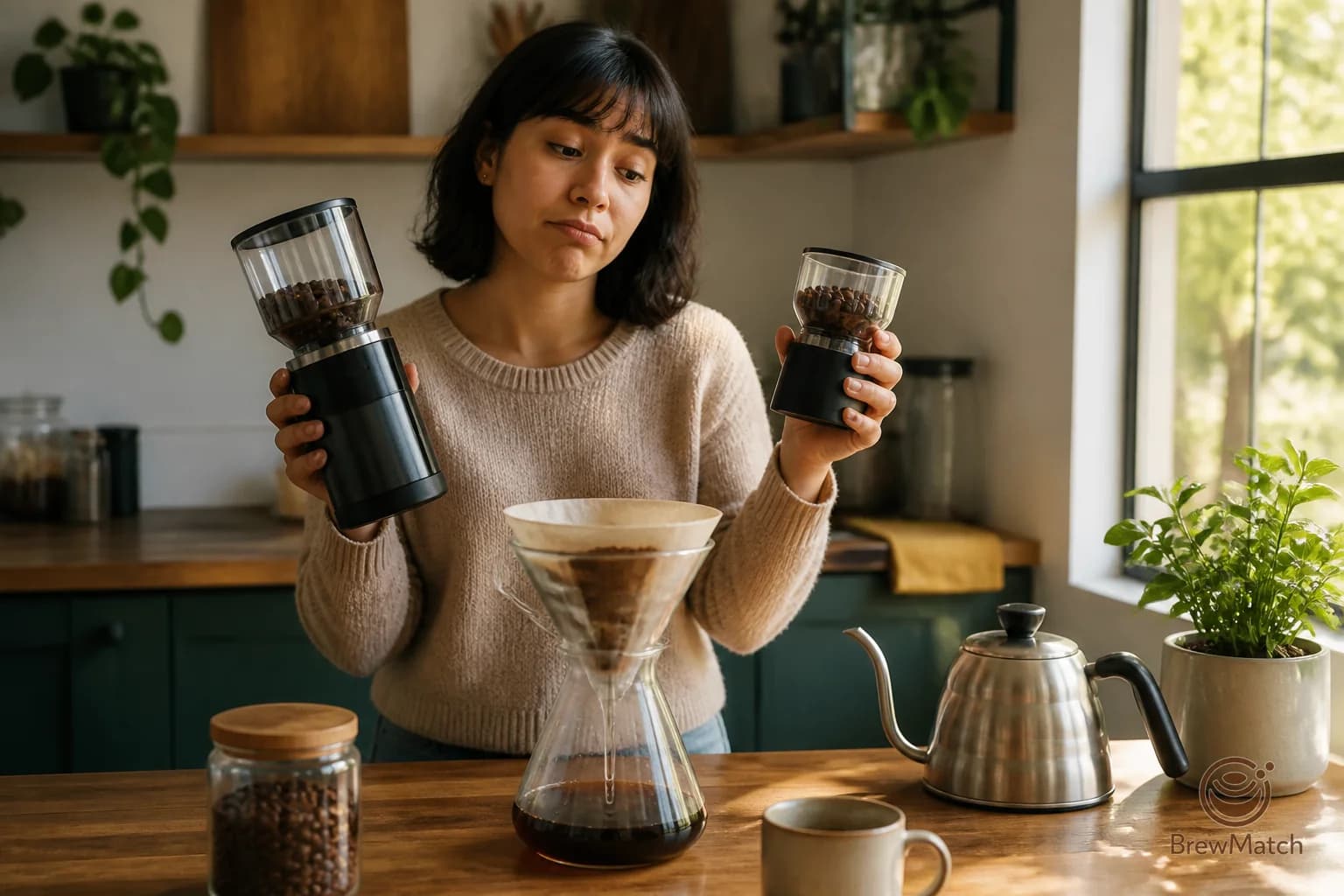
An espresso grinder can make drip coffee taste better, but it is not automatically the smarter buy. If the grinder is designed mainly for very fine espresso adjustments, it may be annoying for drip coffee and can push you toward bitter, over extracted cups. For less bitter drip coffee, you need repeatable medium settings, low fines, and easy adjustment more than you need an espresso label on the box.
The trap is simple: espresso gear sounds serious. Drip coffee sounds basic. So people assume the espresso grinder must be better.
Sometimes it is. Sometimes it is the wrong tool wearing a fancy jacket.
Espresso grinders solve a different problem
Espresso is picky. Tiny grind changes can swing a shot from sour to bitter in seconds. That is why many espresso grinders focus on very fine control in a narrow range.
Drip coffee has a different job. Water sits with the coffee longer, flows through a filter, and usually needs a medium grind that stays even. You do not need microscopic espresso tuning as much as you need a grinder that can land cleanly in the drip range and stay there.
If your grinder is brilliant at espresso but cramped or awkward for drip, you may end up with coffee that tastes:
- Bitter and dry
- Heavy but not pleasant
- Hollow after the first few sips
- Harsh even when the beans smell good
- Inconsistent from one morning to the next
That does not mean espresso grinders are bad. It means the word espresso is not a magic bitterness filter.
The bitter coffee risk with an espresso focused grinder
The biggest issue is not that espresso grinders are too good. It is that some of them make it too easy to grind too fine for drip.
A grind that is too fine slows the water down and gives it more time to pull bitter compounds from the coffee. In a drip machine or pour over, that can turn a decent bean into something that tastes overcooked and dusty.
If your cup is bitter and dry at the same time, grind size should be high on your suspect list. BrewMatch has a deeper breakdown here: Coffee Ground Too Fine Can Taste Bitter and Dry.
With some espresso grinders, the settings that work for drip are packed into a small part of the dial. One click may be too fine. The next may be too coarse. That is frustrating, especially if you just paid for an upgrade.
The annoying part is that the grinder may be doing exactly what it was built to do. It was made for espresso precision, not necessarily for forgiving daily drip coffee.
What home coffee drinkers get wrong when shopping
A lot of grinder shopping turns into spec collecting. Burr size. Motor power. Espresso capability. Infinite adjustment. Single dose workflows. The list gets weird fast.
For bitter drip coffee, the better question is more boring:
Can this grinder make a clean medium grind repeatedly without producing a pile of powdery fines?
That question beats most spec sheet flexing.
Powdery fines are tiny coffee particles that extract faster than the rest of the grounds. Even when your average grind size looks right, too many fines can make the cup taste bitter or muddy. A grinder does not need to be espresso capable to do this well. It needs to be consistent in the range you actually use.
If you mostly brew drip, French press, cold brew, AeroPress, or pour over, do not buy like espresso is your main hobby unless it really is.
If you want help matching your taste preferences to smoother coffee choices instead of guessing from product descriptions, try BrewMatch. It is built for home drinkers who want better coffee without pretending to enjoy equipment homework.
When an espresso grinder does make sense for drip coffee
An espresso capable grinder can be a good choice if it also handles brewed coffee well.
Look for signs like:
- Clear settings across espresso, drip, and coarse ranges
- Reviews from people using it for filter coffee, not only espresso
- Easy switching between grind sizes
- Low retention if you change brew methods often
- A burr set known for clarity in brewed coffee, not just body in espresso
- A hopper or dosing setup that fits your real morning routine
That last point is underrated. If changing settings is irritating, you will stop dialing in. Then bitterness comes back because the grinder technically can do the job, but you do not want to fight it before breakfast.
A grinder that is slightly less impressive on paper but easier to use every day may give you better coffee. That is not a downgrade. That is honesty.
When a drip focused grinder is the better buy
If you do not make espresso at home, a grinder built mainly for brewed coffee is often the cleaner choice.
For drip coffee, you want a grinder that makes it easy to move between medium fine, medium, and medium coarse. That range matters for automatic coffee makers, pour over cones, flat bottom brewers, and immersion brewers.
A drip focused grinder may be better if:
- You use an automatic coffee maker most mornings
- You want fewer bitter cups without chasing espresso shots
- You do not want to change settings constantly
- You care more about smoothness than thick espresso body
- You share coffee duties with someone who will not read a grinder manual
There is no shame in buying for the coffee you actually drink. The weird move is buying for the version of yourself who might start making espresso six months from now, then drinking bitter drip coffee every day until that imaginary person arrives.
A simple test before you buy
Before buying an espresso grinder for drip coffee, check three things.
First, look at the usable drip range. If owners say the grinder is amazing for espresso but awkward for pour over or drip, believe them.
Second, check how easy it is to return to a previous setting. If you switch between brew methods, you need repeatability. Guessing every morning is a bitterness subscription.
Third, pay attention to fines. You will not eliminate fines completely, but a grinder that makes a visibly dusty grind can make drip coffee taste bitter even when your recipe looks normal.
If you are replacing a grinder because your coffee tastes bitter, pause before buying the most intense espresso option you can afford. BrewMatch has covered the bigger buying question here: Do You Need a New Grinder to Fix Bitter Coffee.
Sometimes the fix is a new grinder. Sometimes it is using your current grinder less aggressively.
Practical checklist for less bitter drip coffee
Use this before you buy or after your new grinder arrives.
- If your drip coffee tastes bitter and dry, grind slightly coarser.
- If the brew takes much longer than usual, grind coarser or reduce fines.
- If the cup is bitter but weak, do not assume you need more coffee. You may be over extracting while under strength.
- If your grinder has a tiny drip range, move one setting at a time and taste before changing anything else.
- If switching from espresso to drip, purge a small amount of coffee after changing settings.
- If your grinder produces lots of powder, avoid going finer to chase strength.
- If your coffee tastes harsh with every bean, test a medium roast before blaming the grinder.
- If you mostly brew drip, prioritize repeatable medium settings over espresso bragging rights.
One change at a time. That rule is boring because it works.
The buying rule I would actually use
Buy the grinder for your main brew method, not for the most impressive brew method.
If you make espresso every day and drip on weekends, an espresso capable grinder with good filter performance makes sense. If you make drip every morning and espresso almost never, a grinder that treats drip coffee as the main event will probably make you happier.
Less bitter coffee usually comes from a cleaner setup, a better matched grind, and a recipe that does not over extract. The grinder matters, but only when it helps with those things.
An espresso grinder is not automatically overkill. It is only overkill when it makes your normal coffee harder to brew well.
If you want smoother coffee without guessing which gear or beans match your taste, use BrewMatch. Bitter coffee is usually fixable, and the fix is not always the most expensive object on the counter.
Find your match
Not sure which beans fit your taste?
Use BrewMatch to turn your flavor goal, brew method, and current coffee problem into a practical roast and bean profile.
Try BrewMatch