
August 1, 2026
A Dry Coffee Bed Can Make Pour Over Taste Bitter
Your pour over may not need better beans. If the coffee bed keeps drying out between pours, your cup can turn sharp, bitter, and weirdly hollow.
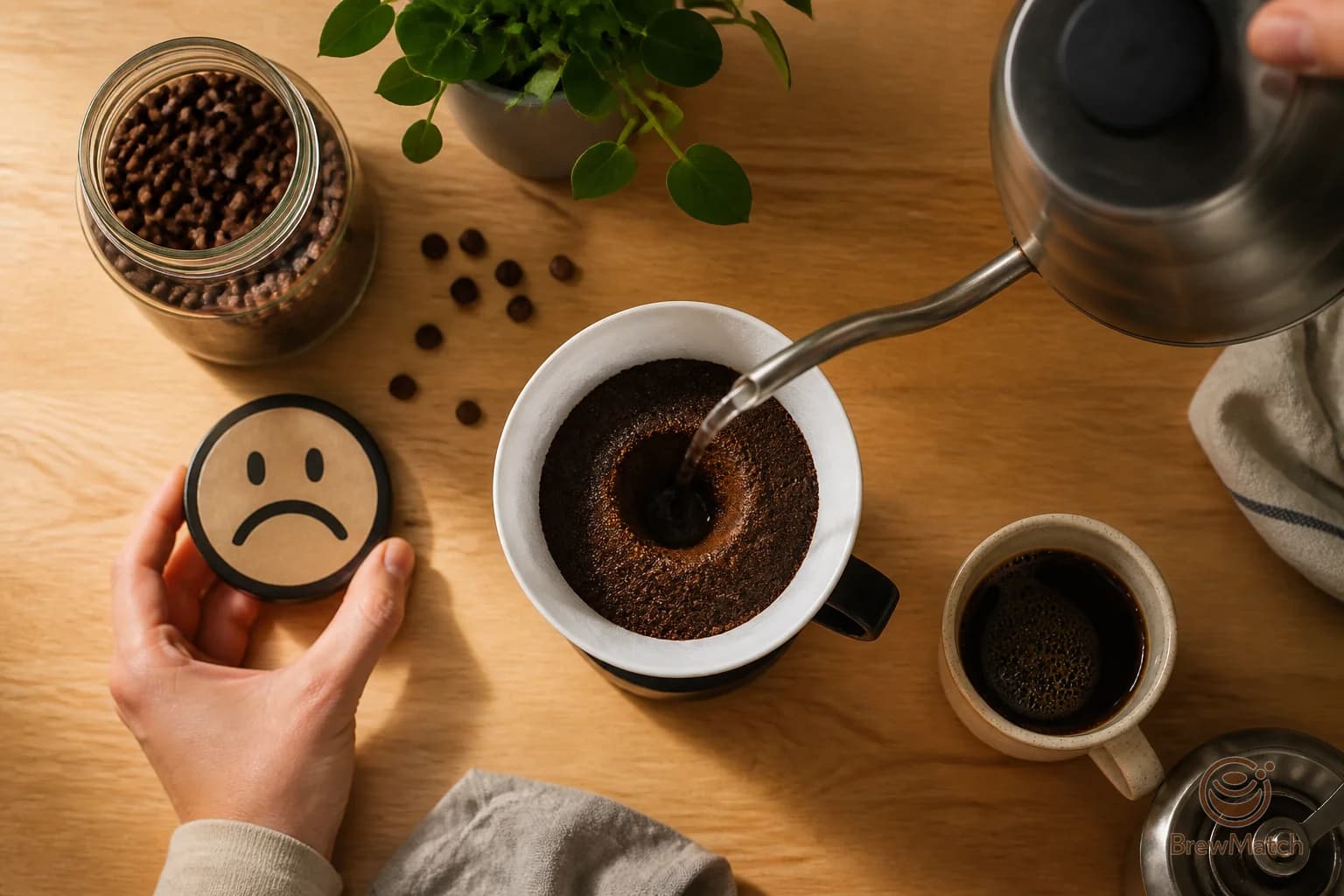
If your pour over coffee tastes bitter, check whether the coffee bed is drying out between pours. A dry bed can make water carve uneven paths through the grounds, extracting too much from some spots and not enough from others. The result is that annoying mix of bitter, harsh, thin, and disappointing. You do not always need new beans. You may need calmer pouring and better timing.
Pour over looks simple because the gear is simple. Kettle, filter, dripper, coffee, water. Then people turn it into a little ceremony and forget the boring part that actually matters: keeping the grounds evenly wet enough for extraction to stay predictable.
What a dry coffee bed actually means
In a pour over, the coffee bed is the layer of wet grounds sitting inside the filter.
A dry bed does not mean every ground is bone dry. It usually means the top of the bed drains so far between pours that parts of the coffee surface look exposed, cracked, muddy, or uneven before the next pour hits.
That pause changes the brew.
When you pour again, fresh water does not always spread evenly through the whole bed. It may cut through weak spots, run down the sides, or flood one area while another area stays under extracted. You get an uneven cup, not a clean one.
People often describe this as:
- Bitter
- Harsh
- Astringent
- Dry on the tongue
- Hollow but still unpleasant
- Strong in a bad way
- Sour and bitter at the same time
That last one confuses people. It should not, really. Uneven extraction can pull bitter compounds from overworked grounds while leaving other grounds under extracted and sharp. One bad brew can have both problems.
Why drying out makes bitterness worse
Coffee extraction is not magic. Water dissolves flavor from the grounds. Early in the brew, you get brighter and sweeter compounds. As extraction keeps going, heavier bitter and drying flavors become more noticeable.
A well made pour over tries to extract the whole bed at a steady pace.
A dry bed interrupts that.
The common pattern looks like this:
- You bloom the coffee.
- You wait too long.
- The slurry drains too far.
- You pour hard to catch up.
- Water channels through the easiest paths.
- Some grounds get hammered while others barely participate.
That is not strength. That is chaos in a paper filter.
If you want a stronger cup, you should adjust dose, grind, or ratio. Letting the bed dry out and then blasting it with water is a good way to make coffee taste more aggressive without making it taste better.
The signs your pour over bed is drying out too much
You do not need lab gear. Watch the brew.
A dry bed is likely part of the problem if you notice:
- The grounds look cracked or clumpy before the next pour
- The filter walls have a high ring of stuck grounds
- Water drains completely between every pulse
- Your next pour digs a hole in the center
- The brew smells fine but tastes bitter and papery
- The cup tastes harsh even with beans you usually like
- The top of the bed looks lumpy instead of flat after draining
One dry moment will not ruin every brew. The problem is repeated drying, especially when paired with aggressive pouring.
If your pour over consistently tastes bitter, also check your pouring pattern. BrewMatch has a deeper look at this in The Pour Over Pouring Mistake That Makes Coffee Bitter.
The easiest fix: pour sooner and softer
The fastest fix is not fancy.
After the bloom, do not wait until the bed looks drained and exposed. Start your next pour while the grounds are still visibly wet and the water level is just getting low.
Then pour softer.
A hard stream can punch a crater into the bed. Once that crater forms, water takes the lazy route through it. That gives you uneven extraction and a bitter edge.
Try this instead:
- Bloom with enough water to wet all the grounds
- Wait about 30 to 45 seconds, not forever
- Start the next pour before the bed looks dry
- Pour in slow circles, not one hard center blast
- Keep the water level modest, not overflowing
- Let the bed settle flat between pours
You are aiming for boring. Boring is good here. A calm, evenly wet bed usually beats dramatic pouring.
If you want coffee matched to the kind of smooth, low bitterness cup you actually like, try BrewMatch. It is built for taste preferences, not coffee trivia.
Do you need one pour or multiple pours?
Both can work.
A single continuous pour can keep the bed wet and reduce stop start extraction. It is also easier to repeat once you get the flow right.
Multiple pulse pours can work too, but they give you more chances to let the bed dry out. If you use pulses, keep them close enough together that the slurry does not collapse into a dry-looking mud flat each time.
For home brewers, the better choice is the one you can repeat without fuss.
Try this simple test:
- Brew one cup with your normal pulse pattern
- Brew the next cup with fewer, longer pours
- Keep the coffee amount, grind, water, and total brew time as similar as possible
- Taste them side by side once they cool slightly
If the fewer-pour version tastes smoother, your old method may have been drying the bed out too much.
Grind size still matters
A dry coffee bed is often a pouring problem, but grind size can make it worse.
If your grind is too coarse, water may drain too fast. That makes it easier for the bed to dry between pours, especially if you wait too long.
If your grind is too fine, water may stall and extract too much. That can also taste bitter, but the visual cue is different. Instead of a dry bed, you may see a slow, muddy drain and a long brew time.
For bitter pour over, do not change five things at once. That is how you create a new problem and learn nothing.
Use this order:
- Fix your pouring rhythm.
- Keep the bed from drying out.
- Taste the cup.
- Then adjust grind if needed.
If the coffee is still bitter and the brew runs slow, go slightly coarser. If it tastes thin, sharp, and drains too fast, go slightly finer or pour with less waiting between pulses.
Water temperature can pile on
A dry bed plus very hot water is a rough combination.
Hot water extracts faster. That is not automatically bad, but if your pour is uneven, hotter water can make the over extracted areas taste even more bitter and drying.
You do not need to obsess over exact numbers. Just stop pouring boiling water straight onto the bed, especially with darker roasts or coffee that already tastes harsh. If you want more detail, read Boiling Water Makes Coffee Taste Bitter.
A simple home fix: after your kettle boils, wait a short moment before pouring. If your coffee immediately tastes calmer, temperature was part of the bitterness stack.
Practical checklist for a less bitter pour over
Use this on your next brew:
- Start with a medium grind, not powdery fine
- Rinse the paper filter if paper taste bothers you
- Bloom with enough water to wet all grounds evenly
- Gently swirl or stir only if dry pockets remain
- Do not let the bed fully dry after bloom
- Start the next pour while the bed is still wet
- Pour softly enough that you do not dig a crater
- Avoid pouring only down the filter wall
- Keep the bed reasonably flat
- Do not chase strength by extending the brew forever
- If bitter and slow, grind slightly coarser next time
- If thin and sharp, reduce long pauses or grind slightly finer
The point is control, not perfection. You are trying to make the brew repeatable enough that one adjustment teaches you something.
A simple recipe adjustment to try tomorrow
If your current pour over tastes bitter, try this low drama version:
- Use your normal coffee amount
- Use your normal water amount
- Keep the grind the same for this test
- Bloom for 30 to 45 seconds
- Pour the rest in 2 or 3 gentle pours
- Do not let the bed look dry before each pour
- Keep the stream soft and controlled
- Taste before changing the beans
If that cup is smoother, your problem was probably not the coffee. It was the way water moved through the bed.
If it is still bitter, then adjust one variable next time. Go a little coarser, use slightly cooler water, or shorten the total contact time. One change per brew. Annoying, yes. Effective, also yes.
Stop blaming the dripper first
Pour over has a reputation for being clean and bright, so people get annoyed when it turns bitter. Fair enough. But the dripper is rarely the villain by itself.
Most bitter pour overs come from a stack of small issues:
- Too much waiting between pours
- A bed that dries and collapses
- A hard stream that creates channels
- Water that is too hot for the roast
- A grind that drains too fast or too slow
Fix the wet bed problem first because it costs nothing and often changes the cup immediately.
Then, if you still want beans that fit your taste better, use BrewMatch. Tell it what you like and what you hate, including bitterness, and it will point you toward coffee that makes sense for your palate.
Your pour over is not doomed. It may just be drying out, getting blasted with water, and acting dramatic about it.
Find your match
Not sure which beans fit your taste?
Use BrewMatch to turn your flavor goal, brew method, and current coffee problem into a practical roast and bean profile.
Try BrewMatch