
August 17, 2026
Do You Need a New Grinder to Fix Bitter Coffee
Before you buy another coffee grinder, run these bitter coffee checks. Sometimes the grinder is guilty. Sometimes your recipe is just being dramatic.
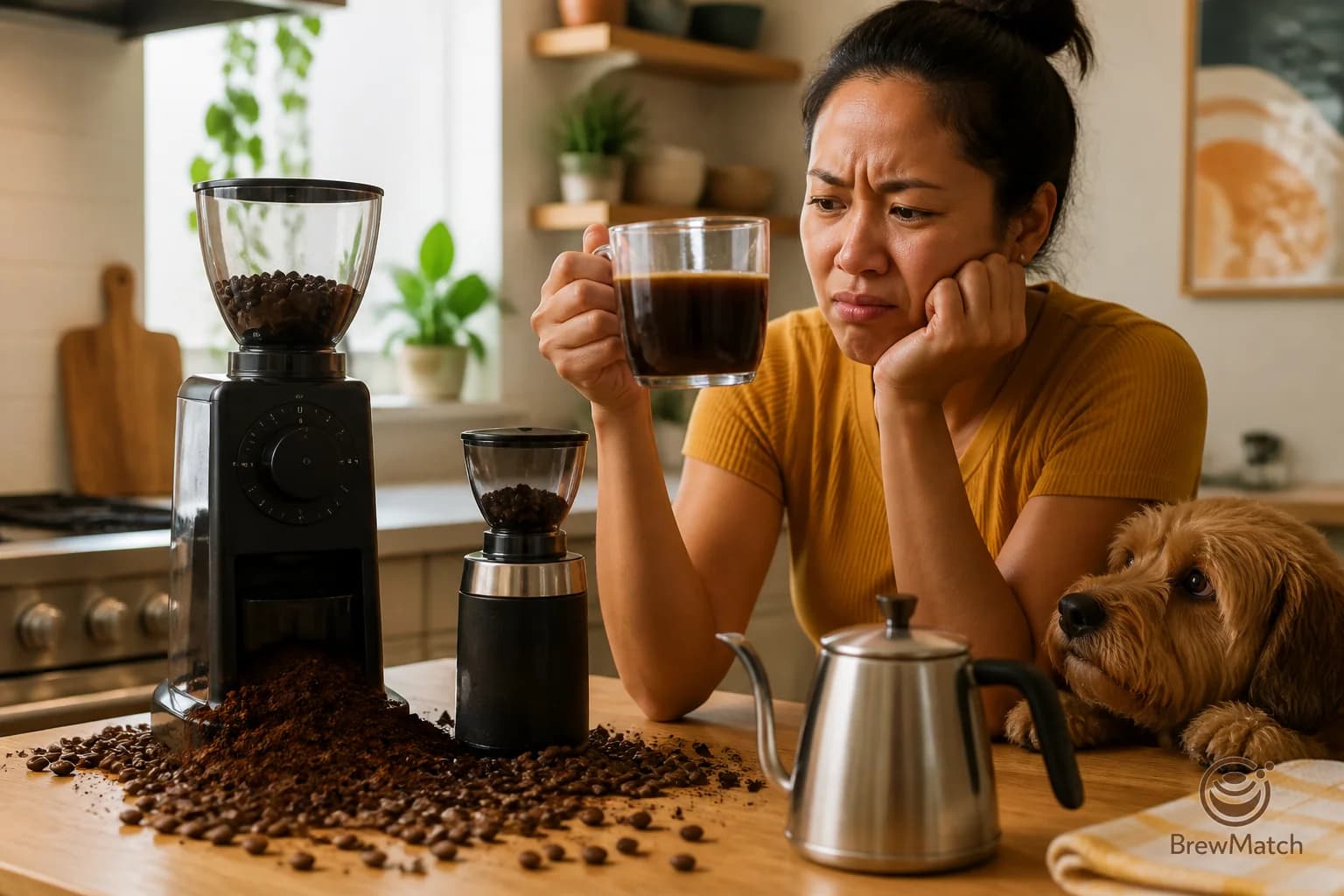
You might need a new grinder if your coffee tastes bitter no matter how you adjust the recipe, especially if your grinder makes lots of powdery fines, has very limited settings, or gives inconsistent results from one brew to the next. But do not buy a grinder as your first move. Bitter coffee is often caused by grind size, dose, water temperature, brew time, or dirty gear. A new grinder helps only when the grinder is the bottleneck.
That distinction saves money. It also saves you from the most annoying coffee upgrade loop: buying better gear and still making bitter coffee.
A grinder can cause bitterness but it is rarely the only cause
A grinder affects how evenly water extracts flavor from your coffee grounds. If the grounds are all over the place, some tiny pieces over extract while larger chunks under extract. The tiny pieces give you bitterness and dryness. The larger pieces can leave the cup thin or sour.
That is why grinder advice gets loud online. Better grinding can absolutely improve coffee.
But people stretch that into a bad rule: bitter coffee means bad grinder.
Not always.
A very good grinder can still make bitter coffee if you grind too fine, use too much coffee, brew too long, or use water that is hotter than your coffee can handle. A cheap grinder can still make decent coffee if the recipe is forgiving and the beans are not roasted into charcoal territory.
So the goal is not to ask, “Is my grinder good?” The better question is: “Is my grinder stopping me from making a useful adjustment?”
Fix the recipe before you shop
Before blaming the grinder, run one simple test. Brew the same coffee again, but change only one thing.
Start with grind size. If the coffee tastes bitter, dry, harsh, or hollow, grind a little coarser next time. Not wildly coarser. Just one or two clicks if your grinder has clicks, or a small turn if it is stepless.
If the next cup tastes less bitter, your grinder may be fine. The original setting was the problem.
If your grinder cannot make a small enough change, that is a different story. Some grinders jump from “too bitter” to “too sour” with no useful middle setting. That is when the grinder starts acting less like a tool and more like a locked door.
You should also check dose. Too much coffee can slow water flow and push extraction too far, especially in drip, pour over, espresso, and moka pot brewing. Brew time matters too. A cup that sits in contact with grounds too long often gets more bitter, not more flavorful.
If you want the deeper version of that flavor problem, read Over Extracted Coffee Tastes Bitter Not Strong.
Signs your grinder is probably not the main problem
Do not replace your grinder yet if one of these is true.
Your coffee gets better when you grind coarser. That means the grinder is giving you enough control to move the flavor in the right direction.
Your bitterness changes a lot from bean to bean. That points toward roast level, freshness, brewing temperature, or recipe, not necessarily the grinder.
Your coffee tastes fine with one brew method but bitter with another. If French press is pleasant but pour over is harsh, your grinder may be workable. The brew method and recipe need attention.
Your coffee maker is dirty. Old oils turn sharp and stale. A grinder cannot fix rancid residue sitting in a brewer, carafe, filter basket, or espresso portafilter.
Your water is very hot and your coffee is dark roasted. Darker roasts give up flavor quickly. Push them with boiling water and a fine grind, and bitterness shows up fast.
Your grinder is not innocent forever. But if recipe changes clearly improve the cup, keep working there before you spend money.
Signs your grinder might be worth replacing
Now for the cases where a grinder upgrade can make sense.
The coffee tastes bitter and muddy at the same time
Muddy bitterness often points to too many fines. Fines are tiny coffee particles that extract quickly and clog flow. They can make a cup taste heavy, dry, and bitter even when the main grind size seems reasonable.
A little dust is normal. A snowstorm of dust is not helpful.
You cannot make small grind changes
If your grinder has only a few useful settings, you may be stuck. One setting tastes bitter. The next one tastes weak or sour. There is no middle ground.
That does not mean you need the most expensive grinder in the store. It means you need more practical control.
The same setting behaves differently every day
Some grinders drift, wobble, or feed beans unevenly. If your recipe stays the same but the cup swings from harsh to thin to bitter with no obvious reason, inconsistency may be part of the problem.
First check that your beans, dose, water, and brew time are actually consistent. If they are, the grinder deserves suspicion.
You are using a blade grinder and chasing precision
Blade grinders chop coffee instead of grinding it evenly. They can work for casual brewing, but they make bitterness troubleshooting harder because the particles are mixed: powder, chunks, and everything between.
If you are trying to reduce bitterness with more control, a burr grinder is usually a better bet. For a clear breakdown, see Burr Grinder vs Blade Grinder for Less Bitter Coffee.
The grinder upgrade that actually matters
If you do replace your grinder, do not shop by hype. Shop by control.
For bitter coffee, the useful grinder is the one that lets you change extraction in small, predictable steps.
That usually means:
- Burrs instead of blades
- Enough grind settings for your brew method
- Reasonable grind consistency
- Low mess and easy cleaning
- A grind range that fits how you actually brew
That last point gets ignored. An espresso focused grinder may be frustrating for French press. A basic filter grinder may not adjust finely enough for espresso. Buying the “better” grinder in the wrong category is still a bad match.
If you mostly brew drip, pour over, French press, or AeroPress, you need a grinder that handles medium to coarse settings well. If you brew espresso, you need much finer adjustment because tiny changes can swing the shot from sour to bitter fast.
Not sure which flavor direction fits you? BrewMatch can help you narrow down coffee taste preferences without pretending you need a barista vocabulary.
Do not buy a grinder to fix burnt coffee
Burnt coffee and bitter coffee overlap, but they are not always the same problem.
If your coffee tastes smoky, ashy, charred, or like burnt toast, the roast itself may be a big part of it. Grinding better will not remove roast flavor. It can reduce harsh extraction, but it cannot turn a very dark roast into a light, sweet cup.
This is where people waste money. They buy a grinder when what they really dislike is the bean style.
Try a medium roast before you upgrade. Look for words like chocolate, caramel, nutty, balanced, smooth, or brown sugar. Avoid bags that lean heavily into smoky, French roast, Italian roast, or extra dark if those flavors read as burnt to you.
A grinder can help you brew a bean more cleanly. It cannot make you like a roast profile you hate.
Practical checklist before replacing your grinder
Run this checklist before buying anything.
- Grind one step coarser and brew again.
- Keep the same coffee dose while testing.
- Shorten brew time slightly if the cup is dry and bitter.
- Use slightly cooler water for darker roasts.
- Clean the brewer and grinder chute if old oils or grounds are hanging around.
- Try one medium roast if you normally buy dark roast.
- Check whether your grinder can make small adjustments.
- Look at the grounds. A heavy layer of powdery dust is a warning sign.
- Brew the same recipe twice. If the results swing wildly, consistency may be the issue.
- Replace the grinder only if recipe changes cannot get you out of bitterness.
That last bullet is the money saver.
A simple decision rule
Keep your grinder if you can make coffee less bitter by adjusting grind size, dose, brew time, or water temperature.
Consider replacing it if you know what adjustment you need but the grinder will not let you make it.
That is the difference between a recipe problem and a gear problem.
A recipe problem says, “Change the setting.”
A gear problem says, “There is no useful setting.”
What to buy if you do upgrade
For most home coffee drinkers trying to avoid bitterness, a decent burr grinder with clear, repeatable settings is enough. You do not need the fanciest grinder on the counter. You need one that makes your daily coffee easier to tune.
If you brew mostly filter coffee, prioritize easy adjustment, consistent medium grinds, and simple cleaning. If you brew espresso, prioritize fine adjustment and repeatability. If you switch between brew methods often, make sure the grinder is not miserable to move back and forth.
Also be honest about convenience. A grinder that is technically excellent but annoying to use may sit untouched while you go back to pre ground coffee. The best grinder for you is the one you will actually use before caffeine has fully reached your brain.
Final answer
You need a new grinder only if your current grinder blocks the fixes that reduce bitterness. If grinding coarser, lowering dose, cleaning your brewer, or changing roast level improves the cup, keep your money for now. If your grinder makes dusty, inconsistent grounds or cannot land between bitter and sour, an upgrade can be worth it.
Bitter coffee is not a moral failure. It is usually a mismatch between bean, grind, recipe, and taste. If you want help finding coffees that fit what you actually like, try BrewMatch and stop letting random bags boss your mornings around.
Find your match
Not sure which beans fit your taste?
Use BrewMatch to turn your flavor goal, brew method, and current coffee problem into a practical roast and bean profile.
Try BrewMatch