
October 19, 2026
A Cold Brew Grinder Should Make Coarse Consistent Grounds Not Powder
Cold brew should taste smooth and round. If your grinder makes boulders and coffee dust at the same time, your jar is quietly turning bitter before you even pour it.
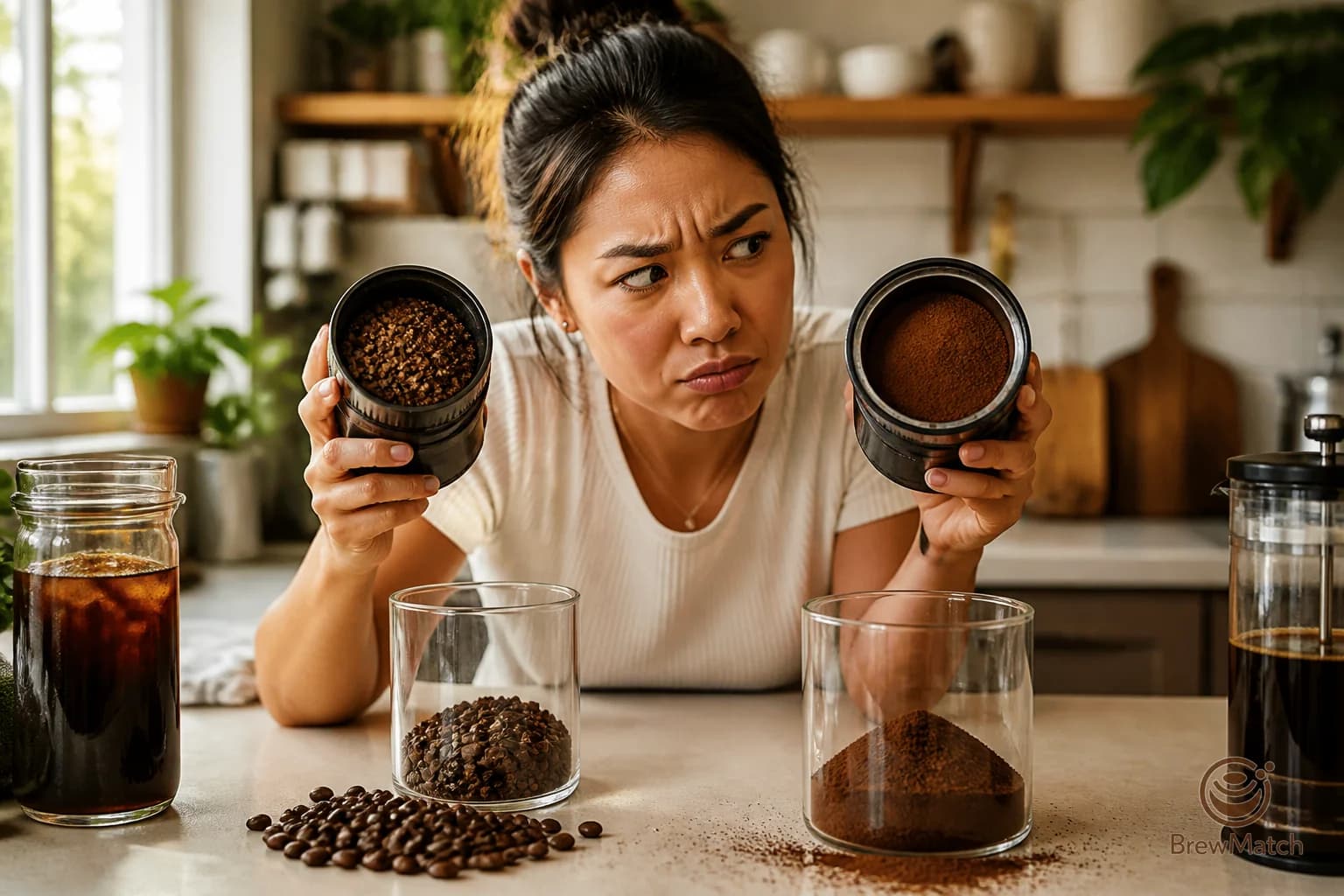
For cold brew, the best grinder is not the fanciest one. It is the one that can make a coarse grind without turning part of the beans into powder. Too much coffee dust extracts fast, sits in the brew for hours, and can make cold brew taste bitter, muddy, and dry instead of smooth.
Cold brew is forgiving, but not magical. A bad grind can still bully the whole batch.
Cold brew needs coarse grounds for a boring reason
Cold brew usually sits with water for many hours. That long contact time is the whole point. You are trading heat for time.
Because the brew is already sitting so long, you do not need tiny coffee particles extracting at full speed. Fine particles give up flavor quickly. In a hot brew, that might happen in minutes. In cold brew, they get a long overnight stay in the jar.
That is where bitterness creeps in.
A good cold brew grind should look chunky and even. Think coarse sea salt or slightly larger, depending on your brewer and filter. It should not look like a mix of pebbles, sand, and brown flour.
That mixed grind is the problem. The big pieces extract slowly. The dusty pieces extract quickly. So your cold brew can taste weak and bitter at the same time, which feels unfair because you waited half a day for it.
The grinder problem is not just too fine
People often say cold brew needs a coarse grind. True, but incomplete.
A grinder can be set coarse and still make too much powder. That is the sneaky part. You look at the big chunks and think the grind is coarse enough. Meanwhile, the fines are hiding between them.
Those fines do three annoying things:
- They over extract during the long steep.
- They clog filters and slow draining.
- They leave a muddy bitterness in the cup.
If your cold brew tastes chalky, dusty, or harsh at the end of each sip, the grinder may be making more fines than your filter can handle.
This is why grind consistency matters more than a dramatic product page. If you want the deeper version, read Grind Consistency Is the Grinder Spec That Actually Helps Bitter Coffee.
What to look for in a cold brew grinder
You do not need a boutique grinder to make good cold brew. You do need a grinder that behaves well at coarse settings.
Look for these traits:
- Clear coarse settings that are easy to return to
- A grind that looks even, not wildly mixed
- Low coffee dust compared with your current grinder
- Enough capacity for your batch size
- Easy cleaning, because stale grounds can taste bitter too
- Stable adjustment, so your setting does not drift
The capacity point is practical. Cold brew often uses more coffee than a single mug. If your grinder is tiny, you may have to grind in multiple rounds. That is not automatically bad, but it can make consistency worse if each batch comes out a little different.
The cleaning point is less glamorous, which is exactly why people ignore it. Cold brew uses a lot of grounds. If old coffee builds up inside the grinder, it can add stale bitterness to a drink that should taste soft and rounded.
Blade grinders are especially rough for cold brew
A blade grinder does not really grind. It chops. The longer you run it, the more it creates powder while some pieces stay large.
That is a bad match for cold brew.
With hot coffee, you can sometimes get away with uneven blade ground coffee if you adjust the recipe. Cold brew gives those fine particles hours to make trouble. The result can be a jar that smells nice but tastes flat, bitter, and gritty.
If you only have a blade grinder, pulse instead of holding the button down. Shake the grinder between pulses. Stop before everything turns dusty. It still will not be as consistent as a burr grinder, but it may keep the worst bitterness down.
If you are shopping, a burr grinder is usually the safer move for cold brew because it crushes beans between burrs at a set distance. That gives you a better chance at coarse, repeatable grounds.
Not all burr grinders are great, though. Cheap burr grinders can still make plenty of dust at coarse settings. The label burr is not a free pass.
The quick visual test before you buy or keep a grinder
Do not judge a grinder only by star ratings. For cold brew, ask a simpler question: what do the grounds actually look like on a coarse setting?
If you can test the grinder, grind a small amount and spread it on a white plate or paper towel.
You want to see:
- Mostly similar coarse pieces
- Not much powder collecting at the edges
- No huge bean chunks mixed with sandy bits
- Grounds that feel chunky, not dusty
If the grind looks like trail mix plus cocoa powder, your cold brew will probably show it.
A little dust is normal. Coffee is brittle. No grinder makes perfect particles. The issue is whether dust becomes a major part of the dose.
For more on that specific problem, see Coffee Dust From Your Grinder Makes Coffee Taste Bitter.
Match the grinder to how you actually make cold brew
Buying coffee gear gets silly fast because people shop for an imaginary version of themselves. Be honest about your cold brew habits.
If you make one small jar per week, you do not need a huge machine. You need a grinder that can handle a coarse setting cleanly and repeatably.
If you make large batches, capacity matters more. Grinding 100 grams of coffee in tiny rounds can get old quickly. It also gives you more chances for inconsistent results.
If you switch between espresso and cold brew, be careful. Espresso needs very fine adjustment. Cold brew needs coarse consistency. Some grinders handle both well. Some are annoying at one end of the range. If the grinder is miserable to adjust back and forth, you may stop dialing it in and just accept bitter coffee. Bad trade.
If bitterness keeps showing up across different beans and brew methods, BrewMatch can help you narrow your taste preferences before you buy another bag or grinder you might not enjoy.
Cold brew bitterness is not always the grinder
The grinder is a common culprit, but it is not the only one.
If your grind looks good and your cold brew still tastes bitter, check these next:
- Steep time is too long
- Coffee dose is too high for your taste
- Roast is darker than you prefer
- The batch is sitting warm on the counter too long
- The filter is letting sludge into the final drink
- You are drinking concentrate without enough dilution
That last one is huge. Cold brew concentrate is supposed to be diluted. If you drink it straight and call it bitter, the coffee may not be broken. It may just be way too intense.
Start by diluting with water or milk before changing every variable. Then adjust grind, steep time, and coffee amount one at a time.
Practical checklist for buying a cold brew grinder
Use this before you spend money:
- Choose a burr grinder if you can.
- Check whether reviews mention coarse grind quality, not just espresso performance.
- Avoid grinders that make obvious powder at coarse settings.
- Make sure the hopper or catch cup fits your batch size.
- Prefer easy repeatable settings over fancy features.
- Pick something you can clean without dreading it.
- If possible, inspect the grounds before committing.
- Do not pay extra for features that do nothing for cold brew.
The last point saves money. Cold brew does not care about many grinder flexes. It cares whether your coarse grounds are consistent enough to steep for hours without turning muddy and bitter.
A simple cold brew grinder test at home
Already own a grinder? Try this before shopping.
Grind your coffee coarser than usual. Spread a spoonful of grounds on a paper towel. Look for dust. If there is a lot, gently shake the grounds in a fine mesh sieve for a few seconds and brew a small batch with the dust reduced.
Do not turn this into a daily ritual. It is a test, not a lifestyle. If the reduced dust batch tastes noticeably smoother, your grinder is part of the bitterness problem.
Then you have three options:
- Use a slightly coarser setting.
- Shorten steep time.
- Consider a grinder that performs better at coarse settings.
That order matters. Try the free fixes first.
The smoother cold brew move
A cold brew grinder should not impress your kitchen counter. It should make coarse, consistent grounds with as little powder as possible. That is the job.
If your cold brew keeps tasting bitter, muddy, or dry, stop assuming cold brew is not for you. Check the grind. Check the dust. Check whether your grinder is making two different brews in the same jar.
And if you want coffee that fits your taste instead of fighting it every morning, try BrewMatch. Smooth coffee starts with knowing what you actually like.
Find your match
Not sure which beans fit your taste?
Use BrewMatch to turn your flavor goal, brew method, and current coffee problem into a practical roast and bean profile.
Try BrewMatch