
July 18, 2026
Coffee Tastes Burnt But the Beans Smell Fine
Burnt tasting coffee does not always mean burnt beans. Before you blame the bag, check heat, grind, brew time, and the gunk hiding in your coffee maker.
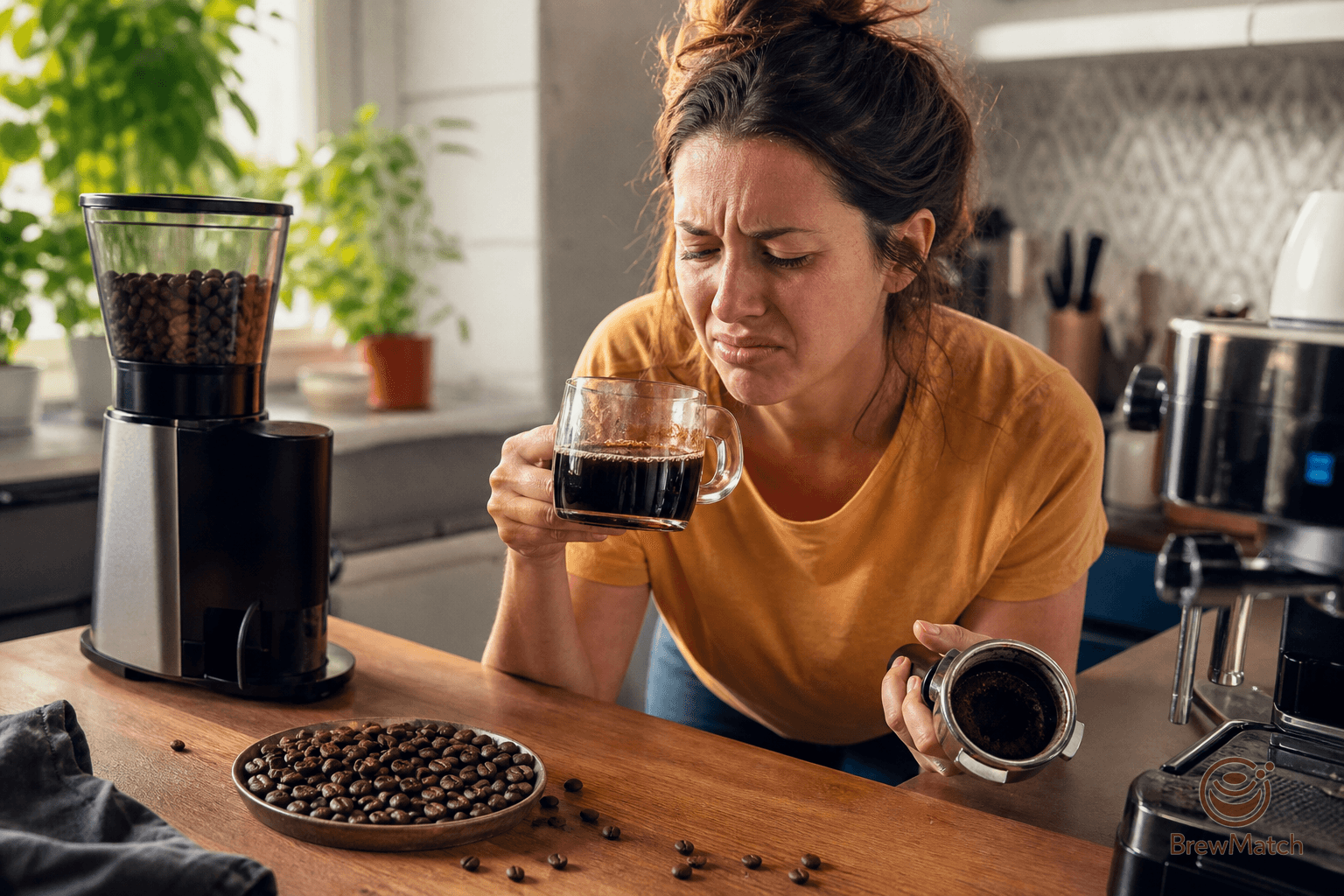
If your coffee tastes burnt but the beans smell fine, the roast is probably not the villain. Burnt flavor often comes from over extraction, water that is too hot, old residue in the brewer, or coffee sitting too long after brewing. The beans can smell sweet and normal while the cup tastes smoky, bitter, dry, or ashy because the brew pulled too much from the grounds.
That is annoying, but it is also good news. You may not need new beans. You may need a calmer recipe.
Burnt taste is usually bitter taste with a costume on
People say burnt when the cup tastes sharp, dry, smoky, or like the bottom of a diner pot. Sometimes the coffee is actually roasted dark enough to taste smoky. But if the beans smell pleasant in the bag and the brewed coffee tastes scorched, something changed during brewing.
A burnt cup usually has one or more of these traits:
- A harsh bitter finish that hangs around
- A dry feeling on your tongue
- A smoky or ashy edge
- A flavor that gets worse as the cup cools
- A flat taste with no sweetness left
That is different from strong coffee. Strong coffee can be rich and intense without tasting like someone roasted your breakfast in a fireplace. If your cup tastes burnt and thin at the same time, the recipe is doing too much extraction and not enough balance.
Cause 1: The water is too hot for the coffee
Hot water extracts faster. That is the whole problem.
If your water is boiling when it hits the grounds, it can pull bitter, drying compounds too aggressively, especially with darker roasts, fine grounds, or small brewers that hold heat well. The result can taste burnt even though nothing actually burned.
This shows up a lot when people do one of these:
- Pour straight from a rolling boil into a pour over
- Use a very hot automatic brewer with dark roast
- Preheat everything heavily and brew a small amount
- Reboil water several times and brew immediately
You do not need lab gear. Try this: after the kettle boils, wait 30 to 60 seconds before brewing. If you are using an electric kettle with temperature control, start around 195 to 205°F. For darker roasts, the lower end often tastes smoother.
If boiling water has been your default, read Boiling Water Makes Coffee Taste Bitter. It covers the same problem from the bitterness angle.
Cause 2: The grind is too fine for the brew method
Fine grounds extract quickly. Too fine, and the brew starts pulling bitterness before the cup has enough sweetness to balance it.
This is one of the most common reasons coffee tastes burnt when the beans smell normal. The smell test checks the beans. The grind test checks what the water is actually doing to them.
Signs your grind may be too fine:
- Drip coffee runs slowly or stalls
- Pour over drains like wet sand
- French press tastes muddy and harsh
- Espresso tastes bitter even when the shot looks impressive
- The cup has a dry, chalky finish
Move one notch coarser and brew again. Do not change five things at once. If the cup gets less burnt and more rounded, the grind was part of the problem.
There is a tradeoff here. Go too coarse and the coffee can turn sour, weak, or hollow. You are not trying to make the water run away from the coffee. You are trying to stop it from overworking the grounds.
Cause 3: The coffee is brewing too long
Time is extraction. More time is not automatically more flavor. At some point it becomes punishment.
Burnt tasting coffee often comes from a brew that stayed in contact with the grounds too long. This is especially true for immersion methods like French press and cold brew, but it can happen in drip and pour over too if the water drains too slowly.
Common time problems:
- French press sits for 8 to 10 minutes because you forgot it
- Drip basket drains slowly because the filter is clogged or overloaded
- Pour over takes forever after the first half of the brew
- Espresso shot runs long and tastes dry
- Cold brew sits so long it becomes woody and bitter
If your cup tastes burnt, shorten the contact time before you blame the roast. For French press, try plunging or pouring off around 4 minutes. For pour over, aim for an even drain without a long muddy finish. For drip, check that the basket is not overloaded and the filter is sitting correctly.
For a deeper fix, BrewMatch already has a direct guide on this: Over Extracted Coffee Tastes Bitter: 4 Home Fixes.
Cause 4: Old coffee oils are adding a burnt layer
Coffee leaves oil behind. Old oil goes stale. Stale oil tastes bitter, rancid, and sometimes burnt.
This is the boring answer nobody wants, because cleaning your coffee maker is less fun than buying a new bag. But it is often the answer.
Check the parts that touch brewed coffee:
- Carafe
- Brew basket
- Reusable filter
- French press mesh
- Moka pot gasket and upper chamber
- Espresso portafilter and basket
- Travel mug lid
Travel mug lids are repeat offenders. They trap old coffee in tiny channels, then donate yesterday's bitterness to today's cup like a petty roommate.
Wash removable parts with warm water and a mild dish soap if the manufacturer allows it. Rinse well. For machines, follow the maker's cleaning instructions. If you clean the brewer and the burnt flavor drops immediately, the beans were never the main problem.
Cause 5: The coffee sat too long after brewing
Fresh brewed coffee can taste fine. Thirty minutes later, it can taste harsh and burnt.
Heat is not gentle. A hot plate keeps cooking the brewed coffee, driving off aroma and concentrating bitter flavors. Even without a hot plate, coffee left open in a carafe slowly loses its nicer notes and tastes flatter.
If the first few sips are good and the later cup tastes burnt, your brewing may be fine. Your holding method is the issue.
Try this:
- Brew less coffee at once
- Move it to an insulated carafe
- Turn off the hot plate sooner
- Do not microwave old coffee and expect magic
- Rinse the carafe before brewing a new pot
A thermal carafe will not make bad coffee good, but it can keep good coffee from turning mean.
A quick burnt coffee checklist
Use this checklist before you replace the beans:
- Smell the beans. If they smell smoky, oily, or stale, the roast or age may be involved.
- Lower the water heat. Wait 30 to 60 seconds after boiling, or use a lower kettle setting.
- Grind a little coarser. Make one small adjustment and compare.
- Shorten brew time. Especially if the cup tastes dry and bitter.
- Clean the brewer. Do not skip the carafe, basket, filter, and mug lid.
- Stop cooking the brewed coffee. Get it off the hot plate or brew smaller batches.
- Taste earlier in the cup. If the first sip is fine and later sips are burnt, storage is the problem.
If you are tired of guessing whether the issue is the beans or the brew, BrewMatch can help match your taste preferences to coffees that are more likely to land smooth instead of harsh.
When the beans actually are the problem
Sometimes the beans are doing exactly what they were roasted to do.
Some dark roasts are intentionally smoky, roasty, and bitter edged. Plenty of people like that. If you do not, there is nothing wrong with you. You are not failing coffee. You just do not like that flavor profile.
The beans may be the main issue if:
- They smell smoky before brewing
- The surface looks very oily
- Every brew method tastes similarly ashy
- Lower heat and coarser grind do not help much
- The bag describes flavors like smoke, char, dark cocoa, or toasted spice and you hate all of that
In that case, look for medium roast coffees with flavor notes like caramel, chocolate, nut, brown sugar, or fruit. Avoid assuming light roast is automatically smoother. Some light roasts can taste sharp or sour if brewed poorly. Smoothness is about roast, bean choice, freshness, and your recipe working together.
The simplest fix to try first
If you only want to make one change tomorrow morning, do this:
Use the same coffee, same amount, and same brewer. Let the water cool slightly after boiling, then grind one step coarser if you can. Brew and taste.
If the burnt flavor fades, you found the direction. Keep adjusting gently. If it still tastes burnt, clean the brewer and check whether the coffee is sitting too long after brewing.
Do not turn this into a full kitchen experiment unless you enjoy chaos before breakfast. Change one thing, taste, then decide.
Burnt tasting coffee is usually fixable. The cup is not doomed, and your beans are not automatically trash. Start with heat, grind, time, cleaning, and storage. If the coffee still tastes like ash after that, then it is fair to shop for a smoother match.
For a less bitter starting point, try BrewMatch and find coffee that fits the way you actually want your cup to taste.
Find your match
Not sure which beans fit your taste?
Use BrewMatch to turn your flavor goal, brew method, and current coffee problem into a practical roast and bean profile.
Try BrewMatch