
July 31, 2026
Coffee Tastes Bitter But Weak: 4 Fixes That Actually Help
Bitter and weak coffee is not a mystery mood. It usually means your brew is extracting badly instead of brewing stronger.
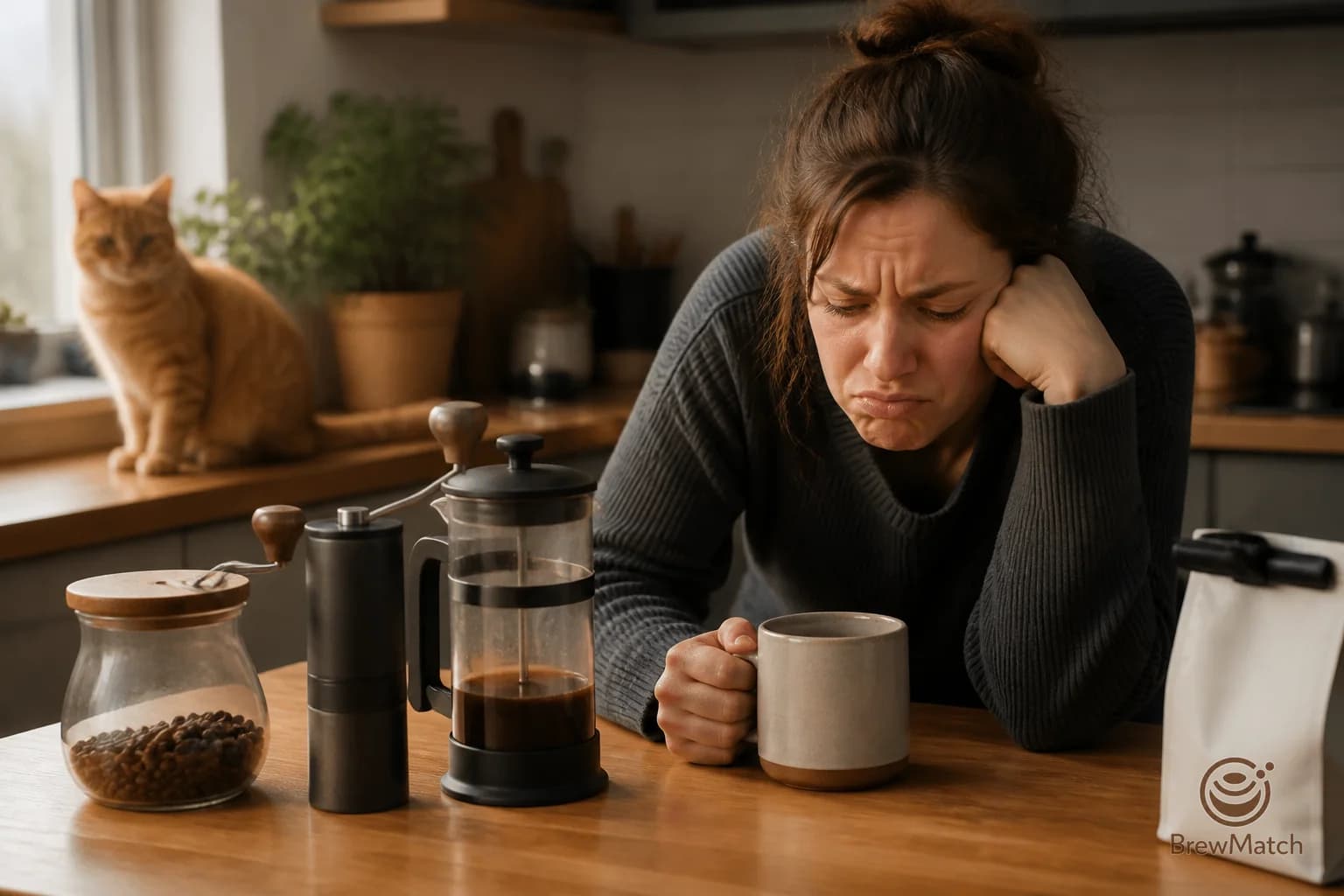
Coffee that tastes bitter but weak usually means the brew is extracting unevenly, sitting too long, using tired beans, or being diluted by a bad recipe. It is not proof that you need darker beans or more coffee by default. The goal is not to make the cup more intense. The goal is to make it taste fuller without dragging out more harshness.
These four fixes are ordered from easiest to most diagnostic: stop stretching the brew, check grind consistency, question stale coffee, and get brewed coffee off heat.
That distinction saves a lot of bad coffee.
People often hear “weak” and immediately add more grounds. Sometimes that works. Sometimes it makes the cup even more bitter, because the actual problem was contact time, grind quality, old beans, or coffee sitting on heat after brewing.
Bitter and weak are not opposites
A lot of home coffee drinkers assume bitterness means the coffee is strong. Not always.
Strong coffee has more dissolved coffee flavor. Bitter coffee has more harsh compounds showing up in the cup. Those can overlap, but they do not have to.
That is why a cup can taste:
- Thin but harsh
- Watery but dry
- Flat but bitter
- Weak at first, then unpleasant in the finish
- Like dark toast dragged through hot water
That combination usually means the good flavors did not land cleanly. You missed sweetness and body, but still picked up bitter edges.
Think of it like overcooked vegetables in too much water. They can taste both washed out and unpleasant. Coffee can do the same thing.
Fix 1: Stop stretching the brew to “get more out of it”
One common cause of weak bitter coffee is trying to pull too much drink from too little coffee.
This happens in drip machines, pour over, French press, moka pot, and espresso. The method changes, but the mistake is the same: the first part of brewing gives you more sweetness and body, while the later part can become thinner and harsher.
If you keep pushing water through the grounds because you want a bigger mug, the cup can taste watery and bitter at the same time.
Try this:
- Use slightly less water for the same amount of coffee
- Or use a little more coffee without extending brew time
- Stop the brew before the last thin drips if they taste harsh
- Do not re run water through used grounds
If your coffee tastes better when the cup is smaller, your old recipe was probably asking the grounds to do too much.
This is also why “stronger” is a vague target. Bigger dose, finer grind, longer time, hotter water, and less water all change strength in different ways. Some make coffee fuller. Some just make it angrier.
For a deeper look at this specific trap, read Over Extracted Coffee Tastes Bitter Not Strong.
Fix 2: Check whether your grind is uneven rather than just wrong
If your coffee tastes weak and bitter, your grind might not be simply too fine or too coarse. It might be uneven.
Uneven grounds are annoying because they create two bad extractions in one brew:
- Tiny particles extract too much and taste bitter
- Larger chunks extract too little and taste thin or sour
The final cup can taste hollow, sharp, bitter, and confusing. You keep changing the recipe, but the coffee never gets clean.
This is especially common with blade grinders, tired grinders, very cheap grinders, or grinders set so badly that the grounds include dust and boulders.
You do not need a fancy coffee setup to notice the problem. Look at the grounds after grinding. If you see powder mixed with big chips, that is a clue.
Try this:
- Grind a little coarser if the brew tastes dry and bitter
- Grind a little finer if it tastes watery and sour, but not dry
- Avoid pulsing a blade grinder until the coffee turns dusty
- Shake or stir grounds gently before brewing to reduce clumps
- If using pre ground coffee, make sure it matches your brew method
The tradeoff is simple. A better grinder gives you more control, but better habits still help if you are not buying gear right now.
If you want help matching coffee to the taste you actually like, not the taste coffee people assume you should like, try BrewMatch. It is built for home drinkers who want smoother cups without learning a new personality.
Fix 3: Do not confuse stale coffee with mild coffee
Old beans often taste weak because the aroma has faded. But they can still taste bitter because roast notes, papery flavors, and flat dryness remain.
That is a miserable combo: less sweetness, less fragrance, less body, but still enough bitterness to ruin the cup.
Stale coffee does not always smell terrible. Sometimes it just smells muted. The bag may still say “smooth” or “balanced,” but if it has been open too long, stored badly, or ground weeks ago, the cup may taste tired before you even brew it.
Signs your coffee may be stale:
- The dry grounds smell faint instead of fragrant
- Brewed coffee tastes flat even when fresh
- You need more coffee than usual to taste anything
- The aftertaste is dry or cardboard like
- Milk covers the problem better than recipe changes do
Try this:
- Buy smaller bags if you drink coffee slowly
- Keep coffee sealed away from air, heat, and light
- Use whole beans when possible
- If buying pre ground coffee, choose a bag you can finish quickly
- Do not store beans above the stove or beside a sunny window
Stale beans can still make coffee, obviously. They just make troubleshooting harder because the flavor ceiling is lower. You can improve the brew, but you may not be able to make it taste lively.
For more on that flat bitter taste, read Old Coffee Beans Can Taste Bitter and Flat.
Fix 4: Get coffee off heat before it turns mean
If coffee tastes fine at first but becomes bitter and weak later, your brewer or serving habit may be the problem.
This often happens with drip coffee left on a hot plate. The water slowly evaporates, the aromas fade, and the cup gets harsher. Weirdly, it can still feel weak because the fresh flavors are gone. What remains is a hot, bitter shadow of the coffee you brewed twenty minutes ago.
A similar thing can happen if coffee sits too long in a French press with grounds still at the bottom. It keeps extracting while it waits.
Try this:
- Pour drip coffee into an insulated carafe after brewing
- Turn off the hot plate once the pot is done
- Do not leave French press coffee sitting on the grounds
- Brew less coffee more often if your pot sits around
- Taste the coffee immediately after brewing, then again later
That last test is useful. If the first cup is fine and the second cup is bitter and thin, your recipe may not be the villain. Time and heat are.
Practical checklist for weak bitter coffee
Use this before changing everything at once.
- Taste the coffee right after brewing If it is good fresh but bad later, fix storage, heat, or serving time.
- Make a slightly smaller cup Use the same coffee dose with less water. If it improves, you were stretching the brew too far.
- Inspect the grounds A mix of powder and chunks can create bitter and weak flavors together.
- Change only one variable Adjust grind, water amount, dose, or time one at a time. Random changes make random coffee.
- Smell the beans or grounds If they smell dull, the cup probably will too.
- Watch the finish A dry, scratchy aftertaste usually points to harsh extraction or old coffee, not “more strength needed.”
- Do not automatically go darker Darker roast can add roast bitterness. It may not add the fullness you want.
A simple test brew
If your usual coffee tastes bitter but weak, run one controlled test.
Use your normal coffee and normal brewer. Change only the water amount.
For example, if you usually use 2 tablespoons of coffee for a large mug, keep the coffee the same and brew a smaller mug. Do not grind finer. Do not steep longer. Do not add extra heat. Just make the drink less stretched.
Then taste it.
If it gets rounder and less hollow, your recipe was too diluted. You can either brew smaller cups or increase the coffee dose slightly while keeping brew time under control.
If it stays bitter and thin, test freshness next. Then look at grind consistency.
If it gets stronger but more bitter, you may already be extracting too much harshness. Back off brew time, grind a little coarser, or lower the water temperature slightly if you have control over it.
This is not about chasing a perfect cafe recipe. It is about stopping the obvious sabotage.
What not to do
Do not dump in more coffee every time a cup tastes weak. That can help if the recipe is simply too diluted, but it can also make bitterness louder.
Do not assume dark roast is the only problem. Dark roast can taste bitter, but light and medium roasts can taste harsh too when brewed badly.
Do not keep brewing longer because the cup tastes thin. Longer contact can pull more bitterness without adding the body you wanted.
Do not judge the entire bag from one bad brew. One messy recipe can make decent coffee taste cheap.
The smoother cup is usually one boring adjustment away
Weak bitter coffee feels like a contradiction, but it is usually fixable. Start by making the brew less stretched. Then check grind consistency, bean freshness, and whether the coffee is sitting too long after brewing.
You are not trying to make coffee more aggressive. You are trying to make it taste complete.
If you want a shortcut to coffees that fit your taste instead of fighting every bag, use BrewMatch. It helps match you with coffee based on what you actually like, including smoother options for people who are tired of bitter cups.
Find your match
Not sure which beans fit your taste?
Use BrewMatch to turn your flavor goal, brew method, and current coffee problem into a practical roast and bean profile.
Try BrewMatch