
July 24, 2026
Coffee Ground Too Fine Can Taste Bitter and Dry
If your coffee tastes bitter dry and oddly hollow, your beans may not be the villain. Your grind may be choking the brew.
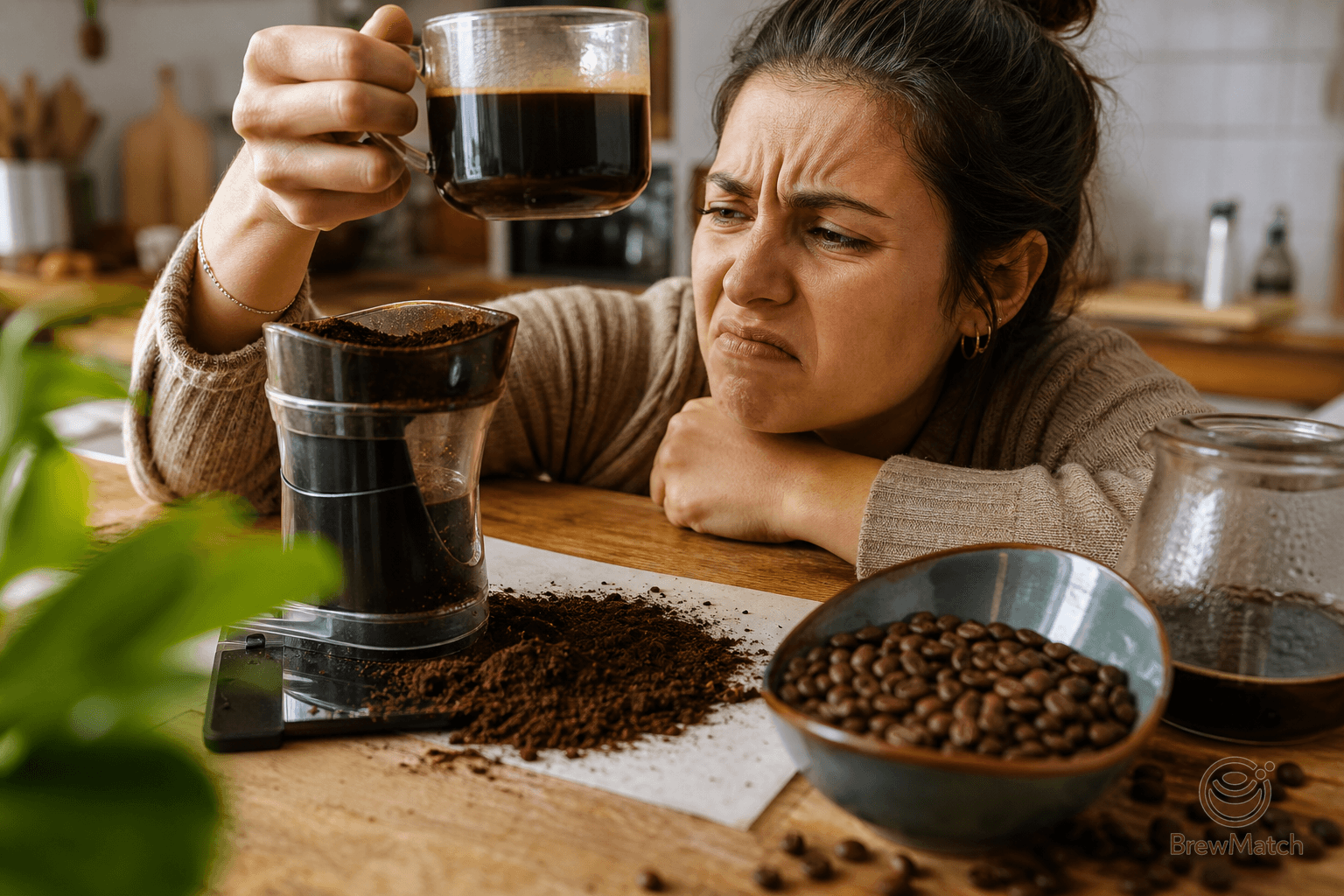
If your coffee tastes bitter, dry, harsh, or oddly empty, your grind may be too fine. Tiny coffee particles slow water down and expose more surface area, which can pull out too much bitter material. Before you blame the beans, move your grinder a little coarser and brew again with the same amount of coffee and water.
That one change fixes a surprising amount of bad home coffee.
Not all bitter coffee comes from grind size. Water can be too hot. The coffee maker can be dirty. The beans can be stale. But when the cup tastes bitter and dry at the same time, grind size deserves a look.
What too fine coffee grounds actually do
Coffee brewing is basically water picking up flavor from ground coffee. The smaller the grounds, the easier it is for water to pull stuff out.
That sounds good until it is not.
A finer grind gives water more surface area to attack. It also slows the flow in many brew methods. In a drip machine, pour over, espresso machine, or AeroPress, water may sit with the coffee longer than expected. That extra contact can drag the cup past sweet and balanced into bitter and dry.
Think of grind size like the opening on a faucet. Coarse grounds let water move through more freely. Fine grounds make water work harder. If the water hangs around too long, the cup can start tasting like burnt toast, black tea that steeped forever, or dark chocolate with the fun removed.
That is over extraction in normal kitchen language: the brew pulled too much.
If your coffee tastes sour and bitter in the same cup, the issue may be uneven extraction rather than just a fine grind. BrewMatch covers that in Coffee Tastes Sour and Bitter at the Same Time.
The taste clues that point to a grind that is too fine
A too fine grind usually has a few tells. You do not need a coffee degree to spot them.
Look for these:
- The coffee tastes bitter but not pleasantly bold
- The finish feels dry, rough, or chalky
- The cup tastes heavy but still kind of hollow
- The brew takes longer than usual
- Your paper filter drains slowly or clogs
- Your French press has a lot of sludge
- Espresso drips slowly or tastes sharp and burnt
- Adding milk helps, but does not fully hide the harshness
The dry finish is the big one. Strong coffee can taste rich, full, and intense. Bitter over extracted coffee tastes like it is trying to sandpaper your tongue.
People often call this burnt, even when the beans are not burnt. That is fair. Taste does not care about technical accuracy. If the cup reminds you of ash, old diner coffee, or over steeped tea, grind size may be part of the mess.
The quick checklist before you change beans
Do this before buying another bag out of frustration.
- Keep the same coffee beans.
- Keep the same amount of coffee.
- Keep the same amount of water.
- Move your grinder one or two steps coarser.
- Brew again.
- Compare the bitterness, dryness, and brew time.
If the second cup tastes smoother, less dry, and a little sweeter, the first grind was probably too fine.
If it gets weak and watery, you went too coarse or changed too much at once. Move back slightly finer and try again.
If nothing changes, the problem may be elsewhere. A dirty brewer, hot plate, boiling water, stale beans, or uneven grounds can all make bitter coffee. For a wider grinder check, read 4 Grinder Setting Mistakes That Make Coffee Taste Bitter.
If you want help matching beans to the kind of coffee you actually like, not the bag label that sounds fancy, try BrewMatch. It is built for home coffee drinkers who want better taste without turning breakfast into a lab session.
Method by method signs your grind is too fine
Different brewers complain in different ways.
Drip coffee maker
A too fine grind can clog the filter basket and slow the flow. The brew may take longer than normal, and the coffee can come out dark, bitter, and flat.
Most home drip machines do better with a medium grind. If you are using grounds that look powdery, try going coarser. You want something closer to beach sand than flour.
One warning: some drip machines are already inconsistent. If the shower head only wets part of the coffee bed, a fine grind can make the wet spots over extracted while dry spots barely brew. That can taste bitter and sour at the same time.
Pour over
Pour over is sensitive to grind size because you control the water flow by hand. If the water drains painfully slowly, the coffee bed looks muddy, and the cup tastes bitter or papery, the grind may be too fine.
Go a click or two coarser. Do not also change your pour, coffee dose, kettle temperature, and filter brand in the same brew. That is how people create a mystery and then call it coffee technique.
French press
French press usually wants a coarser grind than drip or pour over. Fine grounds can sneak through the mesh filter and keep extracting while the coffee sits. That means more sludge, more bitterness, and a gritty finish.
If your French press tastes heavy and bitter instead of rich, grind coarser and pour the coffee out after plunging. Leaving it in the press is basically giving bitterness extra time to move in.
Espresso
Espresso is the tricky exception. Espresso needs a fine grind, but too fine can choke the shot. Water struggles to get through, the shot runs too slowly, and the flavor can turn bitter, burnt, or painfully intense.
If your shot takes much longer than your normal target and tastes harsh, go slightly coarser. Small moves matter with espresso. One big adjustment can swing you from bitter to sour.
Coarser is not always better
Do not turn this into a rule that fine grind equals bad coffee. Fine grinding is useful. Espresso needs it. Some AeroPress recipes use it well. Certain light roasts can handle a finer grind without tasting harsh.
The problem is not fine grind by itself. The problem is fine grind paired with too much contact time, too hot water, poor flow, or uneven particle size.
That is the tradeoff: finer grind can bring out more flavor, but it gives you less room for error. Coarser grind can taste smoother, but go too far and the coffee becomes thin, sour, or dull.
The goal is not the coarsest cup. The goal is the least dramatic cup.
A simple grind test for tomorrow morning
Try this if your coffee has been bitter for a few days and you are sick of guessing.
Brew three small cups if you can. Use the same coffee and water ratio for each.
- Cup 1: your current grind
- Cup 2: one step coarser
- Cup 3: two steps coarser
Taste them side by side when they are warm, not scalding hot. Hot coffee can hide details. As it cools a little, bitterness and dryness become easier to notice.
Pick the cup that tastes smoothest without becoming weak. That is your new starting point.
If you use a grinder with numbered settings, write the setting down. If your grinder has no numbers, take a photo of the dial position. Boring? Yes. Useful? Also yes. Future you does not want to rediscover breakfast by accident every week.
When the grinder is the problem
Sometimes your setting is fine, but your grinder is making a mess.
Blade grinders are famous for this. They can create powder and chunks in the same batch. The powder over extracts and tastes bitter. The chunks under extract and taste sour or dull. The result is a cup that makes no sense.
Even some burr grinders can produce extra fine dust if they are dirty, worn, or set awkwardly for the beans you are using.
If you see a lot of powder clinging to the container, or your brewed coffee always has a muddy finish, grind consistency may be the bigger issue. You can still improve the cup by going coarser, but a better grinder may eventually matter more than another premium bag of beans.
That does not mean you need to buy the most expensive grinder on the internet. It means you should stop expecting uneven grounds to produce a clean cup.
The fix in one sentence
If your coffee tastes bitter and dry, grind a little coarser before you change beans, add more coffee, or start apologizing to your coffee maker.
Then taste again. If the cup gets smoother, you found the pressure point. If it gets sour or watery, move slightly finer. If nothing improves, check water temperature, brewer cleanliness, bean age, and contact time.
Coffee should not taste like punishment. If you want a calmer way to find beans that match your taste and avoid the bitter stuff you already know you hate, use BrewMatch. Start with what you like, then let the grinder do less damage.
Find your match
Not sure which beans fit your taste?
Use BrewMatch to turn your flavor goal, brew method, and current coffee problem into a practical roast and bean profile.
Try BrewMatch