
August 31, 2026
Coffee Grinder Static Is Annoying Not Usually the Bitter Coffee Problem
Grinder static makes a mess but it is rarely the main reason coffee tastes bitter. Fix the dose loss and clumps before buying another grinder.
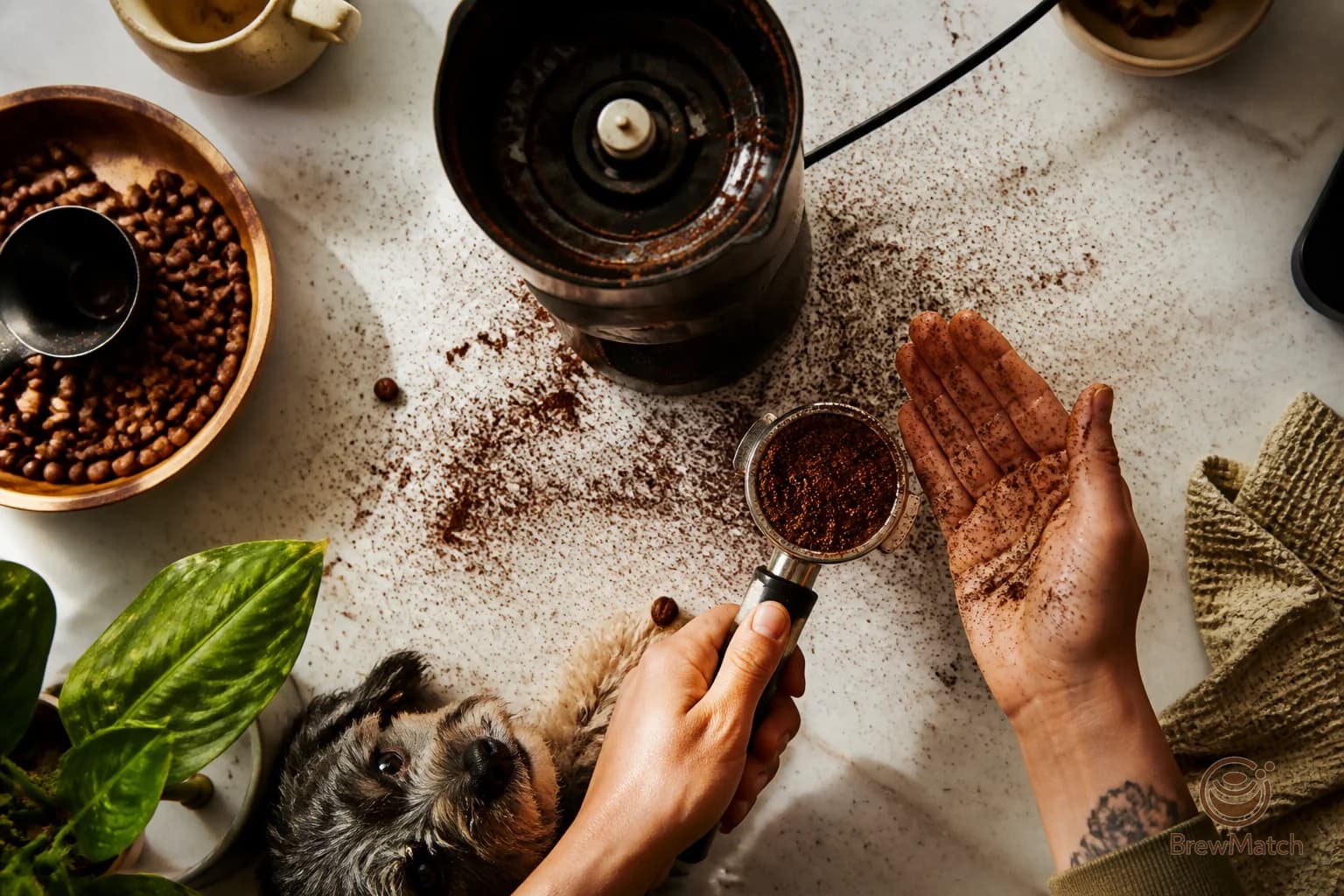
Coffee grinder static can make your counter look like a tiny coffee explosion, but static itself usually does not make coffee taste bitter. The bigger issue is what static causes: grounds sticking in the grinder, uneven dosing, clumps in the basket, and a messy routine that makes your recipe drift. Fix those before you blame static for every harsh cup.
Static is annoying. It is also easy to overrate because you can see it. Bitter extraction problems are often less obvious.
What grinder static actually does
Static happens when dry coffee particles rub against grinder parts and each other. Some of those particles cling to the chute, catch cup, lid, or dosing cup instead of falling neatly where you want them.
At home, that usually creates four problems:
- Grounds stick to the grinder
- Grounds spray onto the counter
- Your final dose is slightly lower than expected
- Fine particles cling to surfaces and release later
None of that means static is directly adding a bitter taste. Static is not a flavor. It is a handling problem.
The taste problem starts when static changes the way your coffee gets brewed. If you measure 18 grams of beans but only 17.2 grams lands in the brewer, your recipe changed. If clumps hit the filter bed and water runs unevenly, your extraction changed. If old grounds stuck in the chute fall into the next brew, freshness changed.
That is where bitterness can creep in.
Static is not the same as coffee dust
People often blame static when the bigger issue is dust. Coffee dust means extra fine particles created during grinding. Those tiny particles extract fast. Too many of them can make coffee taste bitter, dry, muddy, or harsh.
Static can make dust more visible because fines cling to plastic and metal surfaces. But static did not necessarily create the fines. Your grinder, burr condition, roast, grind setting, and coffee freshness all matter more.
If your grinder produces a lot of powdery residue, read Coffee Dust From Your Grinder Makes Coffee Taste Bitter. That is a stronger bitterness clue than a few grounds stuck to the cup.
A simple way to separate the two:
- Static problem: grounds cling and scatter, but the grind looks mostly even
- Dust problem: the coffee looks powdery, muddy, or sandy no matter how careful you are
- Combined problem: you see both clingy grounds and a lot of fine powder
If you have the combined version, do not buy a grinder just because the box says anti static. Look for better grind consistency first.
When static can make coffee taste more bitter
Static becomes a taste problem when it pushes your brew out of balance. That usually happens in boring ways.
You lose coffee before brewing
If grounds cling inside the grinder or catch cup, your dose drops. A smaller dose with the same amount of water can taste thin and sharp. Sometimes it can also taste bitter because the water pulls too much from too little coffee.
This is one reason people say their coffee tastes bitter but weak. The cup is not strong. It is underfilled and overpulled.
Clumps make water behave badly
Static can make grounds bunch together, especially with finer grind settings. Clumps are more common in espresso, but drip and pour over can get them too.
Water does not flow evenly through clumped coffee. Some areas get overextracted while others barely get touched. The result can taste harsh, bitter, sour, and hollow at the same time. Fun little disaster.
Old grounds fall into the next brew
Static can help grounds cling inside the chute. Those grounds may drop later into tomorrow morning's coffee. A small amount will not ruin everything, but stale retained grounds are not doing you any favors.
This is especially noticeable if your first cup tastes worse than the second, or if you switch between very different coffees and the flavors blur together.
Your routine gets sloppy
This one is underrated. Static makes grinding feel messy, so people tap, shake, brush, dump, and guess. Suddenly the dose is inconsistent. The filter bed gets disturbed. Fine dust gets moved around.
Coffee gets bitter when the process changes more than people think it does.
The cheap fixes to try first
Before you shop for a new grinder, make static less dramatic and see if the taste actually improves.
Let the grounds settle for a few seconds
After grinding, wait 5 to 10 seconds before removing the catch cup. That gives charged particles a little time to calm down. It will not fix a bad grinder, but it can reduce the countertop confetti.
Tap gently before opening
A light tap can knock loose grounds from the chute or lid. Do not smack the grinder like it owes you money. You are trying to settle grounds, not shift the burrs or crack plastic parts.
Use a tiny amount of moisture only if your grinder allows it
Some home brewers use a tiny mist of water on whole beans before grinding. The goal is to reduce static. If your grinder manual warns against moisture, skip it. If you try it, use barely any water. Damp beans are not the goal.
This trick can help with static, but it will not fix bitterness caused by too fine a grind, old beans, dirty burrs, or a bad recipe.
Brush the exit chute
If grounds cling around the chute, clean that area regularly. You do not need a ceremony. A soft brush and a quick wipe usually do enough.
If your grinder is a pain to clean, that matters more than an anti static label. A grinder that keeps old grounds trapped can keep bitterness hanging around.
Weigh after grinding for a few brews
This is the least glamorous fix and probably the most useful one. Weigh the beans before grinding, then weigh the grounds that actually make it into your brewer.
If you put in 20 grams and brew with 18.8 grams without realizing it, your bitterness mystery is not mysterious. Your recipe is drifting.
If you want a less bitter coffee that fits your taste instead of a grinder spec sheet, try BrewMatch. It points you toward coffees based on the flavors you actually like, not the jargon on the bag.
Should you buy an anti static coffee grinder
Maybe. Just do not make anti static your main buying reason.
Anti static features can make daily use cleaner. That is worth something. If you hate mess, a grinder with a better chute design, less cling, and less retention can be a nicer tool.
But for bitter coffee, the bigger grinder traits are still:
- Consistent grind size
- Enough adjustment range for your brew method
- Easy cleaning
- Low retention
- A catch cup or chute that does not trap grounds
Anti static design is a comfort feature first and a flavor feature second. It can support better brewing, but it does not replace better grinding.
If you are comparing grinders, 5 Grinder Features That Make Coffee Taste Less Bitter is a better shopping filter than chasing one flashy feature.
A practical checklist for static and bitter coffee
Use this before you blame the grinder or buy a new one.
- Weigh beans before grinding
- Weigh grounds after grinding
- Check whether you are losing more than a tiny amount in the grinder
- Look for powdery fines, not just clingy grounds
- Break up visible clumps before brewing
- Clean the chute and catch cup
- Let grounds settle before opening the cup
- Avoid shaking fines into one spot in the filter
- Keep the same water amount and brew time while testing
- Change only one thing at a time
If bitterness improves after fixing dose loss and clumps, static was part of the problem. If nothing changes, the bitterness is probably coming from grind size, brew time, water temperature, roast level, or dirty equipment.
The fast test
Make two cups with the same coffee and recipe.
For cup one, grind normally and brew normally.
For cup two, grind, wait 10 seconds, tap gently, weigh the grounds that actually land in your brewer, break up clumps, and brew with the intended dose.
If cup two tastes smoother, static was messing with your routine. If cup two tastes just as bitter, stop staring at the clingy grounds. They are ugly, not guilty.
That is the tradeoff with grinder static. It feels like the obvious villain because it leaves evidence everywhere. Bitter coffee usually cares more about extraction than counter mess.
Need help separating bean flavor from brew problems? BrewMatch can help you find coffees that match the smooth, low bitterness profile you actually want.
Find your match
Not sure which beans fit your taste?
Use BrewMatch to turn your flavor goal, brew method, and current coffee problem into a practical roast and bean profile.
Try BrewMatch