
September 2, 2026
Coffee Grinder Reviews Can Mislead You If You Hate Bitter Coffee
Shopping for a coffee grinder? Do not let glossy reviews talk you into the wrong fix. If bitter coffee is the problem, focus on grind range, consistency, cleanup, and adjustment before the fancy stuff.
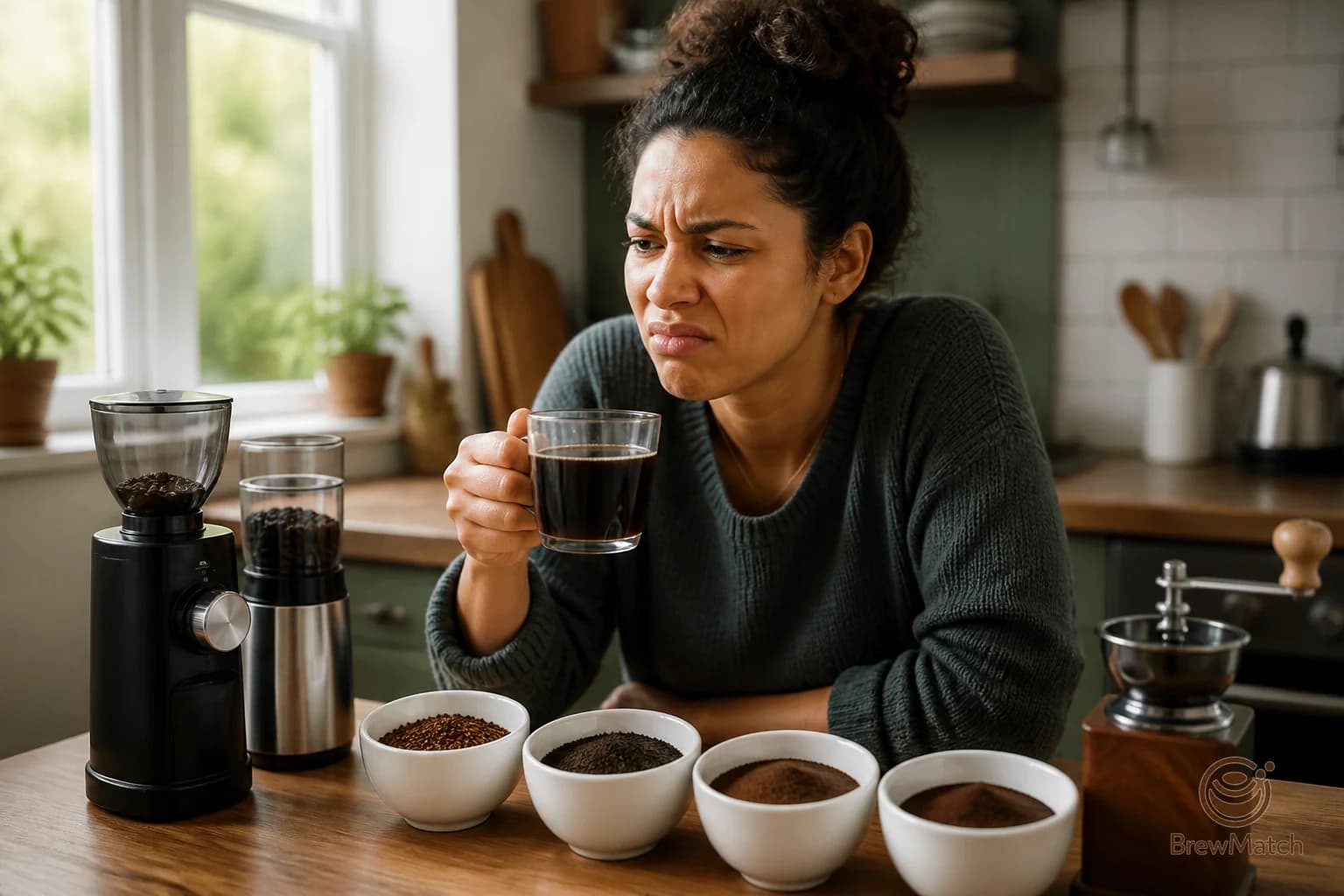
Coffee grinder reviews can mislead you if you hate bitter coffee because they often reward the wrong things: espresso performance, speed, premium materials, and sleek design. For less bitter coffee at home, you need a grinder that gives you usable grind settings, consistent particles, easy cleanup, and enough range for your brew method. A five star grinder can still make your coffee taste harsh if it does not fit how you actually brew.
Most home coffee buyers do not need the grinder that wins forum arguments. They need the grinder that stops turning breakfast into punishment.
Reviewers often care about different coffee than you do
A lot of grinder reviews are written through an espresso lens. That is not automatically bad, but it can distort the advice if you mostly brew drip, French press, pour over, AeroPress, moka pot, or cold brew.
Espresso asks a grinder to do one very specific thing: grind fine enough and adjust precisely enough to control pressure and shot time. That is a demanding job. It is also not the same job as making a clean, smooth mug from a drip machine.
So when a review says a grinder is “excellent,” ask a better question: excellent for what?
If the review is mostly about dialing in espresso shots, it may not tell you whether the grinder has a comfortable medium range for drip coffee. If the review praises ultra fine adjustment, it may not tell you whether the grinder produces too much coffee dust at coarser settings. If the review obsesses over burr geometry, it may skip the part where grounds get trapped inside and stale leftovers end up in tomorrow’s cup.
That is how people buy a technically respected grinder and still get bitter coffee.
The review score is less important than the complaint pattern
Do not just read the headline rating. Read the bad reviews.
Not because angry reviewers are always right. They are not. But repeated complaints usually reveal the tradeoff the polished review skipped.
Look for patterns like:
- “Hard to adjust”
- “Too many fines”
- “Messy and staticy”
- “Hard to clean”
- “Not great for French press”
- “Settings jump too much”
- “Retains a lot of grounds”
- “Works for espresso but not drip”
One complaint can be user error. Ten complaints saying the same thing is a clue.
If bitter coffee is your main problem, pay special attention to anything about fines, grind range, and cleanup. Fine dust extracts fast and can add harshness. Stale trapped grounds can muddy the cup. Big jumps between settings can trap you between “too sour” and “too bitter” with no pleasant middle.
That is more useful than knowing whether the grinder body is metal.
The specs that sound fancy are not always the specs that help
Coffee grinder marketing loves the shiny stuff. Burr material. Motor power. RPM. Timers. Touchscreens. Single dose workflows. Minimalist shapes that look great next to a plant you definitely remembered to water.
Some of those things can matter. They just may not matter first.
If your goal is less bitter coffee, start with boring questions:
- Can this grinder hit the grind size my brew method needs?
- Are the steps small enough to make real adjustments?
- Does it produce a lot of fine dust?
- Is it easy enough to clean that I will actually clean it?
- Does it leave old grounds sitting inside?
That is the shopping list. Not bragging rights.
For a deeper breakdown of useful grinder features, read 5 Grinder Features That Make Coffee Taste Less Bitter. If you are tempted to fix bitterness by spending more, also read Expensive Grinders Do Not Automatically Make Coffee Less Bitter.
Bitter coffee shoppers should be suspicious of espresso only praise
A grinder can be great for espresso and annoying for regular coffee.
That sounds backward because espresso gear often gets treated like the top shelf of coffee equipment. But “better” depends on the job. A grinder built mainly for fine espresso control may have a cramped range where drip coffee lives. It may make tiny adjustments beautifully at the fine end, then feel awkward when you need medium or coarse grinds.
If you brew drip coffee every morning, you do not want a grinder that treats drip as an afterthought.
Before buying, search within reviews for your actual brew method:
- “drip”
- “French press”
- “pour over”
- “cold brew”
- “moka pot”
- “AeroPress”
If all the praise is about espresso and nobody mentions your brewer, slow down. You might still choose that grinder, but do not pretend the review answered your question.
If you are not sure what taste profile you should be shopping toward, BrewMatch can help match your coffee preferences without making you memorize coffee nerd vocabulary.
Watch for the word “uniform” without proof you can use
Grind consistency matters. A lot. But reviews sometimes use “uniform” as a vibe, not a measurement.
For home coffee drinkers, the practical issue is uneven extraction. If a grinder creates too many tiny particles and too many chunky pieces at the same time, the tiny pieces can over extract and taste bitter while the big pieces under extract and taste thin or sour. The result is confusing coffee: harsh, weak, bitter, and somehow not satisfying.
That is why a grinder can make coffee taste both bitter and unimpressive.
You do not need laboratory graphs to shop smarter, but you do need to look for useful evidence. Does the reviewer show grounds at multiple settings? Do they mention fines? Do they test more than espresso? Do regular buyers complain about muddy French press or clogged filters?
If not, “consistent grind” may just be sales fog.
Do not ignore cleaning in grinder reviews
Cleaning sounds boring until your coffee tastes like yesterday’s stale roast.
Some grinders are easy to brush out. Others hide old grounds in corners, chutes, screws, and awkward chambers. Those leftovers can mix into the next brew and add dull bitterness, especially if you switch beans or grind sizes often.
A hard to clean grinder also creates a more human problem: you will clean it less.
Nobody wants to disassemble a tiny appliance before work just to earn a decent cup. If a review says cleaning is annoying, believe it. That annoyance has flavor consequences.
Look for:
- Easy burr access
- A removable catch cup or bin
- A simple grounds path
- Low retention comments
- Clear cleaning instructions
- Replacement parts availability
A grinder that is slightly less glamorous but easy to maintain may give you better coffee than the beautiful one you avoid cleaning.
Speed can be overrated
Fast grinding feels convenient. It is also not automatically better coffee.
If a review makes a big deal about speed, ask what you are giving up. Some fast grinders are loud. Some are messy. Some create more fines at certain settings. Some are built for speed because they are trying to win a countertop race nobody asked for.
For one or two cups at home, saving ten seconds is rarely the thing that fixes bitter coffee.
A slower grinder that gives you better control, less mess, and easier cleanup can be the better buy. The cup does not care how impressive the spec sheet looked.
Practical checklist before you trust a grinder review
Use this before you click buy.
- Does the review test your brew method, not just espresso?
- Does the grinder have a usable medium range for drip or pour over?
- Does it go coarse enough if you use French press or cold brew?
- Are the grind adjustments small enough to fix bitterness without overshooting?
- Do reviewers mention excessive fines or coffee dust?
- Is the grinder easy to clean without a long ritual?
- Do buyers complain about retained grounds?
- Is the hopper or dosing workflow realistic for how you store beans?
- Are replacement burrs or parts available?
- Does the review explain taste, or only build quality?
- Are the negative reviews repeating the same problem?
- Does the grinder solve your bitterness problem, or just look like an upgrade?
If you cannot answer most of those, the review has not done enough work for you.
A simple buying rule for less bitter coffee
Buy for adjustment and consistency before prestige.
A good grinder for less bitter coffee should help you move away from over extraction without throwing the whole cup out of balance. That means you need enough grind range to suit your brewer and enough control to make small changes.
If your coffee tastes bitter and dry, you may need to grind slightly coarser. If it tastes bitter but weak, your grind, dose, and brew time may be fighting each other. If it tastes muddy, you may be dealing with fines or stale retained grounds.
The grinder should help you test those changes. It should not trap you in one flavor.
The grinder is not the whole fix
One warning before you spend money: a better grinder will not fix every bitter cup.
Water temperature, brew time, coffee ratio, roast level, dirty equipment, and old beans can all make coffee taste bitter. A grinder matters because it affects extraction, but it is not a magic apology from the universe.
So if you already own a decent burr grinder, try adjusting your recipe before buying another one. Go a little coarser. Shorten contact time. Clean the grinder. Clean the brewer. Use a consistent dose. Change one thing at a time.
If those changes help, your current grinder may be good enough. If you cannot make those changes because the grinder jumps too far, clogs, traps grounds, or creates heavy dust, then shopping makes sense.
That is the difference between upgrading with a reason and buying gear because the internet got dramatic.
Bottom line
Coffee grinder reviews are useful only when they match your actual brewing life. If you hate bitter coffee, do not get hypnotized by espresso praise, premium materials, speed, or perfect countertop photos. Look for grind range, consistency, small adjustments, easy cleaning, and low retained grounds.
The best grinder for you is not the one with the loudest fan club. It is the one that helps your coffee taste smoother tomorrow morning.
Want a less bitter coffee direction before you buy more gear? Try BrewMatch and get matched to coffee preferences that fit how you actually drink coffee.
Find your match
Not sure which beans fit your taste?
Use BrewMatch to turn your flavor goal, brew method, and current coffee problem into a practical roast and bean profile.
Try BrewMatch