
September 30, 2026
Coffee Grinder Presets Can Keep Coffee Bitter
One touch grinder presets sound helpful until they trap you between too fine and still bitter. Buy adjustment not button theater.
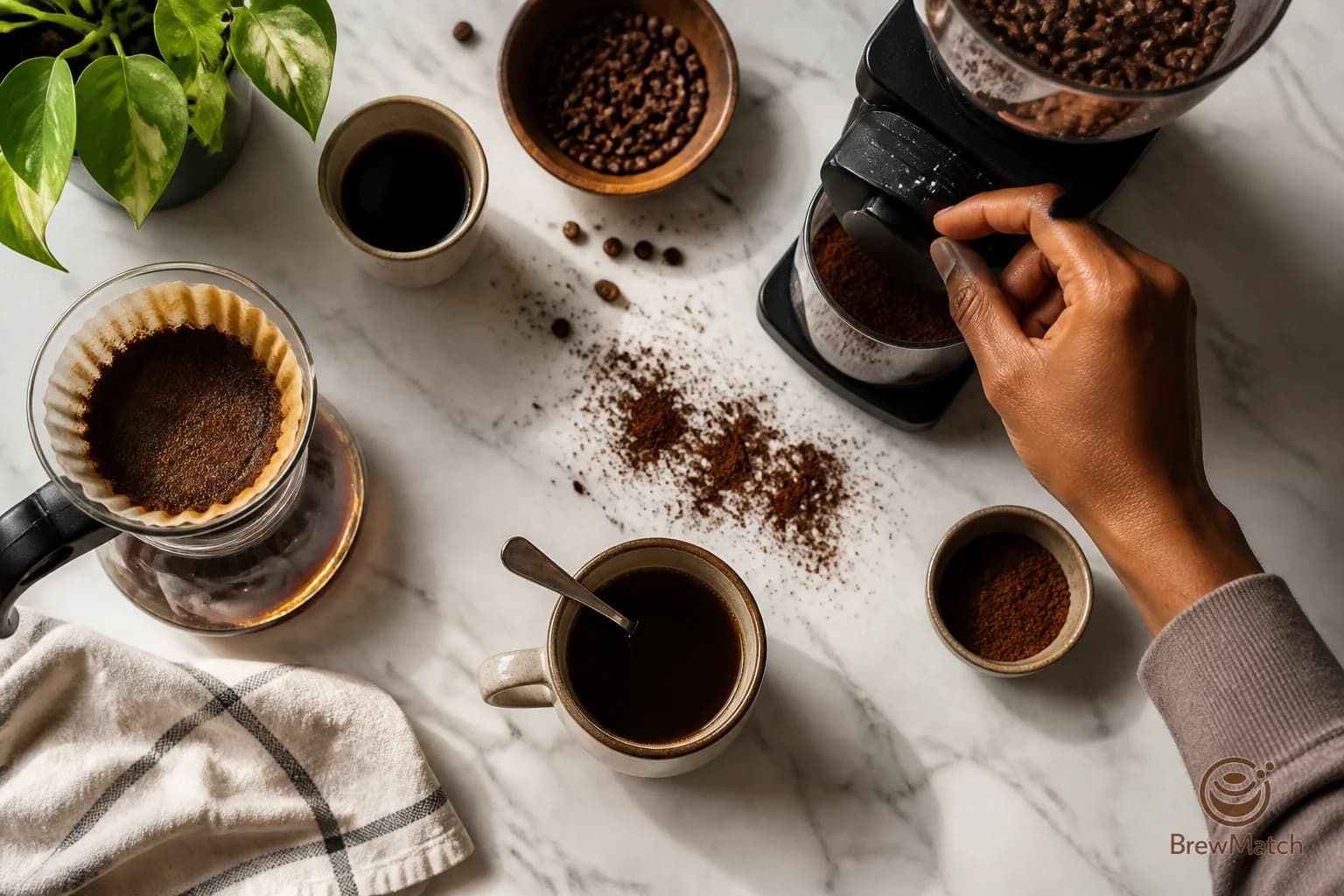
Coffee grinder presets can keep coffee bitter when they give you labels instead of usable adjustment. A button that says “drip” or “French press” is only a guess. If that guess lands too fine, uneven, or hard to repeat, your coffee can taste harsh no matter how good the beans are. Presets are convenient. They are not the same thing as control.
This is annoying because preset grinders look friendly. They promise less thinking. For a home coffee drinker, that sounds perfect. But bitter coffee often needs one small change, not a whole new personality. If your grinder only lets you choose between a few broad presets, you may not have enough room to make that small change.
A preset is a starting point not a flavor fix
A grind preset is usually built around a category: espresso, drip, pour over, French press, cold brew. That sounds useful until you remember how many variables hide inside each category.
Drip coffee can mean a small cone brewer, a flat bottom basket, or an automatic coffee maker with a slow shower head. French press can mean a three minute steep, a five minute steep, or grounds sitting in the pot while you drink the first cup. Espresso can mean a pressurized basket, a standard basket, a light roast, a dark roast, or a machine that runs too long.
One preset cannot know all that.
The tradeoff is simple: presets reduce decisions, but they also reduce corrections. That is fine when the preset tastes good. It is a problem when your coffee tastes bitter and the next coarser setting tastes weak, watery, or sour.
Where preset grinders usually make bitter coffee worse
Preset grinders do not all fail in the same way. Some are perfectly usable. The risky ones tend to share a few habits.
1. The steps are too wide
Bitter coffee often needs a slightly coarser grind. Not dramatically coarser. Slightly.
If your grinder jumps from “medium fine” to “medium coarse,” you may skip right over the sweet spot. The bitter cup tells you the grind is too fine or the extraction is too aggressive. The next preset gives you a thin cup that tastes underpowered. So you go back to the bitter setting because at least it has body.
That is how people get stuck.
A grinder with more useful steps gives you a better chance of moving one notch at a time. If your grinder has very few usable positions, read A Grinder With Too Few Settings Can Keep Coffee Bitter. That problem shows up a lot with grinders that look simple on the box but feel stubborn on the counter.
2. The labels are too confident
“Drip” is not a grind size. It is a brewing method.
The same goes for “espresso,” “French press,” and “pour over.” Those labels can get you in the neighborhood, but they should not be treated like rules. A dark roast may need a different grind than a lighter roast in the same brewer. A paper filter may behave differently than a metal filter. Your automatic coffee maker may run hotter or slower than the grinder company assumed.
This is where people blame themselves or the beans. They set the grinder to the correct looking label, brew a bitter cup, then assume they bought the wrong coffee.
Maybe. But maybe the label is just a lazy map.
3. The grinder hides the actual setting
Some one touch grinders use vague icons, sliders, or brew pictures instead of clear numbers. That makes it harder to repeat what worked.
You want to be able to say, “Yesterday was too bitter at 12, so today I am trying 14.” That is much easier than trying to remember whether the slider was slightly left of the middle coffee cup symbol.
Repeatability is not a fancy coffee obsession. It is how you stop changing five things at once. If your grinder makes it hard to return to a setting, it makes troubleshooting harder than it needs to be. BrewMatch can help you narrow down the taste direction before you start guessing at random. Try BrewMatch if you want a calmer way to match your coffee preferences to better choices.
4. The preset controls grind time too
Some grinders combine grind size presets with cup number buttons or timed dosing. That sounds convenient, but it can muddy the diagnosis.
If coffee tastes bitter, you need to know what changed. Did you grind finer? Did you grind more coffee? Did the grinder run longer than usual? Did the chute hold back grounds from the last use and dump them into this cup?
When grind size and dose are both controlled by vague buttons, you lose visibility. Bitter coffee can come from too much coffee, too fine a grind, uneven extraction, or old retained grounds. If the machine hides the details, you are left poking buttons and hoping.
That is not troubleshooting. That is button roulette.
Practical checklist before buying a preset grinder
If you are shopping for a grinder and hate bitter coffee, do not reject every preset model. Just check whether the presets leave you enough control.
Use this before you buy:
- Can you adjust between the labeled presets, or only choose the labels?
- Are there clear numbers or repeatable marks?
- Does the grinder have enough settings in the range you actually use?
- Can you change grind size without also changing dose?
- Can you grind by time manually if the cup buttons are wrong?
- Is the grind chamber easy to clean?
- Can you return or exchange it if the adjustment range does not work for your brewer?
- Does the grinder let you make small changes instead of dramatic jumps?
That last point is the big one. Less bitter coffee usually comes from controlled correction. A grinder that only offers broad presets may look simple, but it can force dramatic changes when you need gentle ones.
When presets are actually fine
Preset grinders are not automatically bad.
They can work well if you use one brewing method, drink the same general roast style, and the grinder gives you small enough adjustments around each preset. They are also fine if you mostly want decent coffee without chasing every detail.
The problem starts when the preset becomes a wall. If your coffee is bitter and you cannot move slightly coarser, slightly lower in dose, or slightly cleaner in workflow, the grinder is no longer simplifying your morning. It is limiting your fix.
Convenience is worth something. But convenience that traps you in bitter coffee is not a feature.
What to look for instead
When you compare grinders, pay less attention to how many brew icons are printed on the dial. Look for control you will actually use.
A better grinder for less bitter coffee usually has:
- Small enough grind adjustments for your brew method
- Clear setting marks you can repeat
- A simple way to change dose separately from grind size
- Low mess without requiring weird rituals
- Easy cleaning access
- A range that fits your main brewer, not every brewer on earth
If a grinder has presets plus real adjustment, that can be a good mix. The preset gets you close. The adjustment lets you fix the cup.
If a grinder has presets with no meaningful control, be careful. That is where bitter coffee gets stubborn.
For a deeper look at why repeatable adjustment beats flashy grinder claims, see Repeatable Grinder Settings Matter More Than Fancy Burrs for Bitter Coffee.
The quick fix if you already own one
If you already have a preset grinder, do not panic buy a replacement yet.
Try this:
- Pick the preset you normally use.
- Brew your usual cup without changing anything else.
- If it tastes bitter and dry, move one step coarser if possible.
- If the next step tastes weak, keep the coarser grind and use slightly more coffee.
- Clean the grinder chute and burr area if accessible.
- Write down the setting that tasted best.
The goal is not perfection. The goal is to stop letting a button make all the decisions.
Presets sell simplicity but bitterness needs adjustment
A one touch coffee grinder can be useful. It can also be the reason your coffee keeps landing in the same bitter zone every morning.
The better question is not “Does this grinder have a drip preset?” It is “Can I adjust the cup when the drip preset tastes bad?”
If the answer is yes, the grinder may work for you. If the answer is no, that friendly preset dial may be hiding the exact control you need.
Not sure whether your bitter coffee is coming from grind size, beans, roast level, or brewing habits? Use BrewMatch to get a taste based starting point before you buy another bag or another grinder.
Find your match
Not sure which beans fit your taste?
Use BrewMatch to turn your flavor goal, brew method, and current coffee problem into a practical roast and bean profile.
Try BrewMatch