
September 21, 2026
Coffee Grinder Clumps Can Make Coffee Taste Bitter
Those lumpy grounds are not just messy. Grinder clumps can brew unevenly and give you bitter harsh coffee from beans that should taste smoother.
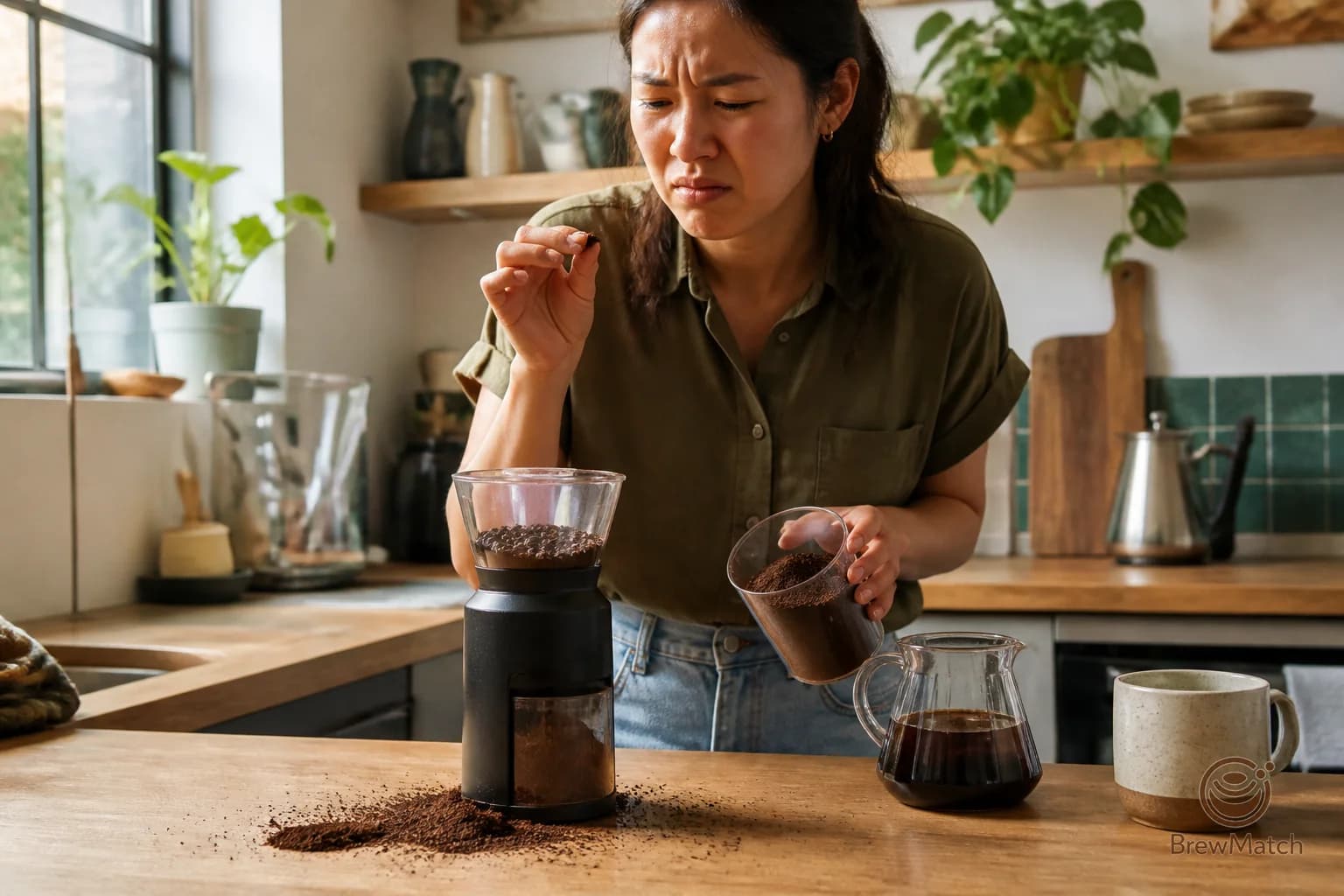
Coffee grinder clumps can make coffee taste bitter because they cause uneven brewing. Water does not move through dense little balls of coffee the same way it moves through loose grounds. Some coffee gets hit too hard. Some barely extracts. The cup can end up weak, harsh, and bitter at the same time.
That does not mean every clump is a crisis. A few soft clumps are normal, especially with fine grinding. The problem is when your grounds come out in chunky pellets, stay stuck together in the basket, or leave you with bitter coffee even when the recipe looks reasonable.
What grinder clumps actually are
Clumps are small packed-together groups of coffee grounds.
They can happen because of static, oily beans, fine grind settings, a narrow grinder chute, stale retained grounds, or a grinder that spits coffee out in compacted bursts instead of a loose fluffy pile.
You will usually notice them as:
- Little balls in the grounds bin
- Dense chunks in an espresso portafilter
- Uneven piles in a pour over filter
- Wet-looking pockets after brewing
- A coffee bed that looks cracked, cratered, or patchy
Some clumps break apart as soon as you tap the container. Those are less worrying. Hard clumps that stay together after shaking or stirring are more likely to mess with extraction.
The tradeoff is annoying: clumps do not look as dramatic as a broken grinder, but they can quietly make good coffee taste rough.
Why clumps can make coffee taste bitter
Coffee tastes better when water can reach the grounds evenly. Clumps make that harder.
A dense clump acts like a tiny obstacle. Water tends to move around it first, not through it. The loose grounds nearby may get over extracted while the middle of the clump is still under extracted. Later in the brew, the clump may break open and release fines or trapped grounds into already bitter liquid.
That is how you get a cup that makes no sense:
- Bitter but thin
- Harsh but not strong
- Dry at the finish
- Muddy in the last few sips
- Inconsistent from one brew to the next
People often blame the beans at this point. Sometimes the beans deserve it. But if the same bag tastes smooth one day and bitter the next, your ground distribution may be the problem.
Clumping is especially noticeable with espresso because the water is under pressure. A dense clump can encourage channeling, where water blasts through the easiest path and skips other areas. But clumps can also hurt drip, pour over, AeroPress, and moka pot coffee. Any brew method that needs even contact can suffer.
Signs clumping is your bitterness problem
Do not diagnose by looks alone. A few clumps in the catch cup do not automatically explain every bitter cup.
Look for patterns.
Clumping is more likely to matter if:
- Your coffee tastes bitter and weak at the same time
- You see obvious chunks before brewing
- Stirring or shaking the grounds makes the cup smoother
- The bitterness changes a lot from brew to brew
- Fine settings taste harsh no matter what bean you use
- The coffee bed looks uneven after brewing
- Espresso spurts or runs unevenly from the portafilter
Clumping is less likely to be the main issue if:
- Your grounds are mostly loose and fluffy
- The coffee tastes consistently bitter across every method
- You are using very dark oily beans
- Your water is too hot or your brew time is too long
- Your grinder is producing lots of powdery dust, not just clumps
Dust and clumps are related, but they are not the same problem. If your grinder is making a lot of powdery fines, read Coffee Dust From Your Grinder Makes Coffee Taste Bitter. Dust can over extract fast even when the grounds look evenly spread.
If you are not sure whether your taste issue is beans, grind, or brew style, BrewMatch can help you narrow the flavor profile you actually want instead of guessing through random bags.
Quick fixes before you buy a new grinder
Do these before deciding your grinder is trash.
1. Break up the grounds before brewing
For drip, pour over, French press, or AeroPress, pour the grounds into the filter or brewer and gently shake them level. If you see obvious chunks, break them with a spoon, chopstick, or clean finger.
For espresso, use a thin distribution tool or needle tool to loosen clumps before tamping. You do not need to turn puck prep into a hobby. Just stop tamping a pile of coffee rocks.
2. Tap the grinder bin gently
If your grinder has a catch cup, tap it on the counter a few times after grinding. You are not trying to compact the coffee. You are trying to loosen the clumps enough that they fall apart before water hits them.
If tapping makes the grounds fluffier and the cup tastes smoother, clumping was probably part of the problem.
3. Try a tiny mist of water before grinding
Some people lightly mist whole beans before grinding to reduce static. Use barely any water. Think one tiny spray or a damp spoon handle stirred through the beans, not wet beans.
This can reduce static-related clumping in some grinders. It is not a cure for bad burrs, old retained grounds, or a chute that packs coffee too tightly.
4. Clean the chute and burr area
Old coffee oils and stuck grounds can make new grounds cling together. If the grinder chute is packed with stale coffee, fresh grounds may come out clumpy and bitter before they even reach the brewer.
Unplug the grinder before cleaning. Brush loose grounds out of the chute and burr area according to the grinder manual. Avoid washing burrs unless the manufacturer says it is safe.
5. Grind a little coarser if the brew allows it
Very fine grinding increases clumping risk. If you are making pour over, drip, AeroPress, or moka pot coffee and the cup tastes bitter, try one notch coarser.
Do not make a huge jump. Big changes create new problems. A small change tells you more.
What to look for in a grinder if clumps keep happening
If your grinder always produces dense clumps and the quick fixes do not help, grinder design may be working against you.
For less bitter coffee, look for a grinder that gives you:
- Consistent particle size
- A clean exit chute
- Easy access for brushing out old grounds
- Repeatable settings
- Low retention
- A catch cup or portafilter setup that does not compact grounds
Some grinders also use declumpers, which are small parts near the exit path that break up grounds before they leave the grinder. A good declumper can help, especially for espresso. A bad one can trap grounds and create stale buildup. Nice feature, not magic.
If you are shopping, do not get hypnotized by burr size, motor wattage, or sleek metal housing. Those details may matter, but they do not guarantee smoother coffee. A grinder that is easy to clean and easy to adjust is often more useful at home than one that looks impressive on a counter.
For a broader buying filter, see 5 Grinder Features That Make Coffee Taste Less Bitter. It keeps the focus where it belongs: cup quality, not spec sheet bragging.
What people get wrong about clumps
The first mistake is treating all clumps as equal. Soft clumps that disappear with a shake are usually not a disaster. Hard clumps that survive stirring deserve attention.
The second mistake is blaming clumps for bitterness caused by something else. If you are brewing too long, using boiling water, or grinding too fine for the method, breaking up clumps will not save the cup by itself.
The third mistake is buying a new grinder too fast. A better grinder can help, but it should not be the first move. Try distribution, cleaning, and a small grind adjustment first. If those improve the cup, now you have evidence. If they do nothing, the bitter taste may be coming from roast level, ratio, water, or brew time.
Coffee troubleshooting gets expensive when every bad cup turns into a shopping trip.
Practical checklist for clumpy bitter coffee
Use this once before your next brew:
- Check the grounds right after grinding
- Break up any hard clumps before adding water
- Shake the brewer or filter gently to level the bed
- Clean the grinder chute if grounds are sticking inside
- Try one slightly coarser grind setting
- Keep the same coffee dose and water amount
- Taste the cup before changing anything else
- Compare it with your previous brew
If the coffee becomes smoother, less dry, or less harsh, clumping was probably part of the bitterness problem.
If nothing changes, do not keep poking random settings. Move to the next likely cause: brew time, water temperature, roast level, or coffee to water ratio.
The bottom line
Coffee grinder clumps can make coffee taste bitter, but they are usually a fixable distribution problem, not a moral failure and not always a reason to buy a new grinder.
Break up the grounds. Clean the chute. Try a small grind adjustment. If the cup gets smoother, you found a real clue. If it does not, stop blaming the lumps and keep troubleshooting the brew.
And if you want coffee recommendations that match smoother, less bitter preferences from the start, try BrewMatch. It is built for home coffee drinkers who want better coffee without pretending to be café scientists.
Find your match
Not sure which beans fit your taste?
Use BrewMatch to turn your flavor goal, brew method, and current coffee problem into a practical roast and bean profile.
Try BrewMatch