
September 7, 2026
Coffee Grinder Capacity Matters If You Hate Bitter Coffee
A tiny grinder is not automatically a smarter grinder. If you brew more coffee than your grinder comfortably handles, bitterness can show up before the beans ever get a fair chance.
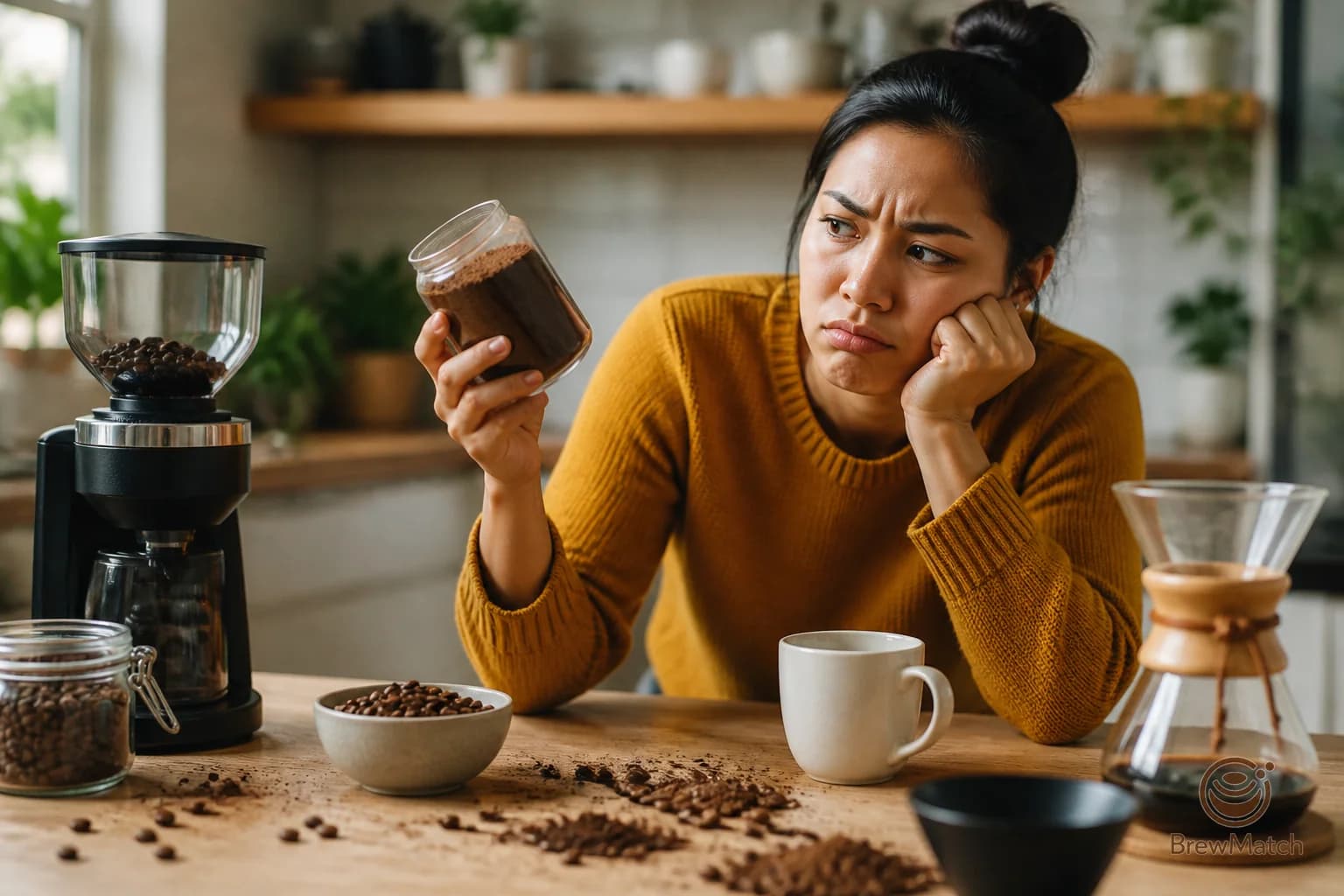
Coffee grinder capacity can affect bitter coffee when the grinder is too small for the amount you brew. The problem is not capacity by itself. The problem is what people do because of it: overfill the grinder, grind in uneven batches, leave beans sitting in a hopper, or buy a cute compact grinder that fights a full pot every morning.
If your coffee tastes bitter and you are shopping for a grinder, do not only look at burr type, motor noise, or whether it looks nice on the counter. Ask a dull but important question: can this thing comfortably grind the amount of coffee you actually make?
Quick answer: if you hate bitter coffee, grinder capacity matters because an undersized grinder can push you into overfilling, uneven batches, stale hopper habits, and extra fines. Choose a grinder that handles your normal dose comfortably before chasing bigger specs.
Capacity is not glamorous but it changes the routine
Most grinder talk gets stuck on burrs, settings, and price. Those matter. But capacity decides whether the grinder fits your real morning or turns it into a workaround festival.
A small grinder can be fine if you brew one mug. It can be annoying if you brew a full drip pot. It can be a bad match if you make French press for two people and need a bigger dose at a coarser setting.
The bitter coffee risk comes from the mismatch.
When a grinder is too small, home coffee drinkers usually compensate in one of four ways:
- They cram too many beans into the grinder.
- They grind multiple rounds and mix uneven results.
- They rush the grind and accept extra dust.
- They keep beans in a large hopper because measuring feels annoying.
None of that sounds dramatic. It just quietly makes coffee harsher.
A tiny grinder can push you into uneven grinding
A grinder that is near its limit often behaves worse than the same grinder used comfortably. You might notice a slower grind, more fines, more clumping, or a cup that tastes both hollow and bitter.
That bitterness often comes from coffee dust, also called fines. Tiny particles extract fast. In a drip machine, pour over, or French press, those little bits give up bitterness before the larger pieces are done brewing properly.
So you get the annoying combo: some grounds are over extracted and bitter, while the rest are under extracted or weak.
People often blame the roast when this happens. Sometimes the roast is involved. But if your grinder is stuffed, inconsistent, or working in awkward batches, the beans may not be getting a clean shot.
For a deeper look at the grinder features that actually help cup quality, read 5 Grinder Features That Make Coffee Taste Less Bitter.
Overfilling is the quiet capacity mistake
Overfilling a grinder is tempting because nobody wants to stand there doing two or three rounds before coffee. Fair.
But overfilling can make the grind less even. Beans may feed poorly into the burrs or blades. Some pieces get hit repeatedly. Others barely get processed. If you are using a blade grinder, overfilling is even worse because the beans need room to move. Pack it too full and you are basically asking for boulders and dust in the same batch.
With burr grinders, overfilling is less chaotic than with blade grinders, but it can still create problems if the grinder has a small hopper or a weak feed path.
The fix is boring: do not buy a grinder you have to max out every day.
If you brew 30 grams of coffee most mornings, a grinder that comfortably handles 30 to 40 grams makes sense. If you brew 60 grams for a larger drip pot, do not pretend a tiny 20 gram travel grinder is your daily driver unless you enjoy chores.
Multiple batches can taste less consistent than one clean grind
Grinding in multiple batches is not automatically bad. Plenty of people do it. The problem is that each batch may not come out exactly the same.
The first batch may grind faster. The second may include more retained grounds. The third may be rushed because the kettle is already hot and patience has left the kitchen.
Then all the grounds go into one filter together and brew unevenly.
This is especially noticeable with drip coffee and pour over because water does not treat every particle equally. Fine coffee dust slows flow and extracts quickly. Larger chunks extract slowly. If your grinder capacity forces a messy mix, the brew can taste bitter even when your recipe looks normal.
That is why grinder capacity is a taste issue, not just a convenience issue.
Big hoppers have their own bitterness tradeoff
The answer is not always buy the biggest grinder.
Large hoppers are convenient, especially on automatic grinders. But if you leave beans sitting in the hopper for days, they are exposed to air and light. They can lose sweetness and aroma faster than beans kept in a sealed bag or container.
That can make coffee taste flatter, harsher, and more bitter around the edges.
So the tradeoff is simple:
- Too small means you may overfill or grind in awkward batches.
- Too large means you may treat the hopper like bean storage.
- Just right means the grinder handles your normal dose without turning the hopper into a stale bean jar.
A good grinder setup should make the right behavior easy. Measure what you need, grind it, brew it. Done.
If you want help figuring out whether your bitterness is coming from your beans, grinder, or recipe, try BrewMatch. It is built for home coffee drinkers who want better tasting coffee without pretending to become café technicians.
Match grinder capacity to your brew method
A one cup pour over does not ask much from grinder capacity. A full drip machine does.
Use your normal brew size as the starting point, not the grinder box.
For a single mug, many compact burr grinders are fine. You are probably grinding somewhere around 15 to 25 grams of coffee, depending on cup size and recipe.
For a two mug drip brew, you may need 30 to 45 grams. A small grinder can still work, but you want enough room that it does not feel stuffed.
For a full drip pot, you may need 50 grams or more. This is where tiny grinders become annoying fast. If you are grinding three separate batches every morning, the grinder may technically work but still be a bad fit.
For French press, capacity matters because people often brew larger servings. Coarse grinding also needs consistency. If your grinder produces lots of dust alongside coarse chunks, that dust can sit in the press and keep extracting bitterness.
For espresso, capacity is usually less about total volume and more about dose precision. You may only grind 18 grams, but you need repeatability. Bigger is not automatically better.
Do not pay for capacity you will not use
There is a silly side to grinder shopping: people buy a machine built for a household of six when they brew one cup before work.
That can waste money and counter space. It can also nudge you toward leaving beans in the hopper because the grinder looks designed for it.
Expensive does not mean less bitter. Bigger does not mean less bitter. A grinder earns its keep when it fits your actual brewing pattern. If you are tempted by a pricier model, compare the features that affect taste before paying for size alone. Expensive Grinders Do Not Automatically Make Coffee Less Bitter covers that trap in more detail.
A smaller grinder can be the right call if you brew small amounts and keep it clean. A larger grinder can be the right call if you brew bigger batches and do not use the hopper as storage.
The winner is not the biggest grinder. It is the grinder that lets you grind your normal dose cleanly without drama.
Practical checklist before buying a grinder
Before you buy a grinder, answer these questions with your real routine in mind:
- How much coffee do you brew on a normal day?
- How much coffee do you brew on a weekend or when someone else wants a cup?
- Can the grinder hold that dose without being packed full?
- Will you need to grind in multiple batches every morning?
- Does the grinder have enough settings for your brew method?
- Is the grounds bin large enough or will it overflow and make a mess?
- Are you likely to leave beans in the hopper for days?
- Is the grinder easy enough to clean that you will actually clean it?
- Does it fit your counter without becoming a permanent irritation?
If the grinder only works when you baby it, it is not a good match. Coffee gear that requires perfect behavior at 7 a.m. is asking a lot.
A simple capacity rule for less bitter coffee
Buy enough capacity for your normal brew, plus a little room. Not double. Not commercial café size. Just enough that the grinder is not strained, stuffed, or forcing you into weird batch grinding.
If you brew one cup, compact is fine.
If you brew a full pot, buy a grinder that respects a full pot.
If you switch between small and large brews, choose a grinder that can handle the larger dose without encouraging stale hopper habits.
Capacity will not fix every bitter coffee problem. Grind size, water temperature, brew time, roast level, and cleanliness still matter. But capacity decides whether your grinder supports a sane routine or quietly sabotages it.
Bitter coffee is often treated like a bean problem. Sometimes it is a shopping problem. If the grinder does not match how you brew, your coffee starts each morning with a handicap.
For a better starting point, use BrewMatch to find coffees that fit your taste and then make sure your grinder is not bullying them into bitterness.
Find your match
Not sure which beans fit your taste?
Use BrewMatch to turn your flavor goal, brew method, and current coffee problem into a practical roast and bean profile.
Try BrewMatch