
August 7, 2026
Coffee Grinder Buying Mistakes That Keep Coffee Bitter
A better grinder can make coffee taste smoother but only if you buy for your brew method instead of chasing shiny coffee gear.
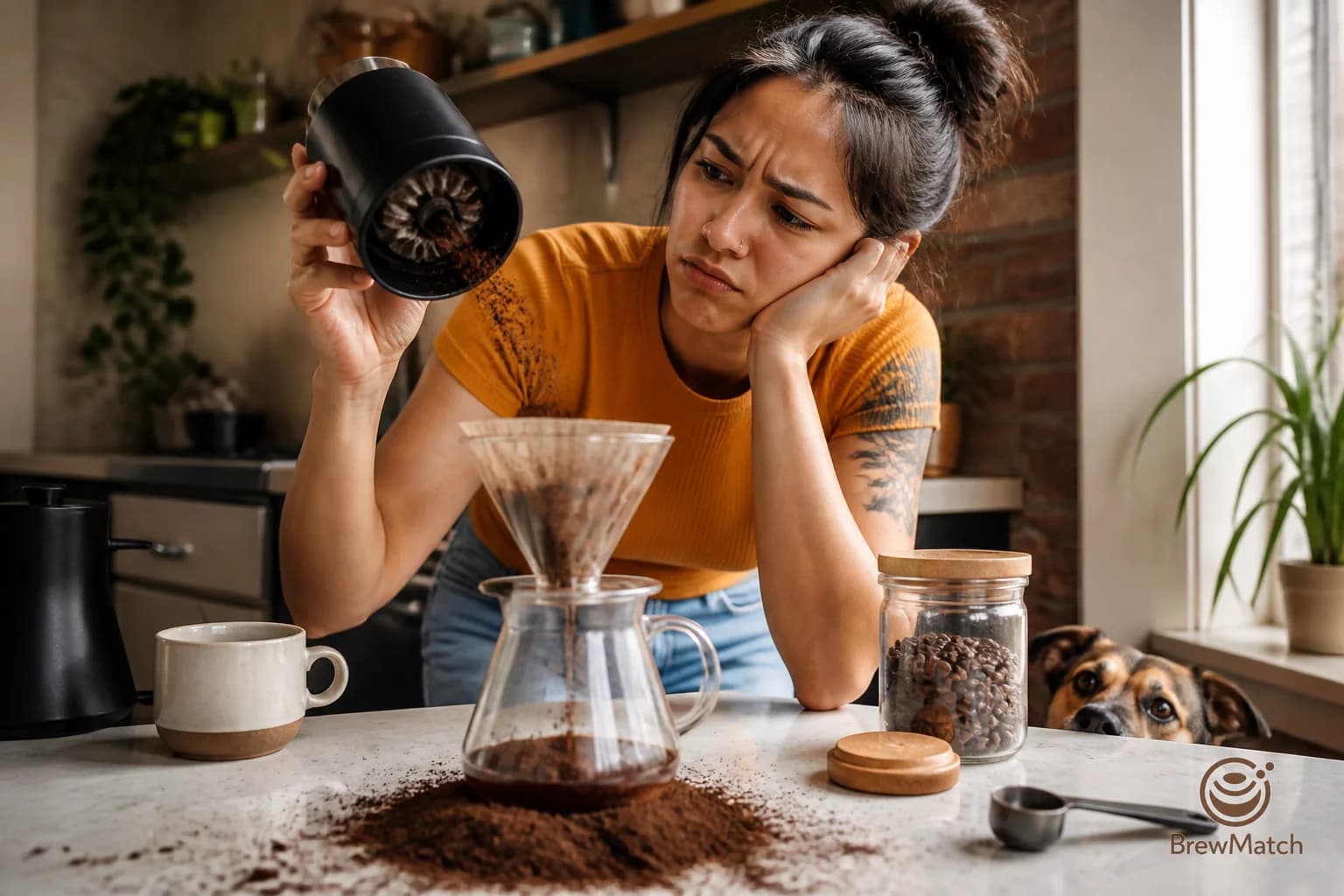
The best coffee grinder for less bitter coffee is not automatically the most expensive one. It is the grinder that gives you even enough grounds, the right grind range for your brew method, and easy repeatability. If your grinder makes a messy mix of powder and chunks, your coffee can taste bitter, dry, weak, or weirdly sharp even when the beans are good.
Buying a grinder should make coffee easier to fix. Too often, it gives people one more confusing knob to blame.
Mistake 1: Buying for specs instead of your actual coffee routine
Coffee people love specs. Burr size. Motor speed. Microns. Alignment. Materials. Some of that matters, but most home drinkers need a simpler question first:
What do you brew most days?
A grinder that is great for espresso may be annoying for French press. A grinder that is fine for drip may not have the tiny adjustments espresso needs. A travel hand grinder might make great grounds, but if you hate hand grinding before work, it will sit in a drawer while you go back to stale pre ground coffee.
Match the grinder to the coffee you actually make, not the coffee version of yourself you imagine on a Saturday morning with unlimited patience.
For bitterness, the big issue is control. You want a grinder that lets you make a small adjustment when coffee tastes harsh, then repeat the better setting tomorrow.
Mistake 2: Assuming any burr grinder fixes bitterness
A burr grinder is usually better than a blade grinder because it crushes coffee between two surfaces instead of hacking it randomly. That more even grind can help reduce bitterness because fewer tiny particles get over extracted.
But burr grinder does not mean magic grinder.
A cheap burr grinder with sloppy adjustment can still make a lot of fines. Fines are the dusty coffee particles that extract fast and often bring bitter, dry flavors into the cup. A poorly designed grinder can also drift between settings, clog with oily beans, or produce uneven grounds at the range you actually need.
If you are still using a blade grinder, the upgrade is usually worth considering. For the bigger picture, read Burr Grinder vs Blade Grinder for Less Bitter Coffee.
The point is not to worship burrs. The point is to avoid chaos.
Mistake 3: Choosing the wrong grind range for your brew method
Different brew methods need different grind ranges. If the grinder is fighting your brew method, bitterness gets harder to fix.
For French press, you usually need a coarse, fairly even grind. Too much powder makes the cup muddy and bitter. For drip coffee, you need medium settings that let water pass through evenly. For pour over, you need enough control to move slightly coarser or finer without making a huge jump. For espresso, tiny adjustments matter because pressure magnifies small mistakes.
Here is the buyer map:
- French press: prioritize consistent coarse grinding and low fines.
- Drip coffee maker: prioritize repeatable medium settings and easy cleanup.
- Pour over: prioritize clear adjustment steps across medium to medium fine.
- Moka pot: prioritize medium fine control without going espresso fine by accident.
- Espresso: prioritize micro adjustments and stability under fine grinding.
If you brew mostly drip coffee, do not buy a grinder only because espresso people rave about it. If you brew espresso, do not expect a basic drip grinder to suddenly behave like a serious espresso tool.
Not sure whether your bitter coffee is a bean problem, grinder problem, or recipe problem? BrewMatch can help you match your taste preferences to coffee that is less likely to fight you from the start.
Mistake 4: Ignoring how big the adjustment jumps are
This is where a lot of bitterness troubleshooting gets annoying.
Your coffee tastes bitter, so you grind coarser. Now it tastes thin and sour. You go one click finer, and it is bitter again. That usually means the grinder does not give you enough useful control in the range you need.
You do not need hundreds of settings for every brew method. You do need enough room to make small corrections.
For drip, pour over, and French press, you want settings that let you move gradually. For espresso, you need much finer control because a tiny grind change can swing a shot from sour to bitter fast.
People often think they are bad at brewing when their grinder is just making them choose between two bad options.
Mistake 5: Buying a grinder that is miserable to clean
A dirty grinder can make fresh coffee taste stale, bitter, or flat. Old grounds get trapped inside. Oils build up. Darker roasts can leave more residue. Then your new beans pick up old flavors before water even touches them.
This is not glamorous, but it matters.
Before buying, check whether the grinder is easy to open, brush out, and put back together without recalibrating your whole life. If cleaning feels like appliance surgery, you probably will not do it often.
For home use, easy maintenance beats heroic engineering you avoid touching.
A grinder that stays reasonably clean helps your coffee taste like the beans you bought, not like last month’s leftovers.
Mistake 6: Forgetting that grind size can make coffee taste bitter fast
If you grind too fine for your brew method, water extracts too much from the coffee. The cup can turn bitter, dry, harsh, and heavy. Sometimes people describe this as strong coffee, but it is usually over extracted coffee.
A better grinder helps because it lets you fix that without guessing wildly.
Try this simple test:
- If coffee tastes bitter and dry, grind a little coarser.
- If coffee tastes sour, sharp, or hollow, grind a little finer.
- If coffee tastes bitter but weak, check your coffee amount and water flow too.
- If the change makes the cup worse, go back one step and adjust another variable.
For a deeper look at this specific problem, read Coffee Ground Too Fine Can Taste Bitter and Dry.
Practical checklist before buying a coffee grinder
Use this before you spend money:
- What brew method do you use most often?
- Does the grinder perform well in that grind range?
- Can it make small enough adjustments for your method?
- Are the settings easy to repeat tomorrow?
- Does it produce a lot of powder at the grind size you need?
- Is it easy to clean without special tools?
- Will you actually use it on a rushed morning?
- Does it fit your counter, noise tolerance, and budget?
- Are you buying it to solve a real taste problem or just because it looks serious?
That last one stings a little, but it saves money.
What to buy if you hate bitter coffee
If you mainly want smoother coffee, look for a grinder that gives you control and consistency, not bragging rights.
For most drip, French press, and pour over drinkers, a solid burr grinder with repeatable settings is enough. You do not need a cafe level machine to make breakfast coffee taste less harsh. You do need to stop feeding your brewer a random mix of dust and boulders.
For espresso, be more careful. Espresso is less forgiving, and the wrong grinder can keep producing bitter shots no matter how good your beans are. If espresso is your daily drink, the grinder matters as much as the machine, sometimes more.
For people switching from pre ground coffee, even a modest grinder can be a major improvement because freshly ground coffee gives you one more way to control taste. Just do not expect freshness alone to fix a bad grind size.
The smarter grinder upgrade
A grinder should make bitter coffee easier to diagnose. If it only adds more confusion, it was the wrong upgrade.
Buy for your brew method. Make sure the adjustment range is useful. Choose something you can clean. Skip the ego purchase unless you actually need what it does.
Bitter coffee is rarely a personality flaw. It is usually a recipe, grinder, water, or bean mismatch. If you want help narrowing down the coffee side of that equation, try BrewMatch and look for beans that fit the way you want coffee to taste, not the way coffee packaging tries to impress you.
Find your match
Not sure which beans fit your taste?
Use BrewMatch to turn your flavor goal, brew method, and current coffee problem into a practical roast and bean profile.
Try BrewMatch