
July 13, 2026
Your Coffee Filter Can Make Coffee Taste Bitter
Bitter coffee is not always the bean or the roast. A folded wrong clogged or forgotten paper filter can slow your brew down and make the cup taste sharper than it should.
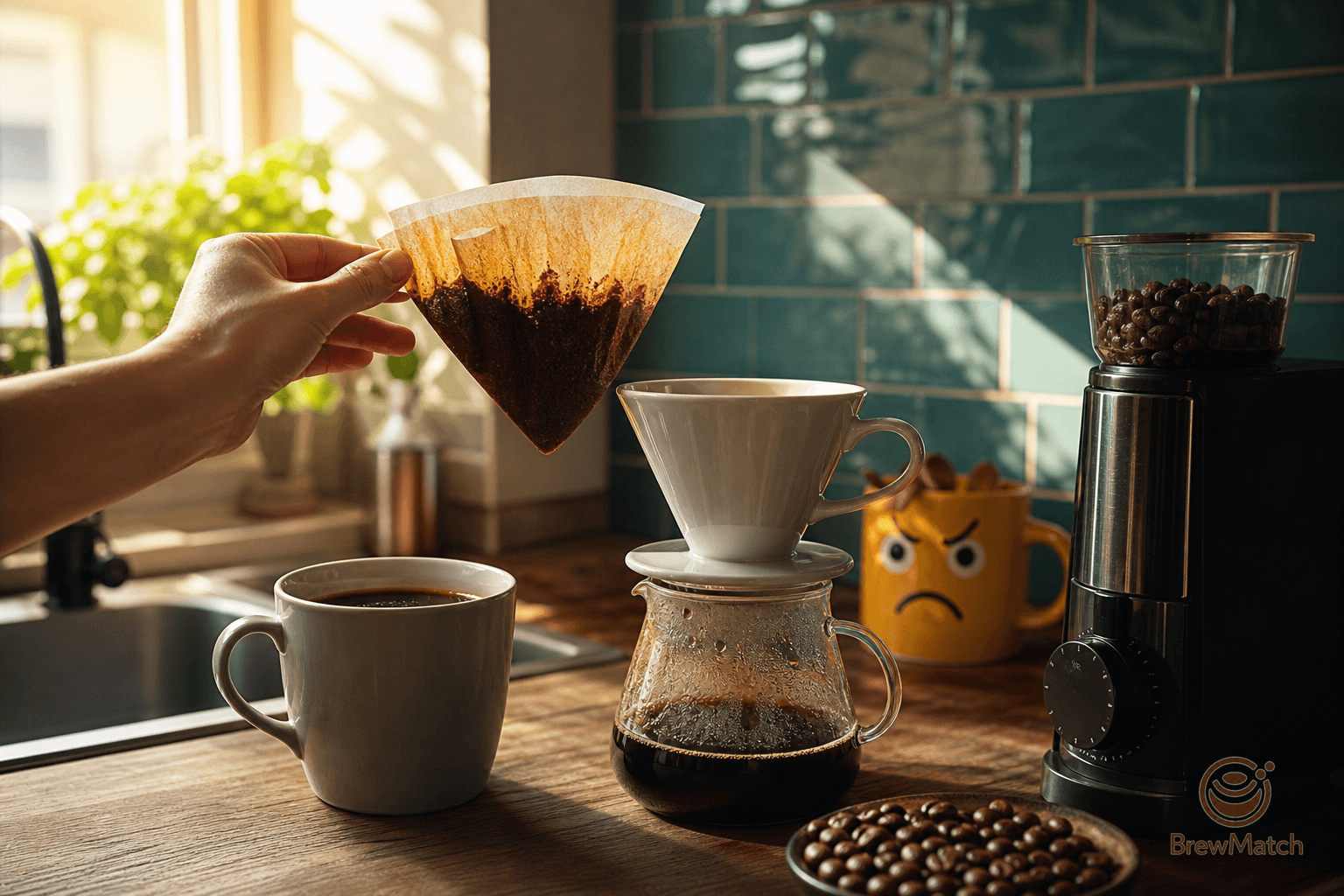
Yes, your coffee filter can make coffee taste bitter, but usually not because the paper itself is “bad.” The bigger problem is what the filter does to the brew: it can clog, collapse, slow the water down, or trap too many fine coffee particles. When that happens, water spends too much time pulling flavor from the grounds, and the cup can turn bitter, dry, or harsh.
This is especially common with drip coffee makers and pour over brewers, where the filter controls how quickly water passes through the coffee bed.
The filter is not the villain by default
Paper filters are useful. They catch sediment, keep the cup cleaner, and make home coffee easier to repeat. A good filter in the right shape is not supposed to make your coffee taste bitter.
But filters can create bitterness indirectly.
Think of the filter as a traffic lane for water. If the lane is clear, water moves through the grounds at a steady pace. If the lane gets blocked, folded, or squeezed shut, water hangs around too long. That longer contact time can pull more bitter compounds from the coffee.
So if your coffee tastes bitter even though you used decent beans, reasonable water, and your normal recipe, the filter setup is worth checking before you blame the bag.
1. The filter is clogging and slowing the brew
The most common filter-related bitterness problem is a slow brew.
When a paper filter clogs, water drains too slowly. This can happen in a pour over, a batch brewer, or a basic drip machine. You may notice:
- The water level sits high for a long time
- The brew takes much longer than usual
- The coffee bed looks muddy at the end
- The cup tastes bitter, dry, or heavy
- The last part of the brew seems especially harsh
Clogging usually comes from fine coffee particles. Even if your main grind looks okay, a grinder can produce tiny dusty bits called fines. Those fines drift downward and block the filter pores.
A small amount is normal. Too much turns the filter into a slow drain.
If this sounds familiar, start with the grind before changing beans. A grind that is too fine can make the brew slow and bitter. BrewMatch has a deeper guide here: A Too Fine Grind Can Make Coffee Taste Bitter.
2. The filter is the wrong size or shape
A filter that almost fits is not always good enough.
If the filter is too small, grounds can creep over the edge and into the brew basket. If it is too large, it may fold awkwardly, block the drain area, or create channels where water runs unevenly. If it does not sit flat against the brewer, water may pool in one area and miss another.
This can create two problems at once:
- Some coffee gets over-extracted and tastes bitter
- Some coffee gets under-extracted and tastes thin or sour
That mixed cup often tastes confusing. People describe it as bitter but not strong, sharp but watery, or harsh without much sweetness.
For cone brewers, use the correct cone size. For flat-bottom drip baskets, use basket filters that actually sit open and even. It is not glamorous advice, but it fixes more cups than people expect.
3. The filter collapses during brewing
A collapsed filter can ruin an otherwise normal brew.
This often happens when the filter is not seated properly before brewing. In drip machines, the water stream can push the paper inward. In pour over brewers, the filter can sag if it was not folded along the seam or rinsed into place.
Once the filter collapses, water stops moving evenly. Some grounds get flooded. Others get bypassed. The drain may partially block. The result can taste bitter, muddy, or oddly flat.
Before brewing, check that the filter is fully open and pressed against the sides of the brewer. If it has a seam, fold the seam before placing it in the brewer. If you rinse your filter, use that rinse to help the paper stick to the brewer walls.
This takes ten seconds. It can save the whole cup.
4. You are skipping the filter rinse when it matters
Not every paper filter needs a dramatic rinse ritual. This is home coffee, not a lab coat situation.
But some filters do carry a noticeable papery taste, especially thicker filters or cheaper white and brown filters. That papery flavor is not exactly bitterness, but it can make the cup taste dull, dry, or unpleasant enough that people call it bitter.
A quick rinse helps in two ways:
- It washes away loose paper taste
- It warms the brewer and helps the filter sit correctly
For pour over, place the filter in the brewer and rinse it with hot water before adding coffee. Dump the rinse water before brewing.
For drip machines, rinsing can be less convenient. If your machine has a removable basket, you can rinse the filter in the basket over the sink, then put it back. If that feels annoying, try it once as a test. If the coffee improves, you found a small but real problem.
5. The filter is trapping too much oil for your taste
Paper filters remove more oils and sediment than metal filters. For many people, that creates a cleaner cup. For others, it can make coffee taste thinner and sharper, especially with darker roasts or recipes that are already close to bitter.
This does not mean paper filters are bad. It means the brew may need a small adjustment.
If paper-filtered coffee tastes too sharp, try:
- Grinding slightly coarser
- Using a little less coffee
- Stopping the brew a bit sooner in a manual pour over
- Trying a different paper filter brand
- Testing a metal or cloth filter if your brewer supports it
Change one thing at a time. If you change the filter, grind, dose, and beans all on the same morning, you will not know what actually helped.
If you want a simpler way to narrow your taste preferences, try BrewMatch. It helps match you with coffee based on what you actually like drinking, not what sounds impressive on a bag. Start here: BrewMatch.
The simple filter test
If you suspect your filter is making coffee bitter, run this test before buying anything new.
Make two brews as close together as possible:
Brew A: your normal method
Use your current filter, grind, dose, and process. Pay attention to the total brew time and how bitter the cup tastes.
Brew B: corrected filter setup
Use the same coffee and amount, but change only the filter handling:
- Use the correct filter size
- Fold the seam if it has one
- Seat the filter neatly in the brewer
- Rinse the paper if practical
- Make sure it does not collapse
- Watch whether the brew drains faster or more evenly
If Brew B tastes smoother, the filter setup was part of the problem.
If Brew B still tastes bitter and the brew is very slow, the filter may be clogging because the grind is too fine or uneven. If the brew time is normal but the cup is still bitter, look at water temperature, coffee amount, roast level, or how long the coffee sits after brewing.
Practical checklist: filter fixes for less bitter coffee
Use this checklist the next time your filtered coffee tastes bitter:
- Confirm the filter is the right size for your brewer
- Fold the filter seam so it sits flat
- Press the filter neatly against the brewer walls
- Rinse the paper filter if the coffee tastes dry or papery
- Watch for filter collapse during brewing
- Check whether the brew drains much slower than usual
- Look for a muddy coffee bed after brewing
- Grind slightly coarser if the filter keeps clogging
- Avoid shaking lots of fine coffee dust into the filter
- Change only one variable per test cup
The goal is not to make a perfect café recipe. The goal is to stop accidentally turning a normal cup into a bitter one.
When the filter is not the real issue
Sometimes the filter gets blamed because it is easy to see. But bitterness can come from other parts of the setup too.
If your filter looks fine and the brew time is normal, consider these likely causes:
- Water is too hot
- The coffee is ground too fine
- The dose is too high for the water amount
- The brewer is dirty
- The coffee sits too long after brewing
- The roast is darker than your taste prefers
If bitterness shows up in several brew methods, the issue may be your recipe or bean choice. If bitterness only happens in one machine or one brewer, the setup is probably the problem.
For drip brewers, the basket itself can also affect flow and extraction. If the filter is behaving but the brew still tastes wrong, read 3 Signs Your Brew Basket Is Making Coffee Taste Bitter.
The bottom line
Your coffee filter can make coffee taste bitter, but usually by slowing or disrupting the brew rather than by adding bitterness directly. A clogged, collapsed, wrong-size, or unrinsed filter can push your coffee toward a harsh cup even when the beans are fine.
Before you replace your coffee, check the simple stuff: filter fit, filter shape, brew speed, and grind size. Bitter coffee is often not a personal failure. It is just a tiny paper traffic jam.
Want coffee that fits your taste instead of fighting your setup every morning? Try BrewMatch and find coffees that match what you actually enjoy.
Find your match
Not sure which beans fit your taste?
Use BrewMatch to turn your flavor goal, brew method, and current coffee problem into a practical roast and bean profile.
Try BrewMatch