
August 12, 2026
Coffee Dust From Your Grinder Makes Coffee Taste Bitter
If your coffee tastes harsh even with decent beans your grinder may be spraying fines into every brew. Those tiny particles extract fast and make smooth coffee turn dry and bitter.
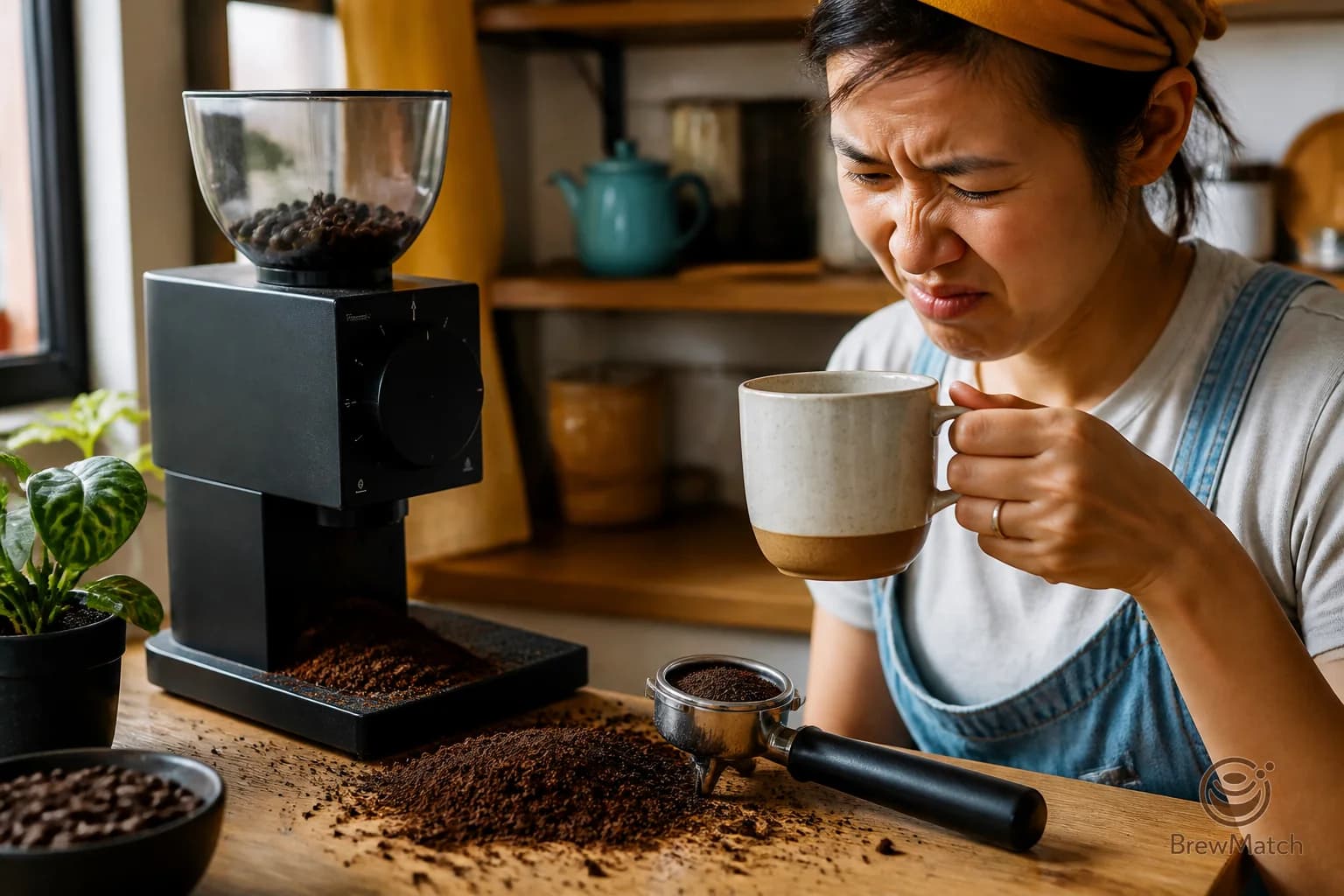
Coffee dust from your grinder can absolutely make coffee taste bitter. Those powdery particles, often called fines, extract much faster than the larger pieces of coffee. So even if most of your grind is the right size, the dust can over extract early and add a dry, harsh, bitter edge to the cup.
This is one of the more annoying coffee problems because the beans can be good, the recipe can be reasonable, and the cup can still taste like someone turned the bitterness knob up.
The tiny particles are not harmless
Ground coffee is never perfectly even. Every grinder makes a mix of sizes. Some pieces are larger, some are smaller, and some are basically powder.
A little variation is normal. Too much variation is where bitterness creeps in.
The powdery bits have a huge amount of surface area compared with larger coffee grounds. Water gets into them fast, pulls flavor out fast, and keeps pulling until the pleasant stuff is joined by dry, bitter, rough flavors.
That is the tradeoff people miss when shopping for grinders. A grinder is not just a machine that makes beans smaller. It controls how evenly the coffee is broken apart. More even grounds usually mean the water extracts the coffee more evenly. More dust means part of the brew is finished too early while the larger pieces are still catching up.
That uneven extraction is why the same bag can taste smooth from one grinder and bitter from another.
What grinder dust tastes like
Coffee dust does not always make coffee taste strong. It often makes it taste sharp, dry, or oddly hollow.
Common signs include:
- Bitter taste on the back of the tongue
- Dry feeling after swallowing
- Harshness even when the coffee smells good
- A cup that tastes both thin and bitter
- Muddy flavor in French press or immersion brewing
- Sludge at the bottom of the mug
- Pour over that clogs or drains painfully slowly
That last one is a big clue. If your pour over starts fine and then almost stops, fines may be migrating down and blocking the filter. The water sits longer, extraction stretches out, and the cup gets rougher.
If your grind is simply too fine overall, that is a slightly different problem. BrewMatch has a separate guide on that here: Coffee Ground Too Fine Can Taste Bitter and Dry.
Blade grinders are the obvious suspect
Blade grinders are famous for coffee dust because they do not really grind. They chop.
The pieces near the blade get hit again and again. Other pieces bounce around and barely get touched. The result is a mix of boulders and powder. That sounds dramatic, but it is exactly why blade ground coffee can taste bitter and weak in the same mug.
You can shake a blade grinder while it runs. You can pulse it. You can try to be careful. Those tricks may help a little, but they do not change how the tool works.
A burr grinder usually gives you more control because it crushes coffee between two surfaces set a specific distance apart. That does not make every burr grinder amazing, but it gives the grinder a better job to do.
If you are choosing between those two categories, read Burr Grinder vs Blade Grinder for Less Bitter Coffee. It is one of the few grinder upgrades that can change the daily cup in a way most home drinkers notice.
Burr grinders can still make too much dust
Do not assume burr grinder equals smooth coffee. Cheap burrs, worn burrs, poor alignment, and sloppy adjustment can still create a messy grind.
Some burr grinders are better at coarse settings than fine settings. Some do fine for drip but struggle with French press. Some produce extra fines when grinding darker, more brittle beans. Some just have wide particle spread because the build is loose.
This is where coffee advice gets irritating. People say buy a burr grinder, then act like the story is over. It is not.
The useful question is not whether the grinder has burrs. It is whether it produces a grind that matches your brewing method without dumping a ton of powder into the mix.
For most home coffee drinkers, that means looking for:
- Clear grind size adjustment
- Consistent output at the setting you actually use
- Low retention so stale grounds do not mix into the next brew
- Easy cleaning access
- A reputation for decent consistency, not just a shiny body
Price can help, but price does not fix everything. A grinder can be expensive and still be the wrong fit for how you brew.
If you want help narrowing your taste preferences before buying more gear, try BrewMatch. It matches you with coffee based on the flavors you actually like, so you are not guessing between roast labels and grinder folklore.
Try this dust test before blaming the beans
You do not need lab equipment. You just need to look closely.
Grind coffee at your normal setting. Spread a small spoonful on a white plate or paper towel. Gently shake it so the particles spread out.
Look for three things.
First, do you see a lot of powder clinging to everything? A light coating is normal. A dusty pile is a warning.
Second, are there huge pieces sitting next to powder? That mix can create coffee that tastes sour from the big pieces and bitter from the dust.
Third, does the grind feel sandy or floury between your fingers? For drip and pour over, you usually want something closer to clean sand than cocoa powder.
This is not a perfect test. It is a practical one. If the grind looks wildly uneven, your bitterness problem may start before water ever touches the coffee.
Fixes that do not require buying a grinder today
If you are not ready to replace your grinder, you still have options.
Grind a little coarser. This can reduce over extraction from the smallest particles, though it will not make the grind more even.
Shorten brew time. If fines are extracting fast, less contact time can keep bitterness from taking over.
Use a paper filter for methods that allow it. Paper catches some sediment and can make the cup taste cleaner.
Clean the grinder. Old oily residue and stale coffee dust can add bitter, flat flavors. This is especially noticeable with dark roasts.
Avoid grinding too long in a blade grinder. Long grinding creates more powder. Use short pulses and stop before the whole batch turns dusty.
Let the grounds settle before brewing French press. After plunging, pour gently and leave the last muddy sip behind.
None of these makes a poor grinder excellent. They just reduce the damage.
Practical checklist
Use this when your coffee tastes bitter and you suspect the grinder:
- Spread your grounds on a light surface and check for powder
- Look for a mix of large chunks and fine dust
- If using a blade grinder, pulse instead of running it continuously
- Try one setting coarser on a burr grinder
- Shorten brew time slightly and taste again
- Clean old grounds and oily buildup from the grinder
- Use a paper filter if your brew method allows it
- Avoid the silty last pour from French press
- Compare the same beans ground at a local cafe if possible
- Consider a burr grinder if your current grinder produces obvious dust every time
Only change one thing at a time. If you change grind size, water amount, brew time, and beans all at once, you will not know what fixed the cup.
When a grinder upgrade makes sense
A grinder upgrade makes sense when the same bitterness keeps showing up across different beans and recipes.
If every medium roast tastes harsh, every pour over stalls, and every French press leaves a layer of sludge, the grinder is not a minor detail. It is probably shaping the flavor more than the bag is.
A better grinder will not make bad beans taste magical. It will not make dark roast taste like peach candy. But it can make decent coffee taste more like itself. Less harshness. More sweetness. Cleaner finish. Fewer cups that feel like punishment for waking up.
That is the whole point. You are not buying gear for bragging rights. You are buying control over bitterness.
The simple diagnosis
If your coffee tastes bitter, dry, and muddy, look at the grind before you blame the roast. Too much coffee dust can over extract fast and drag the whole cup down.
Start with the cheap checks: inspect the grounds, clean the grinder, go a little coarser, and shorten contact time. If the dust is obvious and constant, a grinder change may be one of the rare upgrades that actually earns its space on the counter.
For a less random way to choose coffee that fits your taste, use BrewMatch. Bitter coffee is fixable, and your next bag should not feel like a gamble.
Find your match
Not sure which beans fit your taste?
Use BrewMatch to turn your flavor goal, brew method, and current coffee problem into a practical roast and bean profile.
Try BrewMatch