
August 15, 2026
Ceramic vs Steel Burr Grinders Will Not Save Bitter Coffee
Ceramic and steel burrs both can make great coffee. If your cup tastes bitter, the material is probably not the villain. Check grind size, fines, retention, and adjustment range before buying another grinder.
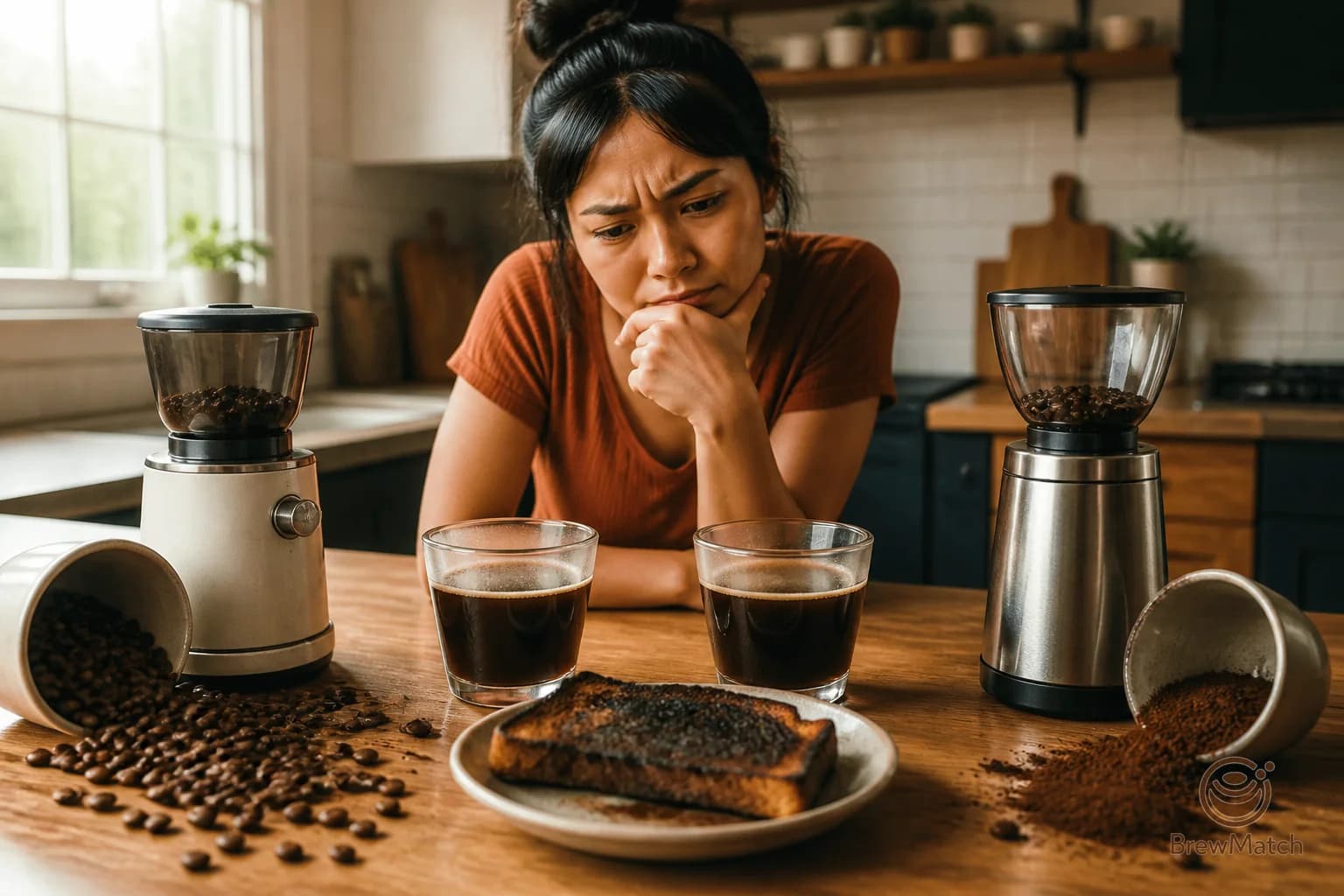
Ceramic burrs and steel burrs can both make coffee taste smooth or bitter. If your coffee is bitter, burr material is rarely the main cause. The bigger issues are grind size, how many fine particles your grinder creates, how easy it is to adjust, and how much old coffee the grinder holds onto. Do not buy ceramic or steel as a bitterness cure. Buy the grinder that lets you control extraction.
Quick answer: ceramic burrs or steel burrs will not save bitter coffee by themselves. A grinder saves the cup only when it gives you even grounds, useful adjustment, low retention, and cleaning you will actually do.
That sounds annoying if you were hoping for a clean shopping answer. Ceramic sounds pure. Steel sounds professional. Neither label tells you whether your morning cup will stop tasting harsh.
What ceramic and steel burrs actually change
Burr material affects durability, cost, feel, and sometimes how a grinder is positioned in the market. It does not automatically decide flavor.
Ceramic burrs are common in some manual grinders and lower cost electric grinders. They can stay sharp for a long time under normal home use, but they can be more brittle if a small stone or hard object gets into the beans. Steel burrs are common in many electric grinders and higher priced hand grinders. They are tough, widely used, and available in many designs.
The part shoppers miss is that material is only one variable. Burr shape, alignment, motor speed, adjustment range, build quality, and how much coffee gets trapped inside the grinder usually matter more in the cup.
A cheap steel burr grinder can still make a messy grind. A good ceramic burr grinder can still make tasty coffee. A fancy steel burr grinder can still make bitter coffee if you grind too fine and brew too long.
The burr material does not rescue a bad recipe.
Bitter coffee usually comes from over extraction
Bitterness is often a sign that your brew pulled too much from the grounds. That can happen when the grind is too fine, the brew time is too long, the water is too hot for the coffee and method, or the dose is out of balance.
A grinder gets involved because grind size controls how quickly water extracts flavor. Finer grounds expose more surface area. That can be useful, but it can also push the cup into dry, bitter, mouth coating territory.
If your coffee tastes sharp, hollow, and bitter at the end, your burr material is probably not the first suspect. Your grind setting is.
This is why a grinder with clear, repeatable adjustments is more valuable than a grinder with a nicer sounding burr material. You need to move the taste. If each adjustment jump is too large, you may get stuck between sour and bitter with no comfortable middle.
For a deeper grind size diagnosis, read Coffee Ground Too Fine Can Taste Bitter and Dry.
The shopping trap: buying the material instead of the control
A lot of grinder shopping turns into spec collecting. Ceramic or steel. Conical or flat. Manual or electric. Big numbers. Fancy names. Tiny promises.
For home coffee, the better question is blunt: can this grinder help me make small taste corrections without making the cup worse?
If your coffee is bitter, you need a grinder that can do three things well:
- Let you adjust slightly coarser without jumping too far.
- Produce a reasonably even grind without tons of dust.
- Stay consistent enough that yesterday's fix still works tomorrow.
That is the buying logic. Not ceramic magic. Not steel superiority.
If you are still using a blade grinder, the burr upgrade matters more than the ceramic vs steel decision. Blade grinders chop unevenly, which usually creates boulders and powder in the same batch. The powder can over extract fast and taste bitter, while the larger pieces lag behind. That is a nasty combination. BrewMatch has a full breakdown here: Burr Grinder vs Blade Grinder for Less Bitter Coffee.
Heat is overblamed by home brewers
Some grinder marketing leans hard on heat. The claim is that one burr material or grinder design protects flavor by keeping coffee cooler.
Heat can matter in heavy use. If you are grinding back to back batches for a crowd or running a machine hard, temperature can become part of the picture. But for a normal home cup or two, heat is usually not the reason your coffee tastes burnt or bitter.
The more likely reason is that the grind is too fine, the brew ran too long, or the beans are darker than your taste preferences can tolerate.
This is where buying advice gets a little boring but more useful: do not pay extra just because a product page makes heat sound scary. Pay attention to whether the grinder gives you control you will actually use.
If you want a smoother cup and are not sure whether the problem is your beans, grinder, or recipe, BrewMatch can help match you with coffee that fits the flavors you actually like. It is a lot cheaper than blaming every bag you buy.
When ceramic burrs make sense
Ceramic burrs can be perfectly fine for home coffee. They often show up in simple hand grinders and budget friendly models. If you brew one or two cups a day and your grinder has enough adjustment range, ceramic is not a problem by itself.
A ceramic burr grinder may make sense if:
- You want a lower cost manual grinder.
- You brew mostly French press, drip, AeroPress, or pour over.
- You do not need espresso level adjustment.
- The grinder has good reviews for consistency, not just durability.
- Replacement parts are available if something chips or wears.
The risk is not that ceramic makes coffee bitter. The risk is buying a grinder that happens to have ceramic burrs but lacks the adjustment and consistency you need.
That is a very different complaint.
When steel burrs make sense
Steel burrs are common for good reason. They are durable, widely available, and used in many grinders that offer better adjustment systems. If you are brewing espresso or you want more precise control, many strong options use steel burrs.
A steel burr grinder may make sense if:
- You want easier fine tuning for espresso or pour over.
- You want a grinder with clearer stepped settings or stepless adjustment.
- You grind daily and care about speed.
- You want a machine with easy part support.
- You are comparing grinders known for grind consistency.
But steel is not an automatic upgrade if the rest of the grinder is weak. A poorly designed steel burr grinder can still make too many fines, retain old grounds, or jump too far between settings.
Again, the cup does not care what the box promised.
The bitter coffee grinder checklist
Use this before buying a new grinder or blaming the one you have.
- Move one or two clicks coarser and brew again.
- If the bitterness drops, the issue was probably extraction, not burr material.
- If the coffee becomes sour and bitter at the same time, your grind may be uneven.
- Check whether your grinder leaves old grounds trapped inside.
- Clean the burr area if coffee oils and old particles have built up.
- Look for powdery dust in the grounds, especially with cheaper grinders.
- Avoid huge setting jumps when dialing in coffee.
- If you brew espresso, make sure the grinder is actually espresso capable.
- If you brew pour over or drip, prioritize consistency over extreme fine settings.
- Do not buy ceramic or steel just because a forum made one sound morally superior.
That last one is only half a joke.
Coffee people love turning small differences into identity politics. Your cup is simpler. If it tastes bitter, change the extraction first.
A simple test before replacing your grinder
Before buying anything, run this three cup test with the same beans and brew method.
Cup one: brew your normal recipe.
Cup two: grind slightly coarser and keep everything else the same.
Cup three: grind slightly coarser again, but stop the brew a little earlier if your method allows it.
Taste them side by side once they are warm, not scorching. If cup two or three tastes less bitter, your grinder is not automatically bad. You may just need a better setting.
If all three cups taste bitter in the same way, then look beyond grind size. The beans may be too dark for you, the coffee maker may need cleaning, the water may be too hot, or the grinder may be creating too much dust no matter where you set it.
That is when shopping starts to make sense.
What to buy if you hate bitter coffee
If bitterness is the flavor you are trying to avoid, do not shop by burr material first. Shop for control.
Look for a grinder with a good reputation for even grounds, enough settings for your brew method, easy cleaning, and low retention. If you make espresso, be picky about fine adjustment. If you make drip or French press, you do not need an espresso monster. You need a grinder that does not turn every setting into a dust storm.
Ceramic vs steel can be a tie breaker. It should not be the whole decision.
If you also suspect your beans are pushing you toward bitter flavors, use BrewMatch to find coffees that match your taste instead of guessing from roast labels. A better grinder helps you control extraction. A better matched bag gives you a flavor target worth controlling.
Find your match
Not sure which beans fit your taste?
Use BrewMatch to turn your flavor goal, brew method, and current coffee problem into a practical roast and bean profile.
Try BrewMatch