
September 14, 2026
Burr Size Is Not the Coffee Grinder Spec That Fixes Bitter Coffee
Bigger burrs look serious but they will not magically rescue bitter coffee. If your grinder makes dust or cannot adjust cleanly burr size is just shiny trivia.
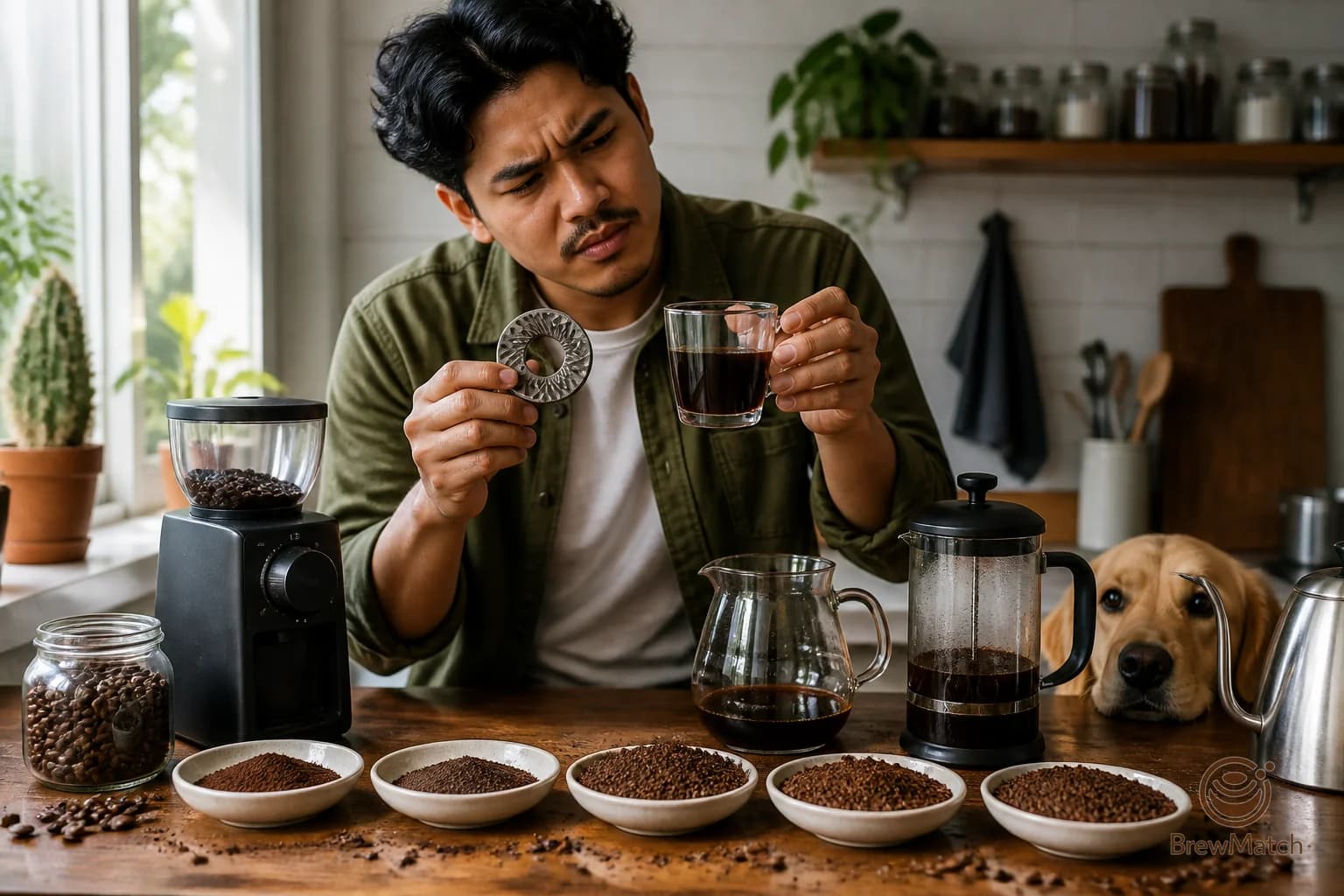
Burr size can affect a coffee grinder, but it is rarely the reason your home coffee tastes bitter. Larger burrs may grind faster and can help with consistency in some grinders. They do not automatically make coffee smoother. If the grinder creates too much dust, has awkward settings, or is hard to dial in, bigger burrs are not saving the cup.
That is the trap with coffee grinder burr size. It sounds technical enough to feel decisive. Bigger must mean better, right? Sometimes. Not always. And for bitter coffee, often not first.
What burr size actually changes
Burrs are the cutting parts inside a burr grinder. Their job is to crush coffee beans into pieces that are roughly the size you asked for.
Burr size usually refers to the diameter of the burrs, often listed in millimeters. A grinder with larger burrs can often grind faster than one with smaller burrs. In some designs, larger burrs may also produce a more even grind. That sounds good because uneven grounds are one of the main ways coffee turns harsh, dry, and bitter.
But burr size is only one piece of the grinder. It does not tell you:
- how well the burrs are aligned
- how much coffee dust the grinder produces
- whether the settings are usable for your brew method
- whether old grounds get trapped inside
- whether the grinder is easy to clean
- whether the motor and burr design work well together
A grinder is not a burr size with a power cord attached. It is a whole system. Bad systems can have big burrs.
Bigger burrs can still make bitter coffee
Bitter coffee usually comes from too much extraction, uneven extraction, roast choice, water heat, dirty gear, or stale grounds. A grinder can make that worse when it gives you a messy mix of boulders and dust.
The dust is the sneaky part. Tiny coffee particles extract fast. They can dump bitter, dry flavors into the brew while the larger pieces are still under extracted. The result can taste both thin and harsh, which feels unfair because you did buy a better grinder.
Larger burrs can help reduce that problem in some grinders, but only if the rest of the grinder is designed well. A sloppy grinder with larger burrs may still throw off plenty of fines. A smaller grinder with good grind quality may make coffee that tastes smoother at home.
If you want the grinder spec that matters more directly, read Grind Consistency Is the Grinder Spec That Actually Helps Bitter Coffee. Burr size is interesting. Grind consistency is what shows up in the cup.
The burr size mistake people make when shopping
The common mistake is treating burr size like a ranking system.
40 mm burrs? Beginner.
64 mm burrs? Serious.
Bigger than that? Must be amazing.
That logic sells grinders. It does not always fix breakfast.
For most home coffee drinkers, the better question is not whether a grinder has bigger burrs. It is whether the grinder gives you enough control to fix the taste you are getting.
If your coffee tastes bitter, you may need to go a little coarser. If it tastes sour and sharp, you may need to go finer. If your grinder jumps from too bitter to too sour with one click, burr size is not your biggest problem. Adjustment range is.
This is especially true for drip, pour over, French press, and moka pot drinkers. You are not trying to win a grinder spec contest. You are trying to make tomorrow morning taste less punishing.
A smaller grinder can be the better buy
A smaller burr grinder can be the smarter choice if it has good adjustment, low retention, decent consistency, and easy cleaning. That is not as flashy as a giant burr number on a product page, but it is more useful in a kitchen.
Think about what you actually do with the grinder.
You grind a normal dose. You brew one or two cups. You adjust when the coffee tastes off. You clean it when things start tasting stale or bitter. You probably do not need a cafe sized machine to do that well.
A compact grinder that makes repeatable changes can beat a bigger grinder that is annoying to use. The boring daily stuff matters because bitter coffee is often a repetition problem. Same stale grounds. Same too fine setting. Same hard to clean chute. Same bitterness.
If you want a broader grinder shopping lens, 5 Grinder Features That Make Coffee Taste Less Bitter is a better place to start than chasing burr diameter alone.
Not sure whether your beans, grinder, or brew method is the main bitterness problem? BrewMatch can help you match your taste preferences to smoother coffee choices without turning this into homework.
When burr size does matter
Burr size is not useless. It can matter when two grinders are already close in build quality and design.
Larger burrs may be worth caring about if:
- you grind larger batches often
- you want faster grinding
- you brew espresso and need very fine control from a capable grinder
- you already know the grinder has good alignment and consistency
- you are comparing models in the same general quality range
In those cases, burr size can be part of the decision. It still should not be the whole decision.
For home drinkers who hate bitter coffee, bigger burrs are more like a bonus than a cure. If the grinder also has practical settings, clean grind output, and low dust, great. If not, you just bought a larger version of the same problem.
What to check before you care about burr size
Before you pay extra for larger burrs, look at the grinder like someone who has to live with it at 7 a.m.
1. Can it make small useful adjustments?
A grinder that can only make big jumps may trap you between bad cups. One setting tastes bitter and dry. The next tastes weak or sour. That is a frustrating place to be.
For less bitter coffee, you want the ability to move slightly coarser without wrecking the brew.
2. Does it produce a lot of dust?
No grinder produces perfectly identical particles. Still, some grinders create more dust than others. Dusty grounds often lead to bitterness, especially in methods with longer contact time like French press or automatic drip.
If reviews mention muddy cups, clogged filters, or lots of powder, pay attention.
3. Is it easy to clean?
Old coffee oils and trapped grounds can make fresh coffee taste stale, heavy, and bitter. A grinder that is miserable to clean will probably not get cleaned often. That is human, not a moral failure.
Choose gear that fits your patience level.
4. Does it suit your brew method?
A grinder that shines for espresso may not be pleasant for French press. A grinder built for coarse brewing may be a pain for espresso. Match the grinder to the coffee you actually make, not the coffee routine you imagine for your future more disciplined self.
5. Can you repeat yesterday’s good cup?
Repeatability is underrated. If you make one good cup and cannot find it again, the grinder is not helping much. Clear settings and predictable changes matter more than a dramatic burr number.
Practical checklist before buying a grinder for less bitter coffee
Use this before you get pulled into spec sheet theater.
- Ignore burr size for the first pass.
- Pick the brew method you make most often.
- Check whether the grinder has enough useful settings for that method.
- Look for signs of good grind consistency, not just speed.
- Avoid grinders known for excessive dust.
- Check whether the burr chamber is easy to access and clean.
- Ask whether the grinder solves your actual bitterness problem.
- Do not pay for espresso features if you mostly brew drip or French press.
- Do not assume a more expensive grinder will taste less bitter by default.
- Choose the grinder you will adjust and clean, not just admire.
That last one is brutal but fair. The best grinder for your kitchen is the one that helps you correct bad taste quickly.
A simple bitter coffee test before upgrading
Before replacing your grinder, run one small test.
Brew your normal coffee. If it tastes bitter, change only the grind one step coarser next time. Keep the coffee amount, water amount, and brew method the same.
If the coffee gets smoother, your grinder setting was probably part of the problem. If one step coarser suddenly tastes weak or sour, your grinder may not have enough useful adjustment. If nothing improves, bitterness may be coming from roast level, brew time, water temperature, dirty equipment, or stale grounds.
This test is not fancy. That is why it works. It stops you from buying burr diameter as a personality trait.
The better way to think about burr size
Coffee grinder burr size should be a supporting detail, not the headline decision.
Bigger burrs can be nice. They can also be irrelevant for the cup you make every morning. Less bitter coffee usually comes from more even grinding, better adjustment, fresher grounds, cleaner gear, and a recipe that is not extracting every last harsh note from the coffee.
So yes, look at burr size. Then move it down the list.
If your goal is smoother coffee, buy for control before bragging rights. Buy for consistency before diameter. Buy for the cup, not the spec sheet.
And if you want help choosing coffee that fits your taste instead of fighting bitterness cup after cup, try BrewMatch. Your grinder matters, but it should not have to carry the whole morning.
Find your match
Not sure which beans fit your taste?
Use BrewMatch to turn your flavor goal, brew method, and current coffee problem into a practical roast and bean profile.
Try BrewMatch