
August 19, 2026
A Built In Grinder Can Make Coffee Taste Bitter
Built in grinders are convenient but they can quietly make coffee taste bitter through stale grounds limited settings and messy dosing. Fix the setup before you blame the beans.
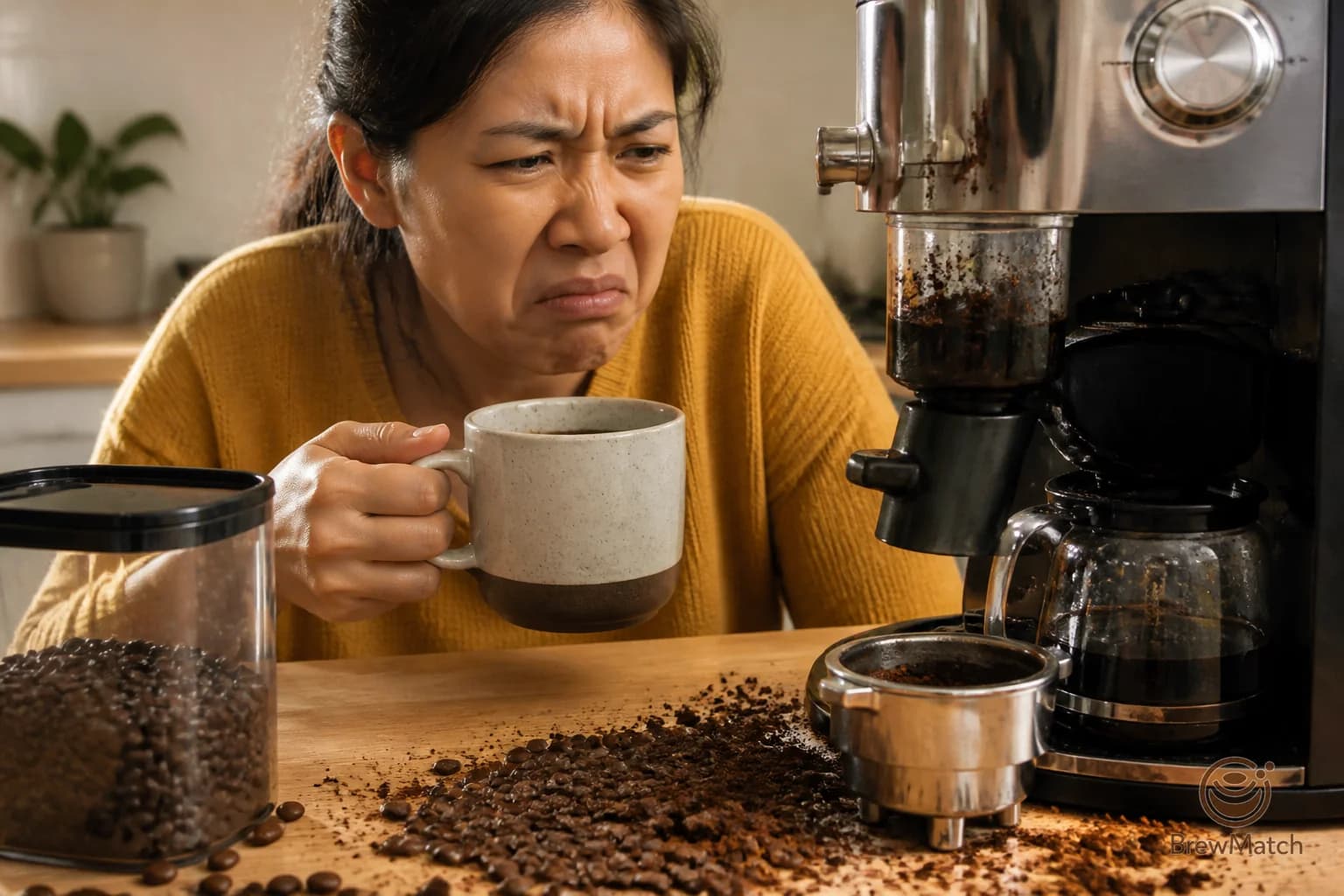
Yes, a built in grinder can make coffee taste bitter. Not because built in grinders are automatically bad, but because they often hide three annoying problems: old grounds trapped inside, too few grind settings, and inconsistent dosing. The machine looks like it is doing everything for you. Sometimes it is also doing the bitterness for you.
That does not mean you need to throw the machine out. It means you need to stop treating convenience as proof that the coffee is being brewed well.
The convenience tradeoff people ignore
A coffee maker with a built in grinder sounds perfect on the box. Add beans, add water, press a button, drink coffee. Less counter clutter. Less measuring. Less thinking before caffeine.
The tradeoff is control.
Most built in grinder machines are built to be easy, not precise. They may give you a few grind options, a few strength buttons, and maybe a cup count. That is enough to make coffee, but not always enough to fix bitter coffee.
Bitterness usually shows up when coffee is over extracted, when fine particles extract too aggressively, or when old coffee residue sneaks into the brew. A built in grinder can contribute to all three without making the problem obvious.
The machine is not evil. It is just a closed little coffee factory on your counter, and closed factories are harder to troubleshoot.
Problem 1: old grounds sit inside the grinder path
Many built in grinders hold onto some ground coffee after each use. This is called retention, though you do not need the jargon to understand the problem.
Yesterday's grounds can get stuck in the chute, corners, burr area, or dispenser path. The next morning, some of that stale coffee can end up in your fresh brew.
Stale grounds can taste flat, woody, harsh, or bitter. The annoying part is that your whole beans may smell fine. You grind fresh coffee, but the machine may be mixing in a little old coffee anyway.
Signs this might be happening:
- The first cup after the machine sits overnight tastes worse than later cups
- The coffee has a bitter dusty edge even with fresh beans
- You see old grounds fall out before the fresh grind starts
- The grinder chute clogs or cakes up easily
- Cleaning the brew basket helps a little but does not fully fix the taste
This is one reason a dirty coffee maker can taste bitter even when the beans are good. If the whole machine needs a reset, read Your Coffee Maker Makes Coffee Taste Bitter When It Is Dirty.
Problem 2: the grind settings may be too limited
A lot of built in grinders give you settings like fine, medium, and coarse. That sounds helpful until your coffee needs something between medium and coarse and the machine refuses to negotiate.
If the grind is too fine for your brewer, water spends too much time pulling from the grounds or pulls too much from the tiny particles. That can give you coffee that tastes bitter, dry, or heavy.
If the grind is uneven, you get another problem. The small bits over extract while the bigger chunks under extract. The cup can taste bitter and dull at the same time, which is a deeply rude thing for coffee to do before breakfast.
This is where built in grinders can frustrate people. You may know the grind is the issue, but the machine only gives you a few clicks to work with.
If your grinder feels boxed in by its settings, A Grinder With Too Few Settings Can Keep Coffee Bitter goes deeper on that specific problem.
Problem 3: strength buttons can quietly overdose the brew
Strength buttons are not magic. On many machines, a stronger setting may use more coffee, change grind time, slow the brew, or alter the contact time.
That can be useful. It can also be how your coffee gets bitter.
People often press strong because the coffee tastes weak. Fair. But if the weakness comes from stale beans, poor water flow, a dirty machine, or uneven extraction, adding more coffee may not fix the weak taste. It may just add bitterness on top.
That is how you end up with coffee that tastes both weak and harsh. The machine gave you more, not better.
A safer move is to go back to a normal strength setting, then adjust one variable at a time. Strong mode should be the last tweak, not the default panic button.
What to try before buying a separate grinder
Do these in order. Do not change everything at once, unless you enjoy not knowing what worked.
1. Clean the grinder chute and brew path
Check the manual for the correct cleaning process. Many grind and brew machines have removable parts around the chute, basket, hopper, or burr area.
Brush out trapped grounds. Remove oily buildup if the machine allows it. Empty the hopper if beans have been sitting there for weeks. Wipe the basket area. Rinse what the manual says is safe to rinse.
Do not soak electrical parts. Do not freestyle with water near the grinder motor. Coffee bitterness is annoying. A dead machine is more annoying.
2. Run a small purge before brewing
If your machine allows a short grind without brewing, grind a tiny amount and discard it before making your cup. This can help clear stale grounds from the path.
Not every machine makes this easy. Some machines force grinding and brewing together. If that is the case, cleaning matters even more.
3. Move one grind setting coarser
If your coffee tastes bitter, dry, burnt, or harsh, try one step coarser.
Do not jump from the finest setting to the coarsest setting. Big jumps can create a new problem, especially sour or thin coffee. Make one change, brew again, and taste.
If the bitterness drops but the coffee gets too thin, you are close. You may need a small ratio adjustment, not a dramatic machine overhaul.
4. Turn off the strongest setting
Brew one batch on the normal strength setting. If the coffee gets less bitter, your strong button was probably pushing the brew too far.
If normal strength tastes weak but cleaner, increase coffee slightly by measure if your machine allows it, rather than using the most aggressive strength setting. Measured changes beat mystery buttons.
5. Use fresher beans in smaller amounts
Built in hoppers encourage people to dump in a full bag and forget about it. That is convenient, but beans sitting in a warm kitchen hopper can lose aroma and pick up stale flavors.
Try adding only a few days of beans at a time. Keep the rest sealed away from heat, light, and air.
If you are not sure whether your bitterness is coming from beans, grinder, roast level, or recipe, BrewMatch can help you narrow down coffees that fit the way you actually like coffee to taste.
A practical checklist for bitter coffee from a built in grinder
Use this before you replace the machine.
- Empty old beans from the hopper
- Brush out the grinder chute if your machine allows it
- Clean the brew basket and carafe
- Check for caked grounds near the dispenser
- Brew once on the normal strength setting
- Move the grind one step coarser
- Avoid the finest grind unless the coffee tastes sour or watery
- Use a consistent amount of water each time
- Do not let brewed coffee sit on a hot plate too long
- Taste the coffee before adding milk or sweetener so you know what changed
If two or three of these improve the cup, the machine is probably not doomed. It just needed less blind trust.
When a separate grinder actually makes sense
A separate grinder is worth considering if your built in grinder gives you no useful range, clogs constantly, holds lots of old grounds, or makes every roast taste bitter no matter what you change.
The point is not to buy gear for the sake of gear. The point is to buy control where your current machine gives you none.
A separate grinder can help because it lets you:
- Adjust grind size more precisely
- Clean the grinder more easily
- Grind only what you need
- Keep stale grounds out of the brew path
- Use the coffee maker without relying on its grinder
But a separate grinder will not fix bad water, old beans, dirty equipment, or a recipe that uses too much coffee. If you buy one, buy it to solve a specific problem, not because the internet made your countertop feel inadequate.
What if the coffee still tastes bitter?
If cleaning, coarsening the grind, and turning down the strength setting do not help, look outside the grinder.
Your water may be too hot or too hard. Your roast may be darker than you enjoy. Your brew ratio may be too heavy. The coffee may be sitting too long after brewing. Bitter coffee usually has more than one possible cause, which is why blaming the beans first can waste time and money.
Built in grinders are not automatically bad. They are just easy to overtrust. If the coffee tastes bitter, treat the machine like a system you can adjust, not a black box you have to accept.
Want a coffee that matches your bitterness tolerance instead of fighting it every morning? Try BrewMatch and build your taste profile around what you actually like.
Find your match
Not sure which beans fit your taste?
Use BrewMatch to turn your flavor goal, brew method, and current coffee problem into a practical roast and bean profile.
Try BrewMatch