
August 14, 2026
A Blade Grinder Is a Bad Bet for Less Bitter Coffee
A blade grinder can make good beans taste sharp, dry, and bitter. Here is when it is the problem and when a burr grinder is worth it.
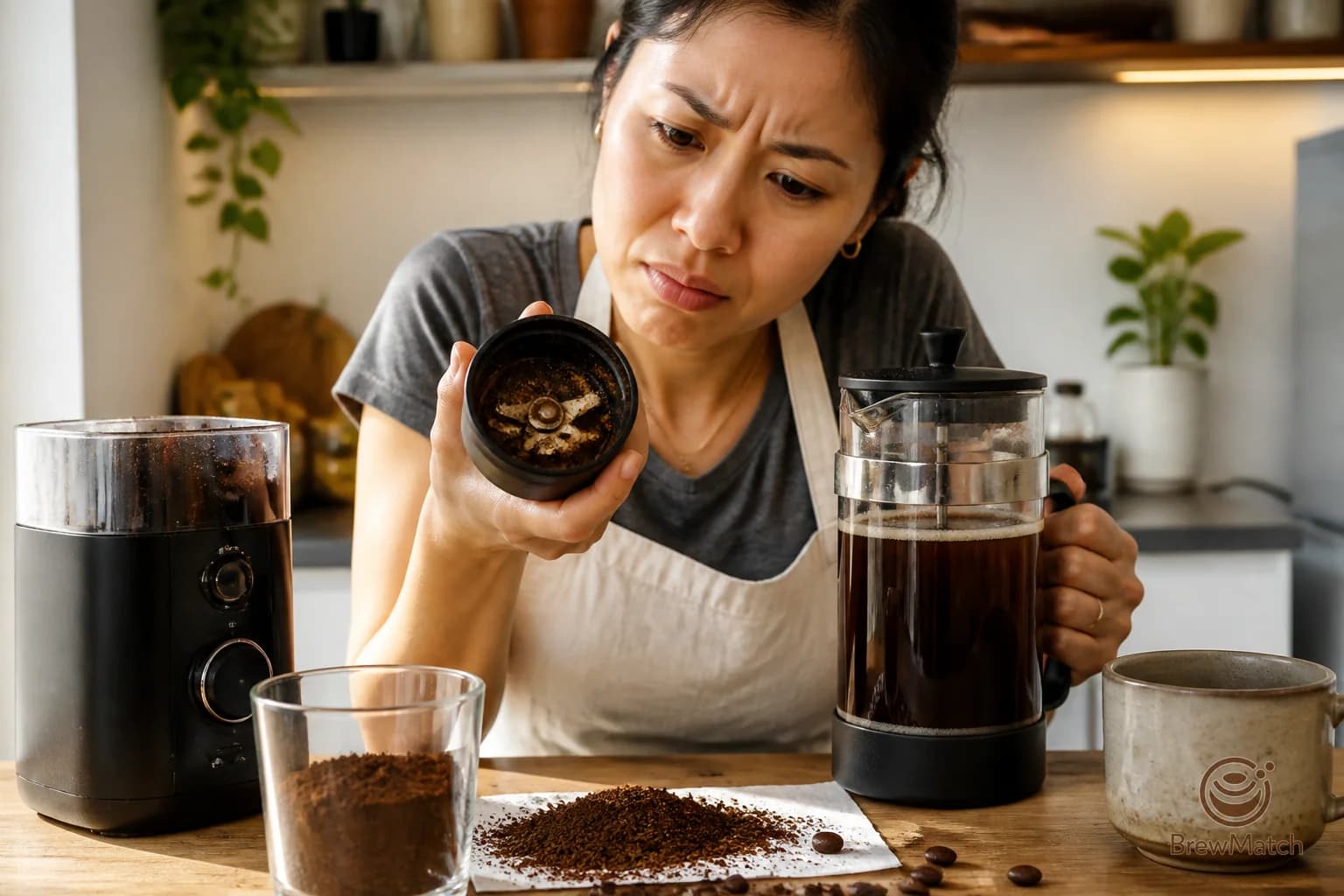
A blade grinder can make coffee taste bitter because it chops beans into uneven pieces. Tiny dust over extracts and turns harsh. Bigger chunks under extract and taste thin or sour. Put them together and you get a cup that feels messy, sharp, and weirdly bitter even when the beans are fine.
That does not mean every bitter cup is the grinder's fault. But if you use a blade grinder and keep chasing a smoother cup, the grinder is a very suspicious suspect.
What a blade grinder actually does to coffee
A blade grinder is basically a tiny spinning propeller. It does not grind coffee so much as smash it until you decide to stop.
That creates a mix of particle sizes:
- Fine powder
- Medium bits
- Big chunks
- Broken flakes
- Random bean shrapnel
Coffee brewing is extraction. Water pulls flavor out of the grounds. Small particles give up flavor quickly. Big particles give it up slowly.
When all those sizes brew together, they do not extract at the same pace. The fines can go too far and taste dry, bitter, or ashy. The bigger pieces can stay underdone and taste weak, grassy, or sour. The final cup can taste bitter without tasting rich.
That is the annoying part. You may think you need stronger coffee, darker beans, or a more expensive brewer. Sometimes you just need fewer tiny particles bullying the cup.
The bitterness problem is unevenness not just fine grind
People often blame grind size as if there is one setting called fine and another called bitter. It is not that clean.
A fine grind can taste great in the right brewer. Espresso uses very fine coffee. Moka pots often need a medium fine grind. Some pour over recipes also run fairly fine.
The blade grinder problem is that you do not get one grind size. You get several at once.
That is why shaking the grinder, pulsing in short bursts, or grinding upside down can only help so much. Those tricks may reduce the worst clumps, but they do not turn a blade grinder into a burr grinder.
If your coffee tastes harsh and muddy at the same time, uneven grinding is more likely than a simple too fine problem.
For the grind size side of this issue, read Coffee Ground Too Fine Can Taste Bitter and Dry.
Signs your blade grinder is making coffee bitter
Your blade grinder is more likely to be the problem if several of these are true:
- The cup tastes bitter, dry, or rough even with medium roast beans
- The coffee also tastes weak, thin, or hollow
- You see powder stuck to the sides of the grinder
- Your paper filter clogs or drains slowly
- French press coffee leaves heavy sludge in the bottom
- Pour over flow changes wildly from brew to brew
- You cannot repeat a good cup two days in a row
That last one matters. Good coffee at home is partly about repeatability. A blade grinder makes repeatability harder because time is your only control. Ten seconds today might not match ten seconds tomorrow if the bean amount, bean density, or shake pattern changes.
If your coffee tastes bitter once in a while, do not panic. If it tastes unpredictable every week, the grinder deserves a look.
When a blade grinder is not the main problem
Do not buy a new grinder just because one cup tasted bad. Bitter coffee has more than one cause.
Your blade grinder may not be the main problem if:
- You are using very dark oily beans and dislike roast bitterness
- Your coffee maker is dirty
- Your water is too hot for your recipe
- You are steeping too long in French press
- You are using too much coffee for the amount of water
- Your beans are stale or just not a flavor style you enjoy
A burr grinder will not magically make burnt tasting beans taste like caramel. It will not fix dirty equipment. It will not rescue a recipe that is brewing way too long.
The tradeoff is simple. A burr grinder gives you more control, but it does not replace basic brewing adjustments.
If you want a faster read on whether your taste problem is the beans, recipe, or grinder, BrewMatch can help you narrow it down without pretending you need to become a coffee nerd.
Blade grinder vs burr grinder for bitterness
A burr grinder crushes beans between two abrasive surfaces. The gap between those burrs controls the grind size. That is why burr grinders usually produce a more even grind than blade grinders.
More even does not mean perfect. Cheaper burr grinders can still create fines. Old burrs can get dull. Bad settings still make bad coffee. But compared with a blade grinder, a decent burr grinder gives you a much better chance at a smoother cup.
The main benefits are practical:
- You can choose a grind size instead of guessing by seconds
- You can repeat a setting when a cup tastes good
- You usually get less extreme dust and fewer big chunks
- You can adjust for drip, pour over, French press, or espresso more sensibly
If you want a deeper comparison, read Burr Grinder vs Blade Grinder for Less Bitter Coffee.
What to buy if you hate bitter coffee
You do not need the fanciest grinder on the shelf. You need the right kind of control.
For most home coffee drinkers who want less bitter coffee, look for:
A burr grinder not a blade grinder
This is the big one. Flat or conical burrs can both work. Do not get trapped in internet arguments before you fix the obvious thing.
Enough grind settings for your brewer
If you make drip or French press, you do not need espresso level precision. If you make espresso, you need much finer adjustment. Buying the wrong grinder for your brewer is how people end up angry at perfectly decent coffee.
Easy cleaning
Old coffee oils and trapped dust can add stale bitterness. A grinder that is miserable to clean will not get cleaned often. Be honest about your patience.
A price you will not resent
A better grinder can help, but there is no virtue in buying gear that makes you nervous to use it. Start with a solid burr grinder that fits your brewing style.
Practical checklist before replacing your grinder
Try this before spending money:
- Clean your grinder and brewer.
- Use fresh beans you normally like.
- Measure coffee and water instead of eyeballing.
- If using a blade grinder, pulse in short bursts and shake between pulses.
- Stop grinding before the whole batch turns dusty.
- Brew one cup and note the taste.
- If it is bitter and dry, grind a little less or brew a little shorter.
- If it is weak and sour, grind a little more or brew a little longer.
- If the taste swings from harsh to thin no matter what, the blade grinder is probably holding you back.
This test is not perfect. It is just cheaper than buying a grinder because a comment section told you to.
The cup you should expect after switching
A burr grinder will not remove all bitterness from coffee. Coffee naturally has bitter compounds, especially darker roasts. The goal is not zero bitterness. Zero bitterness would taste flat and strange.
The goal is better balance.
After switching from a blade grinder to a decent burr grinder, many home drinkers notice coffee tastes:
- Less dry at the finish
- Less muddy
- More consistent
- More clearly sweet or nutty
- Easier to adjust when something tastes off
That last part is the real win. With a blade grinder, every fix is fuzzy. With a burr grinder, you can change one thing and learn from it.
Keep the grinder upgrade in perspective
A blade grinder is a bad bet if your main goal is less bitter coffee. It gives you uneven grounds, and uneven grounds make brewing harder than it needs to be.
But do not turn this into gear worship. A burr grinder is a tool, not a personality. Pair it with beans you like, a reasonable recipe, and clean equipment. That is where smoother coffee starts to feel boringly repeatable, which is exactly what breakfast coffee should be.
If you are not sure whether your bitter coffee is a grinder problem, a bean problem, or a recipe problem, try BrewMatch. It is built to match coffee to your taste, not to make you memorize coffee forum arguments.
Find your match
Not sure which beans fit your taste?
Use BrewMatch to turn your flavor goal, brew method, and current coffee problem into a practical roast and bean profile.
Try BrewMatch