
July 30, 2026
Bitter Coffee Aftertaste Has 5 Fixable Causes
If coffee tastes fine at first but leaves a bitter finish, do not blame your taste buds. Fix the stuff that lingers.
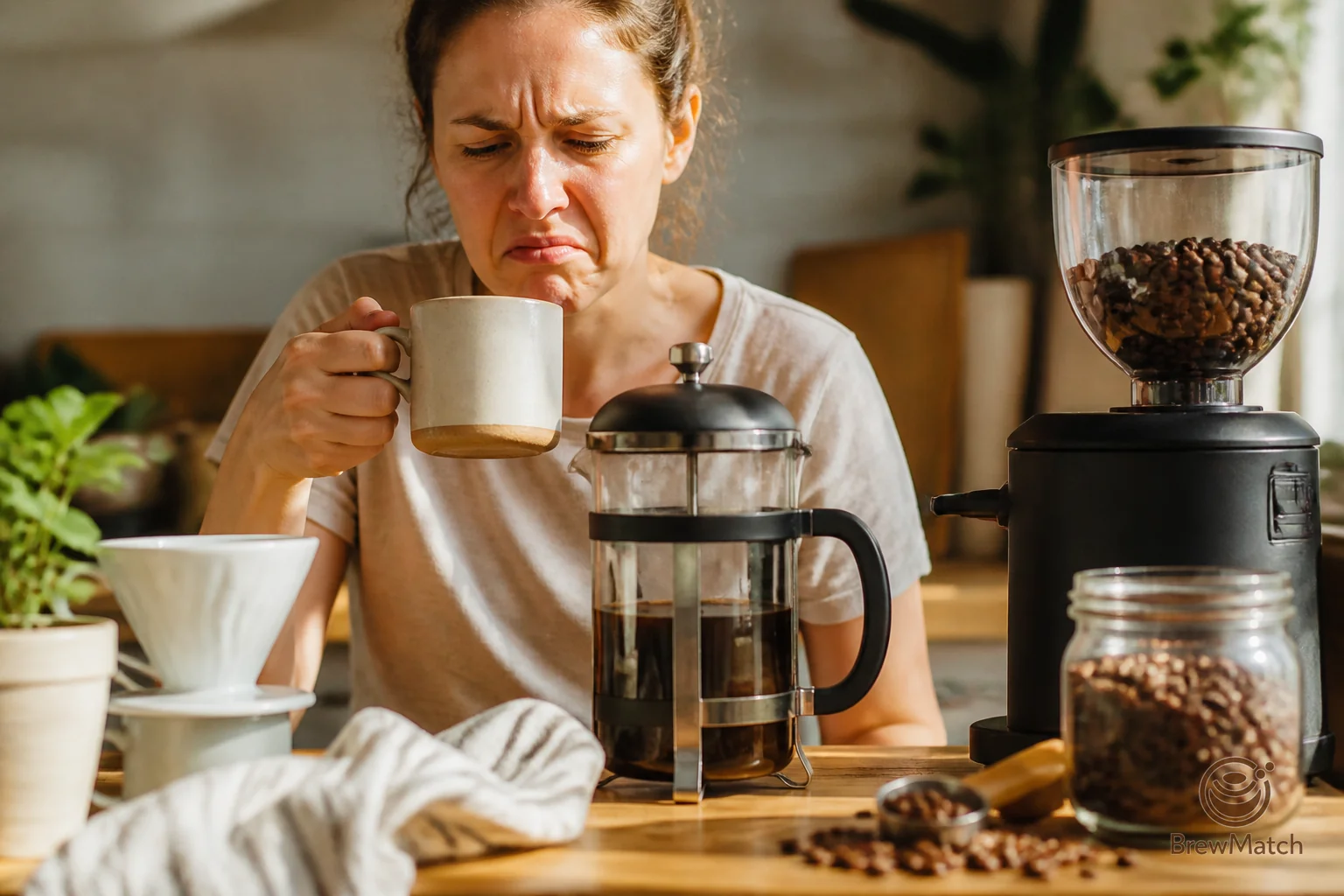
Bitter coffee aftertaste usually means something is lingering in the cup after the sweeter, rounder flavors fade. The usual culprits are over extraction, stale coffee oils, beans past their best, water that tastes rough, or coffee that sat too long after brewing. You do not need a coffee lab. You need to change one variable at a time and stop treating bitterness like a moral failure.
The good news is that these causes are fixable. Most bitter aftertaste problems improve when you clean the gear, make extraction gentler, use fresher coffee, test cleaner water, or stop letting brewed coffee keep cooking.
A bitter aftertaste is annoying because the first sip can seem fine. Then ten seconds later your mouth feels dry, sharp, or coated. That delayed finish is the clue. It points less to one magic coffee flaw and more to what your brew left behind.
What bitter aftertaste actually feels like
Not every intense coffee is bitter. Strong coffee can taste rich, heavy, chocolatey, nutty, or roasty without leaving your tongue feeling punished.
A bitter aftertaste usually shows up as one of these:
- A dry feeling on the tongue
- A harsh finish at the back of the throat
- A burnt or ashy flavor after swallowing
- A medicine like bitterness that hangs around
- A coated mouthfeel that makes the next sip worse
That last one matters. If each sip tastes a little rougher than the one before, you are probably dealing with lingering compounds, stale oils, or coffee that has been sitting too long.
1. Your brew pulled too much from the grounds
The most common cause of a bitter coffee aftertaste is over extraction. That means the water pulled too much from the coffee grounds, including harsher bitter compounds that tend to show up late in the brew.
This does not always make the whole cup taste awful right away. Sometimes the first sip has decent flavor, but the finish gets dry and sharp. That is why people confuse over extracted coffee with “strong” coffee. It is not stronger in a good way. It is just more extracted than your taste wants.
Try this if the finish is bitter and drying:
- Grind a little coarser
- Shorten the brew time
- Use slightly cooler water if you are pouring straight off a boil
- Stop letting pour over water drip forever through a nearly spent bed
- For French press, pour the coffee off the grounds instead of letting it sit there
Do not change everything at once. If you grind coarser and use less coffee and change the water and switch beans, you will have no idea what fixed it.
2. Stale coffee oils are hiding in your gear
Coffee oils stick to things. Grinder hoppers, brew baskets, French press mesh, travel mugs, carafes, rubber seals, and drip machine parts all collect residue. That residue goes stale. Then every fresh cup gets a little bitter shadow from yesterday’s coffee.
This is the cause people miss because the coffee maker may not look filthy. A thin brown film is enough. If your cup smells a little musty, smoky, or old even when the beans smell good, clean gear should move to the top of the list.
Start with the parts that touch brewed coffee, not just the parts that touch water. Wash the carafe, lid, filter basket, French press plunger, reusable filter, and travel mug. If you use a grinder, brush out old grounds and check whether oily buildup is collecting around the burrs or blade area.
For a deeper version of this problem, read A Dirty Coffee Maker Can Make Good Coffee Taste Bitter.
3. The beans are old and flat
Old beans do not always taste obviously rotten. More often, they taste dull first and bitter later.
Fresh coffee has enough sweetness, aroma, and acidity to balance bitter notes. As beans age, the lively flavors fade. What is left can feel woody, papery, flat, or harsh. That bitter aftertaste may not be from “bad brewing” at all. It may be stale coffee with no pleasant flavors left to soften the finish.
Signs your beans may be the issue:
- The bag smells faint instead of fragrant
- The brewed coffee tastes flat before it tastes bitter
- You cannot find a roast date anywhere
- The beans have been open for weeks
- The same recipe used to taste better with a newer bag
You do not need to chase beans roasted yesterday. But if the bag has been sitting open in a warm kitchen for a month, do not expect miracles.
If this sounds familiar, see Old Coffee Beans Can Taste Bitter and Flat.
4. The coffee kept cooking after brewing
Coffee changes after it is brewed. Leave it on a hot plate, let it sit in a hot moka pot, keep reheating the same mug, or abandon a French press with coffee still touching the grounds, and the finish can get rough fast.
Heat does not politely preserve flavor. It pushes brewed coffee toward stale, sharp, and bitter. The first mug may taste fine. The second mug tastes like punishment. That is not because your palate became fancy in twenty minutes. The coffee changed.
Better options:
- Brew only what you will drink soon
- Move drip coffee into a thermal carafe
- Take French press coffee off the grounds after brewing
- Avoid reheating the same coffee more than once
- If you must reheat, use gentle heat and stop before it gets steaming hot
This is one of the easiest fixes because it does not require better beans or better equipment. It requires not cooking finished coffee into bitterness.
5. Your water is making the finish rough
Water is most of your cup, so yes, it can absolutely shape the aftertaste. Some tap water adds a rough edge that reads as bitterness. Chlorine, strong mineral taste, or water that smells odd from the tap can make coffee taste harsher than it should.
You do not need to become a water chemist. Run a simple test.
Brew the same coffee two ways:
- Once with your normal tap water
- Once with filtered water or a basic bottled spring water
Keep everything else the same. Same beans, same grind, same coffee amount, same brew method.
If the filtered water cup has a cleaner finish, your recipe was not the whole problem. Your water was adding its own opinion.
Avoid distilled water for normal brewing unless you know what you are doing. Coffee brewed with very low mineral water can taste thin and strange. You are looking for clean tasting water, not empty water.
The quick bitter aftertaste checklist
Use this before buying another bag of coffee out of frustration.
- Does the bitterness show up mostly after swallowing? Look at extraction and stale oils.
- Does your mouth feel dry or rough? Try a slightly coarser grind or shorter brew.
- Does the coffee taste flat before it tastes bitter? Check bean age.
- Does the second mug taste worse than the first? Stop leaving brewed coffee on heat.
- Does your tap water taste or smell noticeable on its own? Test filtered water.
- Does your travel mug smell like old coffee? Clean it before blaming the beans.
- Did you change three things at once? Go back and test one change at a time.
If you want a shortcut, BrewMatch can help you find coffee that fits the flavors you actually like, especially if you are trying to avoid bitter, smoky, or harsh cups without learning coffee jargon.
What to change first
Start with the fix that costs nothing.
Clean the gear that touches brewed coffee. Then brew a fresh cup and remove it from heat once it is done. If the aftertaste improves, you found a big part of the problem.
If the finish is still bitter, adjust extraction. Grind slightly coarser or shorten brew time. Do not make a huge swing. Big changes create new problems. Tiny changes teach you what your coffee is doing.
After that, test water. Then question the beans.
That order matters because people love buying new coffee before fixing the obvious stuff. A new bag cannot save a dirty carafe, a scorching hot plate, or a brew that runs too long.
When the beans really are the problem
Some coffees naturally have more bitter leaning flavors. Dark chocolate, roasted nuts, cocoa, and mild roastiness can be pleasant. Ashy, smoky, burnt, or rubbery flavors are a different story.
If you hate bitter aftertaste, look for bags described with words like:
- Milk chocolate
- Caramel
- Brown sugar
- Hazelnut
- Almond
- Honey
- Balanced
- Smooth
Be more cautious with bags described as smoky, intense, charred, extra dark, or very bold if you already know you dislike lingering bitterness. That does not mean dark roast is always bad. It means your taste preference has a line, and some coffees cross it.
The goal is not to become a coffee expert. The goal is to stop drinking cups that argue with you for ten minutes after every sip.
If bitter aftertaste keeps showing up no matter what you brew, use BrewMatch to narrow the flavor direction before your next bag. Your coffee is not doomed. Your current setup may just be leaving the worst parts behind.
Find your match
Not sure which beans fit your taste?
Use BrewMatch to turn your flavor goal, brew method, and current coffee problem into a practical roast and bean profile.
Try BrewMatch