
August 28, 2026
Best Coffee Grinder for French Press If You Hate Bitter Coffee
French press should taste rich not punishing. If your cup is bitter the grinder can be the quiet troublemaker, especially when it makes too many dusty fines.
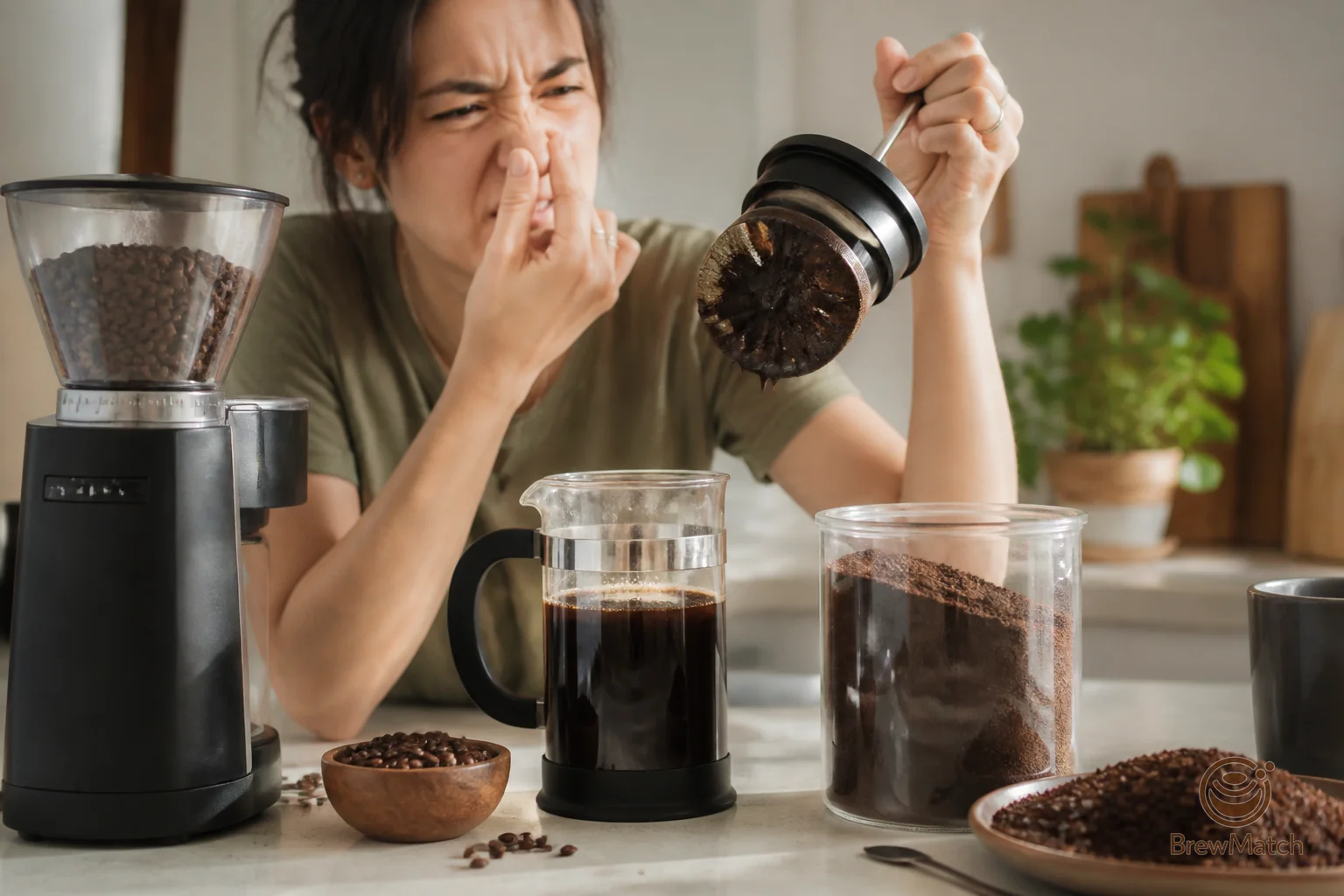
For less bitter French press coffee, choose a burr grinder that makes a clean coarse grind without a pile of dusty fines. You do not need the fanciest espresso grinder. You need coarse consistency, enough adjustment range, easy cleaning, and a grinder that does not turn half your beans into powder.
French press is simple, but it is not very forgiving when your grinder makes a messy grind. The coffee sits in water for several minutes. Tiny particles extract fast. Big chunks extract slowly. That mix can give you a cup that tastes muddy, bitter, dry, and somehow weak at the same time.
French press punishes bad coarse grinding
French press usually needs a coarse grind because the coffee steeps directly in water. You are not forcing water through a tight puck like espresso. You are letting water hang out with the grounds.
That slower contact is the charm. It is also the trap.
If your grinder creates too many fines, those tiny dust like particles keep extracting while the larger pieces are still catching up. By the time the brew tastes strong enough, the fines may have already pushed the flavor into bitterness and grit.
That is why a grinder can matter more for French press than people expect. Not because French press is fancy. Because it gives bad grind quality plenty of time to show up.
What to look for in a French press grinder
If you hate bitter coffee, shop for the grinder like you are trying to avoid dust, not like you are trying to impress the internet.
1. A burr grinder instead of a blade grinder
A blade grinder chops beans unevenly. Some pieces stay chunky. Some turn to powder. That is rough for almost any brew method, but French press makes it obvious because the powder sits in the brew and keeps giving.
A burr grinder crushes coffee between two surfaces at a set distance. It is not automatically perfect, but it gives you a much better shot at an even coarse grind.
If you are still using a blade grinder and your French press tastes bitter, that is a very likely suspect. BrewMatch has a deeper breakdown here: A Blade Grinder Is a Bad Bet for Less Bitter Coffee.
2. A coarse setting that is actually usable
Some grinders technically have a coarse setting, but the result is still messy. You want a grinder that can produce chunky grounds without spraying fines everywhere.
The annoying part: you usually cannot tell from the word “coarse” on the box. Look for reviews that mention French press, cold brew, or coarse grind consistency. If every review talks about espresso and nobody mentions coarse brewing, be careful.
An espresso focused grinder may be excellent at tiny adjustments near fine settings and merely okay at coarse ones. That is not a moral failure. It is a design tradeoff.
3. Enough adjustment to move away from bitterness
You do not need infinite settings for French press. You do need enough room to adjust when your cup tastes wrong.
If your coffee tastes bitter and dry, you may need to grind coarser or shorten the steep. If your coffee tastes thin and sharp, you may need to grind a little finer or steep longer. A grinder with only a few big jumps can trap you between “too bitter” and “too weak.”
A decent grinder lets you make small enough changes that your coffee can land in the middle, where it tastes full without turning harsh.
4. Low fines at coarse settings
This is the big one. Fines are not always visible from across the kitchen, but you can spot the damage.
Signs your grinder is making too many fines for French press:
- The cup tastes bitter even when you use a reasonable steep time
- The coffee feels gritty or muddy
- The last few sips are much harsher than the first few
- There is a thick layer of sludge at the bottom
- Going coarser makes the coffee weak but still bitter
That last one is especially frustrating. It means the big particles are under extracting while the fines are over extracting. Same cup, two bad things happening at once.
What not to overpay for
A grinder can help French press, but not every shiny grinder feature helps bitterness.
You probably do not need a grinder built mainly for espresso. You probably do not need tiny stepless control unless you also make espresso. You probably do not need to obsess over burr shape before you know whether the grinder can handle coarse brewing well.
The feature that matters is not the fanciest spec. It is whether the grinder gives you a cleaner coarse grind and lets you repeat it tomorrow.
If you want a broader shopping filter, read 5 Grinder Features That Make Coffee Taste Less Bitter.
A quick way to test your current grinder
Before buying anything, run a simple test.
Grind your coffee at your normal French press setting. Spread the grounds on a white plate or paper towel. You do not need a microscope. Just look.
Do you see mostly similar coarse pieces, or do you see boulders mixed with powder?
Then brew your normal recipe, but pour the coffee out of the French press when the steep is done instead of letting it sit on the grounds. Taste the first half of the cup and the last few sips.
If the last sips are much more bitter, gritty, or heavy, fines and sludge are probably part of the issue. If the whole cup is harsh from the start, your grind may be too fine, your steep may be too long, or the beans may already be more bitter than you like.
Not sure which flavor problem you are actually tasting? BrewMatch can help you match your taste preferences to coffees that are less likely to punish you with bitterness.
The French press grinder checklist
Use this checklist if you are shopping for a grinder mainly for French press.
Look for:
- Burr grinder, not blade
- Good coarse grind reviews from actual French press users
- Enough settings to adjust without huge jumps
- A grind chamber that is easy to clean
- Low reports of sludge, powder, or grit
- Simple repeatable settings you can find again tomorrow
- A size that fits how much coffee you brew at once
Be cautious with:
- Grinders marketed only around espresso precision
- Very cheap electric grinders with vague setting labels
- Reviews that praise speed but ignore grind quality
- Tiny grinders if you brew large French press batches
- Any grinder that is hard to clean around the burrs or chute
The goal is not perfection. The goal is fewer fines, fewer surprises, and fewer cups that taste like you steeped regret.
Manual or electric for French press
Both can work.
A good manual burr grinder can make excellent French press coffee, especially if you brew one or two cups at a time. The tradeoff is effort. Coarse grinding is easier than espresso fine grinding, but you still have to crank it.
An electric burr grinder is easier if you brew larger batches or make coffee every morning before your brain is online. The tradeoff is that cheap electric grinders can be loud, messy, and inconsistent.
Do not buy manual just because someone online says it is more “serious.” Do not buy electric just because it feels more convenient. Buy the grinder you will actually use correctly.
If your new grinder still makes bitter French press
A better grinder helps when grind quality is the weak link. It will not fix everything.
If your French press is still bitter after improving the grind, check these next:
- Steep time is too long
- Coffee is ground too fine for your taste
- Water is hotter than needed
- Coffee sits in the press after brewing
- The roast is darker than you prefer
- The dose is too high and the cup tastes heavy and harsh
Try one change at a time. Go a little coarser. Shorten the steep by 30 seconds. Pour the coffee out after brewing. If you change six things at once, you will not know what helped.
The bottom line
The best coffee grinder for French press is not the most expensive grinder on the shelf. It is the one that produces a clean coarse grind with fewer fines and gives you enough control to back away from bitterness.
If your French press tastes bitter, do not start by blaming your taste buds. Start with the grind. French press should taste rich, round, and heavy in a good way, not gritty and punishing.
Want coffee that fits the way you actually like it, not the way a bag label thinks you should? Try BrewMatch and find coffees matched to your taste before your grinder gets another chance to cause drama.
Find your match
Not sure which beans fit your taste?
Use BrewMatch to turn your flavor goal, brew method, and current coffee problem into a practical roast and bean profile.
Try BrewMatch