
September 23, 2026
Best Coffee Grinder for Bitter Coffee Is the One You Can Dial In
The best grinder for bitter coffee is not the fanciest one. It is the one that lets you make small clear changes without turning breakfast into a science fair.
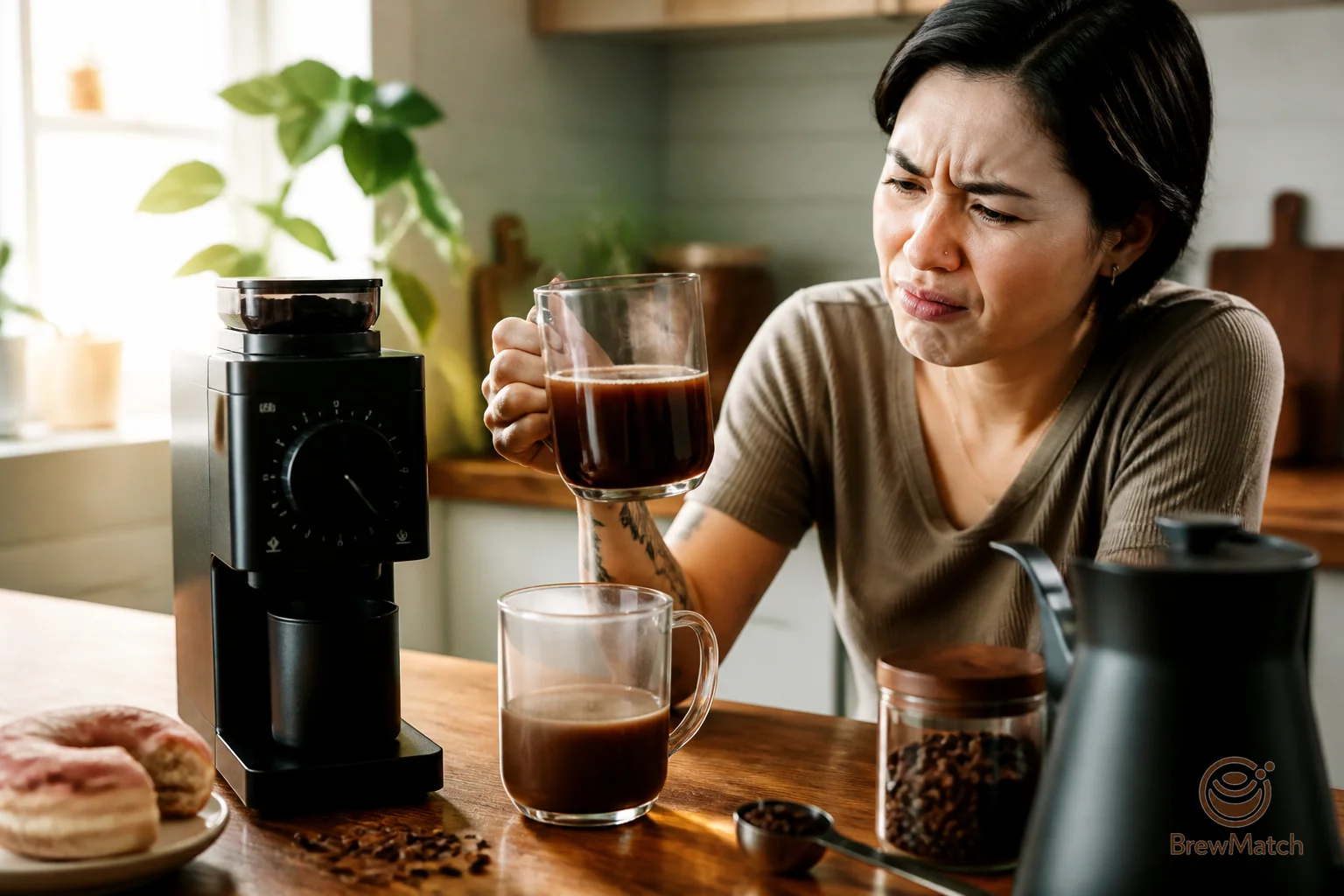
The best coffee grinder for bitter coffee is usually the one you can dial in easily, not the one with the most impressive spec sheet. If your grinder makes it hard to adjust grind size, repeat settings, or avoid dusty uneven grounds, bitter coffee gets harder to fix. Fancy burrs help less than clear control.
That is annoying news if you wanted one magic grinder recommendation. It is better news if you are trying not to waste money.
Bitter coffee needs control more than luxury
A grinder does not make coffee sweet by itself. It gives you control over extraction.
When coffee tastes bitter, one common cause is that too much has been pulled out of the grounds. Grind size is one of the fastest ways to change that. Go a little coarser and the water usually extracts less aggressively. Go too fine and bitterness can show up fast, especially in drip, pour over, espresso, and moka pot.
The problem is that many grinders make small changes difficult.
Some have settings that jump too far. Some have vague dials with no useful markings. Some create a mix of boulders and dust, so one part of the coffee under extracts while the dusty part over extracts. The cup tastes harsh, bitter, muddy, or weirdly weak and sharp at the same time.
That is why the grinder you can actually adjust beats the grinder that only looks good on a product page.
The grinder feature people underestimate: easy small changes
If your coffee is bitter, you need a grinder that lets you make small, repeatable changes.
Not dramatic changes. Not a full spin of the dial. Small changes.
For home coffee drinkers, that means the grinder should have enough usable settings between too fine and too coarse. It should also make it obvious where you are. If you cannot tell whether you moved from setting 12 to 13 or 12 to mystery zone, you are not dialing in. You are guessing with better equipment.
This matters most when your coffee is close but not right. Maybe your drip coffee is almost smooth but leaves a bitter finish. Maybe your pour over tastes good at first and then turns dry. Maybe your French press tastes heavy and harsh instead of rich.
In those cases, you do not need a grinder that screams professional. You need one that lets you nudge the grind coarser and repeat that change tomorrow.
If your current grinder has huge jumps between settings, read A Grinder With Too Few Settings Can Keep Coffee Bitter. That problem is boring, but it ruins a lot of cups.
Do not buy the grinder with the loudest spec sheet
Coffee grinder marketing loves big numbers and serious words. Burr size. Motor power. Materials. Alignment. Low retention. Commercial style parts. Precision this, premium that.
Some of that can matter. Some of it is just expensive wallpaper if your actual cup still tastes bitter.
For bitter coffee, ask a less glamorous question: will this grinder help me make better adjustments at home?
A grinder with a clean dial, useful settings, and consistent grounds can do more for your morning coffee than a pricier grinder that is annoying to use. If you avoid changing settings because the grinder is confusing, stiff, vague, or hard to reset, then the grinder is not helping you troubleshoot.
People get this backward. They shop for the grinder that sounds most advanced, then keep brewing bitter coffee with the same setting every day because they do not want to mess with it.
That is not user error. That is a bad fit.
If coffee gear reviews are pushing you toward features you do not understand or need, Coffee Grinder Reviews Can Mislead You If You Hate Bitter Coffee is worth reading before you buy.
What to look for instead
If bitterness is your main complaint, shop for a grinder that gives you control without making you babysit it.
Look for these traits:
- A clear grind adjustment dial or numbered setting system
- Enough settings for your brew method
- Repeatable settings you can return to easily
- A burr grinder instead of a blade grinder
- Grounds that look reasonably even, not powder plus chunks
- Simple cleaning access so old grounds do not build up
- A size and workflow you will actually use every morning
That last one is not a throwaway point. A grinder can be technically better and still be wrong for you if it is loud, messy, slow, awkward, or irritating. The grinder you avoid using is not the best grinder for anything.
Want a shortcut before buying another bag or another gadget? Try BrewMatch to narrow down the kind of coffee profile you actually like. If you prefer smooth, low bitterness coffee, your grinder choice should support that instead of fighting it.
What to avoid if bitter coffee is your problem
Avoid buying based only on these claims:
Huge burrs
Bigger burrs can be useful, but burr size alone does not guarantee less bitter coffee. If the grinder is hard to adjust or inconsistent at the settings you use, bigger burrs will not save the cup.
Espresso focused marketing
An espresso capable grinder is not automatically better for drip, French press, or pour over. Espresso needs very fine control in a narrow range. If you mostly brew drip coffee, you need a grinder that performs well in the medium range too.
Too few settings
This one is a real bitter coffee trap. If one setting tastes sour and the next tastes bitter, you are stuck between bad options. A good grinder gives you room to land in the middle.
Vague premium language
Words like premium, professional, and precision do not tell you whether the grinder will be easy to use in your kitchen before work. Read for specific adjustment details, cleaning access, and consistency comments.
A grinder that is annoying to clean
Old coffee trapped inside a grinder can mix into fresh grounds. That can make coffee taste stale, flat, or bitter. If the grinder looks like a puzzle box, be honest about whether you will clean it.
Match the grinder to your brew method
Different brewing methods need different levels of grind control.
For French press, you usually want a coarse grind that does not create too much sludge. A grinder that produces lots of fine dust can make French press taste bitter and muddy, even when the main grind looks coarse.
For drip coffee, you want a medium grind with enough adjustment to slow down or speed up extraction. If the coffee tastes bitter, one of your first moves is often going slightly coarser.
For pour over, grind control matters a lot because flow rate changes the taste quickly. A small grind change can shift the cup from harsh to clean.
For espresso, tiny changes matter. If the grinder cannot make fine adjustments, you may get shots that run too slow and taste bitter, or too fast and taste sour.
The point is not that everyone needs an espresso grinder. The point is that your grinder should match the coffee you actually make.
Practical checklist before buying a grinder for bitter coffee
Use this before you spend money:
- What brew method do I use most often?
- Does the grinder have enough settings for that method?
- Can I make small grind changes without guessing?
- Are the settings easy to repeat tomorrow?
- Do reviews mention too much dust, fines, or uneven grounds?
- Is the grinder easy enough to clean that I will actually do it?
- Am I paying for control or just paying for a nicer spec sheet?
- If my coffee tastes bitter, can this grinder help me go slightly coarser in a controlled way?
- Does it fit my real morning routine?
If you cannot answer those questions, pause. Bitter coffee makes people buy fast. That is how you end up with a more expensive version of the same problem.
Try this with your current grinder first
Before replacing your grinder, test whether the one you have can still help.
Brew your normal coffee. If it tastes bitter, move the grind one small step coarser next time. Keep everything else the same: same beans, same amount of coffee, same water amount, same brew method.
If the coffee gets smoother, your grinder may be good enough. You just needed a better setting.
If one click coarser makes it watery or sour, your grinder may not have enough useful adjustment. If the cup stays harsh no matter where you set it, uneven grounds or old coffee buildup might be part of the problem.
This simple test tells you more than a spec sheet. It also keeps you from blaming the beans when the grinder is quietly making every brew harder to fix.
The best grinder is the one that helps you troubleshoot
The best coffee grinder for bitter coffee is not automatically the most expensive one. It is the one that helps you change the cup on purpose.
That means clear settings, small adjustments, decent consistency, and a workflow you will not hate. Coffee should not require a new hobby just to stop tasting harsh.
If you are trying to build a smoother coffee routine without turning into a gear obsessive, BrewMatch can help you find coffees that fit your taste instead of guessing from roast labels and grinder hype.
Find your match
Not sure which beans fit your taste?
Use BrewMatch to turn your flavor goal, brew method, and current coffee problem into a practical roast and bean profile.
Try BrewMatch