
August 4, 2026
5 Grinder Features That Make Coffee Taste Less Bitter
A better grinder will not magically save bad coffee but the right features can stop bitterness before it starts. Look for consistency not hype.
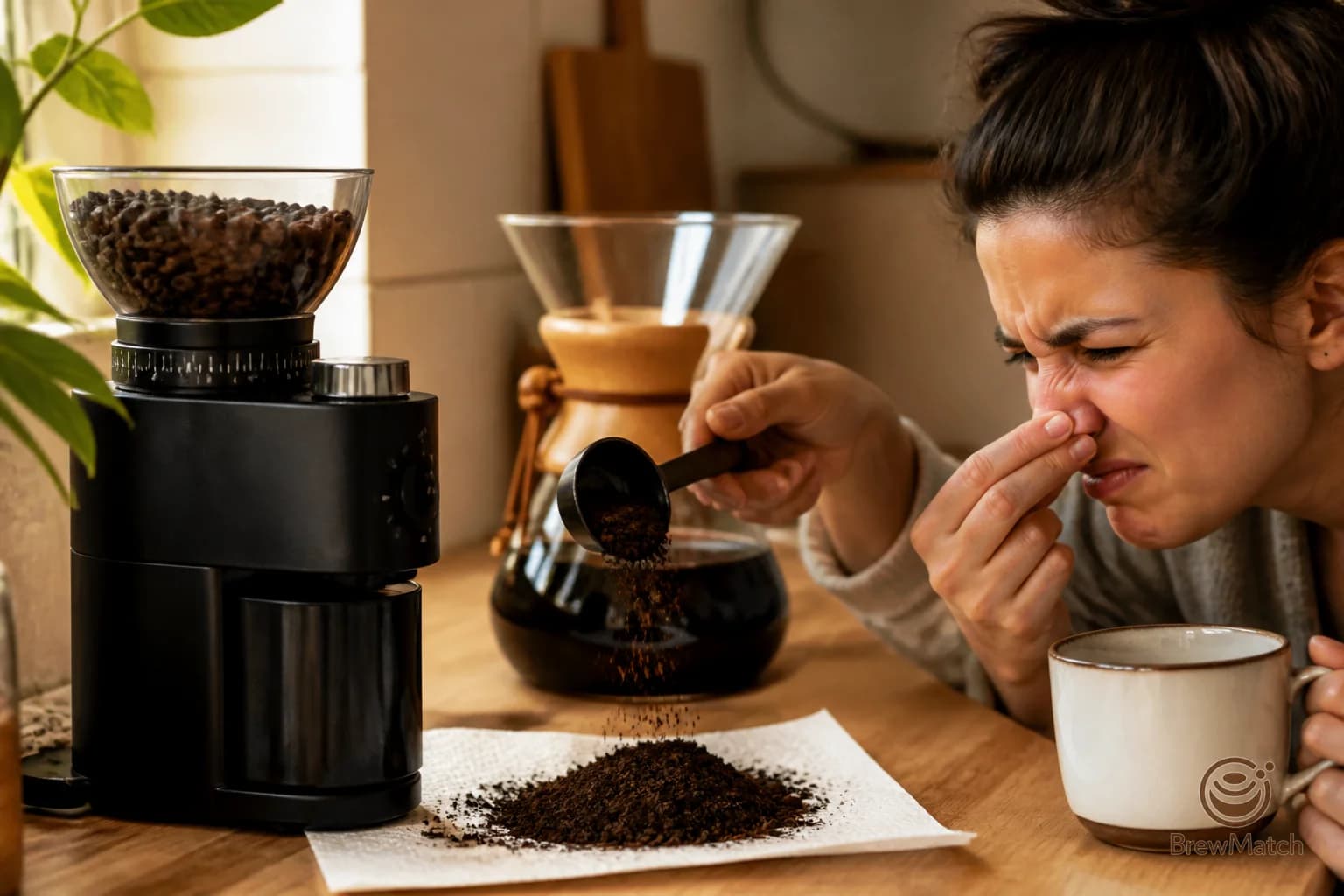
The best coffee grinder for less bitter coffee is not always the most expensive one. It is the grinder that gives you even grounds, enough adjustment, low heat, easy cleaning, and repeatable dosing. Bitter coffee often starts before the water hits the grounds. If your grinder makes dust, boulders, and random sizes in the same dose, your brew is already fighting itself.
A grinder upgrade can help. A flashy grinder upgrade can also waste money if you buy for the wrong reasons.
Bitter coffee is often a consistency problem
Coffee extracts at different speeds depending on particle size. Tiny particles extract fast. Big chunks extract slowly.
When your grinder produces a messy mix, the small particles can over extract and taste bitter while the larger pieces stay under extracted. That is how you end up with a cup that tastes harsh, hollow, bitter, and somehow still not satisfying.
People love to blame dark roast, cheap beans, or their coffee maker. Sometimes those are part of it. But if your grind is uneven, every brew method gets harder.
If you are still deciding whether the grinder type itself is the issue, read Burr Grinder vs Blade Grinder for Less Bitter Coffee. This article goes one step further: what to look for once you know grinder quality matters.
1. Consistent burrs beat aggressive chopping
The first feature that matters is simple: the grinder should crush coffee into fairly even pieces instead of smashing it randomly.
That usually means burrs. Burr grinders pass beans through two abrasive surfaces set a fixed distance apart. Blade grinders spin a metal blade through the beans and chop them unevenly.
That does not mean every burr grinder is amazing. A bad burr grinder can still be frustrating. But burrs give you a much better shot at consistency than a blade grinder.
For less bitter coffee, consistency matters because it reduces fines. Fines are the dusty little particles that extract quickly and can add bitter, dry flavors. You will never remove fines completely, and you do not need to. You just want fewer of them.
When shopping, look for:
- A real burr mechanism, not a blade grinder marketed with vague language
- Stable burr alignment if reviews mention it
- A grind that looks even for your brew method
- Fewer dusty particles at medium settings
The tradeoff: better burrs cost more. But if bitterness is your daily complaint, burr quality is a better place to spend money than a prettier kettle.
2. Enough grind settings for your brew method
A grinder can be consistent and still wrong for you if it does not adjust finely enough.
French press does not need the same grind as espresso. Drip coffee does not need the same grind as moka pot. Pour over can be picky depending on the brewer and filter. If your grinder jumps from too coarse to too fine, you have no comfortable middle ground.
For bitterness, adjustment matters because a grind that is too fine can slow the brew down and pull too much from the coffee. That often tastes bitter, dry, or heavy. If that sounds familiar, see Coffee Ground Too Fine Can Taste Bitter and Dry.
A good home grinder should let you make small enough changes that your coffee moves from bitter to balanced without swinging into sour or weak.
What to look for:
- Clear grind adjustment with repeatable settings
- More control in the range you actually use
- Stepped settings for simplicity or stepless adjustment for espresso control
- A grinder that reviewers use successfully with your brew method
Do not buy an espresso focused grinder if you mostly make French press and drip. Do not buy a basic brew grinder if you plan to dial in espresso every morning. The wrong kind of control is still the wrong grinder.
3. Low heat and sane motor speed
Heat is not the main reason most home coffee tastes bitter. Uneven grind and bad recipes usually do more damage.
Still, grinder heat can matter if the grinder runs hot, especially when grinding larger amounts or using a small grinder beyond its comfort zone. Heat can make coffee smell flatter and taste harsher. It can also make static and clumping more annoying.
You do not need to obsess over motor specs. You do want a grinder that does not sound like it is trying to launch itself off the counter.
Signs a grinder may be too aggressive:
- The grounds feel noticeably warm after a normal dose
- The grinder struggles or stalls often
- The coffee smells oddly flat right after grinding
- The grind chamber holds hot, trapped grounds
For one or two cups at home, this is usually not the deciding factor. But if two grinders are similar, choose the one known for calmer grinding over the one that treats beans like a wood chipper.
4. Easy cleaning because old grounds taste rough
A grinder that is hard to clean becomes a bitterness machine in slow motion.
Old grounds collect inside the chute, burr area, and corners of the grinder. Those stale bits mix into tomorrow's coffee. They can add bitterness, flatness, and that dusty old cafe taste nobody asked for.
This is not about being precious. It is about not seasoning every fresh brew with yesterday's leftovers.
Look for a grinder that makes cleaning realistic:
- The burr area is accessible without a full engineering project
- The chute does not clog constantly
- The catch cup is simple to rinse or wipe
- Replacement parts and brushes are easy to find
- The design does not trap huge amounts of coffee inside
Some grinders are technically good but annoying to maintain. If you know you will not clean a fussy grinder, do not buy a fussy grinder.
A grinder you clean once a week beats a better grinder you avoid opening for three months.
If your coffee still tastes bitter after changing beans, grind, and recipe, BrewMatch can help you narrow down what flavor profile and brew direction actually fit your taste instead of guessing bag by bag.
5. Low retention and repeatable dosing
Retention means coffee gets stuck inside the grinder after you grind. Some of that old coffee exits later and lands in a new brew.
A little retention is normal. A lot of retention is annoying, especially if you switch beans or brew methods often.
For bitterness, retention matters because old grounds are stale and often finer. They can make a fresh brew taste dull or sharp in the wrong way.
Repeatable dosing matters too. If your grinder or workflow changes the amount of coffee in the brewer every morning, you are not tasting a stable recipe. You are tasting chaos with caffeine.
Good features include:
- A low retention design
- A simple bellows or knocker if the grinder uses one well
- A catch cup that makes transfer easy
- A timer or scale friendly workflow
- Settings that are easy to return to after adjustment
You do not need a laboratory setup. You do need to know roughly how much coffee you used and whether today's grind matches yesterday's.
The grinder features that matter less than people pretend
Some grinder specs get treated like personality traits online. Be careful.
Bigger burrs can be great, but they are not automatically better for your kitchen. Flat burrs and conical burrs can both make good coffee. Metal burrs and ceramic burrs can both work, depending on build quality. Single dosing can be clean and flexible, but it is not required for good drip coffee.
What matters more for a home drinker who hates bitterness:
- Does the grind look even?
- Can you adjust it enough?
- Can you clean it without dread?
- Does it fit your brew method?
- Can you repeat a good cup tomorrow?
That is less glamorous than arguing about burr geometry, but it saves more bad mornings.
Practical checklist before you buy a grinder
Use this before you add anything to cart.
- Match the grinder to your brew method first.
- Choose burrs over blades if bitterness is a regular issue.
- Look for enough adjustment in your normal brewing range.
- Avoid grinders with lots of complaints about fines or uneven grounds.
- Check whether cleaning sounds easy enough that you will actually do it.
- Prefer repeatable settings over vague twist and hope controls.
- Do not overbuy espresso features if you never make espresso.
- Do not underbuy if espresso is your main drink.
- Read reviews from people using the same brew method as you.
- Leave budget for better beans if your current coffee is old or stale.
A grinder is not a personality test. It is a tool. Buy the tool that removes the most friction from the way you already brew.
A simple bitterness test after changing grinders
When you get a new grinder, do not change everything at once. That is how people turn one problem into five.
Try this:
- Use the same beans you already know.
- Use the same amount of coffee and water.
- Start at the grinder's recommended setting for your brew method.
- Brew once and taste.
- If it is bitter and dry, grind a little coarser.
- If it is sour or thin, grind a little finer.
- Change only one setting per brew.
This boring method works because it gives your taste buds a clean comparison. Random changes feel productive, but they hide the cause.
The bottom line
The best grinder for less bitter coffee is the one that gives you consistent grounds, useful adjustment, easy cleaning, low stale coffee buildup, and a repeatable routine.
Do not buy the loudest recommendation on the internet. Buy for your brew method, your patience level, and the bitterness problem you are actually trying to fix.
If you want less bitter coffee without turning your counter into a gear museum, start with your grinder, then match the beans and brew style to your taste. BrewMatch can help you find coffee that fits what you actually like, not what coffee people say you should like.
Find your match
Not sure which beans fit your taste?
Use BrewMatch to turn your flavor goal, brew method, and current coffee problem into a practical roast and bean profile.
Try BrewMatch