
August 25, 2026
3 Roast Labels That Usually Mean More Bitter Coffee
Want smoother coffee? Some roast labels are basically warning signs if you hate bitterness. Learn what to avoid before you buy another dramatic bag.
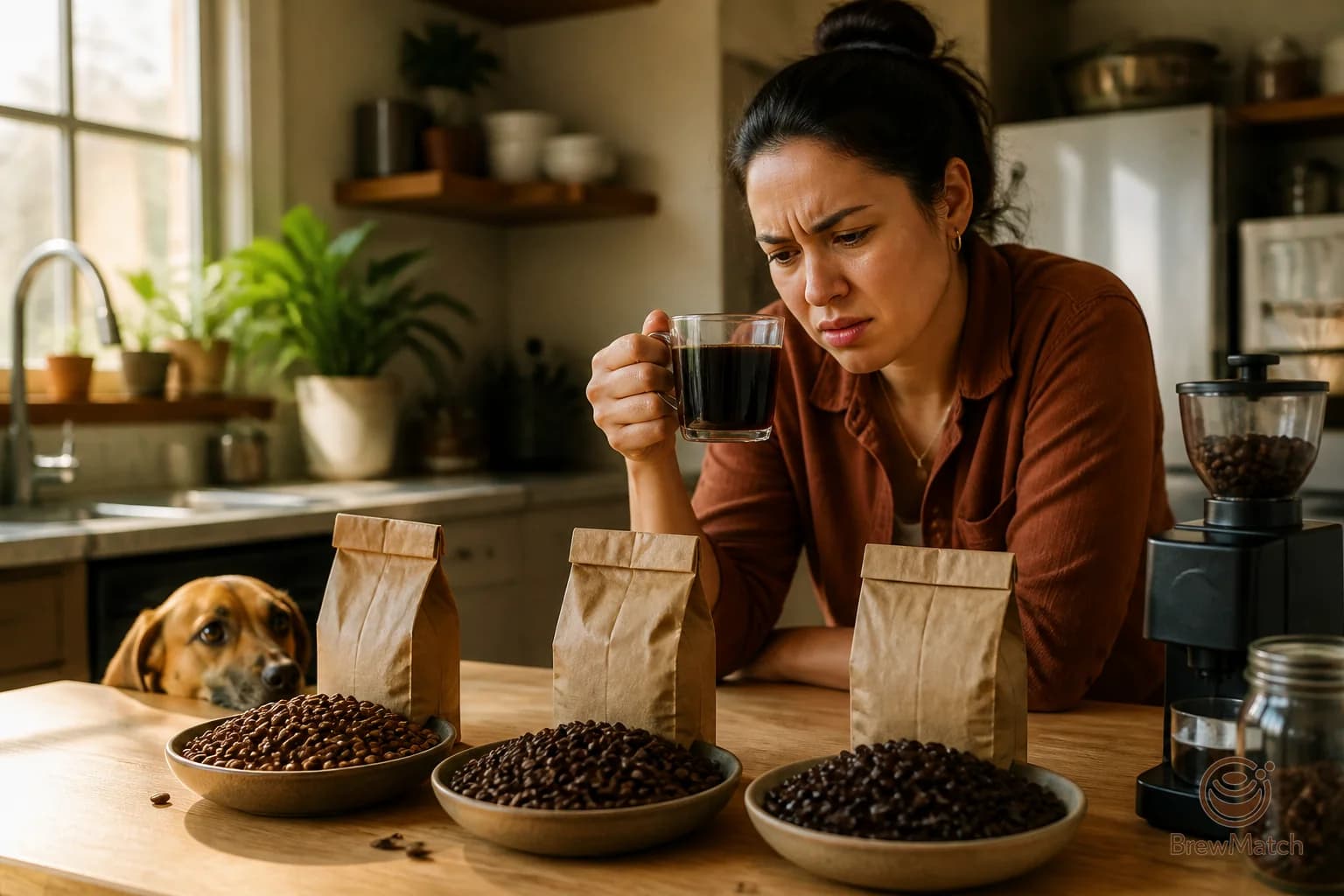
If you want less bitter coffee, be careful with bags labeled French roast, Italian roast, espresso roast, bold, intense, or low acid. None of those labels automatically mean bad coffee, but they often point toward darker roast, heavier roast flavors, or marketing that hides bitterness behind strength. For most home coffee drinkers, a medium roast with simple flavor notes is the safer bet.
Coffee bags are weird little billboards. They promise chocolate, smoke, caramel, brightness, comfort, energy, and sometimes a tiny vacation. The problem is that roast labels are not standardized in a way that helps normal people shop.
One roaster's medium can taste like another roaster's dark. One bag labeled espresso roast might be sweet and balanced. Another might taste like burnt toast and aspirin if you brew it as drip coffee.
So do not treat the front of the bag like a guarantee. Treat it like a clue.
1. French roast and Italian roast usually mean darker and more bitter
If a bag says French roast or Italian roast, expect a very dark roast most of the time.
That does not mean it is low quality. Plenty of people like this style. It can taste smoky, heavy, roasty, and bold. It also tends to have more of the flavors many bitter coffee haters are trying to avoid.
Common dark roast notes include:
- Smoke
- Char
- Roasted nuts
- Dark chocolate
- Molasses
- Tobacco
- Burnt sugar
Some of those can be pleasant. But if your usual complaint is that coffee tastes harsh, burnt, dry, or bitter, French roast and Italian roast are risky buys.
The tradeoff is simple. Very dark roasts often give you body and intensity. They can also flatten the sweeter fruit or caramel notes that make coffee taste balanced. When those sweeter notes disappear, bitterness gets louder.
People often buy darker coffee because they think it will taste stronger. It might taste more intense, but intensity is not the same as better flavor. A cup can be strong and smooth. A cup can also be weak and bitter. If that second one sounds familiar, read Over Extracted Coffee Tastes Bitter Not Strong.
2. Espresso roast is not always your friend outside espresso
Espresso roast sounds precise. It is not.
On many bags, espresso roast means the coffee was roasted with espresso brewing in mind. That often means medium dark or dark, lower acidity, heavier body, and flavors that can cut through milk. That can work beautifully in a cappuccino.
It can also taste flat and bitter as drip coffee, pour over, or French press.
That is where home coffee drinkers get trapped. They see espresso roast and assume it means premium, serious, cafe style coffee. Sometimes it just means the coffee was designed for a very different brew method than the one sitting on your counter.
If you brew with an automatic drip machine, French press, AeroPress, moka pot, or pour over, do not assume espresso roast is the upgrade. It may be too dark for the taste you actually want.
A better shopping move:
- If you drink black coffee, look for medium roast before espresso roast.
- If you add milk, espresso roast may work better, but still watch for smoky or burnt notes.
- If you hate bitter aftertaste, avoid espresso roasts described as charred, smoky, intense, or extra bold.
Espresso roast is not bad. It is just not a magic smooth coffee button.
If you are tired of guessing from bag labels, BrewMatch can help match your taste preferences to coffee that is more likely to fit what you actually enjoy, including lower bitterness.
3. Bold and intense are marketing words not smoothness promises
Bold sounds good. Intense sounds exciting. Neither one means less bitter.
These words usually tell you the coffee is trying to make a big impression. That may come from roast level, blend design, body, or just plain marketing. But if your goal is smooth coffee, bold and intense can be warning signs.
A lot of bitter coffee problems start with one bad assumption: stronger words on the bag mean better coffee in the cup.
Not always.
Bold can mean rich and chocolatey. It can also mean heavy, roasty, and sharp. Intense can mean flavorful. It can also mean the coffee grabs your tongue and refuses to let go.
If you dislike bitterness, read the smaller flavor notes instead of the loudest claim on the front.
Safer flavor notes often include:
- Milk chocolate
- Caramel
- Brown sugar
- Hazelnut
- Almond
- Honey
- Graham cracker
- Vanilla
Riskier flavor notes, if bitterness bothers you, include:
- Smoky
- Charred
- Dark cocoa
- Baker's chocolate
- Black pepper
- Earthy
- Tobacco
- Burnt sugar
None of these are rules carved into stone. A coffee with dark chocolate notes can be lovely. But when you are shopping blind, those notes give you better odds than a giant BOLD label.
For a deeper shopping guide, see Smooth Coffee Beans: How to Choose a Bag That Tastes Less Bitter.
Low acid does not mean low bitterness
Low acid coffee gets marketed like it solves every taste problem. It does not.
Acidity and bitterness are different sensations. Acidity can taste bright, citrusy, crisp, or tangy. Bitterness can taste sharp, dry, burnt, medicinal, or harsh.
If you dislike sour coffee, low acid might help. If you dislike bitter coffee, low acid is not automatically the fix.
In fact, some low acid coffees are darker roasts. That can make them feel smoother in one way but more bitter in another. Less brightness does not always mean more sweetness. Sometimes it just means the roast flavors dominate.
So if a bag says low acid, keep reading. Look at the roast level and flavor notes before you decide.
A low acid dark roast with smoky notes may still be the wrong coffee for someone chasing a smooth, mellow cup.
The roast level that usually gives you the best odds
For most people who hate bitter coffee, medium roast is the safest starting point.
Not because medium roast is fancy. Not because light roast is bad. Not because dark roast is doomed. Medium roast simply gives you more room for balance.
A good medium roast can keep enough sweetness and body without pushing too far into char, smoke, and roast bitterness. It often works well across common home brew methods too.
If you want smooth coffee, look for:
- Medium roast
- Medium light roast if you like brighter flavors
- Flavor notes like caramel, chocolate, nuts, honey, or brown sugar
- Roasted within a reasonable recent window if the bag shows a roast date
- Simple language instead of extreme claims
Be more careful with:
- French roast
- Italian roast
- Extra dark roast
- Espresso roast for non espresso brewing
- Bold or intense blends with smoky notes
- Low acid bags that are also very dark
Light roast deserves a quick mention. It is often less roasty and less bitter, but it can taste sour or sharp if brewed poorly or if you are not into bright flavors. If you want mellow and sweet, medium roast is usually easier than jumping straight to very light roast.
Practical checklist before you buy the next bag
Use this in the coffee aisle or while shopping online.
- Do I actually want less bitterness, or do I just want stronger coffee?
- Does the bag say French roast, Italian roast, extra dark, bold, or intense?
- Is espresso roast being sold for a brew method I do not use?
- Are the flavor notes smoky, charred, earthy, or dark cocoa heavy?
- Does low acid appear on a very dark roast bag?
- Are there sweeter notes like caramel, milk chocolate, honey, or nuts?
- Is there a medium roast option from the same roaster?
- Am I changing beans before fixing an obvious brewing problem?
That last question matters. A smoother roast helps, but it cannot fully rescue a bad brew recipe. If your grind is too fine, your brew runs too long, your water is too hot, or your ratio is off, even a friendly medium roast can taste bitter.
A simple buying rule for less bitter coffee
If you hate bitter coffee, do not start with the darkest, loudest, most dramatic bag on the shelf.
Start with a medium roast that uses sweet, plain flavor notes. Brew it normally. If it still tastes bitter, adjust your recipe before blaming the beans.
The goal is not to become a coffee label detective forever. The goal is to stop buying bags that were never aimed at your taste in the first place.
If you want a shortcut, BrewMatch can help you find coffees based on how you want the cup to taste, not how aggressive the label sounds.
Find your match
Not sure which beans fit your taste?
Use BrewMatch to turn your flavor goal, brew method, and current coffee problem into a practical roast and bean profile.
Try BrewMatch