
August 30, 2026
Weekly Review: Stop Blaming the Beans First
This week: grind consistency, French press bitterness, stale trapped grounds, and roast labels worth treating carefully.
This Week's Brew
Bitter coffee gets blamed on beans a lot. Sometimes that is fair. A super dark bag labeled bold, intense, French roast, or Italian roast may simply not match what you want in the cup.
But this week had a different theme: your grinder may be quietly turning decent coffee into a harsh, muddy mess.
The featured read is Grind Consistency Is the Grinder Spec That Actually Helps Bitter Coffee. The short version: an uneven grind can push small particles too far while bigger chunks barely extract. That is how you end up with bitterness, thinness, and confusion in the same mug.
A better grinder will not magically fix every brew. But a grinder that makes a more even grind gives you a calmer starting point. Less guessing. Fewer dramatic recipe changes. More cups that taste like the coffee you meant to buy.
Coffee Tip of the Week
If your coffee tastes bitter, do one boring grinder check before changing beans.
Grind your normal dose, spread the grounds on a white plate or paper towel, and look for two things:
- A lot of powdery dust mixed in with bigger chunks.
- Old grounds stuck in the chute, burr area, dosing cup, or corners of the grinder.
Powdery fines extract fast and can make coffee taste harsh, dry, or muddy. Old retained grounds can taste stale, flat, and bitter even when today’s beans are fresh.
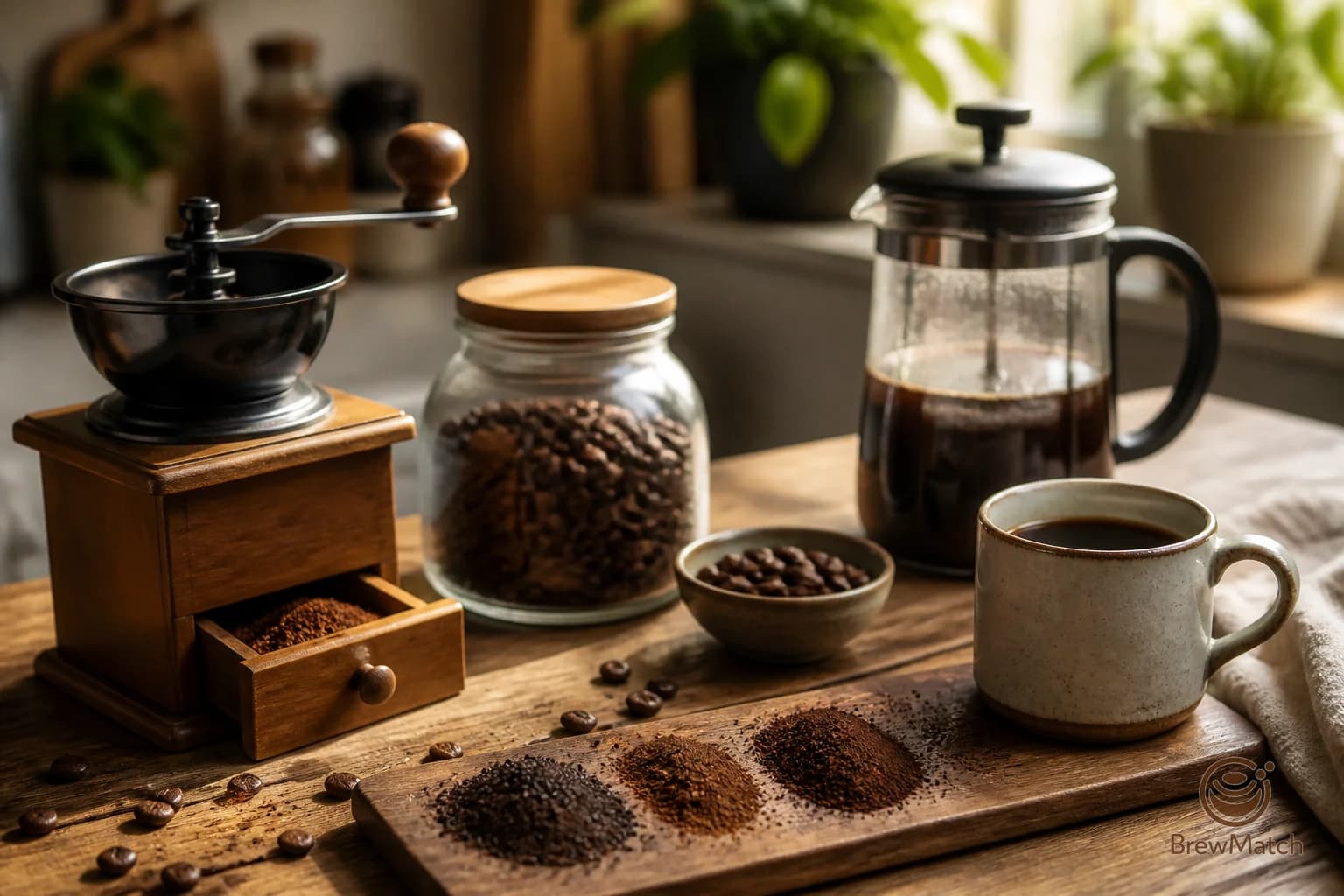
For French press, this matters even more. The coffee sits in water for several minutes, so dusty fines have plenty of time to overextract. If your French press tastes rich for two sips and then turns punishing, the problem may not be the press. It may be the grind.
Try this once: clean the grinder, grind a little coarser, and brew the same beans again. If the cup gets smoother, you found a real lever.
Around the Coffee World
The home coffee questions bubbling up this week were very grinder heavy, with French press, espresso improvement, and cold brew close behind.
That tracks. Grinder selection is where normal coffee drinkers get pulled into weird spec theater. Burr geometry. RPM. Motor power. Espresso capability. Fancy product photos. Some of that can matter, but it often distracts from the thing you can taste every morning: whether the grinder makes a clean enough grind for the way you brew.
For French press, you want a coarse grind without a snowstorm of dust. For drip, you want enough adjustment control to avoid sour on one side and bitter on the other. For espresso, tiny grind changes matter more, so sloppy adjustment gets annoying fast. For cold brew, you can get away with more, but stale retained grounds still have no business joining the batch.
The tradeoff: you do not need to become a grinder nerd. You do need to stop buying only on hype words.
From BrewMatch
New articles published this week:
- Grind Consistency Is the Grinder Spec That Actually Helps Bitter Coffee
- Best Coffee Grinder for French Press If You Hate Bitter Coffee
- Grounds Stuck in Your Grinder Can Make Coffee Taste Bitter
- Hot Grounds From Your Grinder Are Usually Not the Bitter Coffee Problem
- 3 Roast Labels That Usually Mean More Bitter Coffee
- 4 Things a Budget Coffee Grinder Needs If You Hate Bitter Coffee
The pattern is pretty clear: bitterness is not one problem. It can come from roast choice, grind size, uneven particles, dirty equipment, or a recipe that pushes extraction too far.
If you want coffee shopping to start with taste instead of label decoding, try BrewMatch: Find coffee that matches how you actually like coffee to taste.
Question of the Week
When your coffee tastes bitter, what do you change first?
- Grind size
- Brew time
- Water temperature
- Beans
- Grinder cleaning
- Nothing, you just suffer and finish the mug
If you are not sure, start with grind size and cleanliness. They are less glamorous than buying another bag, but they are often cheaper fixes.
Find your match
Not sure which beans fit your taste?
Use BrewMatch to turn your flavor goal, brew method, and current coffee problem into a practical roast and bean profile.
Try BrewMatch