
August 23, 2026
Weekly Review: Your Grinder Might Be the Bitter Coffee Villain
Old grounds, hopper storage, built in grinders, and when a new grinder is actually worth it.
This Week's Brew
Welcome to the BrewMatch weekly review for August 23, 2026. This weekly review asks whether your grinder might be the bitter coffee villain, or whether it is only one part of a bigger recipe problem.
This week was basically grinder intervention week.
If your coffee keeps turning bitter, it is tempting to blame the beans first. Sometimes that is fair. But a lot of home setups quietly sabotage good coffee before water ever hits the grounds: stale coffee stuck in the grinder, beans sitting in a hopper for days, grind settings that jump from too coarse to too fine, or a built in grinder that is convenient but sloppy.
Featured read: A Hard to Clean Grinder Can Keep Coffee Bitter
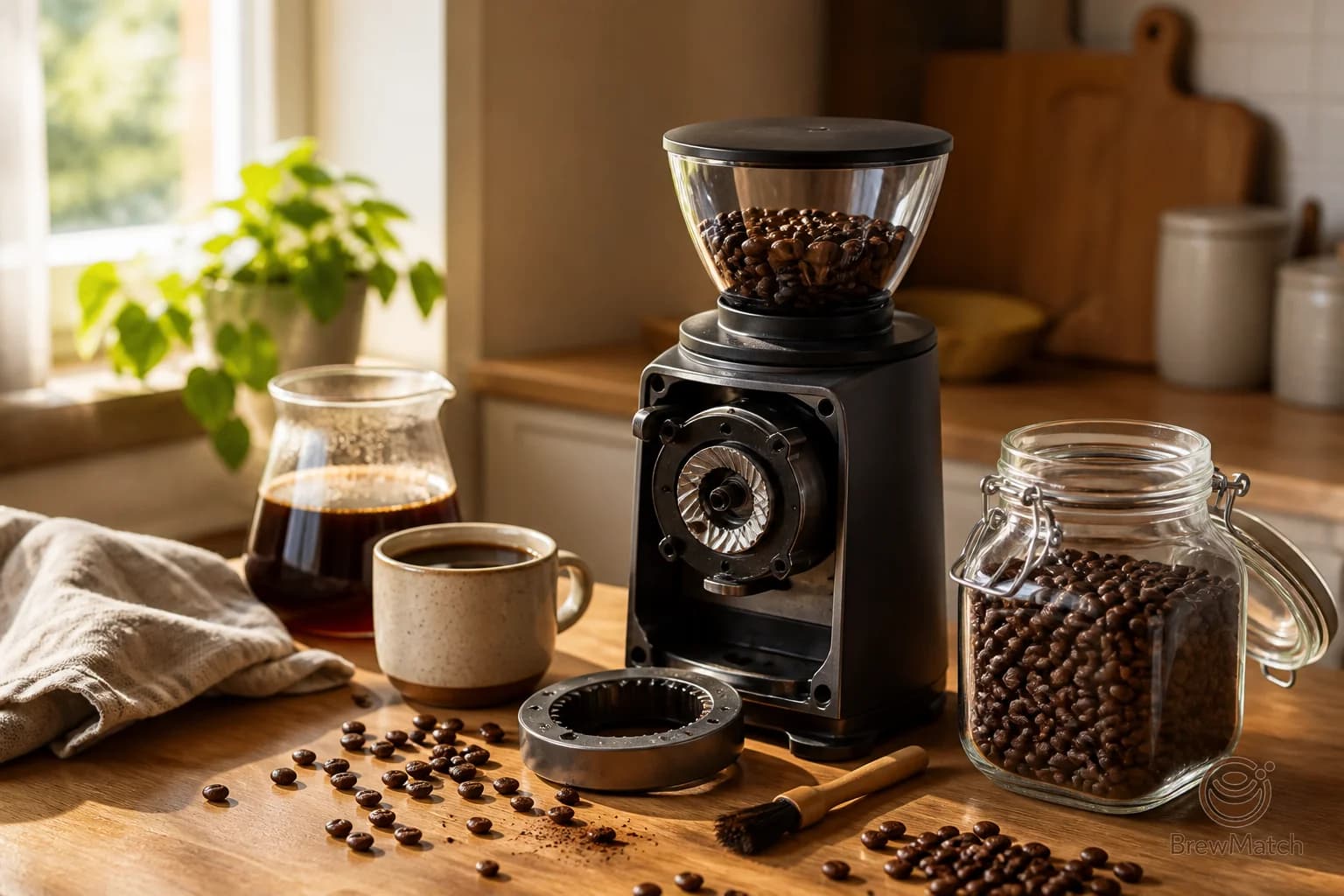
The short version: if your grinder holds onto old grounds and oily residue, those leftovers end up in tomorrow's cup. Darker roasts make this more obvious because the oils go stale faster and cling to the grinder more aggressively.
Also from this week's grinder run:
- Stop Leaving Beans in the Grinder Hopper If Coffee Tastes Bitter
- An Espresso Grinder Is Not Always Better for Less Bitter Drip Coffee
- A Built In Grinder Can Make Coffee Taste Bitter
- Single Dose Coffee Grinders Can Help Bitter Coffee But They Are Not Magic
- Do You Need a New Grinder to Fix Bitter Coffee
The pattern is simple: better gear helps only when it fixes the actual bottleneck. A new grinder will not rescue a bad recipe, but an annoying grinder can absolutely keep making decent beans taste worse than they should.
That is the villain test: if cleaning, better storage, and one small grind move make the cup smoother, the grinder might have been causing more bitterness than the beans.
Coffee Tip of the Week
Before buying a new grinder, run a three cup bitterness check.
- Clean the grinder as well as the manual allows. Brush out old grounds. If your grinder supports cleaning tablets, use them according to the instructions.
- Store beans in a separate airtight container, not in the hopper, for a few days.
- Brew your usual coffee, then brew again one notch coarser if the first cup is bitter and dry.
If the cup gets noticeably cleaner after cleaning and better storage, the grinder was part of the problem. If it is still bitter after going coarser, look at dose, brew time, water temperature, and roast level before shopping.
What people get wrong: they treat bitterness like a single cause. It is usually a stack of small mistakes. Fine grind plus hot water plus stale hopper beans plus dirty burr chamber is not one problem. It is four little problems holding hands.
Around the Coffee World
A few home coffee conversations stood out this week.
Low acid coffee is still getting a lot of attention. That makes sense, but the label can be slippery. If you want a smoother cup, start by looking at roast level, origin, brew method, and freshness instead of assuming every low acid bag will taste good to you. Some are mellow and chocolatey. Some are just flat.
Bean selection is another recurring pain point. Most people do not need a more exotic coffee. They need a clearer preference: do you want chocolate, nuts, caramel, fruit, florals, or something roasty and heavy? Buying based on taste words beats buying based on vibes.
There was also buying advice around Breville Bambino accessories. For a small espresso setup, the unsexy upgrades often matter most: a decent scale, fresh beans, a proper tamper, and a grinder that can make small repeatable espresso adjustments. Accessories are fun. Grind consistency pays rent.
And if you are dealing with grinder issues, Baratza support came up in community chatter too. The bigger lesson: repairable gear is underrated. A grinder you can maintain, clean, and get parts for can be a better long term buy than one with a shinier spec sheet.
From BrewMatch
BrewMatch is built around a simple idea: coffee recommendations should start with how you want coffee to taste, not how impressive the bag sounds.
If you are tired of buying beans that are technically good but wrong for your palate, try BrewMatch here: Find coffee that matches how you actually like coffee to taste.
No need to become the person who owns six kettles and argues about water chemistry at dinner. Unless you want to. We are not your boss.
Question of the Week
When your coffee tastes bitter, what do you blame first: the beans, the grinder, the recipe, or yourself?
A better follow up: what have you actually tested?
This week, pick one variable and change only that. Clean the grinder. Go one step coarser. Take beans out of the hopper. Lower brew temperature slightly. Do not change everything at once, because then you learn nothing except that coffee can be annoying.
Find your match
Not sure which beans fit your taste?
Use BrewMatch to turn your flavor goal, brew method, and current coffee problem into a practical roast and bean profile.
Try BrewMatch