
August 16, 2026
BrewMatch Weekly Review: Stop Blaming the Burr Material
This week: grinder dust, blade grinders, old burrs, and the ceramic vs steel debate.
This Week's Brew
Welcome to the BrewMatch weekly review for August 16, 2026. This weekly review is about blaming burr material when the real problem is usually grind quality, dust, adjustment range, cleaning, or recipe control.
This was grinder week at BrewMatch, and the main point is pretty simple: bitter coffee is rarely fixed by buying the grinder with the cooler spec sheet.
The featured piece is Ceramic vs Steel Burr Grinders Will Not Save Bitter Coffee. Ceramic sounds clean. Steel sounds professional. Neither label tells you whether your cup will stop tasting dry, burnt, or harsh.
If your coffee has that bitter, mouth drying edge, look at the boring stuff first:
- Is the grind too fine for your brew method?
- Is your grinder making lots of powdery dust?
- Are old grounds and stale oils stuck inside the grinder?
- Can your grinder make small enough adjustments without jumping from sour to bitter?
That theme ran through the whole week:
- A Blade Grinder Is a Bad Bet for Less Bitter Coffee: blade grinders chop unevenly, which can give you sour chunks and bitter dust in the same cup.
- An Old Coffee Grinder Can Make Coffee Taste Bitter: old equipment is not automatically charming. Worn burrs, tired blades, and trapped oils can punish good beans.
- Coffee Dust From Your Grinder Makes Coffee Taste Bitter: fines extract fast, so a little too much powder can make a reasonable recipe taste harsh.
- Stepped vs Stepless Grinders for Less Bitter Coffee: stepless adjustment helps most with espresso. For many home brewers, good grind quality matters more than infinite settings.
- Conical vs Flat Burr Grinders Are Not the Bitter Coffee Fix: burr shape matters, but not as much as people make it sound when they are trying to fix bitterness at home.
The grinder rabbit hole is real. Just do not let it distract you from the cup in front of you.
The material debate matters less than the coffee evidence. Ceramic or steel can both work, but neither material can fix a grinder that makes too much dust or a brew recipe that keeps pushing extraction too far.
Coffee Tip of the Week
If your coffee tastes bitter, make the grind a little coarser before changing beans.
Not wildly coarser. One or two clicks on a burr grinder. If you use a grinder without clear clicks, make a small visible move and keep everything else the same: same beans, same water amount, same coffee amount, same brew time if you can.
Then taste for three things:
- Did the dry, bitter finish calm down?
- Did the cup get sweeter or more balanced?
- Did it swing too far and become thin, sharp, or sour?
If bitterness improves, you were probably over extracting. If the cup gets weak but still bitter, your grinder may be making too many fines, or old grounds may be sitting inside the grinder and sneaking into every brew.
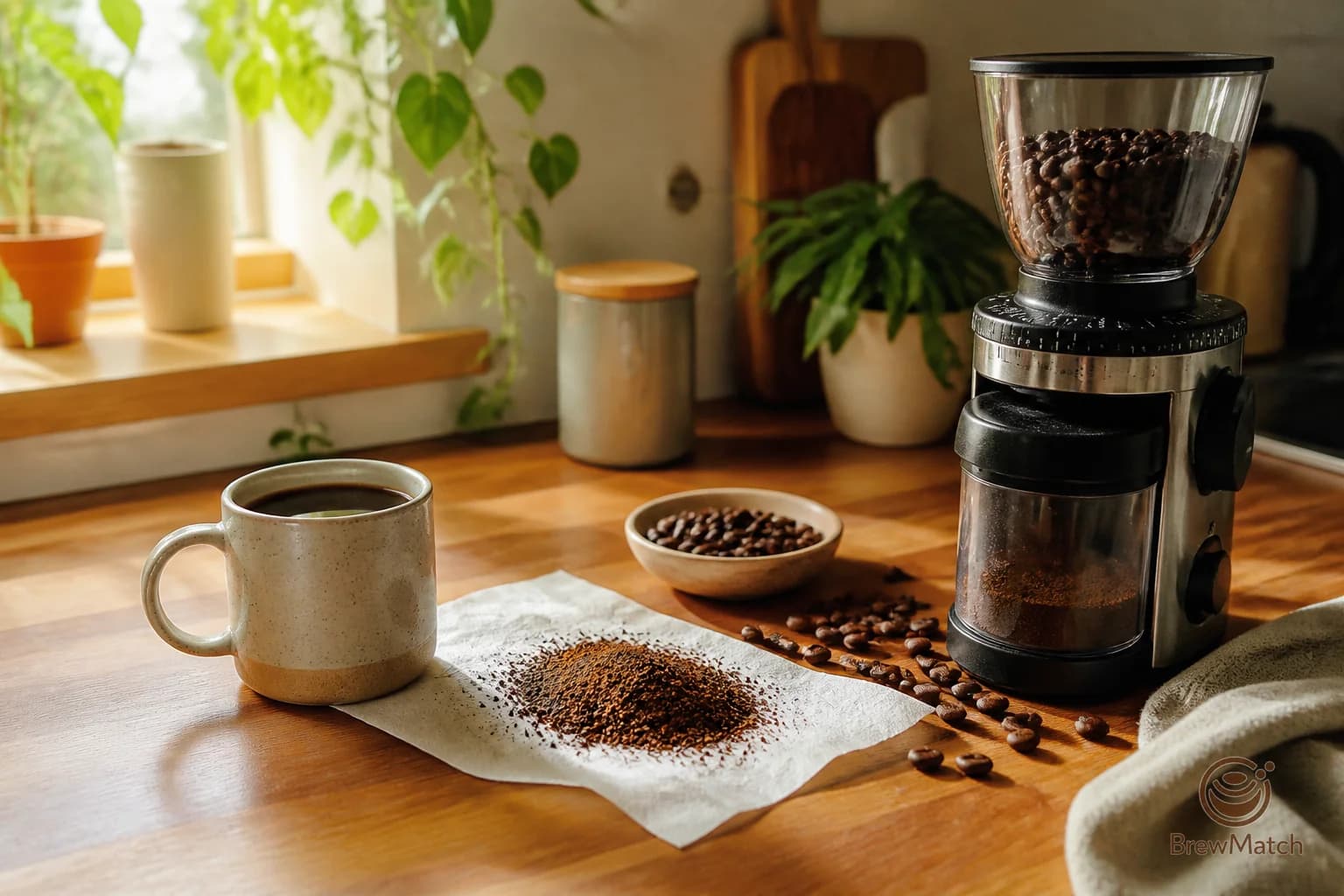
Quick home check: grind a little coffee onto a white plate or paper towel. If you see a heavy layer of powder mixed with bigger chunks, that is not just messy. That is flavor chaos.
Around the Coffee World
A few themes are showing up again and again with home coffee drinkers right now.
Pour over is still the brew method people want to improve, mostly because it looks simple until the cup tastes weird. The usual trap is treating pour over like a ceremony instead of a recipe. If the coffee tastes bitter, go coarser or shorten contact time. If it tastes sour and thin, go finer or use hotter water. Do not change five things at once and call it learning.
Roast level questions are also everywhere. Dark roast is not automatically bitter, and light roast is not automatically sour. But darker roasts are less forgiving if you grind too fine or use water that is too hot. Lighter roasts often need a little more extraction to avoid tasting sharp. The roast sets the lane. Your brewing still drives the car.
Low acid coffee interest makes sense too. Some people want a gentler cup, especially black. If that is you, start with medium or medium dark coffees described as chocolatey, nutty, smooth, or low acid. Be careful with ultra dark beans if you dislike bitterness. They may feel low acid, but they can also taste roasty and dry.
And for newer coffee drinkers using creamer: no shame. But if coffee only tastes good after a heavy pour of creamer, the base coffee may be harsher than it needs to be. Try a smoother medium roast before assuming you just dislike coffee.
From BrewMatch
BrewMatch is built around a simple idea: coffee recommendations should start with how you actually want coffee to taste, not with tasting notes that sound like a candle label.
If you want something smooth, chocolatey, fruity, low acid, bold, or easy with milk, start there.
Find coffee that matches how you actually like coffee to taste: https://brewmatch.app
Question of the Week
Should you upgrade from a blade grinder to a burr grinder?
If you drink pre ground coffee and like it, no urgent need. If you grind at home with a blade grinder and keep getting bitter, sharp, muddy cups, a burr grinder is probably one of the few upgrades that can actually change your daily coffee.
But do not buy one just because the internet made you feel guilty. Buy one if you want more control.
For drip, French press, cold brew, moka pot, and pour over, a solid entry burr grinder is usually enough. For espresso, grind adjustment becomes much more demanding, so the grinder matters more.
The upgrade is not about prestige. It is about getting grounds that behave the same way from one morning to the next.
Find your match
Not sure which beans fit your taste?
Use BrewMatch to turn your flavor goal, brew method, and current coffee problem into a practical roast and bean profile.
Try BrewMatch