
August 9, 2026
BrewMatch Weekly Review: Stop Buying Coffee Gear That Still Makes Bitter Coffee
This week: grinder mistakes, bitter coffee fixes, dirty coffee makers, and a simpler way to choose beans.
This Week's Brew
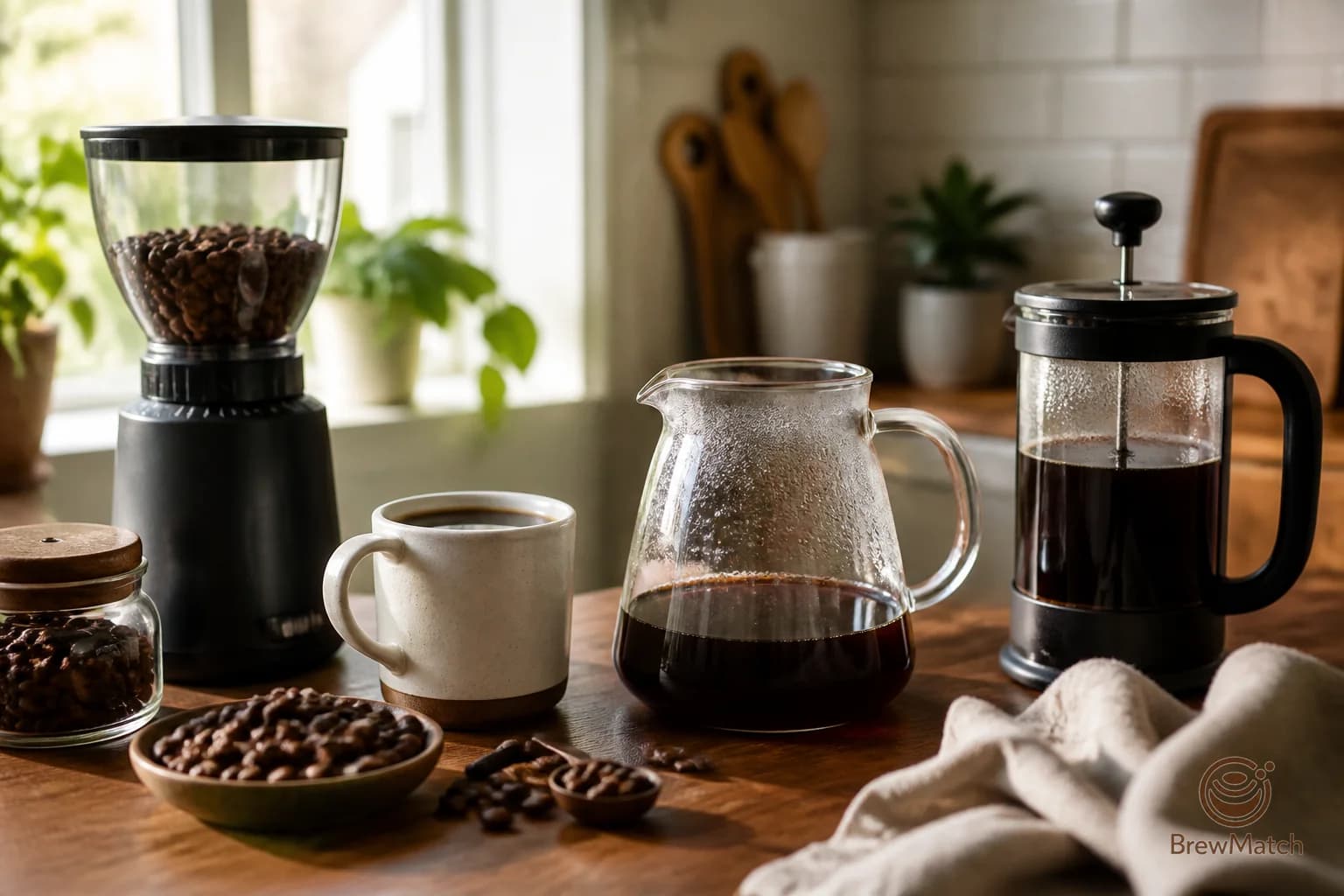
Welcome to the BrewMatch weekly review for August 9, 2026. This weekly review looks at why bitter coffee still shows up even when you have better beans, a better grinder, or gear that should be helping.
This week was grinder week, mostly because grinders are where a lot of bitter coffee starts before anyone notices.
The loud debate is usually manual versus electric. That can be useful, but it is not the main event. A good manual grinder can beat a cheap electric grinder. A good electric grinder can save your morning. A bad version of either can turn decent beans into a cup that tastes dry, harsh, and overdone.
Start with this one: Manual vs Electric Coffee Grinders for Less Bitter Coffee.
The short version: buy for grind consistency, adjustment range, and repeatability. Not for countertop theater.
Also from this week:
- Coffee Grinder Buying Mistakes That Keep Coffee Bitter
- A Grinder With Too Few Settings Can Keep Coffee Bitter
- Expensive Grinders Do Not Automatically Make Coffee Less Bitter
- 5 Grinder Features That Make Coffee Taste Less Bitter
- Your Coffee Maker Makes Coffee Taste Bitter When It Is Dirty
Coffee Tip of the Week
If one grinder click makes your coffee bitter and the next click makes it thin, your beans may not be the problem.
That usually means your grinder is not giving you enough useful control. You are not dialing in. You are choosing between two bad exits.
Try this before buying anything:
- Keep the same beans.
- Keep the same coffee dose and water amount.
- Change only the grind setting.
- Taste for three things: bitterness, sourness, and body.
If every setting feels like a compromise, write that down. That is different from not knowing how to brew. It means your gear may be limiting the cup.
For drip or pour over, you want enough grind control that small changes actually feel small. For French press, consistency matters more than ultra fine adjustment. For espresso, tiny adjustments matter a lot more, which is why cheap grinders can be so frustrating there.
Around the Coffee World
A few coffee questions keep showing up for home drinkers right now: which beans to buy, how to improve espresso, and whether French press is supposed to taste heavy or muddy.
For bean buying, stop starting with origin if you do not know what flavor you want yet. Origin can help, but it is not a personality test. Start with roast level and taste words. If you want chocolatey, smooth, low acid coffee, do not grab a bright light roast just because the bag sounds fancy. If you want fruit and sparkle, do not expect a dark roast blend to behave like a washed Ethiopian coffee.
For espresso, the grinder matters more than people want it to. Espresso is not forgiving. If the grind is uneven or the adjustment steps are too large, you can spend a whole bag chasing a decent shot and learn nothing except new swear words.
For French press, the common mistake is treating it like a dumping ground for random coarse coffee. Use a consistent coarse grind, give it enough steep time, and do not plunge like you are trying to win an arm wrestling match. Slow is cleaner.
From BrewMatch
BrewMatch is built around a simple idea: coffee recommendations should start with how you actually want coffee to taste.
The theme of this weekly review is that gear can still make bitter coffee when the setup does not match the cup you want.
Not what sounds impressive. Not what a bag description thinks you should appreciate. Your actual preferences.
If you want a smoother cup, a less bitter daily coffee, or a better starting point for beans, try BrewMatch: Find coffee that matches how you actually like coffee to taste.
Question of the Week
When your coffee tastes bitter, what do you blame first?
- The beans
- The roast level
- The grinder
- The coffee maker
- Yourself, unfairly
Most people jump to beans first. Sometimes they are right. But if your coffee has been bitter across multiple bags, look at the boring stuff: grind consistency, brew ratio, water temperature, and whether your coffee maker is carrying around old oils from three weeks ago.
A grimy brewer can make good coffee taste stale. A weak grinder can make good beans taste confused. A very dark roast can taste bitter because that is the roast style, not because you failed at brewing.
The fix starts with blaming the right thing.
Find your match
Not sure which beans fit your taste?
Use BrewMatch to turn your flavor goal, brew method, and current coffee problem into a practical roast and bean profile.
Try BrewMatch